Retail

Search documents
Markets Rebound at Open as Tech Shakes Off Powell’s Valuation Warnings
Stock Market News· 2025-09-24 14:07
Market Overview - U.S. stock markets opened positively on September 24, 2025, recovering from losses experienced the previous day, with major indexes near all-time highs [1][2][3] - The S&P 500 was up 0.2% at 6674 points, the Dow Jones Industrial Average increased by 113 points (0.2%), and the Nasdaq Composite rose 0.3% [2] Economic Indicators - Investors are focused on upcoming economic data, particularly the U.S. core Personal Consumption Expenditures (PCE) price index, which is expected to show slight inflation acceleration [4] - Federal Reserve Chair Jerome Powell indicated a cautious approach to future interest rate adjustments, acknowledging the Fed's recent rate cut but not signaling immediate further cuts [5] - Revised U.S. GDP numbers, consumer confidence data, and reports on home sales and durable goods orders are also anticipated [6] Company Developments - Alibaba (BABA) shares surged nearly 9% in premarket trading after announcing increased AI spending plans beyond $50 billion [7] - Micron Technology (MU) gained over 1% following better-than-expected earnings and strong guidance [8] - Nvidia (NVDA) dropped 2.8% due to concerns over its $100 billion deal with OpenAI but showed signs of recovery, up nearly 1% in premarket [9][10] - Boeing (BA) stock rose by 2% after Uzbekistan Airways announced a purchase agreement for 14 Dreamliner airplanes [11] - Lithium Americas (LAC) shares soared on news of potential U.S. government investment in its lithium project [11] Earnings Reports - Cintas Corporation (CTAS) is expected to report fourth-quarter fiscal 2025 earnings with a consensus EPS forecast of $1.19 [12] - AutoZone Inc. (AZO) reported adjusted earnings that missed estimates, leading to a slight stock dip [12] - Firefly Aerospace (FLY) saw a significant stock drop of 15.3% after reporting a wider-than-expected loss [12] - Kenvue (KVUE) climbed 1.6% after recovering from previous losses related to comments about its Tylenol product [12] Market Sentiment - The market remains dynamic, with investors weighing economic indicators, Federal Reserve policy signals, and individual company performance, indicating a cautious optimism focused on growth sectors [13]





Retail’s seasonal hiring could hit lowest point since 2009
Yahoo Finance· 2025-09-24 12:11
Group 1 - Retailers are cautious about hiring goals for the holiday season, with many remaining silent on their plans [3][4] - Factors affecting seasonal hiring include looming tariffs, inflationary pressures, and a shift towards automation and permanent staff [4] - Target is focusing on utilizing existing employees by offering more hours rather than hiring new seasonal staff [5] Group 2 - Retail hiring during the holiday season is projected to fall below 500,000 positions, marking the lowest point since 2009 [7] - Challenger, Gray & Christmas reports a 4% year-over-year decrease in seasonal hiring in 2024, with 543,100 jobs added in Q4 [7] - The retail industry has consistently hired above 500,000 seasonal employees since 2009, following the economic recovery [5]

Citi Trends to Present at 2025 Global Consumer & Retail Conference
Businesswire· 2025-09-24 10:45
Core Insights - Citi Trends, Inc. is a leading off-price value retailer focused on apparel, accessories, and home trends primarily for African American families in the United States [1] - The company will present at the inaugural Global Consumer & Retail Conference hosted by Telsey Advisory Group in collaboration with Santander Corporate & Investment Banking [1] - The presentation is scheduled for October 8, 2025, at 8:45 a.m. ET [1]


Shoe Carnival declares $0.15 dividend (NASDAQ:SCVL)
Seeking Alpha· 2025-09-24 10:32
Group 1 - The article does not provide any relevant content regarding company or industry insights [1]


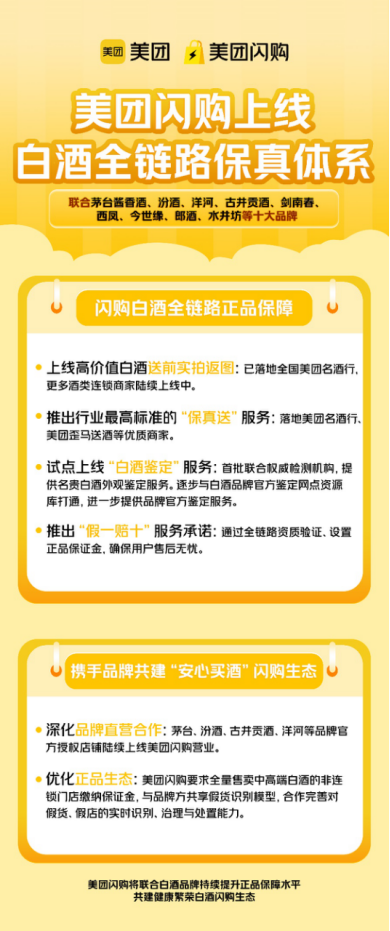
即时零售行业首个!美团闪购携十大品牌上线白酒全链路保真体系
Zhong Guo Jin Rong Xin Xi Wang· 2025-09-24 05:18
转自:新华财经 新华财经北京9月24日电 9月24日,美团闪购联合茅台酱香酒、汾酒、洋河、古井贡酒、剑南春、西 凤、今世缘、郎酒、水井坊等十余家头部白酒品牌,推出即时零售行业首个白酒全链路保真体系,以正 品保障为核心,在白酒售前、售后、配送等环节推出多项服务举措,促进白酒产业知识产权保护,为消 费者打造"安心买酒,正品保真"的购物体验,构建健康可信的闪购白酒生态。 全链路正品保障,闪购白酒安心买 "最近闪购过几次茅台酒,每次商家都会在发货前发送实物照片过来,并叮嘱我收货前核对编码。"家住 上海的刘先生表示,"以前我会担心买到假酒,因为假酒维权非常难,不过美团闪购的'实拍返图''假一 赔十'服务,打消了我的疑虑。" 此外,近期美团闪购开始在部分城市的酒水店铺试点上线"白酒鉴定"服务,首批将联合中轻检验认证有 限公司等权威检测机构,为用户提供名贵白酒外观鉴定服务。美团闪购将逐步与白酒品牌的官方鉴定网 点资源库打通,搭建品牌线下寄送鉴真服务的线上化流程。消费者收货后如有疑虑,品牌可提供72小时 鉴真服务,并出具检测结果,品牌鉴定结果将与平台赔付体系无缝衔接,打消消费者的正品疑虑。 携手头部品牌,构建"安心买酒"即时 ...

S&P Global Says Business Activity Growth Slows But Remains ‘Robust'
PYMNTS.com· 2025-09-23 23:38
Core Insights - U.S. business activity continued to grow in September, but the growth rate slowed for the second consecutive month [1][2] - The Flash U.S. Composite PMI Output Index decreased from 54.6 in August to 53.6 in September, indicating a slowdown in both manufacturing and service sectors [2] - Despite the slowdown, the PMI reading remained elevated, and the third quarter saw the strongest average monthly expansion since Q4 2024 [2] Business Sentiment - Growth remained "robust" in September, although it decreased from the peak observed in July [3] - Companies' expectations for output in the upcoming year rose to a four-month high in September, although still below long-term averages [3] - Sentiment in the service sector reached its highest level since May, while manufacturing sentiment was the highest in three months [4] Economic Factors - Business sentiment improved partly due to anticipated benefits from lower interest rates, despite ongoing concerns over the political environment and tariffs [5] - Retail sales in August showed a stronger-than-expected gain of 0.6% from the previous month and a 5% increase from August 2024 [6] - The National Federation of Independent Businesses reported a rise in small business sentiment, with the Small Business Optimism Index increasing by 0.5 points to 100.8 [6] Labor Market Concerns - The number of business owners expecting higher sales increased by 6 points to 12%, although concerns about labor shortages persisted [7] - Despite improvements in overall business health, labor quality remained the top issue for small business owners [7]
Technology and Logistics: How Far Can They Go?
Yahoo Finance· 2025-09-23 21:09
Group 1 - The collaboration between automation and human workers is enhancing logistics efficiency, focusing on loading, shipping, and delivery processes [1] - Advances in artificial intelligence and machine learning are making robots faster and smarter, leading to more autonomous operations in warehouses [2] - By 2030, it is projected that one in 20 warehouse supervisors will manage robots instead of humans, highlighting the rise of robots-as-a-service (RaaS) models [3] Group 2 - A hybrid model of management is expected to dominate, where managers will oversee both human workers and robots [4] - The last mile delivery is becoming a competitive focus for mega retailers, with Walmart achieving one in three deliveries within three hours [5] - Target is enhancing its store fulfillment capabilities with new sorting technologies, emphasizing the importance of efficient trailer unloading processes [6]
U.S. Stocks Retreat from Record Highs as Powell Warns of “Highly Valued” Markets
Stock Market News· 2025-09-23 21:07
Market Performance Recap - Major U.S. market indexes closed lower on September 23, 2025, with the Dow Jones Industrial Average (DJIA) down 0.2% to 46,292.78, the S&P 500 (SPX) down 0.6% to 6,656.92, and the Nasdaq Composite (IXIC) down 0.9% to 22,573.47 [2][3] - The trading volume was 18.65 billion shares, higher than the last 20-session average, indicating increased market activity despite the pullback [3] Federal Reserve Influence - Federal Reserve Chair Jerome Powell's comments on stock valuations being "fairly highly valued" contributed to the market's cautious sentiment, leading to profit-taking, especially in the technology sector [3] - Powell's remarks came shortly after the central bank's latest interest rate cut, raising questions about the sustainability of the recent market surge [3] Individual Stock Highlights - Nvidia (NVDA) shares fell nearly 3% to 3.2% after a significant gain, influenced by a strategic partnership with OpenAI involving a $100 billion investment for data center buildout [7] - Boeing (BA) shares rose between 1.7% and 2.2% following a deal with Uzbekistan Airways for 14 787 Dreamliner jets, valued at over $8 billion [7] - AutoZone (AZO) experienced a decline of 0.7% to 2.9% due to weaker-than-expected fourth-quarter fiscal 2025 profit, attributed to increased spending [7] - Kenvue (KVUE) shares climbed 2.2% to 3.3%, recovering losses from the previous day, despite concerns related to Tylenol [7][8] - General Motors (GM) shares were up 0.3% after Mizuho raised its price target, noting minimal impact from tariffs and a potential 17% surge in EV sales [12] - Apple (AAPL) approached all-time peaks with a 4.3% rise after a price target increase, although durability concerns regarding iPhone 17 models emerged [12] - Oracle (ORCL) saw a significant jump of over 6% after announcing new co-CEOs [12] Upcoming Economic Indicators - Key economic data releases are anticipated, including the August Personal Consumption Expenditures (PCE) reading, which is crucial for gauging inflation and influencing Federal Reserve policy [5] - Updates on August's U.S. Durable Goods Orders, Q2 GDP Growth Rate (Final), and Existing Home Sales are also expected, providing insights into the U.S. economy's health [6]

SPS Commerce (NasdaqGS:SPSC) 2025 Investor Day Transcript
2025-09-23 14:32
Summary of SPS Commerce 2025 Investor Day Company Overview - **Company**: SPS Commerce (NasdaqGS:SPSC) - **Industry**: Supply Chain Management and Retail Technology - **Headquarters**: Minneapolis, Minnesota - **Employee Count**: Approximately 3,000 employees, with half based in the Minneapolis-St. Paul area [2][3] Core Business Model - SPS Commerce operates a cloud-based network connecting retailers, suppliers, and third-party logistics providers to facilitate supply chain information exchange and collaboration [2][3] - The company serves three main market segments: retailers, suppliers, and third-party logistics providers [3] Growth Strategy - The company emphasizes the importance of network connections to enhance supply chain efficiency, sales growth, and margin improvement [3][4] - SPS Commerce aims to leverage its network to provide value-added applications, including fulfillment and revenue recovery, which are increasingly integrated into the network [6][8] - The company has identified a total addressable market (TAM) of $6.5 billion in the U.S. and over $11 billion globally, with plans to expand its customer base from 50,000 to 275,000 [16][17] Market Dynamics - The pandemic accelerated the adoption of omnichannel initiatives and dropship e-commerce, leading to increased customer count and average revenue per customer [9][11] - Current market conditions show a stabilization of omnichannel initiatives and a slowing customer count growth, attributed to macroeconomic uncertainties [12][14] Product Strategy - SPS Commerce focuses on collaboration and automation within the supply chain, with a strong emphasis on data availability to enhance customer collaboration [25][26] - The company employs a "build, buy, and partner" strategy to expand its product offerings, including recent acquisitions like Carbon6 and SupplyPike [29][30] - New product offerings include a revenue recovery solution and a performance management platform for retailers and suppliers to collaborate effectively [40][49] Go-to-Market Strategy - SPS Commerce's go-to-market strategy is centered around retail programs that facilitate supplier onboarding and compliance with retailer requirements [74][75] - The company maintains a high win rate of approximately 70% in securing new customers, primarily through its differentiated retail programs [76][78] Future Outlook - The company anticipates long-term growth driven by increased supply chain collaboration needs and the emergence of new consumer brands [14][15] - SPS Commerce is committed to continuous investment in technology and product development to enhance its network and customer offerings [50][51] Key Takeaways - SPS Commerce is well-positioned to capitalize on the growing demand for supply chain technology and collaboration solutions, with a robust network and a clear growth strategy [14][16] - The company's focus on data-driven insights and network-led growth presents unique opportunities for upselling and cross-selling to existing customers [20][21]

Duluth Trading Strengthens Midwest Footprint, Opens Sixth Minnesota Location in Maple Grove
Prnewswire· 2025-09-23 14:01
Group 1 - Duluth Holdings Inc. is set to open a new retail store in Maple Grove, Minnesota on September 25, 2025 [1]