
农业社会化服务

Search documents
研之有理|农业社会化服务体系的优化路径
Xin Lang Cai Jing· 2025-12-21 21:43
Core Viewpoint - The development of a comprehensive, efficient, and convenient social service system is crucial for modern agriculture, with Heilongjiang Province having favorable conditions for such development, although there are still shortcomings in service supply and demand balance [1] Group 1: Service Capacity Enhancement - Improving the capabilities of various service entities is essential for enhancing the quality and effectiveness of the service system [2] - Support for leading service organizations, such as farmer cooperatives and agricultural service companies, is necessary to expand service scale and scope [2] - Encouragement of service entity integration through alliances and collaborations to enhance overall service capacity and risk resilience [2] Group 2: Technology Empowerment - Leveraging technology to enhance service processes, efficiency, and cost reduction is vital for agricultural social services [3] - Upgrading comprehensive agricultural service platforms to integrate agricultural information resources and service entity data [3] - Promotion of smart agricultural machinery and IoT applications to support precision farming and data-driven decision-making [3] Group 3: Service Model Innovation - Continuous innovation in service models is needed to meet diverse agricultural needs and improve service supply adaptability [4] - Development of comprehensive management services that extend from pre-production to post-production stages, enhancing the value chain for farmers [4] Group 4: Green Production Services - Focus on developing specialized services for sustainable agricultural practices, such as soil testing and organic fertilization [5] - Support for new industries and business models in agriculture, including leisure agriculture and rural tourism, to expand the scope of social services [5] Group 5: Institutional Adaptation - A stable and transparent institutional environment is necessary for the effective development of agricultural social service systems [6] - Improvement of policy support systems, including financial and tax incentives, to enhance service efficiency [6] - Establishment of quality assessment mechanisms and dispute resolution systems to ensure service standards and mitigate risks [6]
潍坊出台全省首个地级市供销合作社强化为农服务能力工作方案
Qi Lu Wan Bao· 2025-12-17 11:12
Core Viewpoint - The Weifang Municipal Government has released a work plan to enhance the service capabilities of supply and marketing cooperatives, marking the first implementation at the city level following the provincial government's guidelines aimed at improving agricultural service quality and efficiency [1]. Group 1: Agricultural Service Capability Enhancement - The plan aims to accelerate the development of comprehensive agricultural social services to ensure food security, with a target of establishing over 30 new agricultural service entities within three years [1]. - It emphasizes the creation of a comprehensive service platform integrating agricultural supplies, machinery operations, and grain drying and storage, with a goal of stabilizing agricultural service scale at over 8 million acres annually [2]. - The initiative includes promoting specialized production cooperatives and key service management to connect small farmers with modern agricultural practices [2]. Group 2: Modern Circulation Service System - The plan seeks to establish a modern circulation service system to support urban-rural integration, with a target of creating or restructuring eight county-level agricultural enterprises within three years [3]. - It encourages the development of a robust agricultural product sales platform, enhancing the distribution network across counties, towns, and villages [3]. - The initiative includes promoting new business models such as e-commerce and community group buying to improve agricultural product circulation [3]. Group 3: Comprehensive Reform of Supply and Marketing Cooperatives - The plan outlines support for the classification and upgrading of grassroots cooperatives, aiming to establish at least one national demonstration cooperative in each agricultural county within three years [5]. - It emphasizes the need for reform in state-owned enterprises within the cooperatives, ensuring legal protections for assets and encouraging external cooperation [5]. - The initiative includes the establishment of mechanisms to connect small farmers and village collectives, promoting financial support and insurance policies for agricultural services [6]. Group 4: Future Development Plans - The Weifang Supply and Marketing Cooperative plans to develop a "15th Five-Year" development plan, focusing on innovative service models to accelerate agricultural modernization and rural revitalization [7].
四川省加快提升农业社会化服务水平
Zhong Guo Jing Ji Wang· 2025-12-11 08:13
Core Viewpoint - Sichuan Province is focusing on building a higher-level "Tianfu Granary" and promoting agricultural modernization, emphasizing the role of agricultural social services in connecting small farmers with large markets and integrating scattered operations with large-scale operations [1] Group 1: Policy Initiatives - The Sichuan Provincial Government has issued the "Guiding Opinions on Accelerating the Improvement of Agricultural Social Service Levels and Developing Appropriate Scale Operations," aiming to enhance agricultural social services and promote quality improvement and efficiency in agriculture, as well as increase farmers' income [1] - By 2027, the agricultural social service area in Sichuan is expected to exceed 50 million acres, with over 1,000 large-scale service organizations cultivated and more than 200 modern comprehensive agricultural service centers established, serving over 10 million small farmers [1] - By 2030, a new pattern of agricultural social services is anticipated to be formed, characterized by a sound service network, comprehensive coverage of service chains, and coordinated regional development [1] Group 2: Key Tasks - The "Guiding Opinions" outlines five key tasks: strengthening a diverse team of service providers, expanding the scope of services, optimizing development models, solidifying service infrastructure, and enhancing resource guarantees to continuously improve the quality and efficiency of agricultural social services in Sichuan [1] - Agricultural social services refer to market-oriented services provided by professional service companies and farmers' cooperatives throughout the entire agricultural production chain [1]
破解小农户“干不了、干不好、不划算”难题,力争到二0三0年——建成现代农事综合服务中心超五百个
Si Chuan Ri Bao· 2025-12-11 06:32
Core Insights - The Sichuan Provincial Agricultural and Rural Affairs Department announced the establishment of a comprehensive agricultural social service system, with 34,000 service entities covering an area of 48.5 million acres annually [1][2] - The provincial government has issued guidelines to enhance agricultural social services and promote moderate-scale operations, focusing on five key areas: service entities, service fields, development models, service conditions, and resource support [1] - A pilot collaboration model involving "village collectives + service entities + farmers" is being tested in Mianyang City to reduce barriers for small farmers in accessing services and to address technical challenges [1] Service Goals - By 2030, the province aims to establish over 500 modern agricultural service centers and serve more than 5.5 million small farmers annually [2] - Agricultural social services are designed to facilitate market access for small farmers, helping them to collectively engage with product buyers and mitigate price volatility risks associated with scattered sales [2]
广州市供销合作总社创建三维驱动模式,健全公共型农业社会化服务体系
Nan Fang Nong Cun Bao· 2025-12-10 14:34
Core Viewpoint - Guangzhou Supply and Marketing Cooperative is implementing a three-dimensional driving model to enhance the public agricultural social service system, aiming to modernize agriculture and improve service quality for farmers [8][10]. Group 1: Agricultural Social Services - The cooperative has launched the "Agricultural Inputs and Technology Going to the Countryside" initiative, which has served over 10.4 million mu of farmland [9][45]. - The initiative includes distributing over 300 agricultural input and technology promotional materials and green agricultural products to local farmers [4][5]. - The cooperative has organized 69 agricultural technology training sessions, benefiting 8,896 farmers and covering an area of 78,400 mu [47]. Group 2: Resource Integration and Team Building - The cooperative has focused on strengthening agricultural input enterprises and forming specialized agricultural social service teams to provide comprehensive services [16][17]. - It has integrated resources to cultivate and strengthen eight supply and marketing system enterprises, enhancing the quality of agricultural operating entities [24][25]. - The cooperative has also established a service association in Zengcheng District with 17 initial member enterprises to effectively connect service supply and demand [19]. Group 3: Innovative Service Models - The cooperative has developed the "45+45+10" production management model, which involves a revenue-sharing mechanism between the cooperative, villagers, and village collectives [31][32]. - This model aims to consolidate small plots into larger, contiguous farming areas, thereby increasing production and income for villagers [33]. - The cooperative has created a "one-stop" agricultural machinery service center in Baiyun District, providing a range of services including agricultural input delivery and production management [34][36]. Group 4: Quality Improvement Measures - The cooperative has allocated over 1.2 million yuan for the "Agricultural Inputs and Technology Going to the Countryside" initiative over three years [45]. - It has initiated a "Green Agricultural Inputs" upgrade action to promote environmentally friendly practices among farmers [50][51]. - The cooperative has established a district-level agricultural social service platform to enhance service quality and efficiency [53][56].


因地制宜建设农事综合服务中心
Jing Ji Ri Bao· 2025-12-09 00:28
Core Viewpoint - The establishment and operation of modern agricultural comprehensive service centers are essential for enhancing the production capacity and quality efficiency of agriculture, particularly for smallholder farmers, as outlined in the recent guidelines issued by multiple government departments [1][2]. Group 1: Modern Agricultural Comprehensive Service Centers - Modern agricultural comprehensive service centers aim to provide integrated, one-stop services that enhance operational efficiency for smallholder farmers and address gaps in operational services [2][4]. - These centers will serve as shared platforms for resource integration, demand-supply matching, and support for various agricultural operations and service entities [2][3]. Group 2: Key Infrastructure and Equipment - The construction of these service centers focuses on addressing service gaps in pre- and post-production stages, such as seedling cultivation, supply of agricultural materials, and logistics [3]. - The strategy includes optimizing existing facilities and equipment before expanding or building new ones, ensuring that they are suitable for smallholder farmers [3][4]. Group 3: Service Integration and Collaboration - The centers will not replace existing small service providers but will connect them to a comprehensive agricultural production service chain, enhancing service quality and efficiency [4]. - By promoting collaboration among various agricultural entities, the centers will facilitate smallholder participation in larger agricultural operations through mechanisms like land transfer and cooperative models [4][5]. Group 4: Mechanism Optimization - The guidelines emphasize the need for effective integration of public and commercial services, with a focus on transparency in service standards and pricing [5]. - Strengthening partnerships with agricultural technology, training, and financial institutions will enhance the service offerings of these centers, making them pivotal in the modernization of agriculture [5].
(乡村行·看振兴)“土地银行”托起“田园梦”山西高平聚焦农业社会化服务
Zhong Guo Xin Wen Wang· 2025-12-02 10:37
Core Viewpoint - The article highlights the innovative "land bank" model implemented by Yan Guo Feng Supply and Marketing Co., which focuses on agricultural social services and aims to enhance rural revitalization in Gao Ping, Shanxi Province [2][3]. Group 1: Company Overview - Yan Guo Feng Supply and Marketing Co. is a key player in the comprehensive reform of supply and marketing cooperatives in Gao Ping, serving the "three rural issues" and contributing to rural revitalization [2]. - The company has developed a "land bank" operation model where farmers entrust their land to a professional team for management, allowing them to receive dividends without active involvement [4]. Group 2: Agricultural Development - The "land bank" model began with the leasing of 800 acres in Wang He Nan Village, which has now expanded to 36,000 acres as more farmers have gained trust in the system due to consistent dividend payouts [2]. - The model not only increases income for local villagers but also creates job opportunities for surrounding farmers, promoting local employment [3]. Group 3: Future Plans - The company aims to continue its focus on agriculture and rural areas over the next five years, striving to build a comprehensive, large-scale, and sustainable agricultural service system [3].
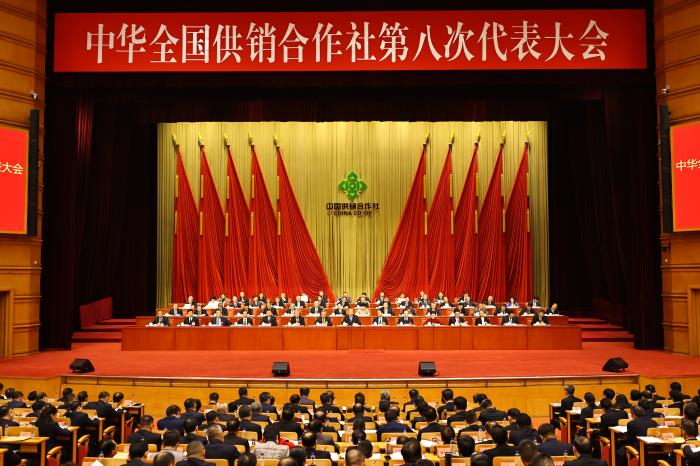
“十四五”期间销售总额年均增长8.6% 供销合作社交出五年“成绩单”
Zhong Guo Xin Wen Wang· 2025-11-26 13:44
Core Insights - The China National Supply and Marketing Cooperative has reported an average annual sales growth of 8.6% during the 14th Five-Year Plan period, indicating stable economic performance and positive trends in the cooperative's operations [1][3]. Group 1: Achievements and Developments - The cooperative has established a robust service system, with over 1,400 enterprises generating more than 100 million yuan in revenue, including 29 enterprises exceeding 1 billion yuan, an increase of 15 since 2020 [1]. - A national agricultural material supply platform has been created to ensure food security, with emergency supply plans and annual meetings to support farmers' fertilizer needs [3]. - The cooperative has enhanced its agricultural social services, addressing key issues in agricultural production and expanding service areas through innovative mechanisms [3]. Group 2: Agricultural and Resource Management - The cooperative has developed a comprehensive recycling system, establishing 46,000 recycling stations and over 600 sorting centers, with standardized stations totaling 4,000, handling approximately 31% of the national waste electrical appliance dismantling [4]. - The cooperative has successfully facilitated consumption assistance and industry support, achieving a transaction volume of 57.2 billion yuan through the "832 platform" over five years [4]. - The establishment of the China Cotton and Yarn Trading Center has been initiated to promote the healthy development of the cotton industry [4].
建设一批现代农事综合服务中心(政策速递)
Ren Min Ri Bao· 2025-11-06 22:11
Core Viewpoint - The article discusses the development of a modern agricultural service system in China, emphasizing the integration of smallholder farmers with modern agricultural practices through comprehensive service centers [1][2]. Group 1: Agricultural Service System - The "14th Five-Year Plan" suggests improving an efficient agricultural social service system to connect small farmers with modern agriculture [1]. - The Ministry of Agriculture and Rural Affairs, along with five other departments, issued guidelines to strengthen the construction of modern agricultural service centers [1][2]. - Agricultural social services include specialized services for various agricultural sectors, which are crucial for integrating small farmers with modern agricultural practices [1]. Group 2: Development and Challenges - Despite rapid development, challenges such as resource dispersion and insufficient pre- and post-production services remain [2]. - The guidelines aim to provide integrated, one-stop services to small farmers and other production entities, enhancing service accessibility and convenience [2]. Group 3: Infrastructure and Operations - The construction of service centers will focus on key infrastructure for pre-production (like seedling and agricultural material collection) and post-production (like drying and storage) [2][3]. - The guidelines encourage a market-oriented approach, allowing professional entities to manage and operate these service centers [3]. Group 4: Policy Support - Multi-faceted policy support is necessary for the construction of modern agricultural service centers, including local government bonds and agricultural infrastructure funding [4][5]. - Financial institutions are encouraged to optimize products and credit models to support these construction projects [5].
建设一批现代农事综合服务中心 为小农户等生产经营主体提供集成化、一站式服务(政策速递)
Ren Min Ri Bao· 2025-11-06 21:58
Core Insights - The article discusses the development of a modern agricultural service system in China, emphasizing the integration of smallholder farmers with modern agricultural practices [1][2][3] Group 1: Agricultural Service System - The "14th Five-Year Plan" suggests improving a convenient and efficient agricultural social service system to connect small farmers with modern agriculture [1] - The Ministry of Agriculture and Rural Affairs, along with five other departments, issued guidelines to strengthen the construction of modern agricultural service centers [1][2] - Agricultural social services include specialized services for various agricultural sectors, which are crucial for integrating small farmers with modern agricultural development [1][2] Group 2: Development Challenges - Despite rapid development, challenges remain, such as resource dispersion, gaps in pre- and post-production services, and weak comprehensive service capabilities [2] - The guidelines aim to provide integrated, one-stop services for small farmers and other production entities, enhancing service accessibility and convenience [2] Group 3: Infrastructure and Operations - The guidelines emphasize the need for planning to avoid redundant construction, suggesting a mix of new and expanded facilities based on local agricultural characteristics [3] - It encourages the establishment of various types of agricultural service centers, focusing on key infrastructure for pre- and post-production processes [3] - The operation of these centers should be market-driven, allowing professional entities to manage them, with potential separation of construction and operation [3] Group 4: Policy Support - The construction of modern agricultural service centers requires multi-faceted policy support, including local government bonds and infrastructure financing [4][5] - Financial institutions are encouraged to optimize products and credit models to support these construction projects [5] - Land policies will facilitate the participation of rural collective economic organizations in the construction of service centers [5]