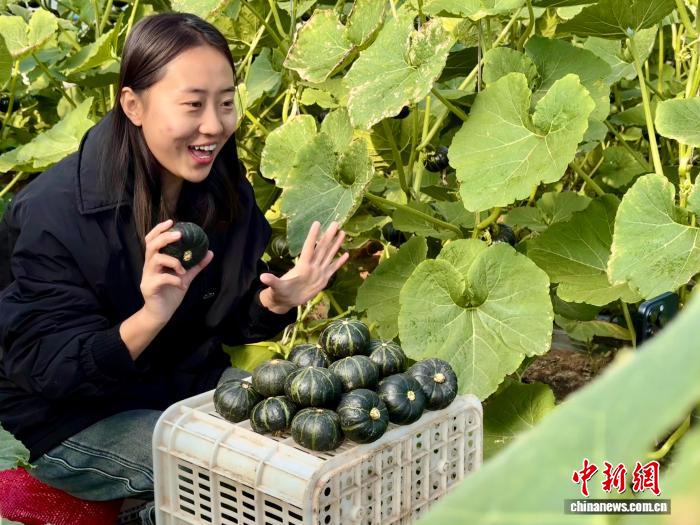
贝贝南瓜

Search documents
聚焦特色种养,广东这场研讨给出富民兴村“金点子”
Nan Fang Nong Cun Bao· 2026-02-24 11:34
Core Viewpoint - The seminar on "Development of Characteristic Planting and Breeding for Enriching People and Revitalizing Villages" in Guangdong focuses on promoting agricultural modernization and enhancing rural economies through innovative farming practices and policies [1][3][51]. Group 1: Policy and Support - The Guangdong Provincial Agricultural Office emphasizes increasing policy support, technological empowerment, and cultivating key players to enhance the quality and efficiency of green and efficient planting and breeding industries [10][11]. - The seminar aims to provide actionable strategies for rural revitalization and economic growth through characteristic agriculture [4][51]. Group 2: Innovative Practices - The "Land Custody" model introduced in Luhua County aims to address the issue of abandoned farmland by consolidating idle land for standardized agricultural practices, leading to the development of a more organized and efficient agricultural sector [14][21][27]. - The introduction of "water-saving and drought-resistant" rice varieties by South China Agricultural University represents a significant technological advancement, promoting resource-efficient agricultural development [28][30][32]. Group 3: Role of New Agricultural Entities - New agricultural operators play a crucial role in linking farmers to markets and enhancing agricultural productivity through mechanization and professional services [36][39]. - The experience of Guangdong Zhaohua Seed Industry Co., which successfully cultivates high-quality rice varieties and implements a unified supply and purchase model, demonstrates the potential for increased farmer income and sustainable agricultural practices [41][48][50].


乡韵依旧、家园常新,这是内蒙古和美乡村的模样
Xin Lang Cai Jing· 2026-02-17 11:13
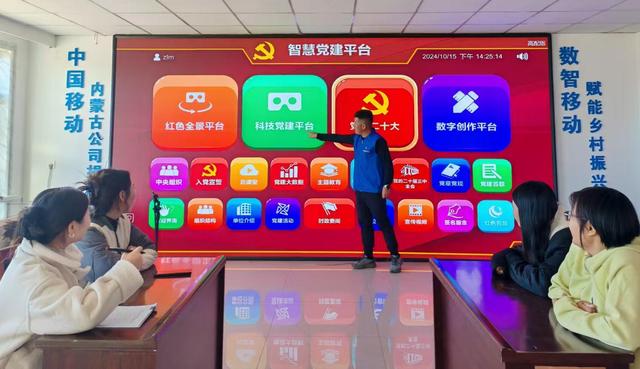
Core Viewpoint - The articles highlight the positive transformations in rural areas of Inner Mongolia, focusing on housing improvements, income growth through cooperative farming, and advancements in digital infrastructure, all contributing to a better quality of life for residents during the Spring Festival. Group 1: Housing Improvements - The story of Yu Chunlong, a poverty monitoring household, illustrates the impact of housing upgrades, as he moved into a new 96-square-meter brick house before the Spring Festival, enhancing his family's living conditions and overall happiness [2] - The Inner Mongolia government has been actively working to connect poverty alleviation efforts with rural revitalization, improving policies in various sectors such as housing, employment, and healthcare to ensure stability and development [2] Group 2: Income Growth - The "Unified Planting and Shared Prosperity" model in Dalate Banner has allowed farmers like Shi Haishu to benefit from cooperative farming, leading to significant income increases. For instance, he earned 33,600 yuan from his 30 acres of land through cooperative management and an additional 42,000 yuan from infrastructure projects [3] - This model promotes the integration of resources and labor, enabling small farmers to participate in larger agricultural industries, thus enhancing collective income and financial stability for both households and village collectives [3][4] Group 3: Digital Infrastructure and Community Engagement - The establishment of a smart party building room in Wushen Yihe Village has facilitated community engagement through digital means, allowing residents to enjoy shared experiences like watching the Spring Festival Gala together [5][6] - The integration of digital technology in rural governance and services, such as remote medical care and e-commerce, is transforming rural life, with significant improvements in infrastructure like high-speed internet and modern facilities [7] Group 4: Overall Rural Development - Inner Mongolia aims to maintain over 10 million acres of grain planting area by 2025, achieving stable production and ensuring food security through cooperative farming practices [4] - The region has made substantial progress in rural infrastructure, with 99.8% of administrative villages having access to fiber optics, and significant improvements in water supply and waste management, contributing to enhanced living conditions [7]
新春走基层丨小灵芝种出甜日子
Guang Xi Ri Bao· 2026-02-09 03:27
Group 1 - The upcoming Spring Festival is driving a surge in tea consumption, particularly for traditional gifts like tea [1] - Yongfu Village has established itself as a notable producer of Lingzhi tea, launching a brand called "Fuzhime" with various products including Lingzhi tea and Lingzhi wine [1] - Since its launch in January last year, the factory has achieved sales exceeding 200,000 yuan through e-commerce channels [1] Group 2 - Prior to 2022, Yongfu Village's edible fungus industry faced losses due to technical and sales shortcomings [2] - Under the leadership of a former soldier, the village transitioned to Lingzhi cultivation, collaborating with local agricultural research institutions for technical support [2] - The village's edible fungus industry now operates on a full industrial chain model, generating annual dividends exceeding 100,000 yuan and creating job opportunities for over ten villagers [2] Group 3 - A local farm has cultivated over 170 acres of various pumpkin varieties, with plans to market them in early April, aligning with favorable market conditions [3] - Yongfu Village has established a specialty agricultural product exhibition center and an e-commerce live streaming area to enhance product visibility [3] - The village has trained over 50 new "farmer" live streamers to promote agricultural products beyond the village [3]
从“喊叫水”到“赛江南”,这里的日子大不一样了
Ren Min Ri Bao· 2026-01-12 08:52
Core Viewpoint - The article highlights the transformation of the Hanjiao Water Town, emphasizing the significance of water resources, particularly from the Yellow River, in improving the living conditions and agricultural practices of the local community [1][3]. Group 1: Historical Context - Hanjiao Water Town was established in 2004 when it was transferred from Tongxin County to Ningxia, primarily due to water resource allocation [1]. - The area has a historical narrative of drought and scarcity, with local legends recounting the struggles of past inhabitants to find water [1][2]. Group 2: Current Living Conditions - The current residents of Hanjiao Water Town have access to various agricultural job opportunities, thanks to the irrigation from the Yellow River [3]. - The community has seen significant improvements in living standards, with new housing and infrastructure developments, reflecting a shift from poverty to prosperity [2][3][4]. Group 3: Agricultural Practices - The introduction of water from the Yellow River has transformed agricultural practices, moving from traditional rain-fed methods to more modern irrigation techniques [3]. - There are challenges associated with the new irrigation methods, as some residents struggle to adapt to changes in farming practices [3]. Group 4: Cultural and Social Changes - The community has developed a culture of water conservation, with new practices in place for rainwater collection and usage [4]. - The overall sentiment in the community has shifted towards optimism and satisfaction with their improved living conditions, indicating a positive social change [3][4].
(乡村行·看振兴)山西高平:智慧农业显身手 温室大棚好“丰”景
Zhong Guo Xin Wen Wang· 2026-01-08 06:01
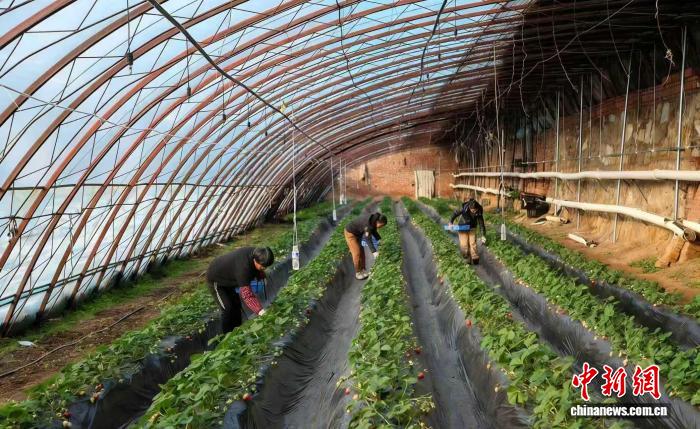
Core Viewpoint - The article highlights the successful implementation of smart agriculture in Gaoping, Shanxi, showcasing the benefits of modern farming techniques such as greenhouse cultivation and advanced technology in crop management [1][5]. Group 1: Strawberry Cultivation - The Jinghe Strawberry Picking Garden in Houjiazhuang Village has started harvesting strawberries, with villagers able to pick around 50 pounds daily, which are quickly sold out due to high demand [1][3]. - The garden employs an order-based picking model to minimize fruit loss and ensure freshness, with strawberries primarily sold to supermarkets and cake shops in the city [3]. - The garden consists of nine greenhouses, producing both winter and summer strawberries, and adheres to a green planting philosophy using organic fertilizers to enhance fruit quality [3][5]. Group 2: Pumpkin Cultivation - The modern agricultural smart technology park in Fushan Village has successfully harvested Beibei pumpkins using vertical cultivation methods, allowing for space efficiency and easier management, with three harvests possible each year [5][6]. - The park utilizes hydroponics and substrate cultivation along with 5G IoT technology to optimize growth conditions by automatically adjusting irrigation, fertilization, lighting, and temperature [5][6]. - The pumpkin cultivation not only generates significant economic benefits but also creates local employment opportunities for villagers [6].

黄沙终披绿 点绿已成金——解码恩格贝生态示范区获评国家“两山”实践创新基地绿色答卷
Zhong Guo Jin Rong Xin Xi Wang· 2026-01-05 08:53
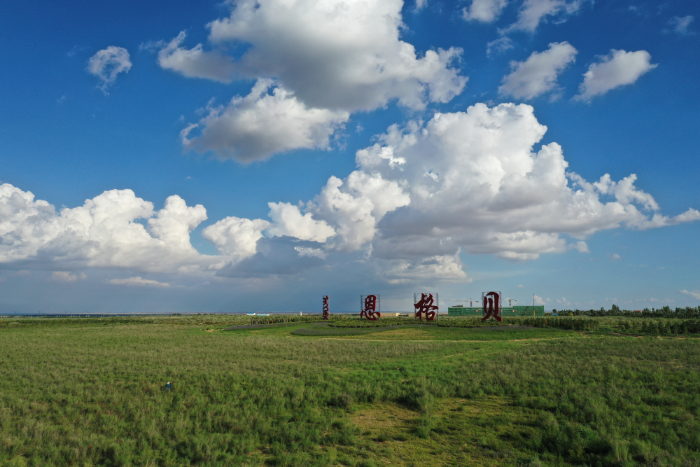
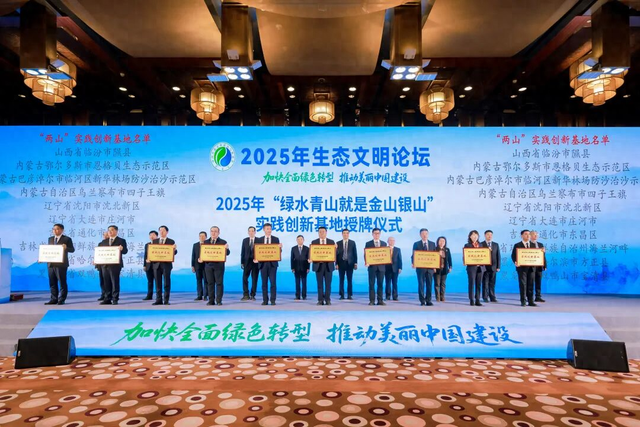
Core Viewpoint - The Engebei Ecological Demonstration Zone in Ordos City, Inner Mongolia, has been awarded the title of "Practice Innovation Base for Green Mountains and Clear Waters are Gold and Silver Mountains" by the Ministry of Ecology and Environment, highlighting its successful transformation from a desert to a lush oasis over the past 40 years and its role in promoting ecological protection and high-quality development in the Yellow River Basin [1][3]. Group 1: Ecological Transformation - Engebei has transformed from a barren land with a vegetation coverage of less than 3% to a thriving ecosystem with a vegetation coverage of 78% and a forest coverage of 41% [4]. - Over 7 million trees have been planted, along with more than 5 million mu of shrubs and 5,000 mu of high-quality forage, significantly enhancing biodiversity from around 20 species to over 600 species [4]. - The area has achieved stable air quality, with PM2.5 annual average concentrations around 20 micrograms per cubic meter and a high level of negative oxygen ions [4]. Group 2: Economic Development - The Engebei Ecological Demonstration Zone has successfully integrated ecological protection with economic development, creating a replicable "Engebei Model" that promotes ecological industrialization and industrial ecology [5]. - The implementation of the "work-for-relief" mechanism has mobilized over 6,000 people for ecological construction, resulting in an average annual income increase of over 20,000 yuan per person [7]. - The area has developed a sand industry system that includes the production of microalgae biological products and the cultivation of specialty crops, contributing to local farmers' income and employment [7]. Group 3: Technological and Policy Support - The establishment of the Engebei Ecological Quality Comprehensive Monitoring Station has provided robust technological support for ecological protection, being recognized as a national monitoring site [4]. - The local government has implemented a coordinated management mechanism to enhance policy support and ensure effective ecological governance [9][10]. - The integration of photovoltaic energy with ecological restoration has led to innovative models that combine clean energy with environmental protection [7]. Group 4: Cultural and Tourism Development - Engebei has developed a four-in-one industry system that includes technology, ecology, research, and health, enhancing its cultural and tourism offerings [8]. - The area has hosted significant events and received over 185,000 visitors, generating tourism revenue of 120 million yuan, showcasing the potential for ecological and cultural tourism integration [8]. Group 5: Future Vision - The local government aims to position Engebei as a global showcase for desertification control and ecological technology innovation, contributing to the ecological security of northern China [12].
粤桂协作奋斗者:山海情深里的振兴足迹
Nan Fang Nong Cun Bao· 2026-01-01 02:05
Core Viewpoint - The article highlights the successful collaboration between Guangdong and Guangxi provinces, showcasing various individuals who have contributed to agricultural and economic development through innovative practices and community engagement [6][12][121]. Group 1: Collaboration and Development - Since the initiation of the new round of East-West collaboration in 2021, numerous support projects have been implemented, demonstrating sustained collaborative momentum [6]. - Key events in 2025, such as product launches and promotional activities in the Guangdong-Hong Kong-Macao Greater Bay Area, have facilitated the exposure of Guangxi's local products [8][10][11]. - The collaboration has enabled local products to reach broader markets, enhancing the visibility and sales of agricultural goods from Guangxi [11][120]. Group 2: Individual Contributions - Wu Zhifu, chairman of Guangxi Sanchun Biotechnology, developed a new product, "drinkable tea oil," after eight years of research, aiming to make healthy oil accessible to the public [19][24][34]. - Wei Wenming transitioned from the construction industry to agriculture, implementing efficient management practices that improved oil yield and sales, demonstrating the integration of construction techniques into agricultural practices [40][46][60]. - Liang Yongxiong established an "order agriculture" model, providing seedlings and technical support to farmers, ensuring stable income and connecting them to the market effectively [67][71][84]. - Lai Yuanyuan transformed the marketing of local kumquats through e-commerce, significantly increasing their market price and expanding their reach to national and international markets [89][95][111][113]. Group 3: Economic Impact - The collaboration has led to the establishment of a sustainable agricultural ecosystem, where local farmers benefit from market access and improved production techniques [82][88]. - The stories of these individuals illustrate how collaboration fosters innovation, market integration, and economic resilience in rural areas [66][117][120].
音乐节带动消费 臻品溯源购好物
Xin Lang Cai Jing· 2026-01-01 00:15
Group 1 - The "Charming Xixiangtang Renewed Consumption Season" cross-year consumption event was launched to enhance consumer potential and promote local brands [1] - The event is organized by the Xixiangtang District People's Government in collaboration with Sichuan Changjiang Group, focusing on key sectors such as retail, dining, automotive, home appliances, and cultural tourism [1] - The event features a variety of activities including online and offline promotions, with special segments like fuel consumption vouchers, New Year goods promotions, family reunion dinners, and vehicle trade-in discounts [1] Group 2 - The "Daxia Premium Traceability Music Festival" is a highlight of the event, aiming to promote local agricultural products through a nationwide traceability system [2] - The music festival combines agriculture, commerce, culture, and tourism, allowing citizens to enjoy music while experiencing local products and shopping discounts [2] - Additional attractions include drone countdowns, fire shows, and various performances such as ice and snow parks, high-altitude dances, and magic shows, providing rich experiences for visitors [2]
恩格贝生态示范区获评2025年“绿水青山就是金山银山”实践创新基地
Nei Meng Gu Ri Bao· 2025-12-30 13:38
Core Insights - The Engebei Ecological Demonstration Zone has been awarded the 2025 "Green Water and Green Mountains are Gold and Silver Mountains" Practical Innovation Base by the Ministry of Ecology and Environment [1][3] Group 1: Ecological Achievements - The Engebei Ecological Demonstration Zone, located in the Kubuqi Desert, covers an area of approximately 200 square kilometers and has transformed from a barren landscape to a green area over the past 40 years [3] - The zone has planted over 7 million trees and more than 50,000 acres of shrubs, increasing vegetation coverage from 3% to 78% and enhancing biodiversity with over 600 species of plants and animals [3] Group 2: Economic Development - The demonstration zone promotes the integration of desert agriculture, renewable energy, and educational tourism, with nearly 20,000 acres dedicated to growing crops like baby pumpkins and generating an annual output value exceeding 50 million yuan from microalgae and desert blueberries [3] - Since 2024, the zone has received 185,000 visitors for educational tourism, generating tourism revenue of 120 million yuan, with the Engebei Desert Science Museum serving as a key platform for international desertification prevention [3] Group 3: Governance and Collaboration - The Engebei Ecological Demonstration Zone has established a collaborative governance structure that includes regional, municipal, and county-level management, effectively addressing the challenges of policy implementation and industrial development [3] - The initiative has attracted nearly 10,000 volunteers from 18 countries to participate in desertification control, exemplifying a multi-stakeholder cooperation model involving government, enterprises, and society [3]
(乡村行·看振兴)“土地银行”托起“田园梦”山西高平聚焦农业社会化服务
Zhong Guo Xin Wen Wang· 2025-12-02 10:37
Core Viewpoint - The article highlights the innovative "land bank" model implemented by Yan Guo Feng Supply and Marketing Co., which focuses on agricultural social services and aims to enhance rural revitalization in Gao Ping, Shanxi Province [2][3]. Group 1: Company Overview - Yan Guo Feng Supply and Marketing Co. is a key player in the comprehensive reform of supply and marketing cooperatives in Gao Ping, serving the "three rural issues" and contributing to rural revitalization [2]. - The company has developed a "land bank" operation model where farmers entrust their land to a professional team for management, allowing them to receive dividends without active involvement [4]. Group 2: Agricultural Development - The "land bank" model began with the leasing of 800 acres in Wang He Nan Village, which has now expanded to 36,000 acres as more farmers have gained trust in the system due to consistent dividend payouts [2]. - The model not only increases income for local villagers but also creates job opportunities for surrounding farmers, promoting local employment [3]. Group 3: Future Plans - The company aims to continue its focus on agriculture and rural areas over the next five years, striving to build a comprehensive, large-scale, and sustainable agricultural service system [3].