
分布式能源

Search documents
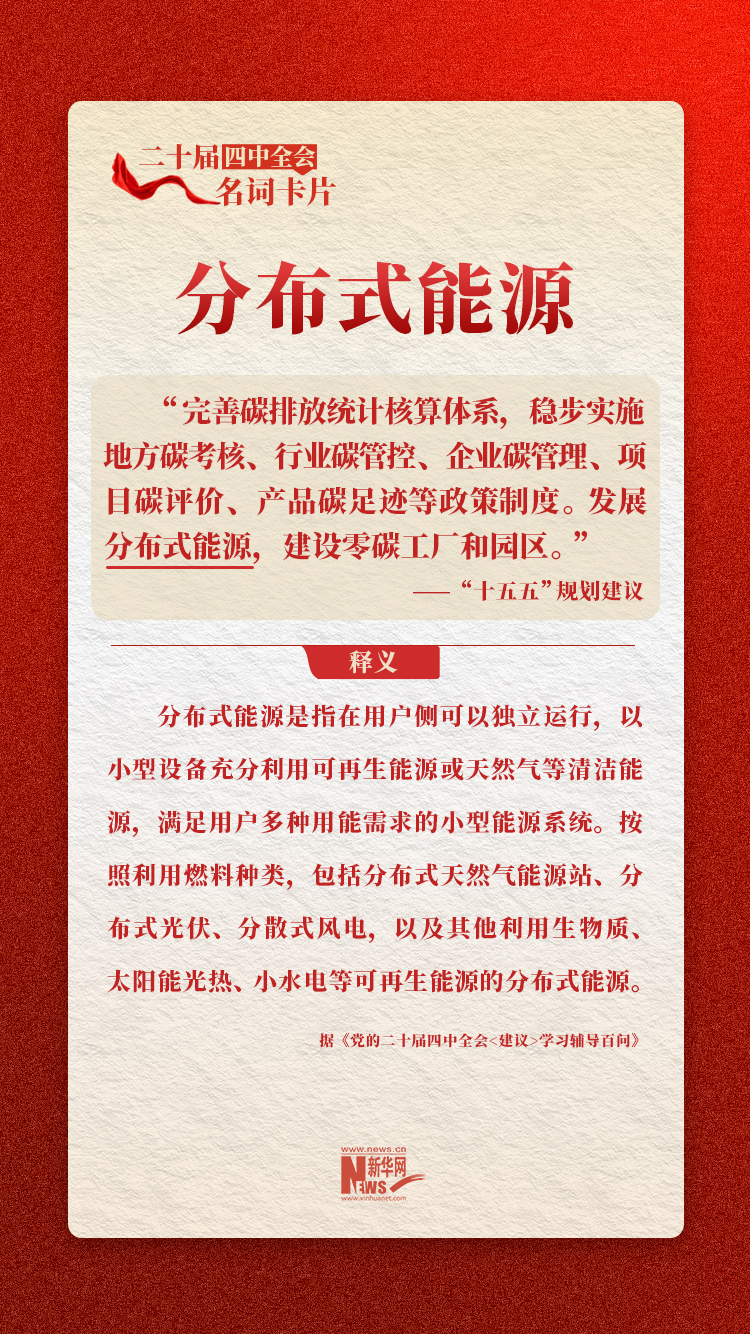
二十届四中全会名词卡片:分布式能源
Xin Hua Wang· 2025-11-24 14:37
Core Viewpoint - The development of distributed energy is crucial for optimizing energy structure, promoting energy conservation and emission reduction, and advancing sustainable economic and social development [7][8]. Group 1: Importance of Distributed Energy - Distributed energy is an essential component of the new energy system, significantly contributing to carbon peak and carbon neutrality goals by utilizing renewable energy more effectively than centralized systems [7]. - It meets diverse energy needs of the public through flexible operation modes, especially benefiting remote areas and high-demand facilities like hospitals and banks [7]. - The development of distributed energy enhances energy security by increasing clean energy supply and reducing reliance on large energy systems [7]. Group 2: Economic and Industrial Impact - Distributed energy projects have lower investment thresholds compared to large-scale energy projects, encouraging social investment and supporting local economic development [8]. - It can drive the development of high-energy-consuming industries and promote coordinated energy and industrial layout [8]. Group 3: Development Focus Areas - Key areas for development include constructing zero-carbon parks, promoting zero-carbon rural areas, integrating photovoltaic systems into buildings, and enhancing the synergy between clean energy and transportation [9][10]. - The establishment of distributed natural gas energy stations is also emphasized for peak shaving and backup purposes [10]. Group 4: Implementation Considerations - It is important to avoid blind expansion of scale, ensure proper integration of supporting infrastructure, and prevent unfair competition in the distributed energy market [11].

分布式能源迎来系统性变革,零碳园区时代的关键引擎
Zhong Guo Neng Yuan Wang· 2025-11-18 02:06
Core Insights - The Chinese energy system is undergoing profound and systematic changes, driven by the new energy revolution and industrial restructuring, with a shift from centralized supply to diversified, distributed, and digitalized energy systems [1][2] - The rise of distributed energy is reshaping the entire terminal energy usage, moving from a supplementary role to becoming a key engine in the zero-carbon park era [1][3] Structural Changes in Industry Demand - There is a structural change in industrial demand from "optional" to "essential," as traditional energy supply models struggle to meet the comprehensive requirements for greening, digitization, low cost, and high stability [2][3] - Localized flexibility, autonomous regulation, and enhanced digital monitoring capabilities are becoming essential, which are inherent advantages of distributed energy systems [2] Parks as the Main Battlefield for Energy Transition - Over 60% of industrial enterprises in China are concentrated in various industrial parks, making these parks the main battleground for energy transition [3] - Distributed energy can be directly integrated into park load sides, providing multiple benefits such as reduced energy costs, increased green electricity proportion, and enhanced supply stability [3] Market Reforms Creating New Value Spaces - Recent market reforms have opened unprecedented value spaces for distributed energy, shifting from subsidy-driven to value-driven models [4] - Distributed energy assets can now participate in the market and generate diverse revenue streams, redefining the boundaries of energy systems [4] Transition from Local Innovation to Systemic Leap - Distributed energy has transitioned from "local innovation" to "systemic leap," becoming a core component of new power system flexibility, resilience, and stability [5] - This transformation signifies a comprehensive change across systems, mechanisms, policies, markets, enterprises, and cities [5] Future Competitiveness of Parks - The competitiveness of future parks will depend not only on industrial chains and cost factors but also on the greenness, cost levels, and digital capabilities of their energy systems [6] - Distributed energy serves as the foundational technology for building these capabilities, highlighting the need for a comprehensive understanding of policies, markets, and technologies [6] Upcoming Distributed Energy Conference - The 21st Distributed Energy Conference (DEC2025) will be held on December 4, 2025, in Beijing, focusing on the theme of "Developing Distributed Energy · Building a Zero-Carbon Future" [7] - The conference will address key issues such as systematic paths for zero-carbon park construction, deep coupling of distributed energy with electricity market reforms, and collaborative logic of various technologies [7]

能辉科技(301046.SZ)拟与AI算力运营商浙江立算共设合资公司
智通财经网· 2025-11-02 09:08
Core Viewpoint - The company is optimistic about the long-term development of "computing power + AI" and aims to seize opportunities in "computing power + new energy" through strategic transformation [1] Investment and Partnership - The company has jointly invested RMB 10 million with Zhejiang Lisan Technology Co., Ltd. to establish a holding subsidiary, Zhejiang Nenghui Lisan Technology Co., Ltd., with the company holding a 51% stake [1] - The investment structure includes a registered capital of RMB 5.1 million contributed by the company [1] Strategic Focus - Zhejiang Lisan is an AI computing power operator specializing in integrated services in the "AIDC + MEC" field, leveraging its core team's expertise in industrial digitalization and AI cloud computing [1] - The company's strengths in "distributed energy + energy storage" solutions can meet the energy needs of small and medium-sized AIDC and MEC applications [1] Synergy and Competitive Advantage - The establishment of the joint venture is expected to leverage both parties' technological and resource advantages in the new energy and computing power sectors, promoting collaborative development [1] - This move aligns with the company's strategic transformation needs and is anticipated to enhance its core competitiveness positively [1]

183家待审, 北交所IPO排长龙
21世纪经济报道· 2025-07-28 12:40
Core Viewpoint - The article discusses the significant increase in IPO applications at the Beijing Stock Exchange (BSE), leading to a potential backlog in the approval process, while highlighting the slower pace of IPO approvals and the improved quality of companies applying for listings [2][10][12]. Group 1: IPO Application Trends - As of July 27, 2023, there are 305 companies in the IPO review process across A-shares, with 183 of them (60%) at the BSE [2]. - In June 2023 alone, the BSE received 97 IPO applications, setting a new monthly record, surpassing the previous record of 92 applications in June 2022 [2]. - Despite the high number of applications, only 6 companies have successfully listed on the BSE this year, compared to 14 on the Shanghai Main Board and 22 on the ChiNext [2]. Group 2: Approval Process and Timelines - The average waiting time for IPO approvals at the BSE has increased, with median times from application to listing rising from 218 days in 2022 to 306 days in 2024 [4]. - For the 115 IPO applications received in 2025, the average time from application to first inquiry is 26 days, longer than the 15 days for the ChiNext and 21 days for the Sci-Tech Innovation Board [5]. - The longest waiting time for a company currently in the review process is over three and a half years for Yangde Environmental Energy, which has faced additional scrutiny due to investigations into its controlling shareholder [7][8]. Group 3: Company Quality Improvement - The quality of companies applying for IPOs at the BSE has improved, with 113 companies currently under review having an average revenue of 738 million yuan and an average net profit of 95.06 million yuan [11]. - 36 companies, or 31.86%, have reported net profits exceeding 100 million yuan, indicating a trend towards higher-quality applicants [11]. - The increase in company quality is attributed to better performance of new three-board companies and enhanced support from investment banks in selecting and preparing companies for listing [12].

CCER方法学将“上新”,分布式能源等项目有望入围
2 1 Shi Ji Jing Ji Bao Dao· 2025-04-02 08:10
Group 1 - The core viewpoint of the articles revolves around the recent developments in CCER (China Certified Emission Reduction) methodologies, highlighting the need for expansion and adaptation to promote low-carbon projects and enhance market supply [1][3][4] - The Ministry of Ecology and Environment has publicly solicited suggestions for new CCER methodologies, indicating a proactive approach to broaden the scope of emission reduction projects [1][2] - The current CCER price remains high, with a trading average of 100.10 yuan per ton, driven by supply-demand imbalances and increased market participation from diverse stakeholders [2][3] Group 2 - There is a consensus among industry experts that the carbon quota prices and CCER prices are expected to rise steadily in the future, with CCER supply anticipated to increase in an orderly manner [3][4] - The new CCER methodologies are expected to enrich the voluntary carbon market and increase the market supply of CCERs, focusing on sectors with emission reduction potential such as distributed energy, storage, transportation, and construction [3][5] - The application for CCER methodologies is restricted to certain industries, excluding those with mandatory emission reduction obligations, which may limit participation from some sectors [3][5][6] Group 3 - The development of new CCER methodologies is seen as a potential source of commercial opportunities, particularly for projects that meet additionality requirements and align with national industrial policies [4][5] - Experts suggest that companies should ensure safety, conduct additionality assessments, and consider international best practices when developing CCER methodologies [7][8] - The complexity of technical validation for methodologies may pose challenges, and companies are encouraged to seek guidance from experienced institutions or experts to navigate these difficulties [8]