化学研究

Search documents
准确率达91%,Reac-Discovery融合数学建模/机器学习/自动化实验,解决自驱动实验室系统通用性难题
3 6 Ke· 2025-10-28 09:35
Core Insights - The article discusses the introduction of the Reac-Discovery semi-autonomous digital platform by the research team from IMDEA Materials Institute in Spain, which addresses the lack of a unified model for geometric parameters in reactor design, enhancing the speed and precision of catalytic reactor development [1][2]. Group 1: Platform Overview - Reac-Discovery integrates design, manufacturing, and optimization modules in a closed-loop system, allowing for parallel evaluation of multiple reactors while incorporating real-time NMR monitoring and machine learning for process optimization [2][6]. - The platform utilizes periodic open pore structures (POCs) to improve performance, reaction efficiency, and material consumption, while enhancing system versatility [2][6]. Group 2: Research Highlights - The integration of mathematical modeling, machine learning, and automated experimental systems allows for a comprehensive approach to catalytic reactor design, from geometric design to experimental optimization [3]. - The platform incorporates topological parameters into the optimization space, overcoming the limitations of traditional methods that focus on single variables like temperature and flow rate [3]. - A neural network-based performance prediction model has been developed, significantly improving experimental efficiency and resource utilization through rapid evaluation iterations [3]. Group 3: Data Generation and Modules - The research team generated an internal multidimensional dataset during experiments, covering geometric structures, printability, and reaction performance, without relying on external datasets [3][4]. - The Reac-Discovery platform consists of three functional modules: Reac-Gen for geometric modeling, Reac-Fab for manufacturing, and Reac-Eval for experimental validation and optimization [6][12]. Group 4: Experimental Validation - The platform's effectiveness was validated through two typical multiphase catalytic reactions: the hydrogenation of phenylacetone and CO₂ cycloaddition, demonstrating robustness, stability, and repeatability in self-optimization and topological reconstruction [15][20]. - In the phenylacetone hydrogenation experiments, the platform successfully identified optimal process conditions from over one million parameter combinations, significantly reducing experimental exploration costs [16][20]. Group 5: Industry Implications - The rapid integration of artificial intelligence in flow chemistry and reactor engineering is establishing self-driving laboratories as a new paradigm in chemical research, enhancing precision, efficiency, and scalability in reaction processes [22][23]. - The potential for self-driving laboratories to replace certain research roles while creating new opportunities highlights the transformative impact of automated systems in scientific exploration [23].


唠科|为化学创造“新空间”的金属有机框架——2025年诺贝尔化学奖成果解读
Xin Hua She· 2025-10-09 07:57
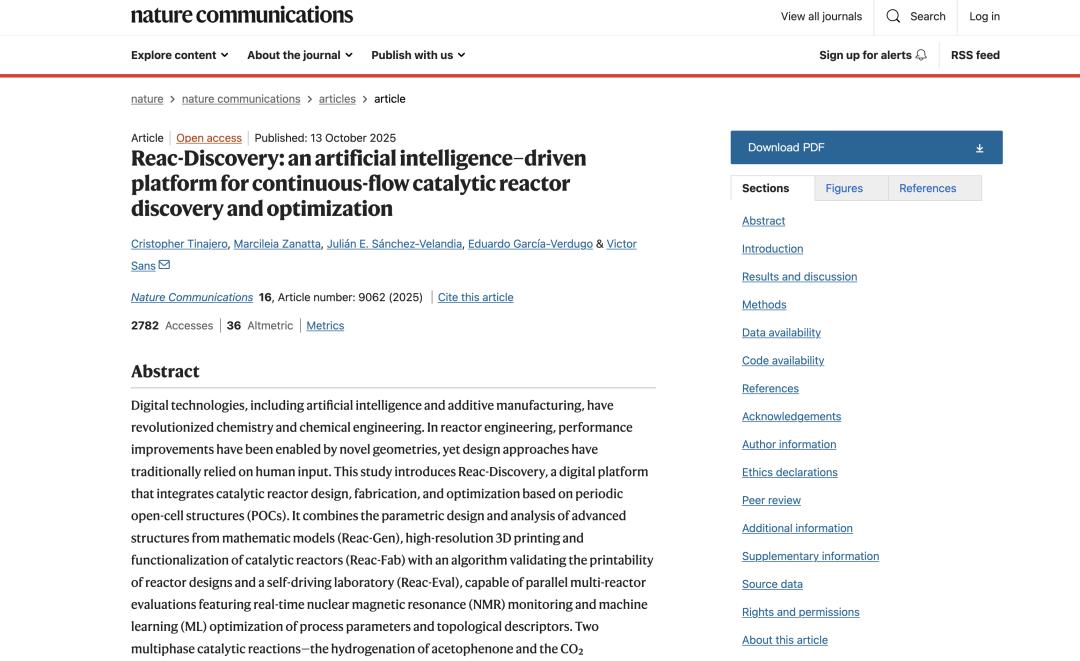
Group 1 - The core achievement in the field of chemistry is the successful design of metal-organic frameworks (MOFs) with large cavities, enabling the ordered combination of metal ions and organic molecules, which provides new methods for synthesizing compounds with controllable spaces [3] - The discovery is seen as a significant advancement that could help address major challenges related to resources, energy, and environmental issues [3] - The work of the award-winning researchers has led to the development of various flexible MOFs that can change shape when filled or emptied of different substances, showcasing their potential applications [1][3] Group 2 - The stable material MDF-5, constructed by Yaghi in 1999, can hold an area equivalent to a football pitch with just a couple of grams, highlighting the efficiency and utility of MOFs [1] - The ongoing research in this area is focused on leveraging the properties of MOFs to find solutions for pressing global challenges [3]
祝贺!中国化学家荣获2025年度“引文桂冠奖”
Zhong Guo Hua Gong Bao· 2025-09-25 09:16
Core Insights - Clarivate announced the 2025 Citation Laureates, recognizing 22 distinguished scholars from 8 countries, including Zhang Tao from China for his pioneering work in single-atom catalysis, making him the first scientist from mainland China to receive this award [1][3]. Group 1: Award Significance - The Citation Laureates award is based on a comprehensive evaluation of multidimensional data, including citation performance, originality and breakthrough of research, identification of core contributors, and peer recognition [5]. - Since its establishment in 2002, 83 Citation Laureates have eventually won Nobel Prizes, highlighting the award's significance in identifying impactful researchers [5]. Group 2: Zhang Tao's Contributions - Zhang Tao and his team proposed the concept of single-atom catalysis in 2011, advancing heterogeneous catalysis research to an atomic precision scale, laying the scientific foundation for precise control in catalytic processes [3]. - The systematic research conducted by Zhang's team not only advanced the field of catalysis but also had a broad impact on various interdisciplinary fields such as energy chemistry, materials science, and biomedicine [3]. - Single-atom catalysis has influenced both academia and industrial applications, with new processes achieving industrial-scale implementation, supporting green chemistry and carbon neutrality goals [3].


中国科学院发表最新Nature论文
生物世界· 2025-09-24 00:00
Core Viewpoint - The research conducted by the team led by Shen Qilong from the Shanghai Institute of Organic Chemistry decodes the redox behavior of copper in Ullmann-type coupling reactions, providing new insights into the catalytic mechanisms involved [2][3][5]. Group 1 - The study reveals the reaction process between well-defined Cu(I) complexes and electron-deficient aryl iodides, leading to the formation of separable Cu(III)-aryl complexes, which subsequently undergo reductive elimination to form C(sp²)−CF₃ bonds [4]. - The research demonstrates that the copper species undergo an oxidation-reduction cycle involving Cu(I)/Cu(III)/Cu(II)/Cu(III)/Cu(I), highlighting the complexity of copper's behavior in these reactions [4][5]. - The team successfully interrupted the catalytic cycle using temperature control and captured the reactivity of copper species through various spectroscopic methods, allowing for an in-depth mechanistic analysis [4][5].

科学与健康|让氢气“更听话”!科学家在光催化氢气异裂领域取得新进展
Xin Hua She· 2025-09-05 15:32
Core Viewpoint - Recent advancements in photocatalytic hydrogen cleavage have been achieved by a research team from the Dalian Institute of Chemical Physics, Chinese Academy of Sciences, in collaboration with the University of Trieste, Italy, enabling hydrogen cleavage at room temperature [1][2]. Group 1: Research Significance - Hydrogen is a key element in transforming nitrogen into fertilizers and converting carbon dioxide into gasoline, but its cleavage is challenging due to the strong bond between hydrogen atoms [1]. - The research focuses on hydrogen activation, a crucial step in hydrogenation reactions, which accounts for about 25% of chemical processes [1]. Group 2: Methodology and Findings - The team developed a photocatalytic strategy that utilizes spatially adjacent positive and negative charge centers to achieve efficient hydrogen cleavage at room temperature [2]. - By using gold/titanium dioxide as a model catalyst, the team demonstrated that ultraviolet light can induce electron migration, enhancing hydrogen cleavage efficiency [2]. Group 3: Practical Applications - The hydrogen species generated can completely convert inert carbon dioxide into ethane at room temperature, with the catalyst maintaining stable operation for over 1500 hours [3]. - This process significantly reduces energy consumption and carbon dioxide emissions, contributing to the optimization of carbon resource utilization and offering a new model for the upgrading and transformation of modern coal chemical industries [3].
模拟早期地球条件,助力揭示生命起源,化学家首次实现RNA与氨基酸连接
Ke Ji Ri Bao· 2025-09-02 06:33
Core Insights - Researchers at University College London (UCL) have achieved a significant breakthrough by successfully connecting RNA with amino acids under simulated early Earth conditions, addressing a long-standing question regarding the synthesis of proteins, which are essential for life [1][2] Group 1: Research Findings - The study demonstrates that amino acids, the building blocks of proteins, can chemically link with RNA, which serves as the "instruction manual" for protein synthesis [1] - The reaction was conducted in a neutral aqueous environment, showing spontaneity and selectivity, suggesting that similar processes could have occurred in primordial Earth environments such as ponds or lakes approximately 4 billion years ago [1][2] Group 2: Methodology - The research team utilized a novel approach by introducing thioester as an activated intermediate, which is a high-energy compound that plays a crucial role in various biochemical processes [2] - They employed a sulfur-containing compound, pantetheine, to generate thioesters, further supporting its potential role in the origin of life under early Earth conditions [2] Group 3: Theoretical Implications - The findings bridge two prevailing theories of life's origin: the "RNA world" hypothesis, which posits that self-replicating RNA is fundamental, and the "thioester world" hypothesis, which suggests that thioesters were the primary energy source for early life [2] - This research provides a new unified framework for understanding the origins of life, indicating that the reaction pathways identified could have naturally occurred on early Earth [2]
清华大学发表最新Science论文
生物世界· 2025-08-29 08:10
Core Viewpoint - The article discusses a significant research breakthrough by a team led by Professor Wang Quanming from Tsinghua University, focusing on the structural evolution of silver nanoclusters, specifically icosahedral forms, which are essential for understanding their unique properties [1]. Group 1 - The research published in the journal Science details the synthesis of two giant silver icosahedral nanoclusters containing 213 and 429 silver atoms, serving as model systems for studying the formation process of icosahedra [1][3]. - X-ray diffraction studies indicate that these nanoclusters possess a multilayer structure, supporting a gradual evolution process from nuclei to seeds [1][3]. - The emergence of surface plasmon resonance confirms the metallic characteristics of these silver nanoclusters, highlighting their potential applications in various fields [1][3]. Group 2 - The study successfully utilized ligand engineering and kinetic control to synthesize the two types of giant silver nanoclusters, Ag213 and Ag429, with specific ligands that enhance their stability and properties [3]. - Ag429 is noted as the largest reported silver nanocluster containing 260 valence electrons, showcasing the advancements in nanomaterial synthesis [3]. - The research reveals the atomic-level precise structure of the silver icosahedra, elucidating the layered evolution mechanism from nuclei to seeds [3].

诺奖得主费林加:让年轻人认识科学之美
Huan Qiu Wang Zi Xun· 2025-07-20 12:05
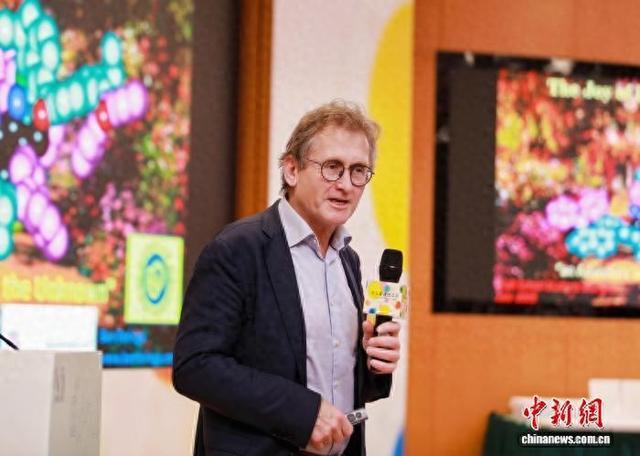
Group 1 - The event "Interdisciplinary Crossing: Space Station for Innovation Principals" was held at the Shanghai Natural History Museum, featuring Nobel Laureate Bernard Feringa as a keynote speaker [1][3] - Feringa emphasized the importance of creativity and imagination among young people to drive innovation and societal development [3][5] - His lecture titled "The Joy of Discovery" highlighted advancements in molecular motors and switches, pointing out the vast possibilities offered by synthetic chemistry in various fields such as pharmaceuticals and displays [3][5] Group 2 - Feringa introduced his new book "Fascinating Chemistry: Molecules in Life," which aims to make complex chemical knowledge accessible and engaging through everyday phenomena [5] - The event was seen as a platform to inspire children's scientific dreams, as noted by Ni Minjing, the director of the Shanghai Science and Technology Museum [5]
新型有机金属化合物挑战“十八电子规则”
Ke Ji Ri Bao· 2025-07-08 23:48
Core Insights - The research team has synthesized the first stable ferrocene derivative with 20 electrons, breaking the long-standing "18-electron rule" in organometallic chemistry, which could lead to new possibilities in chemical research and the development of novel catalysts [1][2] Group 1: Breakthrough in Organometallic Chemistry - The "18-electron rule" has been a fundamental principle in the stability of transition metal complexes, indicating that a system is most stable when the sum of the metal center's electron count and the ligand's contribution equals 18 [1] - The newly synthesized ferrocene derivative features a unique bonding between iron and nitrogen atoms, allowing for the presence of two "excess" electrons, which endows the molecule with unconventional redox properties [1] Group 2: Potential Applications - The formation of iron-nitrogen bonds in the new compound provides a richer and more diverse pathway for electron transfer, suggesting potential applications in energy storage and chemical synthesis [2] - Existing ferrocene derivatives are already utilized in various fields, including solar cells, pharmaceuticals, and medical devices, and this breakthrough may not only optimize current applications but also lead to entirely new materials and uses [2]
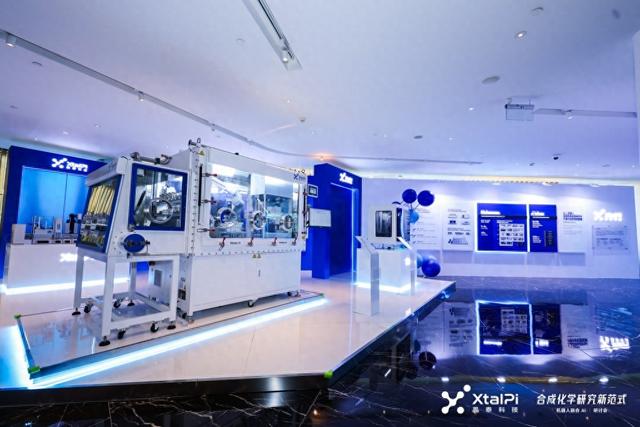
合成化学研究新范式:当AI“大脑”遇上机器人“双手”
Xin Lang Cai Jing· 2025-07-01 04:09
Core Insights - The integration of artificial intelligence (AI) and automation in synthetic chemistry is seen as the future, enhancing efficiency and reducing reliance on traditional trial-and-error methods [1][3][4] - The vastness of chemical space presents significant challenges for chemists, with the theoretical number of small molecules that can be synthesized reaching 10^60, far exceeding the number of stars in the universe [2][3] - Current methodologies in synthetic chemistry include "top-down" experimental approaches and "bottom-up" theoretical approaches, both facing efficiency and universality challenges, necessitating new tools [3][4] Group 1: Challenges in Synthetic Chemistry - Synthetic chemistry is fundamental for creating materials essential for agriculture, health, and industry, but faces increasing demands for new materials and performance [1][2] - The "top-down" approach relies on chemists' intuition and experience, while the "bottom-up" approach uses computational methods, both of which have limitations in efficiency and applicability [2][3] Group 2: Automation and AI in Research - Automation in laboratories, such as high-throughput technology, has been adopted to enhance efficiency in catalyst development, significantly reducing the time required for experiments [4][5] - The use of automated platforms allows researchers to design and test thousands of catalyst formulations quickly, leading to the discovery of new materials that would take much longer through traditional methods [5][6] Group 3: Future Directions - AI's role in chemistry is currently as a supportive tool rather than a replacement for human intuition, with significant potential for development in interpreting experimental results [6][8] - The concept of "self-driving laboratories" is emerging, where automated systems can analyze results and autonomously design subsequent experiments, creating a rapid iterative cycle of design, execution, and learning [9][10]