无人机培训

Search documents
关注无人机乱象|“包取证”“包就业”? 无人机培训小心上当
Xin Hua Wang· 2025-12-18 03:27
Core Viewpoint - The rapid growth of drone training programs has led to a surge in unqualified institutions making false promises, resulting in many individuals being deceived [1][4][8]. Group 1: Industry Growth and Trends - The implementation of the "Interim Regulations on the Management of Unmanned Aerial Vehicles" on January 1, 2024, establishes the CAAC drone license as a prerequisite for industry entry and necessary for airspace applications [2]. - As of December 15, 2023, the number of drone training institutions in China has increased to over 3,900, up from just over 1,000 in August 2024, with more than 15,500 related companies registered this year compared to 4,200 last year [3]. Group 2: Issues with Training Institutions - Many new training institutions lack proper qualifications, with some operating without the required "Civil Unmanned Aerial Vehicle Pilot Training Institution Qualification Certificate" [4][8]. - Complaints from students highlight issues such as inadequate practical training, with some reporting that promised real machine operation hours were significantly lower than advertised [5][8]. - The low entry barrier for starting a training institution has led to a proliferation of unqualified providers, often using misleading marketing tactics to attract students [4][9]. Group 3: Financial Concerns and Student Experiences - Students often face unexpected costs beyond initial fees, including charges for accommodation, additional training, and various hidden fees, leading to total expenses exceeding initial estimates [7][8]. - Many institutions advertise "job placement" guarantees, but students frequently find these promises unfulfilled, receiving only temporary or low-quality job offers [8][9]. Group 4: Regulatory and Industry Recommendations - Experts suggest that regulatory bodies need to enhance oversight to eliminate non-compliant institutions and improve market order [9][10]. - Training institutions are encouraged to adopt a segmented fee structure to reduce upfront financial risks for students and to provide practical skills training alongside certification [9][10].
新华视点·关注无人机乱象|“包取证”“包就业”? 无人机培训小心上当
Xin Hua She· 2025-12-18 02:40
Core Insights - The drone training industry is experiencing rapid growth, with a significant increase in the number of training institutions and registered companies, raising concerns about the quality and legitimacy of these programs [1][2][5] Group 1: Industry Growth and Trends - The implementation of the "Interim Regulations on the Management of Unmanned Aerial Vehicle Flight" on January 1, 2024, establishes a CAAC drone license as a prerequisite for industry entry [1] - As of December 15, 2023, the number of drone training institutions in China has surged to over 3,900, up from just over 1,000 in August 2024, and the number of related companies registered this year exceeds 15,500, compared to over 4,200 in the same period last year [1][2] - The demand for drone pilots is substantial, with a projected talent gap of over one million positions in the industry by the end of 2024, as indicated by the Civil Aviation Administration of China [5] Group 2: Issues and Concerns - Many training institutions lack proper qualifications, with reports of unlicensed operations and false promises regarding job placements and training quality [2][4] - Complaints from students highlight issues such as poor course quality, difficulty in obtaining refunds, and misleading advertising practices [4][5] - The low entry barriers for establishing training institutions have led to a proliferation of unqualified providers, often resulting in inadequate training and high additional costs for students [2][3] Group 3: Recommendations and Regulatory Needs - Industry experts emphasize the need for stricter regulatory oversight to eliminate non-compliant institutions and improve market order [5][6] - It is recommended that students verify the qualifications of training institutions through official platforms before enrolling, to avoid falling victim to scams [6]
产业风口下的寒假选择:无人机执照成济南学子的新标配
Qi Lu Wan Bao· 2025-12-11 07:55
Core Insights - The increasing interest among university students in obtaining the CAAC drone pilot license during the winter break is driven by the desire to enhance employability and competitive edge in job markets, as well as parents viewing it as a practical skill for future opportunities [1][2] Industry Trends - The low-altitude economy has been designated as a strategic emerging industry by the government, with cities like Jinan accelerating the development of key low-altitude projects, leading to a high demand for specialized professionals such as drone operation engineers and low-altitude data analysts [2] - The CAAC license is recognized as a valuable credential in this emerging field, providing a convenient entry point for students looking to enter the industry [2] Educational Offerings - Jinan Zhihang Yunyin Drone Training Base has launched specialized winter training programs tailored to meet the needs of students and parents, focusing on efficient learning and skill acquisition [3] - The training program includes a comprehensive curriculum designed to cover theoretical knowledge, simulation, and practical operation within a short timeframe [3] - The facility is equipped with high-end equipment and offers a comfortable learning environment, including heated outdoor training areas to ensure effective learning during winter [4] Additional Benefits - Free accommodation is provided for students attending the winter training, allowing them to focus entirely on skill enhancement without the distraction of commuting [5] - The training program incorporates a six-dimensional teaching approach, covering various aspects of drone operation, which enhances students' employability and adaptability in the job market [6]
八方航聚未来飞手无人机飞行学院双基地启航,打造研学新范式
Nan Fang Du Shi Bao· 2025-11-15 03:50
Core Insights - The opening of the "Future Pilot Drone Flight Academy" in Shunde marks an innovative practice in the Guangdong-Hong Kong-Macao Greater Bay Area's low-altitude economy, combining traditional culture with modern technology [1][3] - The academy aims to cultivate professional drone pilots while also focusing on the enlightenment of future technological talents [1][3] Group 1: Innovative Educational Model - The academy introduces a unique "intangible cultural heritage + drone + cultural tourism" research and study model, showcasing the ancient Xiangyun silk through dynamic aerial performances [3] - The project is integrated into the Shenzhen Aviation Industry Association's youth aviation school system, emphasizing the importance of understanding how technology empowers traditional culture and modern agriculture [3] Group 2: Dual Base Operation - The academy employs a "dual base" operational model to provide comprehensive training from novice to expert levels [4] - Shunbo Creative Park Base: Focuses on certification, particularly the CAAC license training, providing a pathway for students to enter the profession [4] - Xiangyun Silk Industry Park Base: Emphasizes skills and applications, offering practical courses in drone maintenance, aerial photography, agricultural protection, inspection, and facade cleaning [4] Group 3: Talent Development Goals - The academy plans to train 5,000 composite talents holding both CAAC licenses and specialized skill certificates within three years, aligning its curriculum with industry demands [4][5] - The curriculum includes a three-dimensional training model of "theory + simulation + practical operation" for CAAC license courses and simulates real work scenarios for industry application courses [5] - The academy is collaborating with universities and enterprises to establish R&D centers, exploring drone applications in logistics and inspections, and aims to apply for "low-altitude + agricultural demonstration zones" to support high-quality development in the regional low-altitude economy [5]


从“包拿证”到“一场空”,无人机培训藏了哪些“坑”
Qi Lu Wan Bao Wang· 2025-08-07 11:20
Core Viewpoint - The drone training industry in Jinan is experiencing rapid expansion, but it is plagued by unreliable institutions and unfulfilled promises, leading to significant challenges for aspiring pilots [1][2][3] Group 1: Industry Challenges - Many training institutions make false promises of job placement and certification, leading to disillusionment among students who leave their jobs to pursue training [2][3] - The lack of standardized training hours and fee structures creates confusion and potential exploitation of students [6][7] - Numerous small, unqualified institutions are entering the market, often lacking experienced instructors and proper accreditation [8][10] Group 2: Market Dynamics - The drone training market is characterized by a high turnover of small private institutions, while larger, established organizations are fewer in number [7][9] - The industry is witnessing a surge in the number of registered training institutions, with 299 across the province and 65 in Jinan alone [9] - Some institutions are resorting to additional fees for services like mock exams and facility usage, further burdening students financially [3] Group 3: Regulatory Environment - The upcoming implementation of the "Interim Regulations on the Management of Unmanned Aerial Vehicle Flight" in January 2024 is expected to raise entry barriers and standardize the industry [13][14] - Experts predict that the industry will undergo a transformation from chaotic growth to a more regulated environment, with stricter oversight of training institutions [13][14] - There is a call for improved integration of education and industry practices, emphasizing real-world training scenarios to better prepare students [13]

七批110个新职业,折射经济发展新动能 “新饭碗”里有多少料?
He Nan Ri Bao· 2025-07-28 23:21
Core Viewpoint - The emergence of new professions driven by the new economy reflects the changing dynamics of economic development and offers new employment opportunities for the younger generation [11][16]. Group 1: New Professions and Economic Trends - The Ministry of Human Resources and Social Security, along with other departments, has released the seventh batch of new professions, including 17 new occupations and 42 new job types, highlighting the shift in economic development dynamics [11][16]. - The introduction of new professions such as coffee processing workers, elderly service workers, and drone flight planners indicates a response to the evolving job market and the increasing demand for diverse skills [16][17]. - The recognition of these new professions is expected to attract talent and support the development of emerging industries, creating a symbiotic relationship between employment and industrial growth [17][21]. Group 2: Individual Experiences in New Professions - Coffee processing worker Liu Shifei emphasizes the importance of mastering the entire coffee bean processing workflow to ensure quality and consistency in the final product [12][13]. - Elderly service worker Li Hankan focuses on providing personalized health management for seniors, reflecting the growing demand for specialized care in the aging population [14][16]. - Drone training instructor Xu Fusen highlights the increasing interest in drone operation and the need for skilled trainers in this rapidly expanding industry [15][18]. Group 3: Challenges and Opportunities - The coffee industry is projected to grow significantly, with the market size expected to reach 369.3 billion yuan by 2025, indicating a promising future for coffee processing workers [20]. - Despite the potential of new professions, challenges such as market competition and public perception remain, as seen in the experiences of individuals in the drone and two-dimensional culture sectors [19][20]. - The government is actively promoting vocational training programs to enhance the skills of young people, particularly in fields like big data, artificial intelligence, and smart manufacturing, to better align with industry needs [22].

“毕业即失业”,无人机培训该降虚火了
Xin Jing Bao· 2025-07-05 11:06
Core Insights - The drone training industry is experiencing rapid growth, with over 2,500 training institutions established by June 2023, and a significant increase in enrollment numbers, indicating a new industry trend [1] - The demand for drone operators is driven by a projected talent gap of 1 million positions in China, as low-altitude economy initiatives are included in government work reports for 2024 [1] - Many young individuals are attracted to the industry due to the promise of high salaries and quick certification, leading to a surge in training programs [1] Industry Challenges - Despite the growth in training institutions, many graduates face unemployment, raising questions about the actual job prospects and the quality of training provided [2] - Some training programs misrepresent their employment guarantees, with legal analyses revealing discrepancies between promises and actual job placement support [2] - The quality of training varies significantly, with some institutions prioritizing profit over comprehensive education, potentially leading to safety risks in the field [2] Market Dynamics - The increasing automation and intelligence of drone operations may outpace the current training offerings, leading to a mismatch between skills taught and market needs [3] - A singular focus on flying skills may not suffice in a competitive job market, as specialized knowledge in fields like agriculture or electrical inspections is also required [3] - The rapid growth in job postings for drone-related positions is overshadowed by an even faster increase in job seekers, suggesting a potential talent bubble in the industry [3] Recommendations for Improvement - Regulatory bodies should address misleading employment claims and establish a quality assessment system for training programs to ensure they meet industry standards [3][4] - Training programs should integrate practical applications relevant to various sectors, fostering the development of versatile professionals capable of solving complex problems [4] - Aligning vocational training with industry needs is essential for transforming the burgeoning low-altitude economy into tangible employment opportunities [4]
失序的无人机“飞手”培训市场亟待监管
Zhong Guo Qing Nian Bao· 2025-07-03 00:00
Core Insights - The demand for drone operators, referred to as "fly hands," is surging due to the booming low-altitude economy, with a reported talent gap of 1 million positions in this field [1] - The proliferation of training institutions, exceeding 2,600 registered entities, has led to concerns over the quality of education and misleading employment promises [1][2] - Young individuals view the drone operator certification as a gateway to diverse career opportunities, but there is a need for caution against exploitative practices by some training organizations [2] Industry Overview - The rapid growth of the drone industry has created a significant talent shortage, prompting many to pursue drone operator licenses as a means to enter the market [1] - The emergence of training institutions has been met with mixed reviews, as some institutions prioritize profit over quality education, leading to a disparity in training standards [2] - The Ministry of Human Resources and Social Security has proposed the addition of new occupations, including "drone swarm flight planner," indicating the expanding job landscape within the low-altitude economy [3] Market Dynamics - The competitive landscape for drone training is characterized by aggressive marketing tactics, with some institutions offering misleading employment guarantees [1][2] - There is a call for regulatory oversight to ensure training standards are met and to combat false advertising and unethical practices within the training sector [2] - Aspiring drone operators are encouraged to critically assess training programs and focus on developing core skills necessary for success in a competitive job market [2]
能飞航空集团直营校区全国加速布局,赋能低空人才新发展
Jin Tou Wang· 2025-06-03 02:41
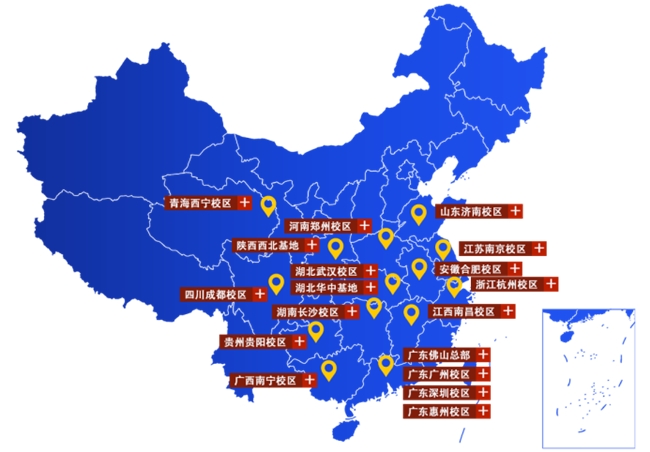
Core Viewpoint - Nengfei Aviation Group is rapidly expanding its training bases and campuses across the country, driven by a forward-looking strategic layout and excellent educational philosophy, thereby injecting strong momentum into the burgeoning low-altitude economy [1][4]. Group 1: National Expansion - By the end of 2024, Nengfei has established direct branches and talent bases in 18 major provincial capitals nationwide, aiming to recruit and train students across the country [1]. - This expansion reflects Nengfei's robust strength and deep insight into the drone training industry, as well as its firm confidence in meeting the urgent demand for professional drone talent in various regions [1]. Group 2: Training Environment - Nengfei emphasizes that a high-quality training environment is crucial for cultivating high-quality drone talent, continuously enhancing the hardware facilities and software services at its training bases and campuses [3]. - Each branch is equipped with modern office areas and multimedia classrooms, providing a rich learning environment with comprehensive teaching facilities and resources [3]. - The flying training sites feature vast and favorable airspace conditions, accommodating various types of drone training needs, from routine operations of multi-rotor drones to complex task simulations for vertical take-off fixed-wing drones [3]. Group 3: Accommodation and Dining - Nengfei offers a variety of accommodation options for students, ranging from comfortable apartment-style dormitories to cozy single rooms, catering to different student needs [3]. - The dining facilities are highlighted for their cleanliness and brightness, with a diverse and nutritionally balanced menu available for students [3]. Group 4: Future Outlook and Employment Services - Nengfei's national layout is a key step in innovation and development within the drone training sector, expanding its growth space and injecting strong momentum into the low-altitude economy [4]. - The company plans to continue driving innovation, optimizing its national layout, and leading new trends in drone training, thereby continuously revitalizing the low-altitude economy [4]. - Nengfei has established a deep cooperation with over 5,000 companies through a dedicated employment service team, creating the largest drone talent employment platform in the country [4].
无人机考证热背后:掏空年轻人钱包,养肥培训机构
商业洞察· 2025-05-24 09:24
Core Viewpoint - The article discusses the booming drone certification market in China, highlighting the rapid growth of drone-related businesses and the increasing interest in drone pilot certifications, while also revealing the hidden pitfalls and challenges faced by aspiring drone pilots [2][5][10]. Group 1: Market Growth - The drone certification market is experiencing a surge, with some training institutions reporting up to 100,000 yuan in registration fees within a week [4][6]. - As of now, there are approximately 31,000 drone-related companies in China, with around 530 new registrations in 2025 alone [5]. - The popularity of drone certifications is reflected in the increasing number of inquiries at traditional driving schools, which are now offering drone pilot training [6]. Group 2: Employment Challenges - Many individuals who obtain drone certifications find it difficult to secure employment, with reports of high costs and limited job opportunities [3][9]. - Common issues include false employment promises, inadequate course content, and low recognition of certain certifications [10][11]. - Aspiring drone pilots often face a harsh reality where the actual job market does not align with the high salary expectations promoted by training institutions [15][16]. Group 3: Financial Implications - The costs associated with obtaining drone certifications can be significant, with some packages priced as high as 15,000 yuan, leading to financial strain for many [7][12]. - Many drone pilots are required to invest in expensive equipment, with entry-level industrial drones costing between 50,000 to 80,000 yuan, and specialized drones ranging from 50,000 to 200,000 yuan [15]. - The actual income for drone pilots often falls short of expectations, with many reporting monthly earnings around 6,000 yuan after expenses [15]. Group 4: Skills and Experience Requirements - The drone industry demands a combination of technical skills and practical experience, with many employers seeking candidates with at least three years of hands-on experience [16][18]. - Certifications alone are insufficient; candidates must also possess specialized knowledge relevant to their field, such as agricultural technology or emergency medical logistics [16][17]. - The article emphasizes that without a deep understanding of the job requirements and industry standards, many certified pilots risk becoming "also-rans" in the competitive job market [18].