
软件和信息技术服务业等

Search documents
5月国民经济运行稳中有进
Bei Jing Shang Bao· 2025-06-16 10:35
Economic Overview - The overall economic operation in May remained stable, with some indicators continuing to improve, showcasing strong resilience and vitality in China's economy [1] - The economic operation is expected to maintain a steady and progressive development trend in the first half of the year [1] Production and Demand - In May, industrial production saw rapid growth, supported by various policies, with the industrial added value for large-scale enterprises increasing by 5.8% year-on-year and 0.61% month-on-month [3] - The manufacturing sector experienced a 6.2% year-on-year growth, while the equipment manufacturing and high-tech manufacturing sectors grew by 9.0% and 8.6%, respectively, outpacing the overall industrial growth [3] - The service sector's production index increased by 6.2% year-on-year, with significant contributions from information transmission, software, and IT services, which grew by 11.2% [3][4] Consumer Market - The total retail sales of consumer goods in May rose by 6.4% year-on-year, accelerating by 1.3 percentage points compared to the previous month [4] - The "old for new" consumption policy significantly boosted retail sales in various categories, including home appliances and communication equipment, with growth rates of 53.0% and 33.0%, respectively [4] New Growth Drivers - The new growth drivers, including high-end manufacturing, digital economy, and new energy industries, are continuously strengthening, promoting industrial transformation and stable economic operation [5] - High-tech manufacturing added value increased by 8.6% year-on-year, with the production of new energy vehicles and solar batteries growing by 31.7% and 27.8%, respectively [5][6] Innovation and Green Transition - Continuous innovation investment and technological advancements are driving industrial innovation, with industrial robot production increasing by 32% and smart vehicle equipment manufacturing rising by 26.8% [6] - The green low-carbon transition is ongoing, with significant growth in clean energy generation, including wind and solar power, which increased by 11.1% and 18.3%, respectively [6] Trade Performance - In May, the total import and export value reached 38,098 billion yuan, with exports growing by 6.3% and imports declining by 2.1% [7] - Trade with ASEAN, the EU, and Belt and Road countries showed growth, with respective increases of 9.1%, 2.9%, and 4.2% in the first five months [8] - Private foreign trade enterprises demonstrated strong market adaptability, with their export growth at 8% and import growth at 4.9%, outperforming overall foreign trade [8]


融资的中小企业们,都把钱花在哪里?
Sou Hu Cai Jing· 2025-06-06 11:02
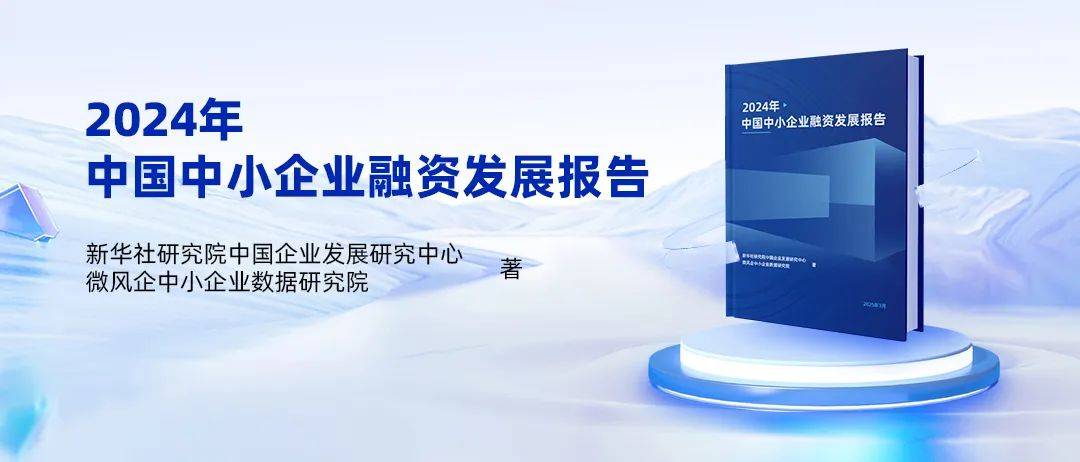
Core Insights - The core issue for small and medium-sized enterprises (SMEs) is how to allocate their financing effectively, impacting their future survival and development [1][3]. Financing and Fund Allocation - According to the "2024 China SME Financing Development Report," SMEs primarily use funds for daily operations, with operational expenses accounting for approximately 93% of total funding [4][6]. - SMEs face high operational cost pressures due to their smaller scale and limited financial reserves, leading to a "short, small, frequent, and urgent" financing demand [6][9]. - The report indicates that SMEs prioritize maintaining daily operations over expanding production, market development, and product innovation, which limits their competitiveness [9][12]. Industry-Specific Insights - Different industries exhibit varying focuses on "developmental investments." For instance, the wholesale and retail sectors have the highest operational expense ratios, with wholesale reaching 97.26%, a year-on-year increase of 0.44% [13][14]. - In terms of R&D spending, the software and information technology services sector leads with an 8.73% allocation, despite a year-on-year decline of 10.55% [15]. - The non-metallic mineral products industry has the highest marketing expenditure ratio at 5.72%, showing a significant year-on-year increase of 54.59% [15]. Challenges and Recommendations - SMEs face significant survival pressure in a competitive market, primarily allocating funds to daily operations, which restricts resources for R&D and marketing, hindering their ability to innovate and grow [17]. - To ensure survival while investing in future growth areas like technology innovation and market expansion, SMEs need to adopt new operational strategies, explore digital solutions, and diversify financing channels [17].
国家统计局:4月份国民经济顶住压力稳定增长
news flash· 2025-05-19 02:03
Group 1: Industrial Production - In April, the industrial added value of large-scale enterprises increased by 6.1% year-on-year and 0.22% month-on-month [1] - The manufacturing sector saw a growth of 6.6%, while the equipment manufacturing and high-tech manufacturing sectors grew by 9.8% and 10.0% respectively, outpacing the overall industrial growth by 3.7 and 3.9 percentage points [1] - The production of 3D printing equipment, industrial robots, and new energy vehicles increased by 60.7%, 51.5%, and 38.9% year-on-year [1] Group 2: Service Sector - In April, the service sector production index grew by 6.0% year-on-year, with significant contributions from information transmission, software, and IT services, which increased by 10.4% [2] - The business activity index for the service sector was at 50.1%, indicating stable growth, while the business activity expectation index was at 56.4%, suggesting positive future outlook [2] - The revenue of large-scale service enterprises increased by 7.0% year-on-year in the first quarter [2] Group 3: Consumer Market - In April, the total retail sales of consumer goods reached 37,174 billion yuan, growing by 5.1% year-on-year [2] - The online retail sales amounted to 47,419 billion yuan, with a year-on-year growth of 7.7%, and physical goods online retail sales accounted for 24.3% of total retail sales [2] - The sales of household appliances and cultural office supplies saw significant increases of 38.8% and 33.5% respectively due to the "trade-in" policy [2] Group 4: Fixed Asset Investment - From January to April, fixed asset investment (excluding rural households) reached 147,024 billion yuan, with a year-on-year growth of 4.0% [3] - Manufacturing investment grew by 8.8%, while real estate development investment declined by 10.3% [3] - Investment in high-tech industries such as information services and computer manufacturing saw substantial increases of 40.6% and 28.9% respectively [3]