
新能源产业

Search documents
南华期货镍、不锈钢2026二季度展望:政策托底,随势而动
Nan Hua Qi Huo· 2026-03-31 06:26
1. Report Industry Investment Rating - Not provided in the document 2. Core Views of the Report - In Q1 2026, the global nickel and stainless - steel markets showed a co - existence of an upward - shifted valuation center and wide - range fluctuations. The core contradiction in the industry chain was the all - around tightening of Indonesian nickel ore policies, leading to a supply structural reversal and damaged production stability [1]. - In Q2 2026, the biggest potential variable in the market is the actual approval progress of Indonesian nickel ore quotas and marginal policy adjustments. The nickel policy in Indonesia still has certain bullish support for the bottom center in Q2. The cost bottom is significantly lifted due to the proposed export tariff and windfall tax on nickel. In Q2, Indonesia and the Philippines will gradually emerge from the rainy season, and the downstream production will increase. The shortage of sulfur in the hydrometallurgical process may have an impact as early as Q2. Macro - level factors such as the development of the US - Iran war and the release of US core data need to be continuously monitored [2]. - In Q2 2026, it is relatively difficult for stainless steel to have a significant independent market. The key lies in the de - stocking during the traditional consumption peak season and the transmission of macro - policies. If the terminal procurement orders are effectively released and drive the high - level social inventory into a continuous de - stocking channel, the spot price may rise moderately under cost support. Overall, the stainless - steel market in Q2 will be range - bound between 13,000 and 14,500 yuan/ton, following the guidance of Shanghai nickel and macro - level factors [2][4]. - It is expected that the core fluctuation range of the main Shanghai nickel contract in Q2 will be between 130,000 and 150,000 yuan/ton [4]. 3. Summary by Relevant Catalogs 3.1 Q1 Market Review - In Q1, the market price was strongly pushed up by a series of strong logics. From late November last year to late January, the market pricing was unilaterally dominated by the "strong expectation" of a significant contraction in Indonesian supply. The expected RKAB quota in 2026 was 250 - 260 million tons, about 30% lower than that in 2025. With the Shanghai nickel price hitting a low of 110,000 yuan, the market price soared. LME nickel broke through the resistance level of $18,785/ton, and the main Shanghai nickel contract reached a high of 152,000 yuan/ton [10]. - From February to the end of the quarter, the sharp rise driven by sentiment and supply - side contraction expectations encountered strong resistance from the real fundamentals. During the traditional off - season around the Chinese Spring Festival, the mid - and downstream had low acceptance of raw materials, and the refined nickel inventory increased due to sufficient profits. The large amount of visible inventory and the damaged downstream transmission mechanism led to a stalemate in the spot market. After the festival, as the news of expanding production by allowing some compliant mining enterprises to increase quotas came out, the bullish sentiment cooled down, and the market fluctuated around 136,000 yuan with strong policy support at the bottom [10][11]. 3.2 Industrial Chain Performance 3.2.1 Nickel Ore - In Q1, the premium of the nickel ore end was the core driver for the cost increase of the entire nickel industry chain. The expectation of quota reduction had a profound impact, and the panic about quota issuance exceeded the actual impact on production. The price of Indonesian nickel ore continued to rise, and some Indonesian projects imported from the Philippines, pushing up the raw material cost. The market was in a situation of weak supply and demand due to the rainy season in the Philippines and the pre - holiday stocking in the Chinese market. The strategic intention of Indonesia's quota reduction was to control the quantity and raise the price to strengthen its global pricing power [15][16]. - In Q2, the nickel ore production and port shipments in the Philippines are expected to increase seasonally. The nickel ore inventory at Chinese ports is likely to stabilize and rebound. However, the mining cost in Indonesia and the Philippines has increased, and the scarcity of high - grade nickel ore has intensified. The approval of RKAB in Indonesia is expected to speed up, and the panic in the ore market may be alleviated. The nickel ore price will remain high, forming a solid cost base for the industry chain [17]. 3.2.2 Ferronickel - In Q1, the ferronickel market had a significant cost - driven upward trend. The strong expectation of reduced ore supply was quickly transmitted to the ferronickel end, pushing up the price. Affected by the tightened supply of nickel ore from Indonesia and the Philippines, the cash cost of ferronickel smelting enterprises increased sharply, and the production in China and Indonesia declined. The import volume of Indonesian ferronickel decreased, and traders continued to raise prices. At the same time, the substitution economy of scrap stainless steel increased [22]. - In Q2, the ferronickel market will enter a complex stage of two - way supply - demand game. The supply is expected to increase marginally as the nickel ore shipments from the Philippines recover seasonally and the quota approval in Indonesia speeds up. However, the demand is uncertain as the downstream stainless - steel market has difficulty supporting high raw material prices, and the cost advantage of scrap stainless steel over ferronickel is prominent. The ferronickel price is strongly supported by high - cost raw materials, but it is difficult to break through further [23]. 3.2.3 Nickel Sulfate and Intermediates - In Q1, the nickel sulfate and related intermediate product market was frequently disturbed, but the industry maintained a production - based - on - sales operation mode. The supply was restricted by the tightened nickel ore quota in Indonesia and a safety accident in the wet - smelting park. The market supply of intermediate products was extremely tight, and the discount coefficient of MHP to LME nickel remained high. On the demand side, some domestic battery and ternary precursor enterprises rushed to export, driving up the price of battery - grade nickel sulfate [32]. - In Q2, the supply of nickel sulfate and intermediates faces uncertainties due to the potential impact of the Middle - East geopolitical situation on sulfur imports. The demand may decline as the impulse demand from pre - export rush fades. The price transmission from the upstream cost increase to the terminal may be limited. The long - term impact of the trade agreement between Indonesia and the US on Chinese enterprises in Indonesia needs to be continuously monitored [32][34][35]. 3.2.4 Stainless Steel - In Q1, the stainless - steel market had limited independent trends, and the price followed the fluctuations of Shanghai nickel and Indonesian policy disturbances. The price increase driven by cost was not effectively supported by terminal demand. Due to the Spring Festival and the traditional off - season, the price transmission to the terminal was difficult, and the inventory accumulated. Only after the mid - March resumption of work in the mid - and downstream did the inventory start to decline [40]. - In Q2, the key is the de - stocking rate during the "Golden March and Silver April" consumption peak season and the acceptance of the current price by the downstream. If the terminal demand is effectively stimulated, the spot price may rise. However, the stainless - steel export still faces trade barriers. The price bottom is firm, but whether it can stabilize above 14,200 yuan depends on the demand [40]. 3.3 Q2 Balance Explanation - On the supply side, the core logic in Q2 is the bottleneck in the RKAB quota issuance in Indonesia and the multiple uncertainties in raw material supply. The new digital quota approval system in Indonesia has led to a long approval time, and the actual approved nickel ore volume is far lower than expected. The impact of the US - Iran conflict on sulfur imports may cause production cuts or shutdowns in the Indonesian wet - smelting industry as early as April [52][53]. - On the demand side, Q2 is the traditional peak consumption season for the stainless - steel industry. The recovery of terminal demand is the core. The demand in the real - estate sector is still weak, but the home - appliance sector is recovering as expected. Steel mills may rush to replenish inventory if the price is appropriate. In the new - energy field, the sales of new - energy vehicles usually pick up after the Tomb - Sweeping Festival, and the price of nickel sulfate is supported by seasonal demand and strong cost [54].

地缘冲突催生新能源产业机遇-欧洲-中东户储双轮驱动-海风出海加速
2026-03-30 05:15
Summary of Key Points from Conference Call Records Industry Overview - The conference call discusses the renewable energy sector, particularly focusing on home energy storage, offshore wind, solid-state transformers, humanoid robots, lithium battery materials, and photovoltaic technologies across Europe and the Middle East. Key Insights and Arguments Home Energy Storage - In the Middle East, home energy storage penetration is expected to rise from less than 1.5% to 15%-20% due to geopolitical conflicts driving demand for energy security [1] - In Europe, the economic viability of home energy storage is enhanced when natural gas prices exceed €50-60/MWh, leading to a payback period of less than 6 years [1][4] - Current penetration in Europe is approximately 6%, indicating significant growth potential [4] Offshore Wind Energy - Offshore wind energy is crucial for energy security in Europe, with the EU recently announcing a €5 billion subsidy to stimulate installations [1][10] - China's "14th Five-Year Plan" aims for 100GW of offshore wind capacity, doubling the previous target [1][10] Solid-State Transformers (SST) - SSTs are gaining policy support and are expected to become the ultimate solution for data centers by 2026 [1][6] - Delta's SST products have already been adopted in a Meituan project, with further developments expected from companies like Sifang and Weidi Technology [1][6] Humanoid Robots - The humanoid robot industry is approaching a production inflection point, with Tesla's G3 expected to begin mass production in summer 2026 [1][7] - UBTECH has secured nearly 10,000 orders for humanoid robots, indicating strong market demand [1][7] Lithium Battery Materials - The lithium battery sector is entering a production peak in Q2, with lithium hexafluorophosphate supply being particularly tight [1][8] - Copper foil and separator production cycles exceed two years, but price elasticity is expected to improve with increased production [1][8] Photovoltaic Industry - The demand for BC solar cells in Europe is surging, driven by geopolitical tensions and energy security needs [2][8] - Tesla's 100GW ground station project requires equipment delivery by Q3 2026, which will boost related supply chains [2][8] Additional Important Insights - The investment strategy in the renewable energy sector focuses on segments benefiting from geopolitical tensions and those with relatively low valuations and safety margins [3] - The differences in market drivers between Europe and the Middle East for home energy storage highlight the unique challenges and opportunities in each region [4] - The economic advantages of balcony storage systems in Europe are notable, particularly their ease of installation and lower initial costs [5] - The U.S. transformer market is experiencing a significant supply gap, projected to reach 14,000 units by 2025, driven by data center construction and grid upgrades [1][10] This summary encapsulates the critical points discussed in the conference call, providing a comprehensive overview of the current state and future prospects of the renewable energy sector.
锂盐行业加速回暖
中国能源报· 2026-03-29 00:38
Core Viewpoint - The lithium salt industry is showing signs of recovery as several companies report improved performance or return to profitability, driven by a rebound in lithium prices and a shift in supply-demand dynamics towards a tighter balance [3][4]. Performance Recovery - In 2025, major players like Tianqi Lithium and Ganfeng Lithium are expected to turn losses into profits, with Tianqi Lithium projecting a net profit of 3.69 billion to 5.53 billion yuan, recovering from a loss of 79.05 billion yuan the previous year [5]. - Ganfeng Lithium anticipates a net profit of 11 billion to 16.5 billion yuan, marking a year-on-year increase of 153.04% to 179.56%, compared to a loss of 20.74 billion yuan in the prior year [5]. - Other companies such as Salt Lake Co., Zangge Mining, and Yahua Group also expect profit growth, with Salt Lake Co. projecting a net profit of 8.29 billion to 8.89 billion yuan, a year-on-year increase of 77.78% to 90.65% [6]. Price Recovery and Market Dynamics - The recovery in product prices, particularly for lithium carbonate and potassium chloride, is cited as a key factor driving performance improvements [8]. - The price of lithium carbonate experienced a "V-shaped" rebound, rising from below 60,000 yuan per ton to a peak of 134,500 yuan per ton by December [8]. - Companies with stable orders from top-tier clients and effective cost control measures have seen significant sales growth, contributing to their improved financial performance [8]. Importance of Quality Resource Reserves - There is an increasing emphasis on securing high-quality lithium resources, as companies with integrated operations and access to core resources are better positioned for competitive advantage [9]. - The expansion of smelting capacity is outpacing the growth of mining capacity, making the control of premium lithium resources crucial for future market positioning [9]. Transition to Quality Upgrade Phase - The lithium industry is entering a phase focused on quality upgrades, with companies adjusting strategies to enhance cost control and technological innovation [11][12]. - Analysts predict that lithium prices will continue to rise, supported by strong battery demand and declining inventory levels in the supply chain [11]. - Companies are encouraged to shift their competitive focus from scale and cost to technological innovation and iterative capabilities to achieve sustainable development [12].




中国海油2025年日赚3.3亿元
第一财经· 2026-03-27 15:52
Core Viewpoint - In 2025, CNOOC reported a revenue of 398.22 billion yuan, a year-on-year decrease of 5.3%, and a net profit attributable to shareholders of 122.08 billion yuan, down 11.5% compared to the previous year, reflecting the impact of geopolitical factors and market supply-demand dynamics on international oil prices [3][4]. Financial Performance - The average Brent crude oil price in 2025 was approximately $68.2 per barrel, a decline of 14.6% year-on-year, leading to a daily profit of about 330 million yuan for CNOOC [3]. - CNOOC achieved record high reserves and production in 2025, with net proven reserves of 7.77 billion barrels of oil equivalent, an increase of 6.9% year-on-year, and total oil and gas production of 777 million barrels of oil equivalent, up 7% year-on-year [3]. - The company maintained a leading cost advantage in the industry, with an average cost of $27.9 per barrel of oil equivalent, a decrease of 2.2% year-on-year [4]. Strategic Initiatives - CNOOC has been actively developing offshore wind power and other renewable energy sectors, having acquired over 11 million kilowatts of renewable resources by the end of 2025, with more than 1.08 million kilowatts already in operation [5]. - The company plans to progressively develop the acquired resources and aims to strengthen its position in the offshore wind power sector [5].

理性审视中东冲突外溢风险,以战略定力筑牢中国能源安全屏障|宏观经济
清华金融评论· 2026-03-26 09:14
Core Viewpoint - The article discusses the impact of geopolitical tensions, particularly the Israel-Iran conflict, on global energy markets and China's economic resilience in the face of external shocks [3][4][5][12]. Group 1: Global Energy Market Dynamics - The current global oil market is characterized by an oversupply, with the U.S. transitioning from a major oil importer to a key exporter, which fundamentally alters the dynamics compared to the oil crises of the 1970s [4][8]. - Despite rising oil prices due to geopolitical tensions, the likelihood of a systemic global economic crisis is deemed low, as the U.S. has gained significant trade surplus and profit from energy exports [8][9]. - The geopolitical conflict has led to increased oil prices, but the underlying supply-demand balance remains favorable, with other oil-producing countries capable of compensating for any short-term supply disruptions [9][10]. Group 2: China's Economic Resilience - China, as the world's largest oil importer, faces input inflation pressures but possesses strong strategic resilience and a robust energy security strategy, including a significant oil reserve capacity that can mitigate supply chain disruptions for up to nine months [12][13]. - The diversification of energy imports and a large domestic market provide China with a degree of pricing power in the global energy market, allowing it to quickly adapt to supply chain challenges [13]. - China's ongoing investments in renewable energy technologies position it favorably in the global energy landscape, aligning with climate goals and enhancing energy security [14][17]. Group 3: Strategic Policy Recommendations - The article emphasizes the need for China to maintain strategic focus and adapt its macroeconomic policies to navigate the evolving geopolitical landscape, ensuring stable economic growth amid external uncertainties [16][17]. - Strengthening domestic demand and developing self-sufficient supply chains are critical for enhancing the economy's resilience against external shocks [17].
碳酸锂:关注底部支撑
Guo Tai Jun An Qi Huo· 2026-03-24 02:14
1. Report Industry Investment Rating - No information provided in the given content 2. Core View of the Report - The report focuses on lithium carbonate, suggesting to pay attention to its bottom support, with a trend strength of 0, indicating a neutral view [1][5] 3. Summary by Relevant Catalogs 3.1 Fundamental Tracking - **Contract Data**: The 2605 contract's closing price was 149,040, with a change of 5,180 compared to T - 1; the 2607 contract's closing price was 148,300, with a change of 5,200 compared to T - 1. The trading volume and open interest of the two contracts also showed different changes [3] - **Basis Data**: The basis between the spot and 2605 contract was -2,540, and the basis between 2605 and 2607 contracts was 740. The difference between electric carbon and industrial carbon was 3,000 [3] - **Raw Material Data**: The price of lithium spodumene concentrate (6%, CIF China) was 2,028, and the price of lithium mica (2.0% - 2.5%) was 4,400 [3] - **Lithium Salt Data**: The price of battery - grade lithium carbonate was 146,500, and the price of industrial - grade lithium carbonate was 143,500 [3] - **Consumer Product Data**: The price of ternary material 523 (polycrystalline/consumer - type) was 189,250, and the price of six - fluorophosphate lithium was 108,000 [3] 3.2 Macro and Industry News - Rongjie Co., Ltd. established a wholly - owned subsidiary, Lanzhou Rongjie Material Technology Co., Ltd., in Lanzhou, Gansu Province, to engage in lithium - ion battery anode material business. The company plans to build a project with an annual output of 50,000 tons of high - performance lithium - ion battery anode materials, with a total fixed - asset investment of about 1.1 billion yuan [4][5] - Tianjin Lishen Battery Co., Ltd. and Lishen Battery (Suzhou) Co., Ltd. applied for a patent named "Solid Electrolyte and Its Preparation Method and Solid - State Battery" in December 2025. The technical solution can significantly improve the H₂S suppression efficiency of the sulfide solid - state electrolyte, with high ionic conductivity retention, excellent battery performance, and strong process compatibility [5]
宁德时代泉州第二个项目落户晋江
鑫椤储能· 2026-03-24 01:42
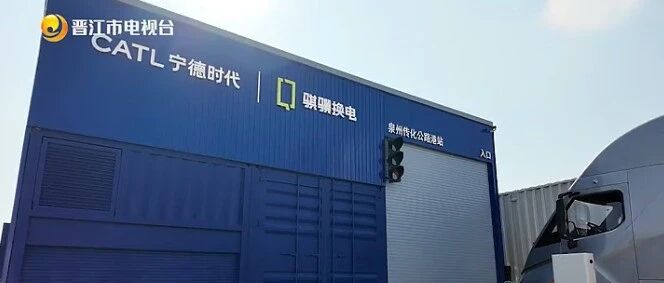
Core Viewpoint - The article highlights the development of a battery swapping station by CATL in Jinjiang, which is expected to be operational by April 2026, enhancing the efficiency of electric heavy-duty trucks in the region [1][3]. Group 1: Project Overview - The CATL battery swapping station project utilizes existing parking space at the Quanzhou Transfar Highway Port and is set to begin construction by the end of 2025, with a projected completion date in April 2026 [3]. - Once operational, the station will support nearly 200 electric heavy-duty trucks daily, with a single battery swap taking only 5 minutes, allowing for a range of 400 kilometers post-swap [5]. Group 2: Infrastructure and Logistics - The Quanzhou Transfar Highway Port covers an area of 260 acres with a total building area of 86,500 square meters, hosting over 200 logistics companies and handling approximately 36,000 tons of goods daily, making it a crucial logistics hub in the region [7]. Group 3: Strategic Partnerships and Developments - On February 2, 2023, the Quanzhou municipal government signed a cooperation agreement with CATL to establish a new energy battery production base, focusing on R&D and manufacturing, which aims to enhance the local new energy industry ecosystem [9]. - The project will leverage advanced green manufacturing technologies to create a smart, zero-carbon modern factory, promoting high-quality development in the new energy sector [9]. Group 4: Future Projects and Investments - The Quanzhou Chip Valley New Energy Industrial Park is set to undergo significant development, with a total construction area of approximately 1,741,519 square meters and an estimated investment of 950 million yuan [11]. - The CATL project in Quanzhou is expected to drive the expansion of traditional industries into new sectors such as electronic information, low-altitude economy, and robotics, accelerating the signing and implementation of new projects [14].

赣锋锂业2026年3月20日涨停分析:业绩扭亏+低成本融资+子公司发展
Xin Lang Cai Jing· 2026-03-20 05:25
Core Viewpoint - Ganfeng Lithium (SZ002460) reached its daily limit on March 20, 2026, with a price of 69.78 yuan, reflecting a 9.99% increase, driven by improved financial performance and strategic developments [1][4]. Financial Performance - The company turned a profit in 2025, reporting a net profit of 1.1 to 1.65 billion yuan, a significant recovery from a loss of 2.07 billion yuan in the previous year, indicating improved operational conditions and boosting market confidence in future growth [2][5]. - Ganfeng Lithium successfully issued bonds with interest rates between 2.19% and 2.33%, showcasing its ability to secure low-cost financing, which supports future development [2][5]. Subsidiary Development - Subsidiaries, including Ganfeng Lithium Battery, showed significant revenue and profit growth, contributing positively to the overall performance of the company [2][5]. - The company sold part of its PLS stock for 709 million yuan, optimizing its asset structure while maintaining strategic partnerships. Additionally, transferring part of its stake in Shenzhen Yichu to strategic investors raised 660 million yuan, aiding in strategic planning and capital reserves [2][5]. Industry Context - Lithium, as a crucial raw material for the new energy sector, is expected to see sustained demand growth due to the ongoing development of the new energy industry [2][5]. - The lithium battery sector has recently attracted significant market attention, with notable inflows of capital on March 20, leading to multiple stocks in the sector hitting their daily limits, creating a sector-wide momentum [2][5]. Technical Analysis - The MACD indicator for Ganfeng Lithium formed a bullish crossover in mid-March, suggesting a positive short-term trend [2][5]. - Monitoring data indicated substantial net buying from major funds on March 20, reflecting active participation from institutional investors, which contributed to the stock hitting its daily limit [2][5].
中东局势依旧是全球资金关注的焦点,关注能源方向投资机会
AVIC Securities· 2026-03-16 02:36
Market Overview - The Middle East situation remains a focal point for global capital, with ongoing tensions between the US and Iran affecting market expectations regarding the Strait of Hormuz and asset price volatility[6] - A-shares have shown significantly lower volatility since the outbreak of the Middle East conflict, indicating effective policy measures by decision-makers to stabilize the capital market[6] Economic Implications - The US midterm elections are approaching, with inflation being a core issue; Trump's net support rate on inflation is the lowest among various topics at -25.9%[7][12] - High oil prices are expected to persist due to low shipping volumes and ongoing attacks on vessels in the Strait of Hormuz, which may hinder US negotiation advantages[11] Currency Trends - The ongoing conflict may lead to increased competition for control over the Strait, reflecting a decline in US dominance over Middle Eastern oil, which could weaken the dollar's position in the long term[11] - The Chinese yuan is anticipated to appreciate in the long term, benefiting from the dollar's long-term downtrend[11] Investment Opportunities - The report suggests focusing on sectors such as photovoltaics, wind energy, hydrogen, nuclear fusion, and energy storage, as China's energy structure is expected to accelerate its transition towards new energy sources[20][23] - Historical data indicates a strong correlation between rising oil prices and domestic inflation, with significant impacts on commodity prices[16][20] Risk Factors - The report highlights potential risks associated with ongoing geopolitical tensions and their impact on market stability and economic performance[23]
沪镍期货周报-20260311
Guo Jin Qi Huo· 2026-03-11 02:27
Report Overview - Report Type: Weekly Report - Report Title: Shanghai Nickel Futures Weekly Report - Date of Completion: March 6, 2026 - Researcher: Du Yu (Qualification Number: F3075043; Investment Consulting Certificate Number: Z0017815) [1] 1. Investment Rating - No investment rating is provided in the report. 2. Core View - This week, the nickel futures price fell below the 140,000 RMB integer mark, reaching a low of 134,480 RMB. Although there was a slight rebound on Friday, the overall trend is still downward. There are both positive and negative factors in the market. Positive factors include the supply gap of Indonesian nickel ore, the growth of new energy industry demand, and a slight decline in LME inventory. Negative factors include macro - economic uncertainty, capital outflows from the futures market, and a weakening price technical pattern. The market needs to continue to track the dynamics of Indonesian export policies and changes in market liquidity expectations. [5][6] 3. Summary by Directory 3.1 Futures Market - This week, the nickel futures (NI.SHF) on the Shanghai Futures Exchange showed a trend of oscillating downward and then rebounding slightly. The price center of gravity moved down compared with last week. The highest price was 141,550 RMB/ton on Monday, and the lowest price was 134,480 RMB/ton on Wednesday. The weekly fluctuation range reached 7,070 RMB/ton, indicating cautious market sentiment. [2] 3.2 Spot Market Analysis - This week, the spot price of imported nickel (1) in China showed an oscillating downward trend, falling from $20,023.24/ton on March 2 to $19,862.90/ton on March 6, a cumulative decline of 0.80%. Notably, the decline in the spot price was less than that of the futures price (3.11%), indicating that the spot market was relatively resistant to decline. [3] 3.3 Market Dynamics - On March 2, the conflict between the US and Iran escalated. The US and Israel launched military strikes against Iran, causing traffic disruptions in the Strait of Hormuz and increasing global risk - aversion sentiment. Although nickel is not a directly affected variety, the decline in market risk preference indirectly affects the price trend of industrial products. Tensions in the Middle East led to a sharp rise in crude oil prices, and the increase in energy costs may increase the production costs of nickel smelting enterprises, providing potential support for nickel prices. [4] 3.4 Market Outlook - The nickel futures price is in a downward trend. Positive factors are the supply gap of Indonesian nickel ore, the growth of new energy industry demand, and a slight decline in LME inventory. Negative factors are macro - economic uncertainty, capital outflows from the futures market, and a weakening price technical pattern. It is necessary to continue to track the dynamics of Indonesian export policies and changes in market liquidity expectations. [6]