酵母及深加工

Search documents
安琪酵母: 安琪酵母股份有限公司内部审计制度(2025年8月修订)
Zheng Quan Zhi Xing· 2025-08-14 16:15
General Principles - The internal audit system of Angel Yeast Co., Ltd. aims to enhance and standardize internal audit work, improve audit quality, strengthen risk management, protect the interests of the company and its shareholders, and promote sustainable development [1][2] - Internal audit is defined as the supervision, evaluation, and recommendations regarding financial expenditures, economic activities, data asset management, internal control, risk management, and performance management [1][2] Internal Audit Organization and Personnel - The internal audit work is organized under the leadership of the company's Party Committee and Board of Directors [2] - The Audit and Risk Committee of the Board is responsible for guiding and supervising internal audit work [2] - The audit team operates independently and is funded through the company's financial budget [2][3] - Internal auditors must possess relevant professional knowledge and experience, and the company should support their continuous training and development [2][3] Internal Audit Responsibilities and Authority - The internal audit team is responsible for establishing a comprehensive internal audit system and auditing the execution of strategic decisions, financial activities, and compliance with regulations [3][4] - The audit team has the authority to request relevant documents, attend meetings, and conduct on-site inspections [3][4] Internal Audit Methods and Procedures - The audit team should incorporate research-based auditing concepts throughout the audit process and utilize modern technologies to enhance audit quality and efficiency [4][5] - An annual audit plan should be developed based on the company's goals and key work areas, covering significant risk areas [4][5] Audit Rectification and Result Utilization - The audited units are responsible for rectifying issues identified in the audit, with their main leaders being the first responsible persons for rectification [6][7] - The audit team will track the rectification progress and establish a rectification ledger to ensure compliance [6][7] Accountability - The company will require corrective actions from audited units that refuse to cooperate with the audit or fail to rectify identified issues [7][8] - Internal auditors who violate regulations or fail to identify significant issues may face disciplinary actions or legal consequences [8][9]

安琪酵母: 安琪酵母股份有限公司社会责任管理制度(2025年8月修订)
Zheng Quan Zhi Xing· 2025-08-14 16:15
General Principles - The company aims to implement a social responsibility management system to promote sustainable economic and social development, adhering to relevant laws and regulations [1][2] - Social responsibility encompasses safety production, product quality, environmental protection, resource conservation, employment promotion, and employee rights protection [1][2] Management System and Responsibilities - The company has established an ESG (Environmental, Social, and Governance) management system led by an ESG working group, which is responsible for formulating ESG strategies and standards [3] - The board of directors serves as the decision-making body for social responsibility, while various departments and subsidiaries are responsible for execution [3] Responsibilities to Consumers - The company commits to providing natural, nutritious, healthy, and delicious products while adhering to food safety laws and regulations [5][6] - A robust product quality control system is in place to prevent unsafe products from reaching consumers [6] Responsibilities to the Environment and Resources - The company focuses on energy conservation and environmental protection, implementing clean production methods to minimize resource consumption [12][13] - An environmental monitoring system is established to ensure compliance with pollution discharge regulations and to address any environmental incidents promptly [15] Responsibilities to Employees - The company protects employees' legal rights and promotes stable employment, ensuring timely social insurance payments and adherence to labor laws [19][20] - Safety management and health monitoring systems are implemented to safeguard employee well-being [21][22] Responsibilities to Shareholders and Creditors - The company aims to improve corporate governance and market image while ensuring fair treatment of all investors [24][25] - Long-term profit distribution policies are established to provide reasonable returns to shareholders [27] Responsibilities to Suppliers and Partners - The company fosters long-term, transparent relationships with suppliers and partners based on mutual benefit and integrity [30][31] - Anti-commercial bribery measures are in place to prevent unethical practices in business dealings [33] Responsibilities to Social Welfare - The company actively participates in industry activities and social welfare initiatives, including disaster relief efforts [34][37] - A donation management system is established to support social causes within the company's capacity [35] Reporting and Disclosure - The company is required to publish an annual sustainability report within four months after the end of the fiscal year, ensuring transparency in its social responsibility efforts [39][40] - The information disclosed must accurately reflect the company's performance in sustainable development without misleading stakeholders [41]
安琪酵母: 安琪酵母股份有限公司董事及高管人员薪酬管理办法(2025年8月修订)
Zheng Quan Zhi Xing· 2025-08-14 16:15
Group 1 - The core viewpoint of the articles is the establishment of a compensation management system for directors and senior executives to enhance their motivation and creativity, aligning with the company's strategic and short-term goals [1][2]. Group 2 - The applicable subjects of the compensation management system include the chairman, general manager, deputy general managers, financial officer, board secretary, and directors (excluding external independent directors and employee directors) [1]. - The guiding principles emphasize a market-oriented approach, ensuring a balance between rights and responsibilities, as well as incentives and constraints [1]. - The board of directors is responsible for assessing the aforementioned personnel and determining their compensation, with the compensation and assessment committee overseeing the implementation [1]. Group 3 - The basic salary for the aforementioned personnel is calculated based on the chairman's basic salary multiplied by a position coefficient, with the coefficients defined for different roles [1]. - The annual salary adjustment considers industry salary levels, external environment, asset and performance scale, and overall salary levels, with increases not exceeding the combined growth of sales revenue and net profit [1][2]. Group 4 - The compensation assessment scheme allows for a salary fluctuation range of 70% to 190% of the basic salary, with additional rewards for significant contributions not subject to the upper limit [2]. - The total salary for the aforementioned personnel is paid monthly based on an advance of 80% of the annual budget salary, with year-end adjustments based on performance assessments [2]. Group 5 - New appointees will have their position coefficients adjusted in stages to reach the standard coefficient within a maximum transition period of three years [2][4]. - The compensation management system will be implemented after approval by the shareholders' meeting [4].
安琪酵母: 安琪酵母股份有限公司董事会战略与可持续发展委员会实施细则(2025年8月修订)
Zheng Quan Zhi Xing· 2025-08-14 16:15
Core Points - The company has established a Strategic and Sustainable Development Committee to enhance long-term strategic planning and decision-making processes [1][2] - The committee is responsible for researching and advising on long-term development strategies, major investment decisions, and sustainability matters [2][8] Group 1: General Provisions - The committee is formed to adapt to the company's strategic development needs and improve core competitiveness [1] - It is a specialized working body set up by the board of directors based on shareholder resolutions [1][2] Group 2: Composition - The committee consists of five to seven directors, including at least one independent director with significant industry experience [2][5] - The chairman of the committee is the company's chairman [2][5] Group 3: Responsibilities and Authority - The committee's main responsibilities include researching long-term strategies, major investment decisions, annual research plans, and significant technological innovation projects [8][9] - It is also tasked with reviewing and advising on major financing proposals and sustainability reports [8][9] Group 4: Decision-Making Procedures - The committee's working group is responsible for preparing decision-making materials and proposals for the committee's meetings [3][4] - Meetings are held as needed, with a requirement for two-thirds of members to be present for decisions to be valid [5][12] Group 5: Meeting Rules - The committee can invite relevant personnel to meetings and may hire external consultants for professional advice [5][16] - Meeting records must be kept, and members are bound by confidentiality regarding discussed matters [5][20] Group 6: Supplementary Provisions - The implementation rules take effect upon approval by the board of directors [6][21] - The board holds the authority to interpret these rules [7][23]
安琪酵母: 安琪酵母股份有限公司董事会薪酬与考核委员会实施细则(2025年8月修订)
Zheng Quan Zhi Xing· 2025-08-14 16:15
Core Points - The article outlines the implementation details of the Remuneration and Assessment Committee of Angel Yeast Co., Ltd, aimed at improving the assessment and remuneration management system for directors and senior management [1][2] - The committee is established by the board of directors and is responsible for formulating assessment standards and remuneration policies for directors and senior management [1][2] Group 1: General Provisions - The Remuneration and Assessment Committee is a specialized working body established by the board of directors according to shareholder resolutions [1] - The committee consists of five to seven external directors, with independent directors making up more than half of the members [2] Group 2: Responsibilities and Authority - The main responsibilities of the committee include researching assessment standards for directors and senior management, conducting assessments, and proposing remuneration policies [2][3] - The committee must submit proposals regarding remuneration and incentive plans to the board of directors for approval [3] Group 3: Decision-Making Procedures - The committee is required to prepare for decision-making by providing relevant company data and performance metrics [5] - The assessment process involves self-evaluation by directors and senior management, followed by performance evaluations based on established standards [5] Group 4: Meeting Rules - The committee must hold at least one meeting annually, with proper notice given to all members [6] - A quorum for meetings requires the presence of at least two-thirds of the members, and decisions must be approved by a majority [6][7] Group 5: Confidentiality and Compliance - Members of the committee are obligated to maintain confidentiality regarding meeting discussions until information is publicly disclosed [8] - The implementation details of the committee are effective upon approval by the board of directors, and any conflicts with future laws or regulations will be resolved according to legal standards [8]
安琪酵母: 安琪酵母股份有限公司负债管理制度(2025年8月修订)
Zheng Quan Zhi Xing· 2025-08-14 16:15
Core Viewpoint - The document outlines the debt management system of Angel Yeast Co., Ltd., emphasizing the importance of debt risk management and establishing a long-term mechanism for debt risk prevention to ensure sustainable and stable development of the company [1]. Group 1: General Principles - The company’s debt management should adhere to principles of prudent operation, enhancing quality and efficiency, scientific management, and self-restraint [1]. - It is essential to strengthen risk awareness and control the scale of debt and leverage levels, ensuring that debt risks remain within manageable limits [1]. - The company aims to improve operational management and enhance capital strength while maintaining a reasonable asset-liability ratio [1]. Group 2: Responsibilities - The finance department is responsible for the overall management of the company's debt, including maintaining a dynamic monitoring system for debt limits and establishing key risk warning indicators [2]. - The risk control department supervises and guides debt management, assisting in the development of risk indicators and emergency response plans [2]. - Each subsidiary must strictly implement the company's debt management requirements and report regularly to the finance department [2]. Group 3: Debt Management Constraints - The asset-liability ratio serves as the primary constraint for debt management, with different industries and types of enterprises subject to classification management and dynamic adjustments [2]. - The baseline for the asset-liability ratio is set at the previous year's average for state-owned enterprises in the same industry, with a warning line set at 5 percentage points above this baseline and a key supervision line at 10 percentage points above [2]. Group 4: Debt Management Mechanism - The company must prioritize debt risk management, carefully conducting debt financing, investments, expenditures, and external guarantees to prevent excessive accumulation of interest-bearing liabilities [3][4]. - The asset-liability ratio should be integrated into the comprehensive budget management system, with specific targets for the annual asset-liability ratio [4]. - The company is encouraged to diversify financing channels and strengthen strategic cooperation with banks to secure long-term, low-cost credit support [4]. Group 5: Monitoring and Evaluation - A dynamic monitoring and early warning mechanism for debt risks should be established to enhance predictive capabilities and prepare appropriate responses [5]. - The company must assess the debt risk status continuously and set clear targets, timelines, and measures for reducing the asset-liability ratio, especially for subsidiaries exceeding warning and supervision lines [5].
安琪酵母:第十届董事会第五次会议决议公告
Zheng Quan Ri Bao· 2025-08-14 13:13
Group 1 - The company announced that its 10th Board of Directors held its fifth meeting on August 14, where several proposals were approved, including the special report on the use of raised funds for the first half of 2025 [2]

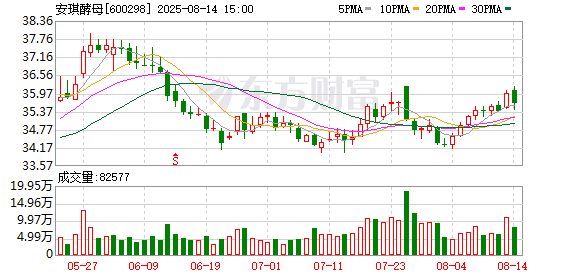
安琪酵母: 法律意见书
Zheng Quan Zhi Xing· 2025-07-24 16:33
Core Viewpoint - The article discusses the adjustment of the repurchase price and the repurchase and cancellation of certain restricted stocks under the 2024 Restricted Stock Incentive Plan of Angel Yeast Co., Ltd. [1][4] Group 1: Implementation of the Incentive Plan - The company has implemented the 2024 Restricted Stock Incentive Plan, which includes various related proposals that have been approved by the board and relevant authorities [3][4]. - The actual number of restricted stocks granted was 11.476 million shares to 974 individuals after some participants voluntarily forfeited their rights [6][7]. Group 2: Adjustment of Repurchase Price - The repurchase price for the restricted stocks has been adjusted from 15.41 yuan to 14.86 yuan per share due to a cash dividend distribution of 0.55 yuan per share [6][7]. - The adjustment method for the repurchase price is based on the formula P = P0 - V, where P0 is the original price and V is the dividend amount [6]. Group 3: Repurchase and Cancellation of Stocks - The company plans to repurchase and cancel 80,000 shares of restricted stock from four individuals who have left the company or changed positions, with the repurchase price set at 14.86 yuan per share [7][8]. - The funds for the repurchase will come from the company's own funds, ensuring compliance with relevant laws and regulations [8]. Group 4: Legal Compliance and Future Procedures - The adjustments and repurchase actions have received the necessary approvals and are in compliance with the Company Law and relevant regulations [4][8]. - The company is required to fulfill information disclosure obligations as per the regulations of the Shanghai Stock Exchange [8].
安琪酵母: 安琪酵母股份有限公司2025年面向专业投资者公开发行科技创新公司债券(第一期)发行结果公告
Zheng Quan Zhi Xing· 2025-07-22 16:04
Core Points - Anqi Yeast Co., Ltd. has been approved to publicly issue corporate bonds totaling up to 2 billion yuan, with a registration validity of 24 months [1] - The first phase of the bond issuance is set at a maximum scale of 1 billion yuan, with a maturity of 10 years and options for interest rate adjustment and investor redemption at the end of the fifth year [1] Summary of Issuance Results - The bond issuance concluded on July 22, 2025, with a final issuance size of 1 billion yuan and a coupon rate of 1.85%, achieving a subscription multiple of 3.45 times [2] - Key stakeholders, including directors, senior management, and shareholders with over 5% ownership, did not participate in the bond subscription [2]
安琪酵母,蛋白猛虎
半佛仙人· 2025-05-26 09:04
Core Viewpoint - Angel Yeast is a significant player in the global yeast market, controlling one-fifth of the world's yeast production capacity and ranking second in market share. The company is not just selling yeast but is also addressing the global protein supply crisis, which is becoming increasingly critical for human survival in the 21st century [2][4][6]. Group 1: Protein Supply Challenges - The current protein supply in China heavily relies on imported feed, particularly soybeans, with domestic production being insufficient to meet demand. This dependency creates vulnerabilities in the food supply chain [4][5]. - Over the past thirty years, China's soybean imports have surged twentyfold, significantly benefiting major grain traders in the West. The import of whey protein has also increased dramatically, indicating a reliance on foreign sources for quality protein [5][6]. - The protein supply chain is at risk, as global demand for quality protein continues to rise, and any disruption in imports could lead to severe shortages and price increases [8][9]. Group 2: Angel Yeast's Innovative Approach - Angel Yeast is leveraging industrial methods to produce protein through yeast, which does not require arable land and has a lower carbon footprint compared to traditional livestock farming. This approach allows for continuous production without dependence on weather conditions [9][10]. - The company is cultivating high-protein yeast strains that can produce protein efficiently, avoiding the risks associated with allergens and antibiotic residues found in traditional animal protein sources [9][10]. - By creating a closed-loop ecosystem, Angel Yeast is transforming the protein supply landscape, providing a sustainable alternative that could alleviate reliance on international suppliers and enhance food security [11][12]. Group 3: Market Implications - The emergence of yeast protein could lead to a restructuring of the entire protein supply chain, potentially lowering prices for traditional protein sources like soy and whey as competition increases [10][11]. - Angel Yeast's innovations represent a shift in the industry, where the focus is on industrial production rather than agricultural yield, thus changing the dynamics of protein supply and demand [12]. - The company's advancements in yeast protein production could position it as a leader in the global protein market, offering solutions that meet the growing needs of consumers while reducing environmental impact [12].