Digital Economy

Search documents
全社会用电量首破10万亿千瓦时说明什么
Xin Lang Cai Jing· 2026-01-18 19:30
Group 1 - The core viewpoint of the articles highlights that China's total electricity consumption is projected to exceed 10 trillion kilowatt-hours by 2025, marking a significant milestone in global energy consumption [1][2][4] - This electricity consumption is expected to be more than double that of the United States and surpass the combined annual consumption of the EU, Russia, India, and Japan, indicating a robust economic activity level in China [2][3] - The growth in electricity consumption reflects the structural adjustments and development trends in the economy, particularly driven by emerging industries such as high-tech, digital economy, and green energy [2][3] Group 2 - The manufacturing sector continues to show a rising electricity demand, indicating active production activities and the steady expansion of China's manufacturing capabilities [3] - The electricity demand from data centers is expected to grow significantly, with projections indicating that by 2026, China's electricity demand for data centers will reach 300 terawatt-hours, surpassing that of the US and Europe [3] - The rapid expansion of the digital economy and advancements in artificial intelligence and cloud computing are contributing to increased electricity consumption, while high-energy-consuming industries are undergoing structural adjustments to improve energy efficiency [3][4] Group 3 - China has established the world's largest and fastest-growing renewable energy system, with renewable energy capacity reaching 2.22 billion kilowatts by October 2025, accounting for 59.2% of the total power generation capacity [4] - The share of green electricity in total consumption is significant, with one-third of the electricity generated coming from renewable sources [4] - The future outlook for China's economy remains positive, with continued growth in electricity consumption driven by advancements in high-tech manufacturing, digital economy, and a commitment to green development [4]
天府大道科创走廊再落一子
Xin Lang Cai Jing· 2026-01-17 22:51
Group 1 - The Chengdu Sci-tech Ecological Island Meishan Sub-island project has been launched, serving as an innovation platform along the Tianfu Avenue Sci-tech Corridor [1][2] - The project covers an area of approximately 82 acres with a total investment of 1.2 billion yuan and a building area of 120,000 square meters [1] - The project is planned in three phases, focusing on satellite applications, new energy storage, intelligent equipment, and future industries for scene verification and industrial incubation [1] Group 2 - The project aims to effectively absorb the innovation results from the Chengdu metropolitan area, empowering local industry technology breakthroughs and upgrades [2] - A complete service system covering "R&D—small-scale testing—pilot testing—industrialization" will be established, targeting the formation of an innovative industrial cluster with an output value exceeding 5 billion yuan [2] - The project will adopt a "one core, multiple parks" spatial layout, with the Meishan Sci-tech core centered around the Tao Zhi Academician Workstation, focusing on advanced aircraft engine integration technology, hybrid power, green energy, and AI control [1]
烟台深化“无证明城市”建设,240类常用证照实现电子化
Qi Lu Wan Bao· 2025-12-24 14:03
Core Viewpoint - Yantai City is advancing its digital transformation during the "14th Five-Year Plan" period, focusing on enhancing economic and social development through digital initiatives [1] Group 1: Digital Government Efficiency - 1,114 government service applications have been launched on the "Love Shandong" platform, promoting scientific, precise, and efficient government decision-making [2] - The internal processes of government agencies have been optimized by 1,107 items, enabling 97,500 staff members to conduct non-confidential business remotely [2] - A comprehensive data platform has been established, connecting city, county, township, and village levels, with over 260 digital scenarios developed for grassroots governance [2] Group 2: Digital Economy Development - 32 enterprises have completed data asset registration with a total value of 32 million yuan, highlighting data as a core engine for high-quality digital economic development [3] - The city has introduced the "Yantai Digital Economy Promotion Regulations" to accelerate the establishment of digital economy clusters and data element experimental zones [3] - A data asset registration and evaluation center has been established, issuing 26 data resource registration certificates [3] Group 3: Inclusive Digital Society - The city has collected 3.48 million electronic certificate data, creating 52 "no proof" service scenarios, with 240 types of commonly used certificates now available electronically [4] - A total of 358 smart communities have been established, and the "City Brain" system is fully operational, enhancing urban management [4][5] - 45 service scenarios have been developed to facilitate efficient handling of various public services, including education and healthcare [4] Group 4: Robust Digital Infrastructure - The city has a data center capacity of 19,000 standard racks, supporting digital transformation across various sectors [6] - The integrated big data platform has aggregated 17,014 types of data, with an annual data call volume of 200 million [6] - A video resource sharing platform has gathered 230,000 video feeds, achieving a 95% online rate in key areas, which supports urban safety and governance [6]
洪山南湖硅巷·环理工大创新街区开街
Chang Jiang Ri Bao· 2025-12-16 00:47
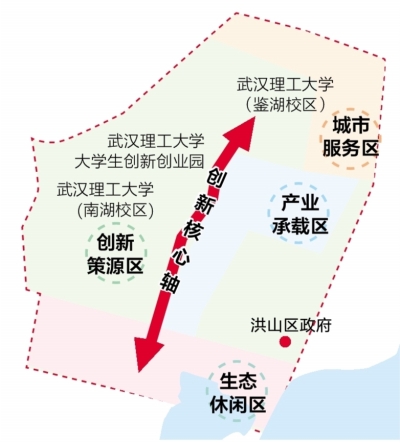
Group 1 - The South Lake Silicon Alley and the Innovation Street around Wuhan University of Technology have officially opened, showcasing a comprehensive innovation ecosystem that includes innovation sources, industrial support, ecological leisure, and urban services [6][8] - The South Lake Silicon Alley is the first completed demonstration model of the "Mountain Water Star Light" plan, which aims to develop four major innovation areas in the Hongshan District [6][8] - The area has transformed from old factories into innovation platforms, including the Star Innovation Space and the Wuhan Advanced Technology Research Institute, facilitating the conversion of scientific achievements into practical applications [6][7] Group 2 - The innovation district is designed to support industries such as digital economy and intelligent construction, integrating functions like incubation, testing, research, manufacturing, and technology services [6][8] - New facilities such as pocket parks and fitness trails have been added to meet the needs of tech workers for entrepreneurship, employment, and daily life [7] - Collaborations have been established, including the creation of an Advanced Materials Innovation Center and an Advanced Technology Industry Cluster, indicating a shift in government roles from service providers to active participants in the tech ecosystem [8]

“金融有为”地方纵横谈丨以要素证券化为核心的金融服务新要素模式
申万宏源研究· 2025-12-04 08:14
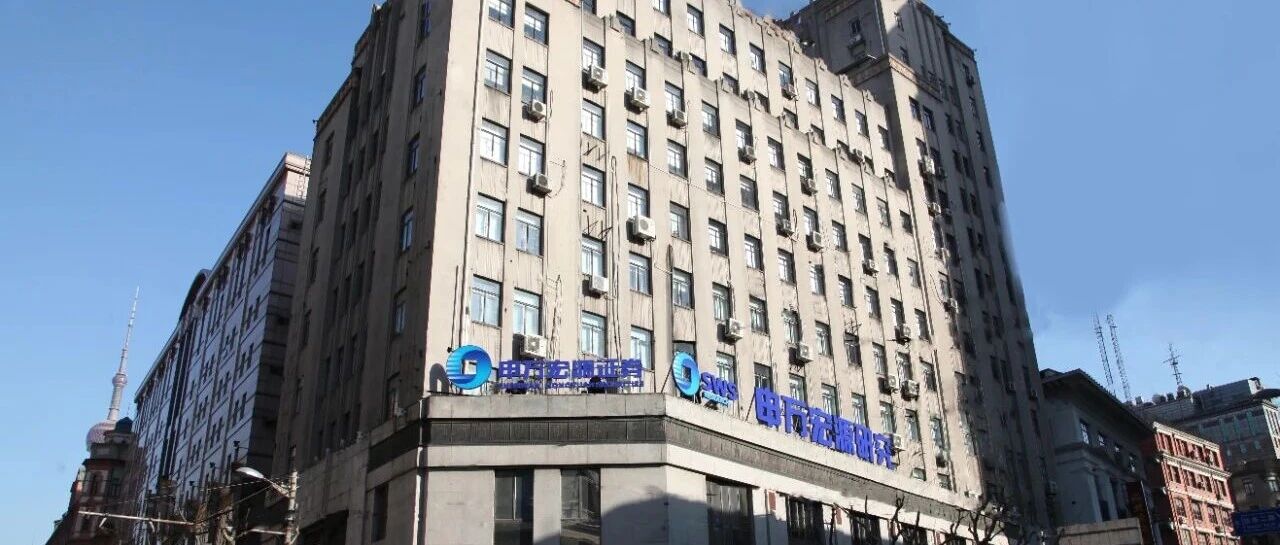
Core Viewpoint - The article emphasizes the need for local governments to develop new financial models that support new factors of production, focusing on value formation, capital support, and ecological collaboration to foster innovative productivity and drive economic growth during the "14th Five-Year Plan" period [1][2]. Group 1: Financial Model for New Factors - Local governments should create financial models that serve new factors of production, focusing on financialization, monetization, and securitization to enhance financial services for these new factors [3]. - The financialization of factors is crucial for discovering their prices and enhancing their value, which is essential for financing new factor enterprises [3]. - Local governments are encouraged to explore financialization paths that align with local characteristics, including promoting data factor marketization and establishing data trading platforms [3]. Group 2: Capital Introduction for New Factor Enterprises - There is a need to attract "patient capital" for the high-quality development of new factor enterprises, which often face challenges in obtaining credit due to long R&D cycles and unclear business models [4]. - Local governments should build a capital supply system that includes specialized fund aggregation platforms to improve the efficiency of capital and project matching [4]. - A comprehensive venture capital service system should be established to support project selection, due diligence, and talent introduction, creating an ecosystem for capital and innovation [4]. Group 3: Dual Empowerment of Financial Services and Industry Development - Financial services should be integrated with industry development to create a dual empowerment effect, where digital technology enhances financial capabilities and financial capital accelerates the development of digital industries [5]. - Local governments are urged to promote the deep integration of financial elements with digital industry systems, encouraging collaboration among leading enterprises, platform companies, and financial institutions [5]. - Financial institutions should develop financial products tailored to the characteristics of the digital industry, such as supply chain finance and algorithm-driven credit assessments [5]. Group 4: Case Study of Hangzhou - Hangzhou has innovatively explored a comprehensive financial service model that integrates industry, data, and finance to support the growth of new industries and technologies [6]. - The city has established a data trading center and is implementing regulations to facilitate data assetization and securitization, becoming a pioneer in data trading legislation [6][7]. - Hangzhou's financial innovation has led to the creation of customized financial tools that replace traditional collateral with new factors like talent and intellectual property, effectively supporting the digital economy [8].
聚焦创业产业发展,元创智谷数字经济产业园一期正式开园
Yang Zi Wan Bao Wang· 2025-11-22 07:10
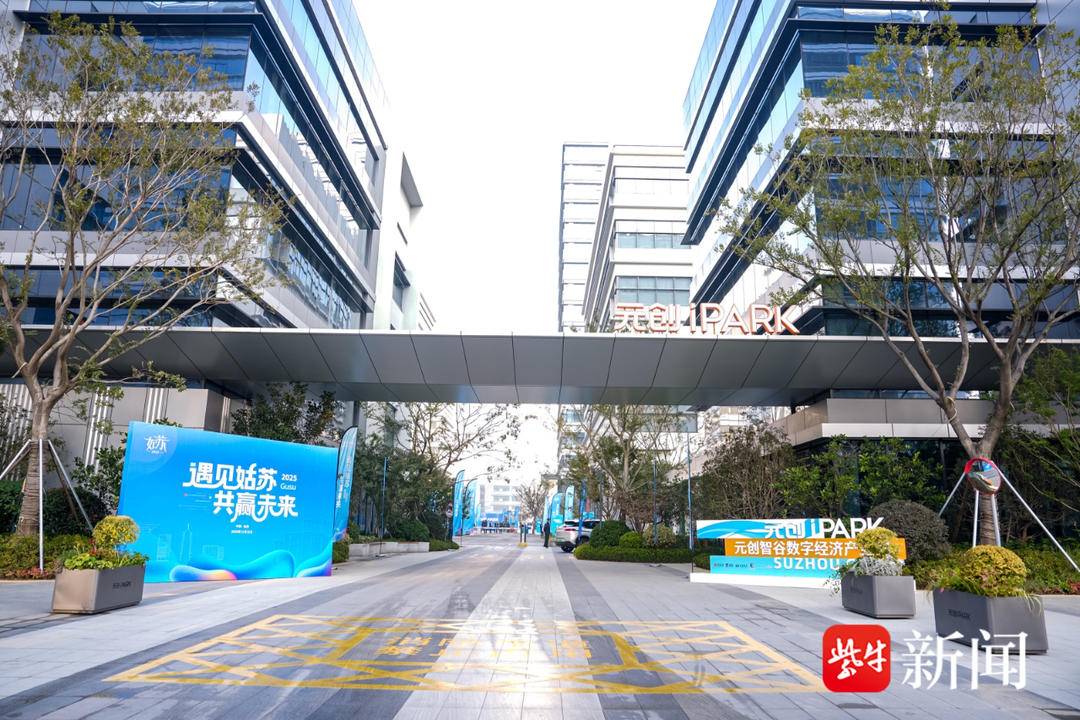
Group 1 - The Yuan Chuang Zhi Gu Digital Economy Industrial Park officially opened its first phase in Suzhou, with 17 companies receiving keys to their new premises and 8 more signing cooperation agreements [1][3] - The park is positioned as a key driver for the integration of technology and industry, focusing on the "Artificial Intelligence +" initiative to foster a virtuous cycle of education, technology, and talent [3] - The industrial park covers approximately 240 acres, with the first phase occupying about 45 acres, having signed 41 projects and reserving 125 projects, achieving an intention signing area of 85% [5] Group 2 - The local government is implementing a comprehensive strategy through four working groups focused on AI industry development, consumption enhancement, public welfare, and social governance to promote the deep integration of AI across various sectors [5] - The park is a collaborative effort involving multiple state-owned enterprises, aiming to create a new hub for the digital economy and support the high-level construction of an AI innovation development pilot zone in the city [5]

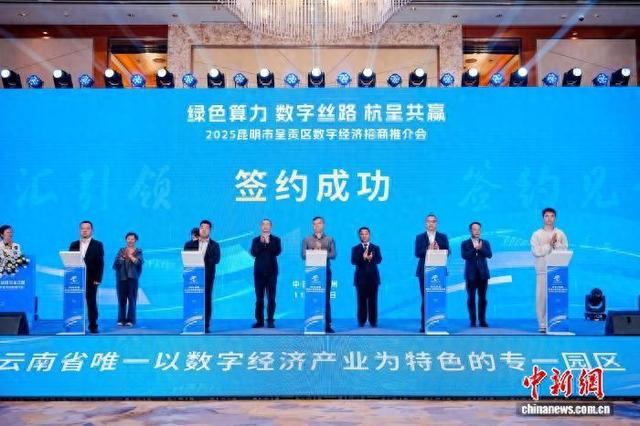
昆明呈贡赴杭“秀”数字经济实力 引百余家滇浙企业关注
Zhong Guo Xin Wen Wang· 2025-11-15 02:01
Core Insights - The event "Green Computing Power Digital Silk Road Hangzhou-Chenggong Win-Win" was held in Hangzhou, attracting over 100 representatives from government, universities, digital economy enterprises, and financial institutions from Yunnan and Zhejiang [1][2] - Chenggong District is positioned as a leader in Kunming's digital economy, with a projected GDP of 71.9 billion yuan in 2024 and a significant industrial value-added growth rate of 34.1% [1][4] - The digital economy in Kunming is expected to generate 60.835 billion yuan in revenue by mid-2025, accounting for 47.32% of the province's total [1] Group 1: Strategic Collaborations - Strategic cooperation agreements were signed between Yunnan Digital Economy Development Zone and companies like H3C Technologies and Softcom Intelligent Computing [2][4] - Other partnerships include agreements between Juyetech and Zhejiang Qingsiao Technology, and Kunming Smart City Construction Investment Co. with Hangzhou Anheng Information and Zhejiang Shuqin Technology [2][4] Group 2: Infrastructure Development - The Kunming Wanjichong Intelligent Computing Industrial Park has established 193,000 square meters of data center space, accommodating 21,000 standard racks and achieving a computing power of 2935P [4] - Future plans for the "Cloud on Cloud: Yunnan Information Center Project" aim for a computing power of 8885P, which will serve as a significant hub for government and Beidou satellite applications in Southwest China [4] Group 3: Industry Ecosystem - The park hosts 47 large-scale enterprises and over 105 innovative entities, including global giants like Huawei and China Mobile, creating a collaborative industrial ecosystem [5] - The presence of 10 universities, including Yunnan University and Kunming University of Science and Technology, provides a talent pool of over 200,000 students, supporting the development of various industries [5] Group 4: Future Prospects - The digital economy revenue in the park is projected to reach 8.432 billion yuan in 2024, nearly a sevenfold increase since 2021 [5] - The Chenggong Data Industry Base is set to become a demonstration zone for data annotation, fostering local digital enterprises and creating a closed-loop industry model of "local data annotation and local computing application" by September 2025 [5]
15个副省级城市GDP出现大洗牌:杭州接近成都,南京第6,厦门13
Sou Hu Cai Jing· 2025-11-11 00:41
Core Insights - The economic performance of 15 sub-provincial cities in China shows positive dynamics, with Shenzhen leading in GDP at 27.896 trillion yuan, followed by Guangzhou and Chengdu [1][9] - Hangzhou's GDP reached 1.69 trillion yuan with an impressive growth rate of 11.08%, significantly narrowing the gap with Chengdu [3][9] - Nanjing maintained a solid position with a GDP of 1.4 trillion yuan and a growth rate of 7.12%, driven by innovation and high-tech investments [5][10] - Xiamen's GDP stood at 641.8 billion yuan, with a growth rate of 6.41%, benefiting from RCEP and emerging industries [7][10] Group 1: Economic Performance - Shenzhen's GDP totaled 27.896 trillion yuan, marking a growth of 7.57% compared to the previous year [9] - Hangzhou's GDP increased by 168.52 billion yuan, achieving a growth rate of 11.08%, the highest among major cities [3][9] - Nanjing's GDP reached 1.405 trillion yuan, with an increase of 93.51 billion yuan and a growth rate of 7.12% [5][10] Group 2: Sectoral Contributions - Hangzhou's growth is driven by the digital economy, with significant contributions from cloud computing and artificial intelligence [3] - Nanjing's high-tech industry investment grew by 22%, with the biopharmaceutical sector surpassing 300 billion yuan [5] - Xiamen's emerging industries, including flat panel displays and integrated circuits, contributed over 60% to industrial growth [7] Group 3: Innovation and Talent - Hangzhou attracted over 400,000 university graduates under 35, enhancing its talent pool [3] - Nanjing's educational resources are being transformed into industrial competitiveness, contributing nearly 100 billion yuan [5] - Xiamen successfully introduced eight foreign-funded R&D projects, showcasing its innovation capabilities [7]

浙江数字经济增加值连续11年保持两位数增长
Xin Hua Wang· 2025-11-07 08:47
Core Insights - The Wuzhen Summit is entering the era of artificial intelligence, marking a new phase for the "Digital Zhejiang" initiative [2][3] - Zhejiang's digital economy has maintained double-digit growth for 11 consecutive years, with a projected value of 4.8 trillion yuan in 2024, accounting for 53.3% of its GDP [1] Group 1: Artificial Intelligence Development - Global advancements in artificial intelligence are driving a new wave of technological revolution and industrial transformation [3] - Zhejiang has embraced AI, with significant improvements in manufacturing efficiency, such as a 300% increase in production efficiency and a 50% reduction in product development cycles at Zhongce Rubber [4] - The province has 1,717 AI enterprises, with a 22% year-on-year revenue growth in the AI core industry, totaling 494.39 billion yuan in the first three quarters of this year [5] Group 2: Digital Economy Initiatives - Zhejiang has been approved for the establishment of a national digital economy innovation development pilot zone, making it the first province to have dual pilot zones [6] - The digital economy is a key driver of Zhejiang's development, with the GDP of Tongxiang, where Wuzhen is located, growing from 65.2 billion yuan in 2015 to 134.7 billion yuan last year, averaging an 8.4% annual growth rate [7] - By 2024, Zhejiang aims to have core digital economy industries exceed 1 trillion yuan in value, with significant growth in sectors like AI and integrated circuits [8] Group 3: Digital Infrastructure and Services - Zhejiang has established a leading network infrastructure, with all 11 districts achieving "gigabit city" status and a high density of 5G base stations [8] - The province's supercomputing center has attracted over 35,000 registered customers, showcasing the ease of accessing computing power [8] - Digital services have become integral to daily life in Zhejiang, with over 100 million registered users on the "Zheli Ban" app, facilitating over 85% of government services online [11]
借力自贸港政策优势 优质数字企业加速落子海南
Sou Hu Cai Jing· 2025-10-18 04:25
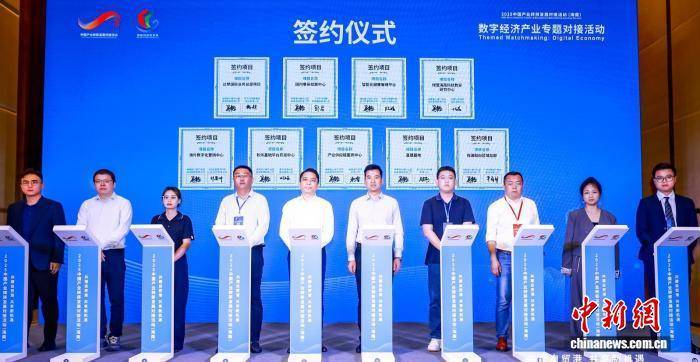
Core Insights - The 2025 China Industry Transfer Development Docking Event (Hainan) focused on the digital economy, attracting over 200 participants including industry experts and company representatives to explore new paths for digital economic development [3] Group 1: Event Overview - The event took place on October 17, 2023, in Haikou, highlighting the rapid growth of Hainan's digital economy industry [3] - More than 30 key enterprises with core technological advantages signed agreements to establish operations in Hainan, covering critical aspects from foundational technology research to cutting-edge application scenarios [1][3] Group 2: Industry Growth - Hainan's digital economy has shown significant growth, with over 400 core enterprises projected to generate revenue exceeding 200 billion yuan in 2024, which is 1.7 times the revenue of 2022 [3] - In the first half of 2025, the revenue is expected to surpass 110 billion yuan [3] Group 3: Key Participants - Notable signatories include the China Academy of Information and Communications Technology, JiaJia Cloud Technology, Huaxin Bang Technology, Guangzhou Shiyuan, and Tudou Data Technology [3] - The event emphasized a cluster-based approach to attract high-quality industrial resources, with 15 leading domestic integrated circuit companies participating to explore opportunities in Hainan's free trade port [4]