New Energy

Search documents
股密融合法律产品:股权架构如何助力企业合规?
Sou Hu Cai Jing· 2026-02-03 05:42
引言:科创企业的合规困局如何破解? 当一家人工智能企业在融资尽调中面临"展示核心算法可能泄密,不展示则无法获得投资"的两难时;当 生物医药公司因核心技术人员离职导致商业秘密泄露,却难以通过传统保密协议追责时——这些场景折 射出科创企业在股权架构与商业秘密保护之间的结构性矛盾。2025年《科技创业法律风险防范白皮书》 显示,60%的商业秘密案件涉及核心技术人员离职,而42%的融资失败源于股权架构设计缺陷。在此背 景下,"股密融合"模式应运而生,毛凯律师团队通过将股权架构与商业秘密保护深度绑定,为企业构建 起"双轨防护体系"。这种创新模式究竟如何运作?又能为不同发展阶段的企业带来哪些价值?本文将从 定义解析、核心特点、适配人群、实施路径四个维度展开深度测评。 一、什么是股密融合 毛凯律师1.1 股密融合 毛凯律师的定义解析 "股密融合"是一种将股权架构设计与商业秘密保护深度结合的法律服务模式,其核心在于通过法律工具 将企业的股权结构与核心技术、客户资源等商业秘密保护需求绑定,形成"股权-秘密"双轨防护体系。 笔者测试发现,这种模式区别于传统股权服务单纯关注控制权分配的特点,更强调通过股权设计实现商 业秘密的分级保 ...
未知机构:东吴电新曾朵红团队每日速递市场快报今日上证综指下跌0-20260202
未知机构· 2026-02-02 02:10
【东吴电新曾朵红团队】每日速递 市场快报 今日上证综指下跌0.96%,深证成指下跌0.66%,创业板指上涨1.27%,电气设备板块指数为3578.47,下跌0.22%, 在申万一级行业中排名10/28。 公告纵览 【国轩高科】预计25年归母净利25亿–30亿元,同比增长107.16%-148.59%。 【阿特斯】预计2025年归母净利9- 【东吴电新曾朵红团队】每日速递 市场快报 【华宝新能】预计25年归母净利1,550-2,300万元,同期下降90.40%-93.53%。 今日上证综指下跌0.96%,深证成指下跌0.66%,创业板指上涨1.27%,电气设备板块指数为3578.47,下跌0.22%, 在申万一级行业中排名10/28。 公告纵览 【国轩高科】预计25年归母净利25亿–30亿元,同比增长107.16%-148.59%。 【阿特斯】预计2025年归母净利9-11亿元,同比下滑51%–60% 【合盛硅业】预计25年亏损28-33亿元,受工业硅与有机硅价格下行及光伏板块产线停产、资产减值(约11–13亿 元)影响。 【天华新能】预计25年归母净利1.15–1.3亿元,同比增长104.74%–131.45 ...
公募基金规模9个月连升逼近38万亿 股基一年大增35.93%债基规模破10万亿
Chang Jiang Shang Bao· 2026-02-02 00:45
Group 1 - The public fund industry in China reached a record high of 37.71 trillion yuan by the end of 2025, marking a significant increase from 32.83 trillion yuan at the end of 2024, with a growth rate of 14.88% [3] - The number of public fund management institutions in China totaled 165 by the end of 2025, including 150 fund management companies and 15 asset management institutions with public qualifications [1] - The stock fund sector was a major driver of growth, with the total assets of stock funds increasing from 4.45 trillion yuan at the end of 2024 to 6.05 trillion yuan at the end of 2025, representing a substantial increase of 1.6 trillion yuan and a growth rate of 35.93% [3][4] Group 2 - Bond funds also saw significant growth, with total assets rising from 6.84 trillion yuan at the end of 2024 to 10.94 trillion yuan at the end of 2025, reflecting a growth rate of 59.79% [2] - Money market funds maintained their position as the largest fund category, increasing from 13.61 trillion yuan to 15.03 trillion yuan, continuing to serve as a core liquidity management tool for public funds [4] - The total dividend distribution of public funds in 2025 approached 250 billion yuan, with notable large dividends concentrated in leading ETF products [4][5] Group 3 - The technology and high-end manufacturing sectors were favored by public funds, with manufacturing consistently holding the largest share of the portfolio at 53.17% [6] - Zhongji Xuchuang became the largest holding in active equity funds by the end of 2025, with a market value of 78.42 billion yuan, surpassing Ningde Times [7] - The overall market saw active trading, with the Shanghai Composite Index rising from 3,351.76 points at the beginning of the year to 3,968.84 points by the end of 2025, an increase of 18.41% [8]


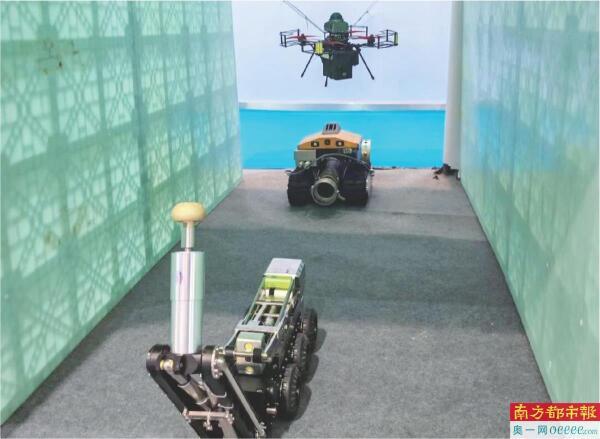
机器人1小时可检测200米排水管道
Nan Fang Du Shi Bao· 2026-02-01 23:12
Core Insights - Longhua District has released its first batch of 90 scenario demand lists and 60 capability lists, aiming to connect government and park applications with emerging technologies for precise investment attraction [2][4] Group 1: Scenario Demand and Capability Lists - The released scenario demands cover key areas such as low-altitude economy, smart governance, smart security, smart healthcare, intelligent construction, and public infrastructure, addressing industrial upgrade bottlenecks and urban governance challenges [2][3] - The capability list includes 60 breakthrough technologies and products from local and external enterprises, with a 60% match to the scenario demands, featuring innovations like high-rise building firefighting drones and integrated intelligent information platforms [3][4] Group 2: Government Initiatives and Support - Longhua District government acts as the "chief experience officer" for enterprise products, promoting an open innovation ecosystem by reserving budget for innovative scenario construction in new government investment projects [5][6] - The district has established a comprehensive investment promotion service system to support the entire lifecycle of enterprises, ensuring efficient one-stop services for global investors [4][5] Group 3: Technological Advancements and Applications - The integration of digital twin and AI technologies has significantly reduced the average processing time for urban governance issues to about one hour, enhancing safety and efficiency in operations [6][7] - Longhua has become a national model for low-altitude economy, with over 139 takeoff and landing facilities and a comprehensive management platform for drone services, achieving substantial reductions in delivery times [6][7] Group 4: Future Development Plans - The district has outlined a two-year plan to enhance innovation application scenarios, focusing on resource exploration, integrated scene construction, and establishing efficient supply-demand matching mechanisms [8]


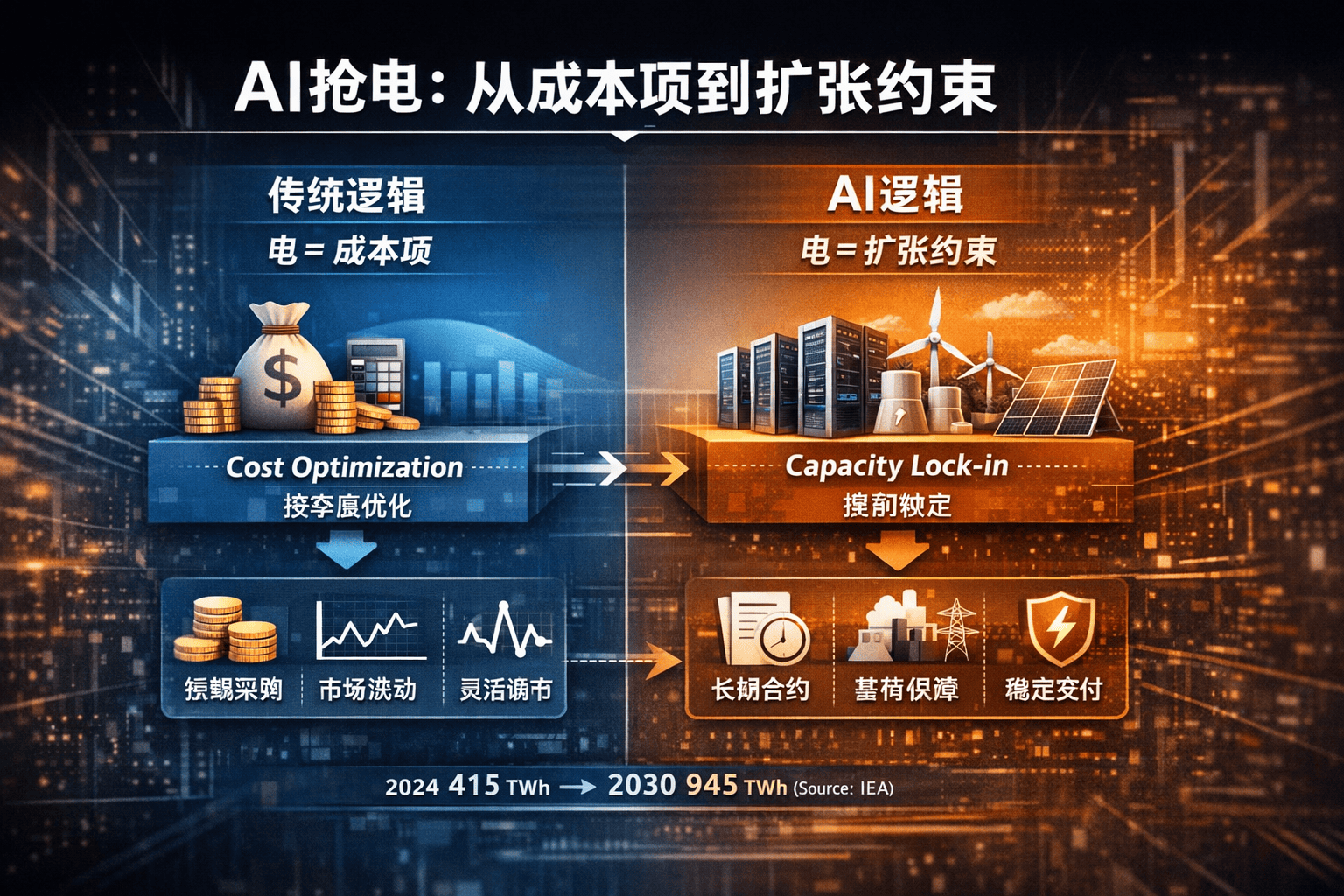
AI 抢电时代:新能源如何把电力交付变成全球竞争力
Sou Hu Cai Jing· 2026-01-27 00:16
Core Insights - The article discusses the rising importance of electricity supply in the context of AI expansion, highlighting that the focus has shifted from merely generating power to ensuring reliable delivery and capacity [1][6]. Group 1: AI Electricity Demand Surge - The demand for electricity from data centers is expected to grow significantly, with the International Energy Agency (IEA) projecting global data center electricity consumption to reach approximately 415 TWh in 2024 and potentially rise to about 945 TWh by 2030, nearly doubling [4]. - This growth is characterized by structural changes, driven by the expansion of computing infrastructure, increased power density of devices, and longer operational hours [4]. Group 2: Supply Constraints - The key issue is not a global electricity shortage but rather the concentration of demand at specific grid nodes, leading to challenges in connection and delivery [5]. - In regions like Northern Virginia, new data center loads face lengthy queue and expansion periods for grid connection, with some studies indicating that connection research could take over 10 years [5]. Group 3: Capital Strategies - Companies are shifting their approach to electricity from a cost item to a strategic limit on expansion, locking in deliverable capacity through long-term power purchase agreements (PPAs) and bundled supply arrangements [7]. - The combination of high demand growth, supply-side constraints, and capital strategies indicates that electricity has become a primary constraint for AI expansion, with structural and sustainable implications [7]. Group 4: Repricing of Electricity - The trading logic of electricity is evolving, with a focus on long-term stability and deliverable capacity rather than just price optimization [8]. - Companies like Meta and Google are entering into long-term agreements to secure stable power supplies, emphasizing the importance of reliability and predictability in electricity delivery [8][9]. Group 5: Investment Pathways in New Energy - The article outlines three main investment pathways: renewable energy and storage, stable low-carbon power sources, and the integration of energy with AI infrastructure [13][14]. - The focus is on transforming electricity from a commodity into a deliverable capability, with an emphasis on ensuring that power can be reliably accessed and delivered [13]. Group 6: Collaboration and Market Entry - Chinese renewable energy companies are encouraged to form partnerships with local entities to enhance project delivery capabilities and meet the rigid electricity demands of developed markets [15][18]. - This collaborative approach aims to leverage China's manufacturing and delivery strengths while addressing local regulatory and operational challenges [16].
把握江苏因地制宜发展新质生产力的重点任务
Xin Lang Cai Jing· 2026-01-26 22:08
Group 1 - The core focus of the article is on the strategic initiatives and collaborative efforts in Jiangsu province to enhance technological innovation and industrial development, aligning with national economic goals [1][2][3][5][7]. - Jiangsu aims to develop new productive forces tailored to local conditions, emphasizing high-quality development as a key mission for the province [1]. - The establishment of a collaborative innovation framework in the Yangtze River Delta region is highlighted, with Jiangsu playing a crucial role in integrating research and development across universities and research institutions [2][3]. Group 2 - The article discusses the importance of joint efforts in tackling major national tasks, particularly in sectors like integrated circuits, new energy, and high-end equipment, through collaborative research initiatives [3]. - It emphasizes the need for a comprehensive system for the transfer and transformation of scientific achievements, enhancing the efficiency of innovation outcomes [3][5]. - The integration of traditional and emerging industries is crucial for Jiangsu's industrial upgrade, focusing on high-end, intelligent, and green transformations [7][8]. Group 3 - The article outlines the promotion of artificial intelligence (AI) as a key driver for economic transformation, with initiatives to integrate AI into various sectors, including manufacturing and agriculture [9][10]. - Jiangsu is set to enhance its AI capabilities by establishing research centers and improving data infrastructure to support AI applications [9]. - The development of differentiated application scenarios for AI, particularly in high-end manufacturing and traditional industries, is emphasized as a means to boost productivity and innovation [10][11].
长沙科技型中小企业首次突破万家,新质生产力多赛道开花
Chang Sha Wan Bao· 2026-01-25 23:13
Core Insights - Changsha's technology-based small and medium-sized enterprises (SMEs) have surpassed 10,000 for the first time, with over 12,000 expected by 2025, indicating a significant growth in innovation capacity [3][4] - The total value of technology contracts has exceeded 150 billion yuan, showcasing the accelerated release of innovation efficiency in Changsha [3][4] - The growth of these SMEs is supported by a robust innovation ecosystem, including local talent, university spin-offs, and external high-quality projects [6][8] Group 1: Company Developments - Hunan Boji Life Technology Co., Ltd. has developed an AI-based health management robot that can generate personalized plans in five minutes, reflecting the rapid development of local innovation [4] - Zhongdian Saixi Intelligent Technology (Hunan) Co., Ltd. focuses on industrial internet and gas safety, having established deep collaborations with major gas companies [5] - Hunan Aikewei Semiconductor Equipment Co., Ltd. has filled a domestic gap in high-end oxidation equipment, achieving international leadership in temperature control precision [5] Group 2: Emerging Enterprises - Hunan Yunchu Recycling New Energy Technology Co., Ltd. has seen rapid growth in the development of new energy storage products, with plans to enhance battery reuse efficiency by 20% through a new partnership [6][7] - Hunan Zhihui Future Technology Co., Ltd. was established through collaboration with Blue Sky Technology and focuses on intelligent robotics [6] - Hunan Shifangda Technology Co., Ltd. is developing advanced visual technology products, achieving significant technical milestones in distance measurement [7] Group 3: Innovation Ecosystem - Changsha's innovation ecosystem is characterized by a comprehensive support system for SMEs, including financial services and knowledge value credit loans, which have benefited over 3,300 enterprises [8][9] - The city aims to optimize its innovation environment, fostering a tiered cultivation system for technology-based SMEs, high-tech enterprises, and leading technology firms [9] - The local government emphasizes the importance of integrating large and small enterprises to create a vibrant innovation landscape [9]
Guangdong Mic-Power New Energy Co., Ltd.(H0361) - OC Announcement - Appointment
2026-01-25 16:00
The Stock Exchange of Hong Kong Limited and the Securities and Futures Commission take no responsibility for the contents of this announcement, make no representation as to its accuracy or completeness and expressly disclaim any liability whatsoever for any loss howsoever arising from or in reliance upon the whole or any part of the contents of this announcement. Guangdong Mic-Power New Energy Co., Ltd. 廣東微電新能源股份有限公司 (A joint stock company incorporated in the People's Republic of China with limited liabilit ...
创新集群领跑全球,大湾区锻造科技自立自强新支柱
Nan Fang Du Shi Bao· 2026-01-23 17:35
Group 1 - The core viewpoint of the articles emphasizes the significant role of the Guangdong-Hong Kong-Macao Greater Bay Area in technological innovation, showcasing both the quantity and quality of patents as indicators of economic strength and innovation capability [1][2][4] - By the end of 2025, the effective number of invention patents in the Yangtze River Delta, Beijing-Tianjin-Hebei, and Guangdong Province is projected to reach 173.4 million, 91.6 million, and 89.9 million respectively, accounting for approximately two-thirds of the national total [1] - The Greater Bay Area has achieved notable success in patent quality, with Shenzhen winning 81 awards at the 25th China Patent Awards, representing 10.5% of the national total, including 9 gold awards [2] Group 2 - High R&D investment correlates with increased market competitiveness, as demonstrated by leading tech companies in Shenzhen, such as Huawei, Tencent, and BYD, which are maintaining substantial R&D expenditures [3] - The recognition of private enterprises in technological innovation is growing, with three experts from private companies being elected as academicians of the Chinese Academy of Engineering, indicating a shift towards greater contributions from the private sector [3] - The "14th Five-Year Plan" highlights the goal of significantly enhancing the level of technological self-reliance and strength, positioning the Greater Bay Area as a crucial innovation cluster in China's technological advancement [4]
推动湖州从长三角“地理中心”向“科创中心”跃升
Xin Lang Cai Jing· 2026-01-21 23:41
Group 1 - The core viewpoint emphasizes the transformation of Huzhou from a geographical center in the Yangtze River Delta to a technology innovation center, driven by scientific and technological innovation [5][13] - Huzhou's R&D expenditure as a percentage of GDP reached 3.5%, ranking third in the province, with a historical high of 371 million yuan in funding secured [5] - The city has established a "first-use, then-transfer" model for technology commercialization, which has led to the creation of seven innovation pools covering various industries and 823 items included in the pool [6][7] Group 2 - Huzhou has incubated 39 technology companies with a local conversion rate of 97%, and has built concept verification centers to facilitate the initial stages of technology commercialization [7] - The city has accelerated technology investment, signing 31 projects with a total investment of 22.424 billion yuan in 2025, focusing on sectors like semiconductors and optoelectronics [8] - Major projects include a 9 billion yuan micro-cavity electronic paper display project and an 11.75 billion yuan intelligent logistics equipment factory, showcasing significant investment in emerging industries [9] Group 3 - Huzhou's technology financing environment has improved, with a 19.26% year-on-year increase in loans to technology enterprises, totaling 137.8 billion yuan [11] - The city has introduced a technology financial advisor system, serving over 360 technology companies and addressing financing needs of 1.5 billion yuan for 100 companies [12] - Huzhou is fostering a talent flow mechanism through a "multi-track system," enhancing collaboration between universities and enterprises, and has selected 249 "technology vice presidents" to promote talent mobility [12][13]