
Smartphone

Search documents
X @Wu Blockchain
Wu Blockchain· 2025-12-10 15:26
Partnership & Expansion - Sei 与全球第三大智能手机制造商小米合作,将在中国大陆和美国以外销售的新小米智能手机上预装下一代加密货币钱包和发现应用程序 [1] - 双方计划从 2026 年第二季度开始在小米全球零售网络中引入 stablecoin 支付,首先在香港和欧盟推出 [1] - 该应用程序将支持 Google 和 Xiaomi ID 登录、MPC 钱包安全、dApp 访问以及点对点和商家支付,初步推广重点是欧洲、拉丁美洲、东南亚和非洲 [1] App Features - 该应用程序将支持 Google 和 Xiaomi ID 登录 [1] - 该应用程序将支持 MPC 钱包安全 [1] - 该应用程序将支持 dApp 访问 [1] - 该应用程序将支持点对点和商家支付 [1]
X @Bloomberg
Bloomberg· 2025-11-25 17:18
Apple will retake its crown as the world’s largest smartphone maker for the first time in more than a decade, lifted by the successful debut of a new iPhone series and a rush of consumers upgrading devices, according to Counterpoint Research. https://t.co/WW9LusJaqb ...

The Wrap-Up for Tuesday November 25
Youtube· 2025-11-25 12:11
Group 1 - President Trump signed an executive order to establish the Genesis mission, aimed at enhancing government technology innovation through AI [2] - The executive order includes a public-private partnership involving the Department of Energy and major tech companies such as Nvidia, Dell, HPE, and AMD [2] - Binance founder Changpeng Zhao is facing allegations of facilitating payments to Hamas, following a recent attack on Israel, despite previous legal issues related to anti-money laundering [2][3] Group 2 - The Corker family, involved in a $100 million pump and dump stock scheme, owes over $5.5 million in restitution [4] - Xiaomi's founder has increased his stake in the company to over 23%, acquiring an additional 13 million shares, amidst a stock decline of over 30% since July [4] - NEO reported a smaller than expected Q3 loss with a 17% revenue increase through October, selling approximately 270,000 vehicles, which is a 60% year-over-year growth [5]


中国科技与通信行业_花旗 2025 中国峰会关键要点 —— 内存涨价、可折叠 iPhone、OpenAI 边缘人工智能、人工智能 PCB、智能眼镜
花旗· 2025-11-24 01:46
Investment Rating - The report indicates a positive outlook for various sectors within the technology and communications industry, particularly for 2026, with several companies expected to experience revenue growth and improved margins [1][5][20]. Core Insights - The memory price hike is anticipated to primarily affect low-to-mid end smartphone models, while high-end models are expected to remain largely unaffected [2][4]. - The upcoming foldable flagship smartphones are projected to drive significant upgrades in components such as UTG, hinge spindles, and heatsinks, with a notable focus on AI edge devices expected to launch in late 2026 [3][10]. - The adoption of 200MP CIS is expected to increase, particularly for telephoto and main cameras, contributing to a stronger performance in the semiconductor sector [4][15]. - The IT services and software sector is projected to see low-teen percentage revenue growth in 2026, with companies like Kingdee and ChinaSoft expecting significant improvements [5][16][17]. Summary by Sections Memory Market - Memory price hikes are expected to impact low-to-mid end models but not high-end models, with limited room for further ASP cuts [2]. Hardware - The foldable flagship smartphone is expected to drive upgrades in various components, with a focus on AI edge devices anticipated to contribute to revenue starting in late 2026 [3][10]. Semiconductors - The semiconductor sector is expected to see strong growth in 2026, driven by the adoption of high-resolution CIS and a shift towards computing and automotive segments [4][15]. IT Services and Software - Companies in the IT services sector, such as Kingdee and ChinaSoft, are optimistic about revenue growth in 2026, with expectations of AI-related projects contributing to this growth [5][16][17]. Smart Glasses and XR - The smart glasses market is expected to see significant growth, with total shipments projected to double in 2026, driven by demand from key US customers [13]. Automotive - The automotive sector is expected to experience growth, with companies like AAC and SO projecting significant revenue increases in 2026 [12]. Panelmakers - Panelmakers like BOE anticipate that upcoming sports events will boost TV LCD stocking and prices in 1Q26, alongside growth in IT replacement demand [11]. AI and Edge Computing - The AI edge device market is expected to present opportunities for companies involved in smart device manufacturing, with potential contributions from major players in the supply chain [10].
X @Bloomberg
Bloomberg· 2025-11-18 00:10
Xiaomi has gone from market darling to the worst-performing Chinese technology stock in just a few short months, and a quick comeback looks challenging amid headwinds in the smartphone and electric vehicle markets https://t.co/87tSdRl9T7 ...
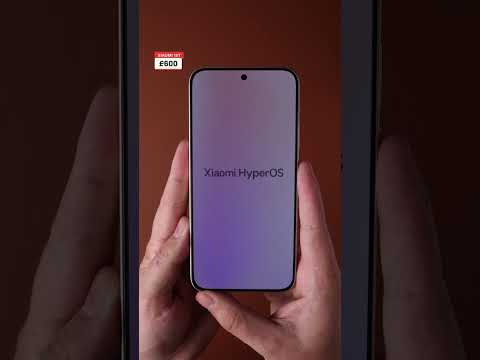
Unboxing Xiaomi’s £600 15T & £650 15T Pro in Mocha Gold 🤎☕️
CNET· 2025-09-25 14:16
Xiaomi’s new flagship phones pack a lot for the money but US shoppers will have to look elsewhere. The 15T Pro's solid processor and camera performance make it a decent all-round phone. While it won't be offering much competition to the likes of the Galaxy S25 Ultra or the new iPhone 17 Pro, it's got everything you'd need from an everyday Android phone. The base 15T packs most of the same camera setup but uses a slightly less powerful processor and misses out on the 90W fast charging found in its Pro siblin ...
X @Bloomberg
Bloomberg· 2025-09-16 05:35
Smartphone maker Nothing Technologies raises $200 million to try and develop the next generation of AI-native devices https://t.co/Wc2TMDAIY4 ...
中国:8 月经济数据不及预期,投资表现尤为疲软-China_ August activity data below expectations, with investment especially weak
2025-09-16 02:03
Summary of Key Points from the Conference Call Industry Overview - The report focuses on the **Chinese economy**, particularly its **industrial production**, **fixed asset investment**, **retail sales**, and **property market** performance in August 2023. Core Insights and Arguments 1. **Weak Economic Activity**: China's activity data in August showed broad weakness, missing market expectations, with industrial production growth declining to **5.2% year-on-year** from **5.7%** in July, primarily due to weaker-than-expected exports [1][9]. 2. **Fixed Asset Investment Decline**: Fixed asset investment (FAI) growth fell to **-6.8% year-on-year** in August from **-5.2%** in July, marking a new low since March 2020. This decline was attributed to adverse weather, local construction restrictions, a prolonged property downturn, and a lack of urgency from policymakers [1][12]. 3. **Retail Sales Slowdown**: Retail sales growth moderated to **3.4% year-on-year** in August from **3.7%** in July, mainly due to falling online goods sales, particularly in home appliances and communication equipment [1][13]. 4. **Services Sector Performance**: The services industry output index showed better performance, growing **5.6% year-on-year** in August, only slightly down from **5.8%** in July, indicating resilience in the services sector [1][14]. 5. **Property Market Weakness**: The property market continued to show signs of weakness, with new home starts down **20.3% year-on-year** and property sales declining by **10.3%** in volume terms in August [1][15]. 6. **Labor Market Conditions**: The nationwide unemployment rate increased to **5.3%** in August from **5.2%** in July, indicating ongoing labor market challenges [1][17]. 7. **GDP Growth Forecast**: Despite the sluggish domestic demand, the GDP tracking model suggests a slight upside risk to the Q3 real GDP growth forecast of **4.6% year-on-year**, driven by industrial production and services sector performance [1][18]. Additional Important Insights - **Sector-Specific Performance**: The decline in industrial production was led by slower output growth in ferrous metal smelting, power generation, and general equipment industries, which offset gains in non-ferrous smelting [1][9][25]. - **Investment Growth by Sector**: Year-on-year growth in manufacturing, infrastructure, and property investment dropped significantly in August, indicating broad-based weakness across sectors [1][12]. - **Consumer Behavior Trends**: The decline in online sales growth reflects changing consumer behavior, with expectations of further slowdown due to unfavorable base effects [1][13]. - **Policy Implications**: Incremental and targeted easing measures are deemed necessary in the coming quarters to address the ongoing economic challenges, despite the resilient export performance [1][18]. This summary encapsulates the key points from the conference call, highlighting the current state of the Chinese economy and its various sectors.
每周观察 | 2Q25前五大企业级SSD品牌厂营收;二季度全球智能手机生产总数达3亿支;Micro LED芯片市场;牵引逆变器…
TrendForce集邦· 2025-09-13 02:04
Group 1: Enterprise SSD Market - The revenue of the top five enterprise SSD brands reached over $5.1 billion in Q2 2025, showing a quarter-over-quarter increase of 12.7% [2][3] - Samsung led the market with a revenue of $1,899 million, holding a market share of 34.6%, although it experienced a slight increase of 0.5% compared to the previous quarter [3] - SK Group (SK hynix + Solidigm) saw significant growth with a revenue increase of 47.1%, reaching $1,461.7 million and capturing a market share of 26.7% [3] Group 2: Smartphone Production - Global smartphone production reached 300 million units in Q2 2025, reflecting a quarter-over-quarter increase of approximately 4% and a year-over-year increase of 4.8% [4][5] - Oppo and Transsion brands contributed to the recovery in production after inventory adjustments, indicating a positive trend in the market despite ongoing economic challenges [4] Group 3: Micro LED Technology - The penetration of Micro LED technology in consumer electronics is accelerating, with significant products like the Garmin Fenix 8 Pro smartwatch expected to adopt this technology by 2025 [7] - The Micro LED chip market is projected to grow to $461 million by 2029, driven by the introduction of key products in various sectors [7] Group 4: Electric Vehicle Inverter Market - The global installation of electric vehicle traction inverters reached 7.66 million units in Q2 2025, marking a year-over-year increase of 19% [10] - Battery Electric Vehicles (BEVs) accounted for 52% of the installed inverters, surpassing hybrid vehicles for the second consecutive quarter [10]



小米-2025 年第二季度预览 - 核心业务季节性利润率下降,评级中性Q225 preview_ seasonal margin decline expected for core business; reiterate Neutral
2025-08-11 02:58
Summary of Xiaomi's Q225 Preview and Key Insights Company Overview - **Company**: Xiaomi - **Industry**: Smartphone and Internet-of-Things (IoT) home-lifestyle company - **Mission**: To build high-quality products at reasonable prices, capping hardware net margin at 5% per year [14][15] Key Financial Metrics - **Q225 Smartphone Sell-Through**: 41 million units, up 0.5% YoY and 1.5% QoQ [2] - **Q225 Estimated Sell-In**: 42.4 million units, in line with sell-through due to lean channel inventory [2] - **Full Year Unit Growth Forecast**: 175 million units, slightly revised down from 176 million [2] - **Q225 Smartphone Gross Profit Margin (GPM)**: Expected to be flat QoQ at 11.6% [2] Regional Performance - **China**: Sell-through grew 8% YoY, driven by subsidies and the 618 shopping festival [2] - **Europe and Rest of World (RoW)**: Recorded declines of -1% and -4% YoY, respectively, due to competition from Samsung and market share gains in emerging markets [2] AIoT Business Insights - **Q225 AIoT Sales Forecast**: RMB 36.6 billion, up 37% YoY; 2025E forecast at RMB 140.6 billion, up 35% YoY [3] - **Margin Expectations**: Seasonal decline expected due to 618 promotions, with a forecasted 3.7 percentage points QoQ decline from Q125's peak [3] - **Challenges**: Receding subsidy impacts and intensified domestic competition may suppress margin upside [3] Electric Vehicle (EV) Segment - **Q225 EV Deliveries**: 82,000 units, up 8% QoQ [4] - **Average Selling Price (ASP)**: Expected to rise to RMB 240,000, with a margin increase of 0.7% [4] - **Future Capacity**: Second EV plant ramp-up is critical for 2H25/2026 shipment forecasts, with expectations of 398,000 and 720,000 units in 2025 and 2026, respectively [4] Valuation and Price Target - **Revised Price Target**: Lowered from HK$62.0 to HK$60.0, maintaining a Neutral rating [5] - **Earnings Forecast Adjustments**: Q225 and 2025 earnings forecasts reduced by 10.4% and 5.5%, respectively [5] - **Valuation Methodology**: Sum-of-the-parts (SOTP) approach, with smartphone, AIoT, and internet segments valued at 22.5x 2026E PE [5] Profitability and Financial Metrics - **Revenue Projections**: Expected revenues for 2025E at RMB 483.4 billion, growing to RMB 929.7 billion by 2029E [6] - **Net Earnings**: Projected net earnings for 2025E at RMB 42.0 billion, increasing to RMB 92.2 billion by 2029E [6] - **Debt Management**: Net cash position expected to improve significantly by 2029E [6] Risks and Opportunities - **Downside Risks**: Include raw material price hikes, competition in the premium smartphone market, and potential declines in IoT demand as subsidies fade [15] - **Upside Risks**: Faster-than-expected adoption of edge-AI smartphones, earlier monetization of IoT products, and higher EV shipments could drive growth [16] Market Position - **Market Capitalization**: Approximately HK$1,348 billion (US$172 billion) [7] - **Free Float**: 59% of shares [7] - **Average Daily Volume**: 151,813 shares [7] Conclusion Xiaomi is navigating a complex landscape with mixed performance across its segments. While the smartphone and AIoT businesses show growth potential, challenges from competition and market dynamics necessitate careful monitoring of margins and capacity expansions, particularly in the EV sector. The revised price target reflects a cautious outlook amid these developments.