Textiles

Search documents
Flooded by cheap Chinese goods, Latin America is fighting back to protect its industries
Yahoo Finance· 2026-02-02 04:55
Core Insights - The influx of Chinese goods in Latin America, particularly in Mexico and Argentina, is significantly impacting local businesses and industries, leading to store closures and job losses [1][3][6] Group 1: Market Trends - The number of shops selling Chinese-made goods in Mexico City has more than tripled, affecting long-established local stores [1] - Temu and Shein, leading Chinese e-commerce platforms, have seen substantial growth in Latin America, with Temu averaging 114 million monthly active users in the first half of 2025, a 165% increase year-on-year [2][3] - E-commerce imports in Argentina surged by 237% in October 2025 compared to the same month the previous year, primarily driven by Chinese products [6] Group 2: Economic Impact - The rise of Chinese imports is causing significant job losses in Argentina, where local factories are shutting down and laying off workers [6][7] - Mexico has become the largest destination for Chinese auto exports, importing 625,187 vehicles in 2024, surpassing Russia [9][10] - Brazil's auto industry is also under pressure from low-priced Chinese cars, with over 80% of the 61,615 electric vehicles sold in Brazil in 2024 being Chinese brands [9][11] Group 3: Trade Relations - China's trade relationship with Latin America is characterized by a growing trade deficit for many countries, with Mexico's deficit reaching $120 billion in 2024 [13] - Argentina's trade deficit with China rose to nearly $8.2 billion in 2025, driven by increased imports of manufactured goods [14] - Brazil recorded a trade surplus of about $29 billion with China in the previous year, largely due to soybean exports [15] Group 4: Government Responses - Countries like Mexico and Brazil are implementing protective measures, including tariffs of up to 50% on various imports from China [18][19] - Argentina is facing challenges as local industries push back against the influx of Chinese goods, with calls for increased tariffs and regulations [19][20] - The balance between protecting local industries and maintaining trade relations with China is a significant concern for Latin American governments [20]


2025年我国纱产量同比减少1.1% 布产量同比增加3.8%
Guo Jia Tong Ji Ju· 2026-01-29 02:01
Group 1 - The core viewpoint of the article indicates a slight decrease in yarn production for December 2025, while fabric production shows an increase both year-on-year and month-on-month [1] Group 2 - In December 2025, the yarn production from large-scale enterprises reached 2.132 million tons, representing a year-on-year decrease of 0.1% and a month-on-month increase of 4.56% [1] - The total yarn production for the year 2025 was 22.158 million tons, which is a year-on-year decrease of 1.1% [1] - In December 2025, the fabric production amounted to 3.01 billion meters, reflecting a year-on-year increase of 3.8% and a month-on-month increase of 7.12% [1] - The cumulative fabric production for the year 2025 was 30.67 billion square meters, also showing a year-on-year increase of 3.8% [1]
申万宏源:25Q4我国纺服终端需求增速放缓 关税谈判结果陆续落定提振出口景气度
智通财经网· 2026-01-22 07:50
Core Viewpoint - The retail sales of clothing, shoes, and textiles in China for the year 2025 reached 1.52 trillion yuan, reflecting a year-on-year increase of 3.2%, with a slowdown in demand observed in Q4 2025 due to warmer winter temperatures affecting winter clothing sales [1][2] Domestic Demand - In 2025, the retail sales of clothing, shoes, and textiles amounted to 1.52 trillion yuan, with monthly growth rates of 6.3%, 3.5%, and 0.6% for October, November, and December respectively, indicating a slowdown in Q4 due to higher winter temperatures [1] - The performance of women's clothing brands is expected to show signs of recovery, with companies like Xinhe and Ge Li Si projected to achieve revenue growth in Q4 2025 [4] External Demand - China's textile and apparel exports totaled $293.8 billion in 2025, down 2.6% year-on-year, with textile exports at $142.6 billion (up 0.4%) and apparel at $151.2 billion (down 5.2%) [2] - Vietnam's textile exports grew by 7.0% to $39.6 billion, indicating a shift in the textile supply chain and highlighting the competitive pressures faced by Chinese exporters [2] Industry Performance - The overall sales in Q4 2025 were impacted by weak winter clothing consumption, but high-end outdoor and niche sports brands are expected to maintain strong growth, with brands like FILA and 361 Degrees projected to see significant revenue increases [3] - The home textile sector is experiencing a mixed performance, with companies like Luolai and Water Mercury showing stable growth, while Fuanna is still in a destocking phase [5] Non-woven Fabric Industry - The non-woven fabric sector is benefiting from quality upgrades and expanding demand, with companies like Wanjia and Nuo Bang expected to see revenue growth of 10% to 20% in Q4 2025 [6] Textile Manufacturing - The performance of the textile manufacturing chain is under pressure due to fluctuations in brand orders, particularly from Nike and Converse, while the Australian wool industry is expected to benefit from rising demand and price increases [7] Investment Insights - Looking ahead to 2026, domestic demand is anticipated to gradually recover, with potential investment opportunities in high-performance outdoor brands and discount retail sectors [9] - The global tariff negotiations are stabilizing, which may not affect the core manufacturing competitiveness of the industry [9]

Cintas Corporation Announces Quarterly Cash Dividend
Businesswire· 2026-01-20 19:55
Core Viewpoint - Cintas Corporation has announced a quarterly cash dividend of $0.45 per share, reflecting its commitment to returning capital to shareholders and a consistent history of annual dividend increases since its IPO in 1983 [1]. Group 1: Dividend Announcement - The Board of Directors approved a quarterly cash dividend of $0.45 per share, payable on March 13, 2026, to shareholders of record as of February 13, 2026 [1]. - Cintas has a strong track record of returning capital to shareholders, having raised its dividend every year for 42 years since its initial public offering [1]. Group 2: Future Dividend Considerations - Future dividend declarations, including amounts, are at the discretion of the Board of Directors and depend on various factors such as operating results, financial condition, capital requirements, and business prospects [2]. Group 3: Company Overview - Cintas Corporation provides a range of products and services to over one million businesses, helping them maintain clean, safe, and presentable facilities [3]. - The company offers various services including uniforms, mats, mops, towels, restroom supplies, workplace water services, first aid and safety products, and fire safety services [3]. - Cintas is headquartered in Cincinnati and is publicly traded on the Nasdaq under the symbol CTAS, being a component of both the S&P 500 Index and Nasdaq-100 Index [3].



Price Over Earnings Overview: Lululemon Athletica - Lululemon Athletica (NASDAQ:LULU)
Benzinga· 2026-01-15 15:00
Core Viewpoint - Lululemon Athletica Inc. is experiencing a significant decline in stock performance, with a current trading price of $201.42, reflecting a 0.85% drop, a 6.36% decrease over the past month, and a 46.10% decline over the past year [1]. Past Year's Performance - The stock has shown a downward trend over the past year, with a notable decline in value [3][4]. P/E Ratio Analysis - The price-to-earnings (P/E) ratio for Lululemon Athletica Inc. is 14.13, which is significantly lower than the industry average P/E ratio of 39.83 in the Textiles, Apparel & Luxury Goods sector [5][6]. - A lower P/E ratio may suggest that shareholders expect the company to perform worse than its industry peers, or it could indicate that the stock is undervalued [6]. - The P/E ratio is a critical metric for assessing market performance, but it should not be used in isolation; other financial metrics and qualitative factors should also be considered for informed investment decisions [8].


24/7 Market News - Kraig Labs Set to Deliver Spider Silk Fiber Samples to Three Industry Partners
Globenewswire· 2026-01-14 13:05
Core Viewpoint - Kraig Biocraft Laboratories is set to deliver its first commercial spider silk fiber samples, marking a significant milestone in the commercialization of this innovative material and the beginning of competition in the spider silk market [1][5][7]. Group 1: Commercialization and Market Readiness - The upcoming deliveries represent the culmination of nearly two decades of research and development, transitioning from laboratory breakthroughs to full-scale production in Asia [2]. - These shipments are significant as they indicate that recombinant spider silk is ready for market-scale testing, paving the way for commercial revenue for the company [5]. - The ability to deliver large sample volumes is crucial for fiber and fabric evaluation, allowing for real-world performance validation before mass adoption [6]. Group 2: Competitive Advantage and Industry Impact - Kraig Labs is positioned to capture early-mover advantage in the eco-luxury apparel sector, where sustainability mandates are becoming increasingly important for brands [3]. - The company's technology combines genetic engineering with traditional sericulture, producing high-performance, biodegradable spider silk that can outperform conventional fibers [11]. - The deliveries will not only serve the fashion and performance textiles sectors but also open opportunities in luxury fashion, outdoor gear, and defense applications [10]. Group 3: Environmental Considerations - Spider silk's plastic-free profile addresses the microplastic crisis in the sustainable fashion market, which is valued at $6.5 billion, with textiles contributing to 35% of ocean pollution [4]. - The production system based on genetically engineered silkworms offers a scalable and cost-effective alternative to fermentation-based methods, enhancing sustainability in textile production [8].
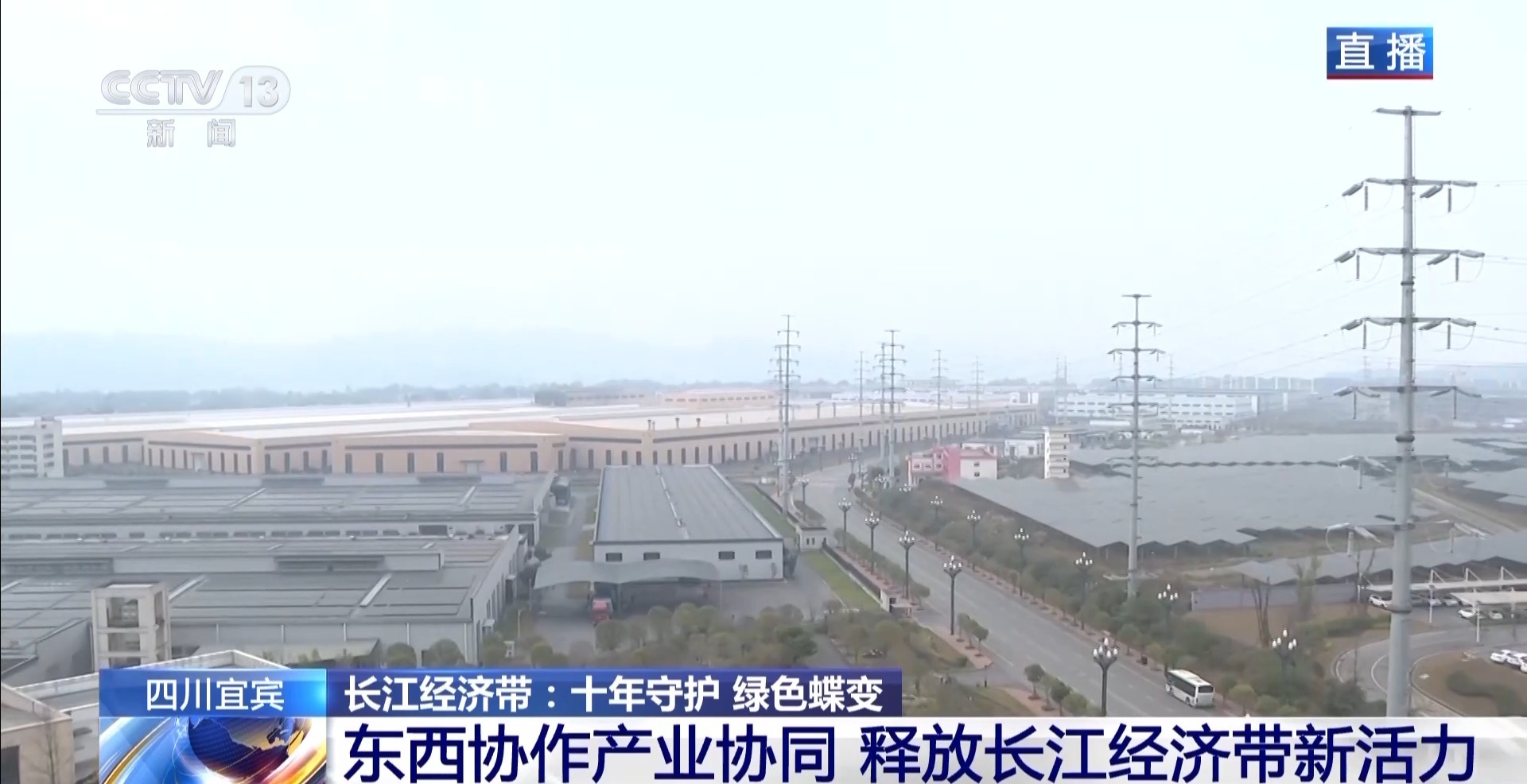
视频丨十年守护换来绿色蝶变 东西协作产业协同释放长江经济带新活力
Yang Shi Xin Wen Ke Hu Duan· 2026-01-09 14:19
Core Viewpoint - The Yangtze River Economic Belt, covering 11 provinces and cities, accounts for about half of the national population and economic total, emphasizing ecological protection and sustainable development over large-scale exploitation [1]. Group 1: Development Strategy - The development strategy of the Yangtze River Economic Belt has been implemented for ten years, focusing on ecological preservation and sustainable growth [1]. - The "Zhechuan Industrial Cooperation Demonstration Park" in Yibin, Sichuan, has transformed the textile industry into a key component of the Yangtze River Economic Belt, promoting green and coordinated regional development [1]. Group 2: Industrial Growth - The park covers an area of 6.91 square kilometers, with approximately 5 square kilometers completed, housing 39 operational enterprises, 6 under construction, and 1 planned [3]. - The park has established itself with a focus on green development, transitioning the textile industry from labor-intensive to technology-intensive [5][9]. Group 3: Technological Advancements - The enterprises in the park utilize multi-story factory designs to optimize land use and enhance logistics efficiency, while adhering to higher environmental standards for enterprise admission [7]. - Modern production lines exceeding 10,000 square meters require only a small workforce, with innovations and collaborations with educational institutions driving further advancements [11]. Group 4: Collaborative Efforts - The protection of the Yangtze River requires upstream and downstream collaboration, as well as east-west cooperation to develop the economic belt effectively [13].
UniFirst Corporation (NYSE: UNF) Earnings Report Analysis
Financial Modeling Prep· 2026-01-08 00:00
Core Insights - UniFirst Corporation is a leading provider of workplace uniforms and facility service products, competing with companies like Cintas Corporation and Aramark [1] Financial Performance - On January 7, 2026, UniFirst reported earnings per share (EPS) of $1.98, missing the estimated $2.05, but exceeded revenue expectations with $621.3 million compared to the estimated $614.7 million, marking a 2.7% increase from the previous year [2] - The company's operating margin decreased to 7.3% from 9.2% in the prior year due to planned investments in growth and digital transformation initiatives [3] - Net income for the quarter was $34.4 million, down from $43.1 million the previous year, and diluted earnings per share fell to $1.89 from $2.31 [3] Valuation Metrics - UniFirst has a price-to-earnings (P/E) ratio of approximately 25.63, indicating the market's valuation of its earnings [4] - The price-to-sales ratio is about 1.50, suggesting how much investors are willing to pay per dollar of sales [4] - The enterprise value to sales ratio is around 1.48, reflecting the company's total valuation relative to its sales [4] Financial Stability - The company maintains a low debt-to-equity ratio of 0.036, demonstrating minimal debt compared to its equity [5] - The current ratio is approximately 3.31, indicating strong liquidity and the ability to cover short-term liabilities [5] - These metrics highlight UniFirst's financial stability and potential for future growth [5]


US hemp fibre exporter Heartland taps into India’s supply chain
Yahoo Finance· 2026-01-07 12:39
Core Insights - Heartland aims to establish a supply chain in India for premium hemp fibre, targeting cost reduction for manufacturers and lower emissions [1] - The company emphasizes the unique properties of hemp fibre, including its strength, breathability, UV resistance, and environmental benefits such as requiring 95% less water than cotton [2] - A partnership involving global brands aims to promote hemp as a sustainable alternative in denim production, highlighting the industry's shift towards eco-friendly materials [3][4] Company Overview - Heartland is positioned as an exporter of premium hemp fibre, focusing on providing low-cost access to US hemp fibre for Indian manufacturers [1] - The company blends hemp fibre with other materials like cotton, linen, lyocell, and bamboo to create soft, ultra-fine fabric blends suitable for various applications [2] Industry Trends - The collaboration between Fashion for Good and major brands indicates a growing interest in sustainable materials, particularly hemp, in the fashion industry [3] - The initiative aims to validate the use of hemp and green chemistry in denim production, potentially leading to a more sustainable future for the industry [4]
Market Analysis: Top Three Losers and Their Financial Health
Financial Modeling Prep· 2026-01-06 00:00
Core Insights - The analysis highlights significant price declines among three companies, emphasizing the volatility in the biotech and technology sectors [1][4][5] Company Summaries Zenas BioPharma Inc. (NASDAQ:ZBIO) - Experienced a -57.30% drop in stock price, falling to $14.73, following the Phase 3 INDIGO trial results for obexelimab despite positive outcomes [1][5] - The market's negative reaction indicates the unpredictable nature of biotech investments [5] Signing Day Sports, Inc. (SGN) - Stock price decreased to $0.51, reflecting a -46.30% change [2] - The company announced an opportunity in AI and HPC infrastructure with BlockchAIn Digital Infrastructure, but competitive pressures and operational challenges may have contributed to the decline [2] Shineco, Inc. (SISI) - Experienced a -37.16% drop, with stock price falling to $0.18 [3] - The company saw a 6.8% decline during mid-day trading, despite a 99% reduction in trading volume, suggesting market competition and regulatory challenges in China's sectors may be impacting its performance [3] Market Trends - The significant price movements among these companies underscore the stock market's volatility, particularly in the biotech and technology sectors [4] - Investors must consider clinical trial outcomes, regulatory decisions, and competitive pressures when making informed decisions in this rapidly changing landscape [4]