
医疗信息化

Search documents
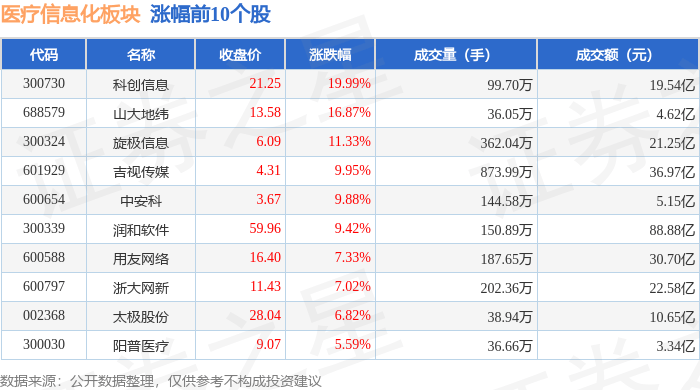
医疗信息化板块8月18日涨2.58%,科创信息领涨,主力资金净流入15.73亿元
Sou Hu Cai Jing· 2025-08-18 08:48
Market Overview - On August 18, the medical information technology sector rose by 2.58% compared to the previous trading day, with Kexin Information leading the gains [1] - The Shanghai Composite Index closed at 3728.03, up 0.85%, while the Shenzhen Component Index closed at 11835.57, up 1.73% [1] Top Gainers in Medical Information Technology - Kexin Information (300730) closed at 21.25, with a significant increase of 19.99% and a trading volume of 997,000 shares, amounting to 1.954 billion yuan [1] - Shanda Diwei (688579) saw a rise of 16.87%, closing at 13.58 with a trading volume of 360,500 shares, totaling 462 million yuan [1] - Xuanji Information (300324) increased by 11.33%, closing at 6.09 with a trading volume of 3.6204 million shares, amounting to 2.125 billion yuan [1] Market Capital Flow - The medical information technology sector experienced a net inflow of 1.573 billion yuan from institutional investors, while retail investors saw a net outflow of 806.686 million yuan [2][3] - Major stocks like Yonyou Network (600588) had a net inflow of 524 million yuan from institutional investors, but a net outflow of 327 million yuan from retail investors [3] Notable Decliners - Sichuang (300078) declined by 10.08%, closing at 3.57 with a trading volume of 1.8008 million shares, totaling 633 million yuan [2] - Jiayuan Technology (301117) fell by 7.70%, closing at 37.75 with a trading volume of 254,000 shares, amounting to 951 million yuan [2]





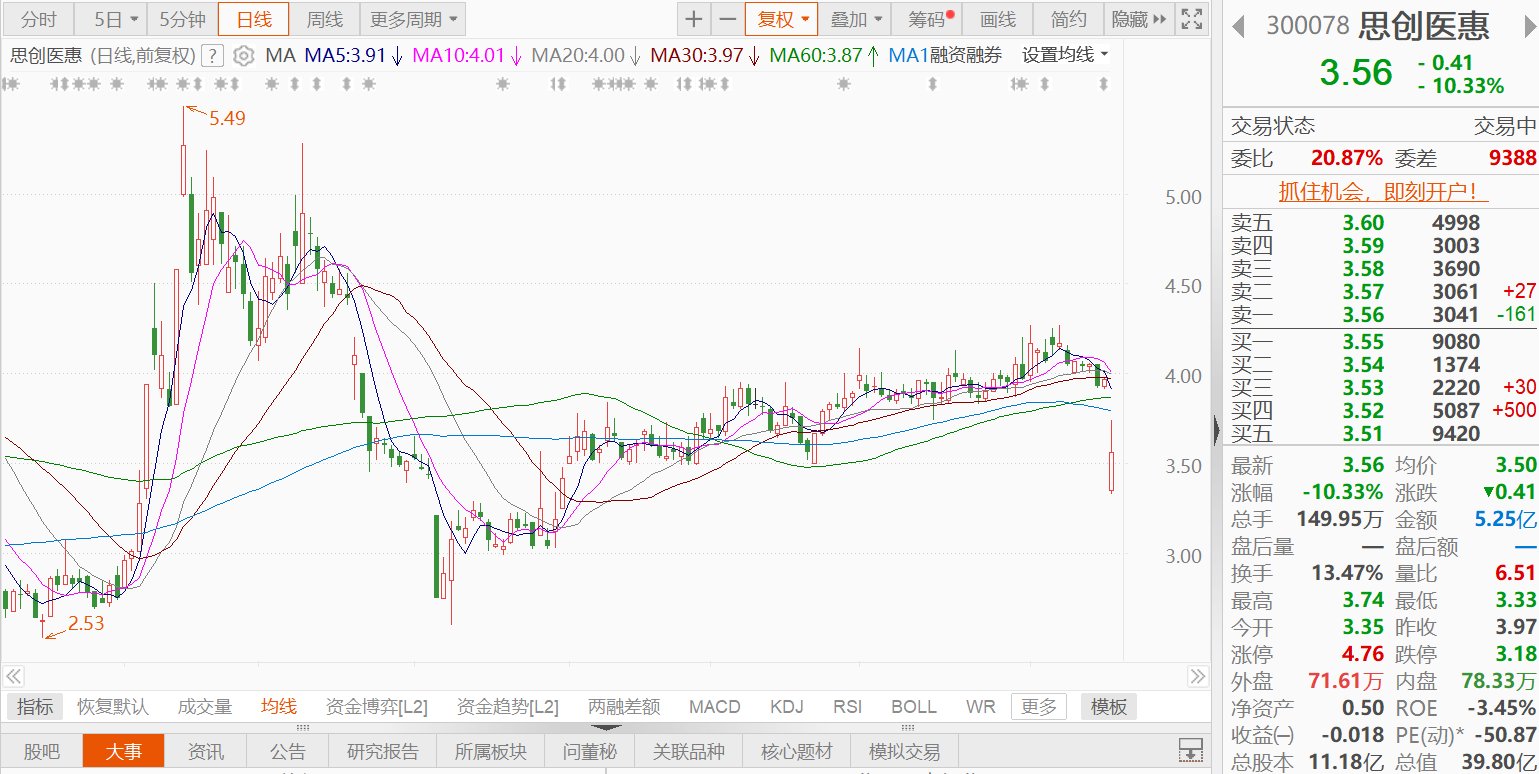
A股异动 | 思创医惠跌逾10%,因涉嫌欺诈发行证券被公安机关调查
Ge Long Hui A P P· 2025-08-18 05:35
登录新浪财经APP 搜索【信披】查看更多考评等级 思创医惠(维权)(300078.SZ)盘初一度跌逾15%,现跌10.33%报3.56元,总市值不足40亿元。思创医惠公告称,公司于2025年8月14日收到杭州市公安局出 具的《调取证据通知书》,《调取证据通知书》显示,杭州市公安局侦办的公司等涉嫌欺诈发行证券案需调取公司有关证据材料。截至目前,案件处于公安 机关侦查阶段,尚未有明确结论。公司将积极配合调查取证工作,并根据案件进展履行信息披露义务。(格隆汇) ...

思创医惠开盘大跌15.62%
Bei Jing Shang Bao· 2025-08-18 01:41
Core Viewpoint - Sichuang Medical (300078) experienced a significant drop of 15.62% at the opening, with a share price of 3.35 yuan due to a legal issue involving allegations of fraudulent securities issuance [1] Company Summary - Sichuang Medical received a notification from the Hangzhou Public Security Bureau requesting evidence related to an investigation into alleged fraudulent securities issuance [1]
从治疗到“智”疗 解码河南数智健康发展新图景
He Nan Ri Bao· 2025-08-16 00:33
Core Insights - The integration of digital intelligence in healthcare is transforming medical services, optimizing resource allocation, and enhancing patient experiences [1] - The implementation of intelligent diagnostic systems in rural healthcare settings is improving diagnostic accuracy and treatment outcomes [3][4][5] Group 1: Intelligent Diagnostic Systems - The intelligent diagnostic system provides multiple disease suggestions and alerts for potential medication conflicts, significantly aiding rural doctors in their decision-making [5][6] - The system has delivered over 16.38 million diagnostic suggestions and corrected 1,264 unreasonable prescriptions, thereby reducing misdiagnosis and improving the quality of care [6] - The system is part of a broader initiative by the provincial health commission to implement an "Artificial Intelligence + Healthcare" action plan, focusing on various medical specialties [6] Group 2: Resource Integration in County Healthcare - The establishment of digital medical communities is crucial for integrating fragmented healthcare resources, enhancing service delivery in rural areas [7][9] - The digital medical community in Gongyi City has connected multiple healthcare facilities, enabling real-time remote consultations and diagnostics, which saves time and costs for patients [9][12] - The community has conducted over 1.7 million remote medical services, significantly reducing healthcare expenses for the public [12] Group 3: Provincial Health Information Platform - The provincial health information platform has transformed previously isolated health data into a comprehensive service platform, facilitating data sharing across hospitals and departments [14][15] - The platform has integrated over 230 billion data entries and achieved 100% connectivity for all secondary and tertiary public hospitals, with nearly 60% of grassroots medical institutions connected [16] - The initiative aims to enhance patient care by streamlining processes and reducing the need for patients to visit multiple facilities [18]
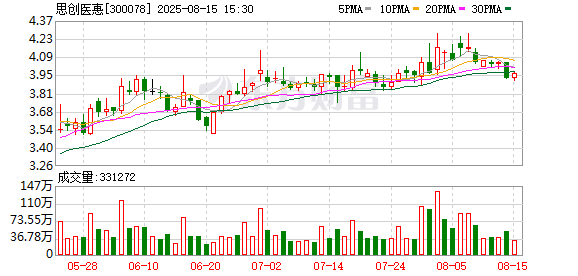
深夜突发!300078,涉嫌欺诈发行证券案!公安出手了
Zhong Guo Ji Jin Bao· 2025-08-15 16:19
Core Viewpoint - Sichuang Medical is under investigation by the Hangzhou Public Security Bureau for suspected fraudulent issuance of securities, marking the first time this issue has been publicly acknowledged since its listing in April 2010 [2][6]. Group 1: Investigation Details - On August 14, Sichuang Medical received a notice from the Hangzhou Public Security Bureau requesting evidence related to the investigation of the suspected fraudulent issuance of securities [6]. - The case is currently in the investigation stage, and no definitive conclusions have been reached yet [6]. Group 2: Financial Irregularities - The Administrative Penalty Decision issued by the Zhejiang Securities Regulatory Bureau on January 8, 2024, indicates that Sichuang Medical inflated its operating income by CNY 34.93 million and profits by CNY 33.02 million in 2019, and inflated operating income by CNY 60.96 million and profits by CNY 52.37 million in the first three quarters of 2020 [12]. - The company’s public offering documents contained significant false information, and its 2019 and 2020 annual reports included false records [12]. Group 3: Fundraising and Investment Issues - Sichuang Medical has faced continuous losses in recent years, with net profits of -CNY 8.78 billion in 2022, -CNY 8.74 billion in 2023, -CNY 5.02 billion in 2024, and -CNY 195.59 million in the first quarter of 2025 [19]. - The company has not fully invested the raised funds from its 2019 non-public stock issuance and 2021 convertible bond issuance into planned projects, with only CNY 30.54 million out of CNY 56.54 million planned for investment actually utilized [14][15]. - Specific projects, such as the Internet + AI medical innovation operation service project, have seen minimal investment compared to their planned amounts, with only CNY 0.23 million invested out of a planned CNY 3.33 billion [16][18]. Group 4: Recent Financial Performance - In 2024, Sichuang Medical reported operating revenue of CNY 690.77 million, a decrease of 31.33% compared to 2023, which had revenue of CNY 1.01 billion [20]. - The net profit attributable to shareholders was -CNY 501.51 million in 2024, showing an improvement of 42.64% from -CNY 874.35 million in 2023 [20].

山西实现省域内跨院影像互通共享
Zhong Guo Fa Zhan Wang· 2025-08-15 07:04
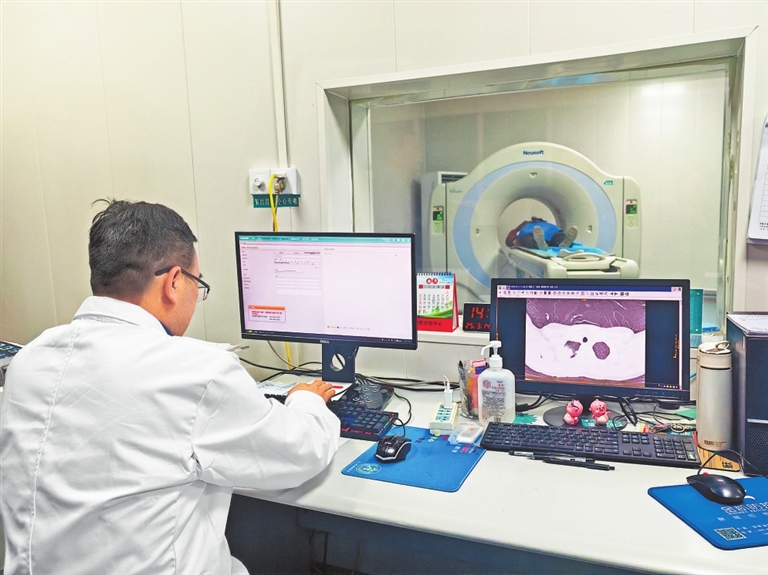
Core Insights - The construction of the Shanxi Province Medical Digital Imaging Cloud Platform has achieved a significant breakthrough, with 276 qualified public medical institutions connected to the platform, enabling "one network sharing" of imaging data and surpassing a total data volume of 100TB [1] Group 1 - The platform is built under a "government-led, multi-party participation, sustainable operation" model, spearheaded by the Shanxi Provincial Health Commission, creating a unified infrastructure for smart imaging cloud, digital imaging services, quality control, training, and research [1] - The core value of the platform lies in breaking down information barriers between medical institutions, allowing for the sharing of imaging examination results across all medical facilities, thus reducing unnecessary repeat examinations and healthcare costs [1] - The platform will eventually integrate with the electronic health card, enhancing its application as a crucial component of residents' electronic health records [1] Group 2 - The next steps for Shanxi Province include deepening application and service integration, ensuring that doctors can easily access patients' historical imaging and reports at any connected hospital [2] - The platform aims to promote efficient data connection and sharing, ensuring that medical insurance settlements align closely with imaging recognition requirements, thereby achieving cost savings for patients [2] - The initiative will leverage the "Internet+" health development opportunity to expand the application of artificial intelligence (AI) in areas such as AI-assisted imaging screening, diagnostic reporting, and quality control, enhancing diagnostic efficiency and accuracy [2] - The coverage of the platform will gradually extend from secondary and higher public medical institutions to eligible grassroots medical institutions and private medical facilities [2]
逆境中核心业务盈利稳增,体检数字化龙头锁定新增长曲线
Sou Hu Cai Jing· 2025-08-15 06:53
Core Insights - Tianfangda, a leading digital health service provider in China, has shown a revenue growth of 6% and a cost reduction of 2% in the first half of 2025, achieving significant profitability [1][2][8] - The company has two clear growth trajectories: the enhancement of its core competencies in established businesses like health check information and internet health check services, and the exploration of new growth areas such as the H-B-C three-link platform and innovative health check categories [2][9] Business Development - Founded in 1996, Tianfangda was one of the earliest HIS software service providers in China, rapidly expanding and achieving a leading market share in Shenzhen [4] - The company shifted its focus to public hospital health check information services to mitigate cash flow risks, establishing a strong foundation in the health check center informationization sector [4][5] - In 2014, Tianfangda expanded into internet health check services, integrating the service chain for health check centers and providing a complete health management solution for clients [5][10] AI and Innovation - AI is a fundamental capability driving Tianfangda's business model, with significant advancements in AI applications such as personalized health check package recommendations and intelligent health check report interpretations [9][10][11] - The company aims to build a health data interconnectivity platform to enhance efficiency and consumer experience in the health check industry [10][11] Future Growth Areas - Tianfangda is exploring new consumer medical categories and expanding into the elderly care market, addressing the growing demand for health checks and management services among the aging population [10][11] - The H-B-C three-link platform is expected to create a competitive edge through data interconnectivity, with plans to expand its reach nationwide by 2026 [11]

荣科科技20.0%涨停,总市值146.63亿元
Sou Hu Cai Jing· 2025-08-13 03:31
截至11月30日,荣科科技股东户数7.37万,人均流通股8677股。 2024年1月-9月,荣科科技实现营业收入4.75亿元,同比减少8.55%;归属净利润-661.83万元,同比减少 181.06%。 来源:金融界 8月13日,荣科科技盘中20.0%涨停,截至11:18,报22.92元/股,成交14.56亿元,换手率10.77%,总市 值146.63亿元。 资料显示,荣科科技股份有限公司位于辽宁省沈阳市沈阳经济技术开发区开发大路7甲3号,公司主要从 事医疗信息化领域的业务,通过收购医疗信息化领域的领军企业,打造了多维度信息化产品服务体系, 同时也在智慧城市领域进行积极拓展。公司已服务全国超七成百强医院、超4000家医疗机构,市场份额 逐年稳步提升,拥有信息化领域的发明专利60余项,软件著作权800余项。 ...

一张信息网,兜牢健康保障底线(民生一线)
Ren Min Ri Bao· 2025-08-12 22:30
Core Insights - The article highlights the implementation of a smart medical community project in the Shigatse region of Tibet, which utilizes advanced technologies such as 5G, big data, and AI to enhance healthcare services and data connectivity across different levels of medical institutions [1][8]. Group 1: Project Implementation and Technology - The smart medical community project was initiated by the Qingdao aid team, integrating various technologies to create a comprehensive health management system that connects district, township, and village medical data [1][8]. - The project has established a network of 161 village clinics, 10 township health centers, and 2 community health service centers, facilitating better communication and collaboration among healthcare providers [7]. Group 2: Patient Care and Health Records - Village doctors are now equipped with digital tools to create electronic health records, allowing for better tracking of patient health and more informed medical decisions [2][5]. - The introduction of health records has improved the accuracy of diagnoses, as seen in the identification of a previously undetected diabetes case through comprehensive patient data [3][5]. Group 3: Emergency Response and Treatment Efficiency - The system allows for real-time sharing of diagnostic information, significantly improving emergency response capabilities, as demonstrated by a case of a patient with a heart attack who was quickly referred to a higher-level hospital [6][7]. - The integration of telemedicine and remote guidance from specialists has enhanced the treatment capacity of local healthcare providers, enabling timely interventions [6][7]. Group 4: Operational Efficiency and Cost Reduction - The project has streamlined data management processes, reducing the need for multiple systems and improving overall operational efficiency in healthcare facilities [8][9]. - Electronic inventory management has minimized medication shortages and improved the responsiveness of healthcare providers to patient needs [9]. Group 5: Overall Impact on Healthcare Delivery - The smart medical community project has significantly improved the healthcare experience for patients, reducing redundant tests and simplifying medical reimbursement processes [7][9]. - The initiative has also enabled better government oversight and management of healthcare resources, leading to more precise decision-making and improved public health outcomes [9][10].


遭股东接力减持的创业慧康:净利暴跌现上市首亏,逾15亿应收账款难掩现金流承压
Zheng Quan Zhi Xing· 2025-08-07 09:38
Core Viewpoint - The company, Chuangyue Huikang, is facing significant challenges, including a sharp decline in profits and cash flow issues, leading to concerns about its future development prospects [1][5][6]. Shareholder Actions - Philips (China) Investment Co., Ltd., the second-largest shareholder, announced plans to sell 3% of its shares, which amounts to approximately 46.33 million shares, potentially raising around 276 million yuan based on the closing price of 5.96 yuan per share [2][3]. - The company's first major shareholder, Ge Hang, has also been reducing his stake, citing debt repayment and risk reduction as reasons for his actions [3][4]. Financial Performance - In 2024, Chuangyue Huikang reported a revenue of approximately 1.423 billion yuan, a year-on-year decrease of 11.96%, and a net profit of -174 million yuan, marking a dramatic decline of 572.96% [5][6]. - The company experienced a significant loss in the fourth quarter of 2024, which dragged the annual performance into negative territory, despite a profit of 52.75 million yuan in the first three quarters [5][6]. Cash Flow and Receivables - The company has a high level of accounts receivable, totaling 1.55 billion yuan, which exceeds its revenue and accounts for 27.35% of total assets, indicating potential cash flow issues [6][7]. - Operating cash flow decreased by 27.31% to 115 million yuan in 2024, exacerbating the company's cash flow challenges [6][7]. Future Outlook - The company anticipates continued pressure on profits into 2025, with a projected revenue of 290 million yuan in the first quarter, a year-on-year decrease of 22.67%, and a net profit of -15.64 million yuan, reflecting a decline of 226.6% [7]. - Management believes that the current difficulties are part of a phase of adjustment, with expectations for future growth driven by the integration of artificial intelligence and medical information technology [7].
