Autonomous Driving

Search documents
Diffusion²:一个双扩散模型,破解自动驾驶“鬼探头”难题!
自动驾驶之心· 2025-10-09 23:32
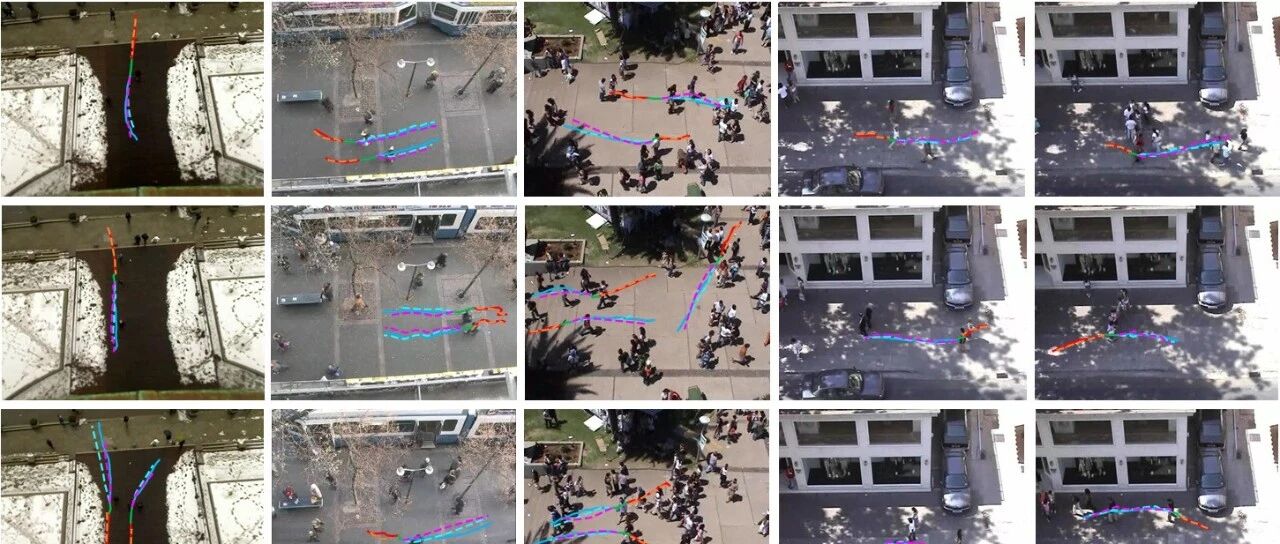
Core Insights - The article discusses the development of a novel framework called Diffusion², designed specifically for momentary trajectory prediction in autonomous driving scenarios, addressing the challenge of pedestrian trajectory prediction when limited observational data is available [1][52]. Background and Contributions - Accurate pedestrian trajectory prediction is crucial for enhancing vehicle safety, especially in human-vehicle interaction scenarios. Traditional methods often rely on longer observation periods, which may not be feasible in real-world situations where pedestrians suddenly appear from blind spots [2][52]. - The study highlights the frequency of momentary observations in datasets, with rates of 2.22 s⁻¹ in the SDD dataset and 1.02 s⁻¹ in the ETH/UCY dataset, emphasizing the need for models that can predict trajectories with limited data [2]. - The proposed Diffusion² model consists of two sequential diffusion models: one for backward prediction of unobserved historical trajectories and another for forward prediction of future trajectories, capturing the causal dependencies between these components [6][7]. Model Architecture - Diffusion² employs a dual diffusion model architecture, incorporating a dual-headed parameterization mechanism to quantify the aleatoric uncertainty of the predicted historical trajectories. This mechanism enhances the model's ability to handle noise in the predictions [4][5][7]. - A time-adaptive noise scheduling module is introduced, which dynamically adjusts the noise scale during the forward diffusion process based on the estimated uncertainty, allowing for more robust trajectory predictions [5][22]. Experimental Results - The Diffusion² model achieved state-of-the-art (SOTA) performance in momentary trajectory prediction tasks across multiple datasets, including ETH/UCY and Stanford Drone datasets, outperforming existing methods [7][44]. - The results indicate significant improvements in average displacement error (ADE) and final displacement error (FDE) metrics compared to previous models, showcasing the effectiveness of the proposed approach [44]. Limitations and Future Work - Despite its successes, Diffusion² faces inherent limitations, particularly in interactive and dense scenarios, where its adaptability may decrease. Future work aims to enhance the model's efficiency and robustness in more complex traffic environments [52][54]. - The article suggests exploring more efficient training and inference methods to reduce computational costs while maintaining prediction quality [53].

小马智行 - 自动驾驶出租车生态系统与乘客兴趣上升支撑大规模运营;目标价上调至 31.3 美元;“买入” 评级
2025-10-09 02:00
Summary of Pony AI Inc. (PONY) Conference Call Company Overview - **Company**: Pony AI Inc. (PONY) - **Industry**: Autonomous Driving and Robotaxi Ecosystem Key Points and Arguments Robotaxi Ecosystem Expansion - The expansion of the Robotaxi ecosystem is supported by an increasing number of new players, including autonomous driving chip suppliers and ride-hailing platforms, which accelerates commercialization efforts with larger scale and lower costs [1][2] - Pony AI collaborates with various ecosystem partners to enhance its driverless fleet operations across multiple cities in China and is also expanding into international markets such as the Middle East and Singapore [1] Financial Performance and Projections - Revenue projections for 2027-2032 have been revised upwards by 1%, primarily due to increased Robotaxi revenues driven by a rise in Gross Merchandise Value (GMV) per vehicle [3] - The company anticipates a net loss of US$216 million in 2025, US$231 million in 2026, and US$254 million in 2027, reflecting higher R&D spending on Robotaxi development [3] Earnings Revision - Gross Margin (GM) is expected to improve by 0.3 percentage points in 2028-2032, attributed to changes in product mix [3] - Operating expenses (Opex) ratio is revised downwards by approximately 0.4 to 0.3 percentage points, indicating improved operational efficiency [3] Target Price and Valuation - The 12-month target price for Pony AI is revised to US$31.3 from US$27.7, based on a discounted EV/EBITDA method with a multiple of 16.6x for 2031E EBITDA [7][13] - The target price reflects a 30.1% upside from the current price of US$24.06 [16] Market Dynamics and Risks - Key risks identified include regulatory challenges, supply chain issues, market growth for Robotaxis, personal information concerns, infrastructure limitations, pricing competition, and product liability [14] Revenue and Growth Metrics - Revenue projections show significant growth, with expectations of reaching US$3.964 billion by 2032, reflecting a year-over-year growth rate of 13% [8][12] - The Robotaxi business is projected to contribute significantly to revenues, with exposure increasing from 0% in 2021 to 94% by 2032 [8] Operational Metrics - The company expects to operate a fleet of 53,000 Robotaxis by 2032, with revenues per car projected to increase significantly over the years [8] - The operating margin is expected to improve from -291.4% in 2026 to 30.5% by 2031, indicating a path towards profitability [12] Additional Important Information - The company is actively working on enhancing operational efficiency and passenger experience through partnerships with service providers like ComfortDelGro [2] - The financial outlook includes a focus on R&D investments, which are expected to decrease as the company scales operations [3][12] This summary encapsulates the critical insights from the conference call regarding Pony AI's strategic direction, financial outlook, and market positioning within the autonomous driving industry.
自动驾驶之心双节活动即将截止(课程/星球/硬件优惠)
自动驾驶之心· 2025-10-08 23:33
Core Insights - The article emphasizes the importance of continuous learning and engagement in the field of autonomous driving technology, highlighting various educational resources and community interactions available for professionals and enthusiasts in the industry. Group 1: Educational Offerings - The platform offers a significant discount on courses, with an 80% off coupon and a 70% discount card available for users [3] - New users can benefit from a 30% discount on renewals and a 50% discount for specific offerings [4] - A comprehensive overview of core content related to autonomous driving is provided, including 40+ learning paths covering advanced topics [5] Group 2: Community Engagement - The platform facilitates direct interactions with industry leaders and academic experts, allowing for face-to-face discussions on cutting-edge topics in autonomous driving [6] - Key discussions include the competition between VLA and WA, future directions of autonomous driving, and the intricacies of world models [6] - The community also features high-level courses on various technical subjects such as trajectory prediction, camera calibration, and 3D point cloud detection [6]
Can Apollo Go's Global Expansion Power Baidu's Next Growth Phase?
ZACKS· 2025-10-08 15:35
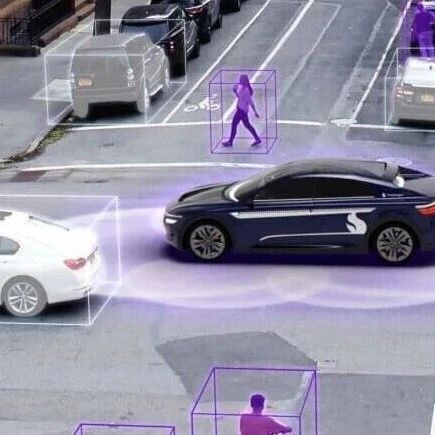
Core Insights - Baidu's autonomous driving unit Apollo Go is at a pivotal moment that could significantly alter the company's revenue trajectory beyond its traditional search and cloud businesses [1] - The robotaxi service has achieved over 2.2 million fully driverless rides in Q2 2025, marking a 148% year-over-year growth, indicating strong operational momentum as it scales globally [1] Strategic Partnerships - Baidu has formed strategic partnerships with Uber and Lyft, which are crucial for its international expansion strategy [2] - These collaborations will deploy thousands of Apollo Go vehicles across Asia, the Middle East, and Europe, utilizing established mobility platforms to facilitate market entry while maintaining an asset-light model [2] - This strategy addresses previous concerns regarding capital intensity in autonomous vehicle deployment and opens pathways to higher-margin international markets [2] Unit Economics - Apollo Go has achieved unit-level profitability in Wuhan, where taxi fares are approximately 30% lower than in tier-one Chinese cities, enhancing its operational efficiency [3] - The RT6, the world's first purpose-built Level 4 autonomous vehicle with the lowest-in-class unit costs, positions Baidu to capture significant value in premium fare markets internationally [3] - The expansion into Hong Kong showcases Baidu's technical capabilities in complex right-hand drive environments, a feat few competitors have accomplished at a commercial scale [3] Revenue Contribution - As Baidu diversifies its revenue base, the contribution from Apollo Go is expected to become increasingly significant [4] - The Zacks Consensus Estimate for Q3 2025 revenues is $4.34 billion, reflecting a 9.33% year-over-year decline as the company shifts towards a more balanced revenue mix [4] - Apollo Go's expanding international operations and improving unit economics are anticipated to mitigate this temporary revenue softness over time [4] Competitive Landscape - Baidu faces increasing competition in autonomous driving from Tesla and Alphabet's Waymo, both of which are advancing their driverless mobility initiatives [5] - Tesla is enhancing its Full Self Driving technology for broader commercial deployment, while Waymo is expanding its operations in the U.S. with improved ride-hailing coverage [5] - Baidu's focus on mass market robotaxi commercialization contrasts with Tesla and Waymo's emphasis on premium autonomous transport, highlighting the competitive race for global leadership in self-driving technology [5] Stock Performance and Valuation - Baidu's shares have increased by 64.8% year-to-date, outperforming the Zacks Internet - Services industry and the Zacks Computer and Technology sector, which grew by 32.8% and 24.1%, respectively [6] - The forward 12-month price/earnings ratio for Baidu is 17.31X, below the industry average of 24.65X, indicating potential value [10] - The Zacks Consensus Estimate for Baidu's Q3 2025 earnings is $7.51 per share, reflecting a 28.66% year-over-year decline [12]

Tradr Launches First-to-Market Leveraged ETFs on AUR, CELH, LYFT, NET & OKTA - Celsius Holdings (NASDAQ:CELH), Aurora Innovation (NASDAQ:AUR)
Benzinga· 2025-10-08 10:46
Core Insights - Tradr ETFs has launched five new single stock leveraged ETFs aimed at providing 200% long exposure on specific underlying stocks, marking a significant expansion in their product offerings [1][2] - The new ETFs cover diverse industries including cybersecurity, autonomous driving, and mobility services, catering to sophisticated investors and professional traders [2] Company Overview - Tradr ETFs is recognized for its innovative approach, having been the first issuer to launch leveraged ETFs on single stocks in 2022, starting with TSLQ for Tesla and NVDS for Nvidia [2] - The firm now offers a total of 39 leveraged ETFs with over $1.7 billion in assets under management, accessible through most brokerage platforms [2] Product Details - The newly launched ETFs include Tradr 2X Long AUR Daily ETF tracking Aurora Innovation, Tradr 2X Long CELH Daily ETF tracking Celsius Holdings, Tradr 2X Long LYFT Daily ETF tracking Lyft, Tradr 2X Long NET Daily ETF tracking Cloudflare, and Tradr 2X Long OKTA Daily ETF tracking Okta [9] - These ETFs are designed to provide traders with the ability to express market views with precision and efficiency, avoiding the complexities of margin and options trading [2][4]






Can Investing $10,000 in Nebius Group Stock Make You a Millionaire?
Yahoo Finance· 2025-10-06 08:44
Group 1 - Nebius Group is currently the top-performing large-cap AI stock in 2025, with a year-to-date gain of over 350% [2] - The company focuses on AI infrastructure and operates seven large-scale GPU clusters across Europe, the U.S., and the Middle East [3] - Nebius Group serves notable clients such as Cloudflare and Shopify, along with various AI start-ups [4] Group 2 - In addition to AI infrastructure, Nebius has subsidiaries that develop autonomous driving technology and an online education platform for technology workers [5] - The company holds equity stakes in Toloka, which provides curated data for AI, and ClickHouse, which offers an open-source database management platform [6] - Nebius is positioned as an early entrant in a rapidly growing market, with CEO Arkady Volozh highlighting its technological expertise and scale [8]

模仿学习无法真正端到端!DriveDPO:Safety DPO打破模仿学习固有缺陷(中科院最新)
自动驾驶之心· 2025-10-03 03:32
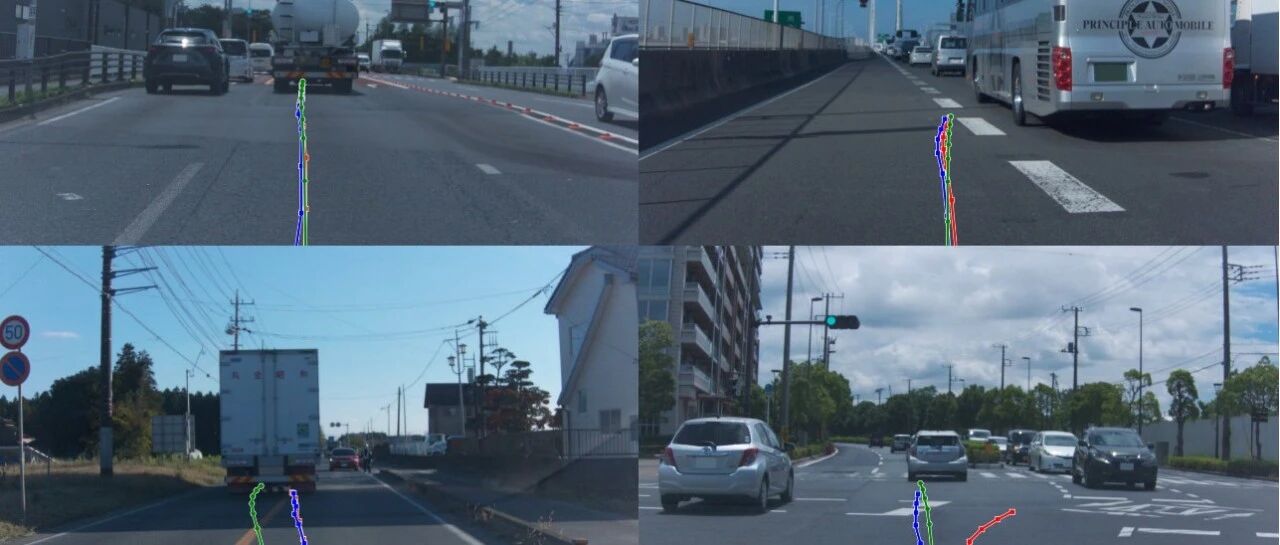
Core Viewpoint - The article discusses the challenges of end-to-end autonomous driving, particularly focusing on the limitations of imitation learning and the introduction of DriveDPO, a safety-oriented policy learning framework that enhances driving safety and reliability [1][7][28]. Summary by Sections Imitation Learning Challenges - Imitation learning can lead to unsafe driving behaviors despite generating trajectories that appear human-like, as it does not account for the safety implications of certain maneuvers [5][11]. - The symmetric loss functions commonly used in imitation learning fail to differentiate between safe and unsafe deviations from human trajectories, leading to potential risks [5][11]. DriveDPO Framework - DriveDPO integrates human imitation signals and rule-based safety scores into a unified strategy distribution for direct policy optimization, addressing the shortcomings of both imitation learning and score-based methods [8][12]. - The framework employs an iterative Direct Preference Optimization (DPO) approach to prioritize trajectories that are both human-like and safe, enhancing the model's responsiveness to safety preferences [8][19]. Experimental Results - Extensive experiments on the NAVSIM benchmark dataset demonstrated that DriveDPO achieved a PDMS (Policy Decision Metric Score) of 90.0, outperforming previous methods by 1.9 and 2.0 points respectively [8][22]. - Qualitative results indicate significant improvements in safety and compliance in complex driving scenarios, showcasing the potential of DriveDPO for safety-critical applications [12][28]. Contributions - The article identifies key challenges in current imitation learning and score-based methods, proposing DriveDPO as a solution that combines unified strategy distillation with safety-oriented DPO for effective policy optimization [12][28]. - The framework's ability to suppress unsafe behaviors while enhancing overall driving performance highlights its potential for deployment in autonomous driving systems [12][28].
WeRide Launches Robotaxi and Robobus Pilots in Ras Al Khaimah, Expanding Into Third UAE Emirate
Globenewswire· 2025-10-02 09:00
Core Insights - WeRide has launched Robotaxi GXR and Robobus pilot operations in Ras Al Khaimah, marking its first deployment in the emirate and expanding its presence in the UAE [1][2] Company Operations - The pilot integrates WeRide's autonomous vehicles into Ras Al Khaimah's public transport system, aiming for broader commercialization across the country [2] - WeRide is the sole partner for Ras Al Khaimah's smart mobility strategy and the only AV company with active operations in the emirate [2] - The Robobus will operate across nine stops on Al Marjan Island, connecting key hotels and resorts, while the Robotaxi GXR will serve the city center [5][6] Regulatory and Strategic Developments - Commercial operations are set to begin in early 2026, with a safety officer onboard initially, transitioning to fully driverless operations pending regulatory approval [6] - The launch aligns with RAKTA's Comprehensive Mobility Plan 2030, which aims to integrate various transport modes and advance sustainability [7] - A Memorandum of Understanding (MoU) was signed between WeRide and RAKTA to provide technical solutions and operational support for the deployment of AVs [8][9] Industry Context - Ras Al Khaimah is enhancing its tourism sector, particularly on Al Marjan Island, which will host the Middle East's first casino, and WeRide's partnership supports this vision for autonomous transport [10] - WeRide is recognized as a leader in the autonomous driving industry, having tested or operated vehicles in over 30 cities across 11 countries [11]

BEVTraj:一个端到端的无地图轨迹预测新框架
自动驾驶之心· 2025-10-02 03:04
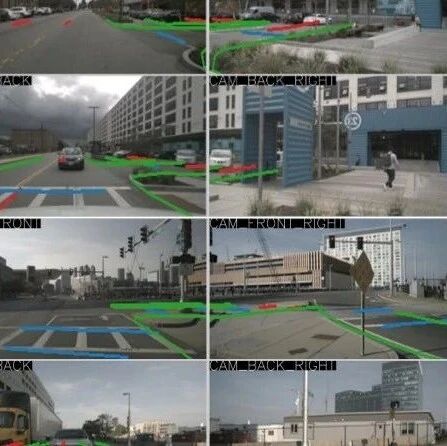
Core Viewpoint - The article discusses the limitations of high-definition maps in autonomous driving and introduces BEVTraj, a new trajectory prediction framework that operates without relying on maps, achieving performance comparable to state-of-the-art (SOTA) models based on high-definition maps [1][3][26]. Group 1: Background and Challenges - High-definition maps provide structured information that enhances prediction accuracy but have significant drawbacks, including high costs, limited coverage, and inability to adapt to dynamic changes like road construction or accidents [3]. - The reliance on high-definition maps is a major bottleneck for the large-scale deployment of autonomous driving technology [3]. Group 2: Solutions Explored - Two main paths have been explored to address the challenges: online mapping, which still depends on a mapping module, and a map-free approach that utilizes raw sensor data for predictions [4][6]. - BEVTraj represents the latter approach, leveraging raw sensor data to extract sufficient geometric and semantic information for accurate trajectory predictions [4]. Group 3: BEVTraj Framework - BEVTraj operates in a unified bird's-eye view (BEV) space, consisting of a scene context encoder and an iterative deformable decoder [7]. - The scene context encoder extracts rich scene features from multi-modal sensor data and vehicle historical trajectories, generating a dense BEV feature map [11]. - A key innovation is the deformable attention mechanism, which focuses on a small number of critical sampling points in the BEV feature map, enhancing computational efficiency [11]. Group 4: Iterative Refinement and Prediction - The iterative deformable decoder generates final multi-modal trajectory predictions using the deformable attention mechanism and a sparse goal candidate proposal module [13]. - The sparse goal candidate proposal (SGCP) module predicts a limited number of high-quality candidate points based on vehicle dynamics and scene context, streamlining the prediction process [13][14]. Group 5: Experimental Results - BEVTraj's performance is competitive with SOTA models, demonstrating its effectiveness in generating reasonable trajectories even in complex scenarios like sharp turns and intersections [17][20]. - The results indicate that BEVTraj can learn implicit geometric constraints from raw sensor data, achieving a minimum Average Displacement Error (minADE) of 1.4556 and a minimum Final Displacement Error (minFDE) of 8.4384 [18]. Group 6: Summary and Value - BEVTraj marks a milestone in the field of autonomous driving trajectory prediction by validating the feasibility of map-free solutions and enhancing system flexibility and scalability [21][26]. - The framework's efficient end-to-end architecture, utilizing deformable attention and sparse proposals, provides a valuable design paradigm for the industry [26]. - The open-source code will significantly promote research in map-free perception and prediction within the community [26].
5 Stock Picks For September From Wall Street's Most Accurate Analysts
Benzinga· 2025-10-01 11:16
Market Overview - U.S. stocks closed higher, with the Nasdaq Composite gaining approximately 0.3% and the Dow Jones reaching a new closing high [1] - Major indices saw gains in September, with the S&P 500 increasing over 3%, the Dow rising nearly 2%, and the Nasdaq jumping 5.6% [1] Analyst Ratings and Insights - Benzinga's Analyst Ratings API provides high-quality stock ratings through partnerships with major sell-side banks, offering daily updates three hours before the U.S. market opens [2] - Analyst insights from Benzinga Pro subscribers have been identified as effective trading indicators that can outperform the stock market [2] Top Analyst Picks - John Todaro, Trevor Walsh, Nick McKay, and Asiya Merchant are noted as some of the most accurate Wall Street analysts according to Benzinga [3] Individual Analyst Ratings - **Needham**: Maintained a Buy rating on Robinhood Markets Inc (NASDAQ:HOOD) with a price target increase from $120 to $145, indicating about 2% upside [4] - **JMP Securities**: Reiterated a Market Outperform rating on Axon Enterprise Inc (NASDAQ:AXON) with a price target of $825, suggesting around 15% upside [4] - **Freedom Capital Markets**: Downgraded Electronic Arts Inc (NASDAQ:EA) from Buy to Hold, raising the price target from $185 to $195, anticipating a 3% decline [4] - **Citigroup**: Maintained a Buy rating on TE Connectivity PLC (NYSE:TEL) with a price target increase from $230 to $250, expecting around 14% gain [4] - **Mizuho**: Initiated coverage on Alphabet Inc (NASDAQ:GOOGL) with an Outperform rating and a price target of $295, predicting a 22% gain [7]