显示面板

Search documents
京东方A(000725) - 035-2025年12月18日投资者关系活动记录表
2025-12-19 00:46
Group 1: Market Performance and Product Trends - The company anticipates an increase in overall shipment volume and area for the year, driven by demand for TV products, despite a slowdown in large-size TV trends due to market dynamics [1] - IT product shipments are expected to grow rapidly due to replacement demand, while MNT product shipments are projected to remain flat year-on-year [1][2] - The OLED market is experiencing increased competition, with a significant rise in low-end Ramless product shipments and a shift towards overseas brand LTPO demand [3] Group 2: Technological Developments - The company announced an investment in an 8.6 generation AMOLED production line to produce high-end touch OLED displays for laptops and tablets, aiming to enhance competitiveness in the high-end market [4] - The company is focused on optimizing product structure to improve operational performance amidst short-term pressures [3] Group 3: Financial Outlook - Depreciation is expected to peak in 2025, with a gradual reduction in depreciation from existing production lines [5] - Capital expenditures are projected to peak in 2025, primarily for the 8.6 generation AMOLED production line and the 6th generation LCD LTPO/LTPS production line [6][7] - The company plans to repurchase minority shareholder equity based on operational and cash flow conditions, following a recent reduction in minority shareholder equity related to the Wuhan 10.5 generation LCD production line [8] Group 4: Shareholder Returns - The company has announced a shareholder return plan for 2025-2027, committing to distribute at least 35% of the net profit attributable to the parent company as cash dividends annually, and to allocate no less than RMB 1.5 billion for share repurchases [9][10] - This plan reflects a comprehensive analysis of the company's operational development, long-term strategy, and external financing environment, aiming to establish a stable and predictable shareholder return mechanism [10]

广州经济“U型”回升,谁在支撑?
2 1 Shi Ji Jing Ji Bao Dao· 2025-12-18 14:44
Group 1: Economic Overview - Guangzhou's GDP growth trajectory has formed a clear "U-shaped" curve, with a forecasted growth rate of 2.1% for 2024, lower than the national and provincial averages [1] - In 2025, GDP growth is expected to rebound significantly, starting from 3.0% in Q1 and reaching 4.1% in the first three quarters, aligning with Guangdong province's growth rate [1] Group 2: Emerging Industries - The "3+5" strategic emerging industries in Guangzhou achieved an added value of 751.73 billion yuan, with a year-on-year growth of 4.6%, contributing 35.2% to GDP growth [2] - Key sectors such as new energy vehicles, OLED production, and low-altitude economy are showing strong growth, with significant increases in production and new business formations [2][3] Group 3: Automotive Industry - The automotive industry remains a pillar of Guangzhou's economy, with a decrease in added value of 2.6% in Q3, but a notable improvement from earlier declines [3] - Guangzhou Automobile Group reported a Q3 sales volume of 428,400 vehicles, a quarter-on-quarter increase of 11.49%, with significant growth in overseas sales [3][4] Group 4: Traditional Manufacturing Upgrades - Traditional manufacturing sectors, including home appliances and display manufacturing, are experiencing double-digit growth, with integrated circuit manufacturing value increasing by 37.4% [5] - The automotive sector's strategic adjustments focus on electrification, intelligence, and internationalization, contributing to its recovery [4][5] Group 5: New Economic Drivers - New economic drivers are emerging, with significant projects like the G8.6 OLED production line and flying car production facilities being established [7][8] - The low-altitude economy is rapidly developing, with over 4,200 companies in the sector and substantial growth in aerospace manufacturing and drone production [9] Group 6: Policy Support and Ecosystem - Guangzhou's supportive policies in the autonomous driving sector have attracted companies, facilitating advancements in technology and commercial applications [10] - The presence of unicorns and specialized enterprises in emerging industries is crucial for further economic growth, with a focus on strengthening supply chains [11]
深天马A:目前公司在厦门布局涵盖多条全资及合资产线
Zheng Quan Ri Bao Wang· 2025-12-17 13:17
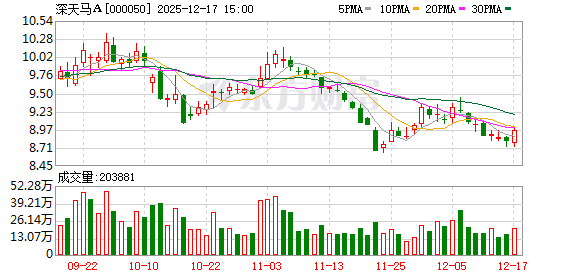
证券日报网讯12月17日,深天马A在互动平台回答投资者提问时表示,目前,公司在厦门布局涵盖多条 全资及合资产线,包括量产技术能力行业领先的G5.5及G6LTPS-LCD产线、先进的G6柔性AMOLED产 线、一条专精于中小尺寸显示产品的G8.6a-Si/Oxide产线,以及一条全制程Micro-LED产线。 ...

和辉光电-U现2笔大宗交易 合计成交1300.00万股
Zheng Quan Shi Bao Wang· 2025-12-17 13:11
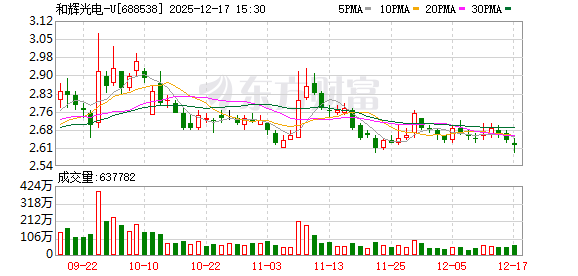
Group 1 - The core transaction on December 17 involved 13 million shares of Hehui Optoelectronics-U, with a total transaction value of 33.8 million yuan, at a price of 2.60 yuan per share, reflecting a discount of 0.76% compared to the closing price [2][4] - In the last three months, Hehui Optoelectronics-U has recorded 28 block trades, totaling 569 million yuan [3] - The stock closed at 2.62 yuan on the same day, down 0.76%, with a daily turnover rate of 1.11% and a total trading volume of 167 million yuan, indicating a net outflow of 12.34 million yuan in main funds [3] Group 2 - The latest margin financing balance for Hehui Optoelectronics-U is 550 million yuan, with an increase of 4.44 million yuan over the past five days, representing a growth rate of 0.81% [4] - The company, Shanghai Hehui Optoelectronics Co., Ltd., was established on October 29, 2012, with a registered capital of 1.3809437625 billion yuan [4]


深天马A:目前,公司在厦门布局涵盖多条全资及合资产线
Mei Ri Jing Ji Xin Wen· 2025-12-17 10:19
(文章来源:每日经济新闻) 每经AI快讯,有投资者在投资者互动平台提问:公司已累计在厦门投资超1000亿元建设5条先进生产线 是真的吗? 深天马A(000050.SZ)12月17日在投资者互动平台表示,目前,公司在厦门布局涵盖多条全资及合资 产线,包括量产技术能力行业领先的G5.5及G6 LTPS-LCD产线、先进的G6柔性AMOLED产线、一条专 精于中小尺寸显示产品的G8.6 a-Si/Oxide产线,以及一条全制程Micro-LED产线。 ...
京东方、三星专利大战落幕
Zhong Guo Jing Ying Bao· 2025-12-17 09:23
Core Viewpoint - BOE and Samsung have reached a comprehensive settlement in their OLED patent dispute, marking a shift in the global display industry from zero-sum competition to a new phase of technological sharing and mutual benefits [1][7]. Group 1: Background of the Dispute - The patent battle began in late 2022 when Samsung initiated a 337 investigation with the ITC, accusing BOE of infringing on four OLED-related patents [2]. - The conflict escalated in 2023, with Samsung adding trade secret claims and filing lawsuits in Texas, while BOE countered with its own patent lawsuits in China [2][4]. - By mid-2025, the litigation intensified, with both companies filing multiple lawsuits against each other, reflecting a significant shift in market dynamics [2][4]. Group 2: Settlement Dynamics - The prolonged litigation resulted in high costs for both parties, with neither emerging as a clear winner [4]. - For BOE, a ruling against them could have severely impacted their market access in the U.S., while Samsung faced challenges in expanding its business in China due to deteriorating relations [4][6]. - The settlement included a reported agreement on a patent licensing fee of approximately 1 trillion KRW (about 4.85 billion RMB), which was a crucial factor in the resolution [6]. Group 3: Industry Implications - The resolution of the dispute is expected to reshape the competitive landscape of the global display industry, moving from fierce competition to a more collaborative approach [7]. - The settlement allows BOE to stabilize its supply to global clients, including Samsung, thereby reducing supply chain uncertainties for downstream manufacturers [7]. - The agreement signifies a shift in the power dynamics of the display industry, with Chinese manufacturers gaining a larger share of the global market, reflecting a transition from manufacturing dominance to a balance of technology and standards [7][8]. Group 4: Future Outlook - Despite the settlement, future intellectual property disputes are likely as technology continues to evolve rapidly [8]. - The resolution between BOE and Samsung illustrates that in a highly globalized supply chain, pure confrontation will give way to rule-based cooperation, indicating a more complex and intertwined competitive landscape in the OLED and advanced technology sectors [8].
华安证券:化工行业反内卷推动周期复苏 国产替代引领成长主线
智通财经网· 2025-12-17 04:08
Core Viewpoint - The report from Huazhong Securities highlights the peak of domestic silicon production capacity, the exit of overseas manufacturers, and the potential recovery of the polyester chain's prosperity due to concentrated production capacity in the polyester filament sector [1][3]. Group 1: Industry Trends - Domestic silicon production capacity has reached its peak, while leading companies are driving industry recovery as overseas manufacturers continue to exit [1][3]. - The PTA production capacity expansion is nearing its end, leading to a concentration in polyester filament production capacity, which is expected to improve the prosperity of the polyester chain [1][3]. - The price of caprolactam has dropped to a low point, prompting the industry to initiate self-driven anti-involution measures [3]. - The raw material price index has rebounded after hitting a bottom, with frequent safety incidents causing significant risks to the global supply chain of key pesticides [3]. - The price of spandex has remained below the cost line, leading to widespread industry losses, but a slowdown in new capacity releases may optimize the supply structure and drive price recovery [3]. - The vitamin market is expected to see significant price increases in 2024 due to a tightening global supply [3]. Group 2: Investment Opportunities - The report emphasizes two main investment themes: anti-involution and domestic substitution, particularly in the context of global macroeconomic uncertainties and a slowdown in chemical capital expenditures [2][4]. - The biobased materials sector is receiving strong support from national policies, with companies accelerating technological breakthroughs and industrialization [4][6]. - The lubricating oil additive sector is witnessing rapid technological advancements among domestic companies, with several high-end products achieving international certification [4][6]. - The electronic ceramics market is seeing strong demand driven by AI and automotive sectors, with domestic manufacturers making breakthroughs in MLCC production [4][6]. - The exit of 3M from the fluorinated liquids market is reshaping the competitive landscape, with domestic manufacturers expected to increase their market share [4][6]. - The explosive growth of AI servers is driving demand for electronic-grade polyphenylene ether, with domestic manufacturers achieving technological breakthroughs and entering key supply chains [4][6].

化工行业2026年度投资策略:周期破晓,关注反内卷政策与国产替代两大主线
Huaan Securities· 2025-12-17 02:53
Investment Strategy Overview - The report emphasizes two main investment themes for the chemical industry: anti-involution policies and domestic substitution, which are expected to drive recovery and growth in the sector [4][5][6] Anti-Involution and Cycle Recovery - The report suggests that the chemical industry is at a turning point, with anti-involution measures leading to a recovery in the cycle. Key areas include the peak of new capacity in organic silicon, the end of PTA capacity expansion, and a rebound in prices for certain chemicals due to supply chain disruptions [4][5] - The China Chemical Product Price Index (CCPI) has decreased significantly, dropping to 3865 points by November 30, 2025, down 16.37% from early 2024 and 10.71% from the beginning of 2025 [4][20] Domestic Substitution as a Growth Driver - Domestic substitution is highlighted as a key growth driver, with significant support from national policies for bio-based materials and advancements in technology leading to a more robust domestic supply chain [4][6] - The report identifies several companies positioned to benefit from these trends, including KaiSai Bio and RuiFeng New Materials, which are making strides in bio-based materials and lubricant additives, respectively [5][6] Market Dynamics and Price Recovery - The report notes that while the chemical market is experiencing a downturn, certain segments are expected to see price recovery due to improved supply-demand dynamics and reduced capacity expansion [4][22] - Specific chemical products have shown varied price movements, with some experiencing significant declines while others are stabilizing or recovering [22] Manufacturing Sector Recovery - The manufacturing sector is showing signs of recovery, which is anticipated to support the chemical industry. The report mentions that the real estate market is stabilizing, and automotive production has increased, indicating a potential uptick in demand for chemical products [25][33] Capital Expenditure Trends - Capital expenditure growth in the chemical industry is slowing, with a notable decline in new projects. The report indicates that the total construction in progress for the chemical sector was 327.57 billion yuan in Q3 2025, down 17.64% year-on-year [34][39] Inventory and Consumption Trends - High inventory levels in the chemical sector are being addressed as consumer demand begins to recover. The report suggests that the inventory-to-revenue ratio for the basic chemical industry was 0.62 in Q3 2025, indicating a slight increase from the previous year [41][42] Profitability and Financial Performance - The report highlights a recovery in profitability for the chemical industry, with gross margins and return on equity (ROE) showing improvement in Q3 2025 compared to previous periods [56][60] - Specific sub-sectors, such as agrochemicals and fluorochemicals, have demonstrated significant profit growth, with some exceeding 100% year-on-year increases [55][56]


京东方、三星专利大战落幕:双方最高层互访 最后一刻和解
Zhong Guo Jing Ying Bao· 2025-12-16 12:20
Core Viewpoint - BOE and Samsung have reached a comprehensive settlement in their OLED patent and trade secret litigation after nearly three years of legal battles, marking a shift in the global display industry from zero-sum competition to a new phase of cooperative competition [1][7]. Group 1: Background of the Dispute - The patent dispute began in late 2022 when Samsung Display initiated a 337 investigation with the ITC, accusing BOE of infringing on four OLED-related patents [1][2]. - In early 2023, Samsung escalated the situation by adding trade secret infringement claims and filing additional lawsuits in Texas [2]. - BOE responded with a series of counterclaims in China, leading to a protracted legal standoff [2]. Group 2: Market Dynamics - By Q1 2025, Chinese manufacturers held a dominant position in the LCD market with a 69.2% global shipment share, while Samsung had begun to withdraw from the LCD sector [2]. - In the OLED market, Samsung led with a 42.2% sales share in 2024, while BOE ranked third with 13.2% [2]. - As of 2023, Samsung held nearly 30,000 OLED-related patents, closely followed by BOE with 28,000 patents, indicating a significant competitive challenge for Samsung from BOE's rapid development [2][4]. Group 3: Reasons for Settlement - The high costs of continued litigation prompted both companies to seek a resolution, as neither party emerged as a clear winner from the prolonged dispute [4][6]. - For BOE, a potential adverse ruling from the ITC in mid-2025 posed a significant threat to its market expansion efforts in North America [4]. - Samsung faced challenges in expanding its business in China due to deteriorating relations, necessitating a stable supply from BOE [5][6]. Group 4: Implications of the Settlement - The settlement is expected to reshape the competitive landscape of the global display industry, moving from fierce competition to a more collaborative approach [7]. - It alleviates supply chain uncertainties for downstream manufacturers, allowing BOE to provide panels more reliably to global clients, including Samsung [7]. - The resolution signifies a shift in power dynamics within the display industry, with Chinese companies increasingly taking a leading role [7][8]. Group 5: Future Outlook - Despite the settlement, ongoing intellectual property disputes are likely as technology continues to evolve rapidly [8]. - The resolution between BOE and Samsung illustrates that in a highly globalized supply chain, pure confrontation will give way to rule-based cooperation in the future [8].
群智咨询:预计2026年电视面板市场增长重点转向大尺寸
智通财经网· 2025-12-16 12:08
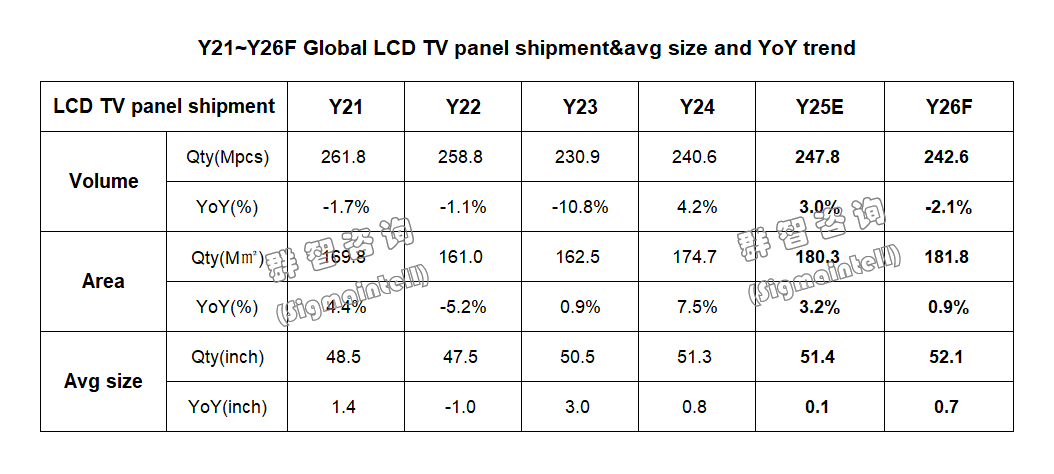
Core Insights - The global LCD TV panel shipment is expected to reach 248 million units in 2025, a 3.0% year-on-year increase, but is projected to decline to 243 million units in 2026, a 2.1% decrease, with a focus on larger sizes driving a 0.9% increase in shipment area [1][3] Market Overview - The demand for LCD TV panels is influenced by several factors, including the upcoming 2026 World Cup, which is expected to drive demand in late 2025 and early 2026 due to inventory preparations [1][2] - The North American market is expected to remain vibrant due to tax incentives and World Cup preparations, while the Chinese market faces challenges due to a sluggish real estate sector [2][3] Supply Chain Dynamics - The rising prices of storage devices present a dual effect on the TV panel market, potentially increasing short-term demand but also raising costs for manufacturers, which may lead to reduced orders for smaller panels [2][3] - Major panel manufacturers are planning production cuts during the Chinese New Year to stabilize prices and manage supply-demand dynamics [3][10] Company Strategies - BOE aims to enhance its operational strength by focusing on size structure upgrades, with plans to produce 65.32 million panels in 2026, increasing the proportion of large sizes [6] - TCL CSOT plans to maintain stable production levels while focusing on profitability and product structure optimization, with a target of 58.81 million panels in 2026 [6] - HKC is adopting a flexible capacity strategy to ensure steady growth, planning to produce 38.11 million panels in 2026, with a focus on larger sizes [7] Price and Demand Outlook - The first quarter of 2026 is expected to see a balance in supply and demand due to production cuts, with potential localized price increases for LCD TV panels [10] - The second quarter may face challenges as manufacturing costs rise, impacting promotional strategies for brands [10] Industry Growth Model - The concept of a growth flywheel is applicable to the TV industry, where various components, including panels, storage, and assembly, interact to drive growth [13] - The health of the growth flywheel may be threatened by rising storage prices and profit losses in the assembly segment, necessitating a collaborative approach to maintain value growth [13]