医疗保险

Search documents
9月1日起 四川职工生育津贴直接发给本人
Si Chuan Ri Bao· 2025-08-06 03:22
Core Points - The provincial medical insurance bureau has announced a change in the application and payment method for maternity allowances for employees, effective from September 1 [1] - Maternity allowances are designed to provide economic support to working women during maternity leave, calculated based on the average monthly salary of employees in the previous year [1] - The new process allows employees or their authorized representatives to apply directly for maternity allowances, which will now be paid directly to the employees rather than through their employers [1] Summary by Categories - **Policy Change** - The application process for maternity allowances has shifted from employer-based to employee-based applications [1] - Payments will now be made directly to employees instead of being routed through employers [1] - **Economic Support** - Maternity allowances serve as a financial substitute for wages lost during maternity leave [1] - The calculation of the allowance is based on the previous year's average monthly salary of the employee's workplace [1] - **Implementation and Services** - The provincial medical insurance bureau has instructed local medical insurance departments to facilitate the application process and provide query services for employees regarding their maternity allowance applications [1]
Clover Health Investments(CLOV) - 2025 Q2 - Earnings Call Transcript
2025-08-05 22:00
Financial Data and Key Metrics Changes - The company reported a 32% year-over-year growth in Medicare Advantage membership, reaching over 106,000 members [20] - Insurance revenue increased by 34% to $470 million in Q2 2025, with year-to-date revenue at $927 million [20] - Adjusted EBITDA for Q2 2025 was $70 million, maintaining year-to-date adjusted EBITDA at $43 million [24] - GAAP net loss improved by $4 million year-to-date to $12 million [19][24] - The insurance benefit expense ratio (BER) was reported at 88.4%, up from 76.1% in 2024 [24] Business Line Data and Key Metrics Changes - The Medicare Advantage segment continues to show robust growth, with a focus on leveraging technology to enhance care management [5][8] - The company is experiencing elevated utilization levels in supplemental benefits and Part D, which are being monitored closely [21][22] Market Data and Key Metrics Changes - The company is insulated from broader industry pressures affecting Medicaid and ACA markets due to its focus on Medicare Advantage [10] - The Part D direct subsidy rate for 2026 is significantly higher than for 2025, indicating potential cost pressures that may alleviate in 2026 [12] Company Strategy and Development Direction - The company aims to achieve profitability, return to growth while sustaining profitability, and leverage its differentiated model for accelerated growth [6] - The focus remains on expanding the reach of Clover Assistant and enhancing member retention in existing markets [14] - The company is strategically positioned for a four-star payment year in 2026, which is expected to provide financial tailwinds [32] Management's Comments on Operating Environment and Future Outlook - Management expressed confidence in the upcoming membership growth season, potentially stronger than the current year [7] - The company is closely monitoring the impacts of the Part D IRA changes and anticipates variability in performance modeling [11] - Management believes that the technology-centric care delivery model will differentiate the company amidst industry pressures [12][13] Other Important Information - The company has maintained a strong cash position with $389 million in cash and investments as of Q2 2025 [26] - Days in claims payable decreased to 32 days, indicating normalization of claims inventory [25] Q&A Session Summary Question: How much conservatism is embedded in the raised guidance on the BER? - The increase in the BER guidance is primarily related to Part D and supplemental benefits, with initiatives in place to monitor these trends going forward [36][37] Question: When did the pressures start emerging, and how much was captured in the bids for next year? - The pressures, especially on Part D, have been tracked throughout the year, with adjustments made in pricing for bids [38][39] Question: What are the drivers for improvements in adjusted SG&A? - Improvements are mainly due to cost efficiencies and renegotiations with partners, reflecting the company's strong growth [41][42] Question: What response has been received from the COPD white paper? - The company plans to continue producing similar papers to highlight the benefits of using Clover Assistant in managing care [43][44] Question: Is the elevated cost trend localized or broad-based? - The elevated cost trends are not specific to new or returning members and are being monitored across the board [48][50] Question: How is the competitive landscape changing for the upcoming AEP? - Competitors are pulling back in certain areas, particularly within PPO networks, which may benefit the company due to its strong positioning [51][52]

4年200亿人次报销,未来五年全民医保如何升级
第一财经· 2025-08-04 06:26
Core Viewpoint - The article discusses the advancements and future plans of China's medical insurance system during the "14th Five-Year Plan" and the upcoming "15th Five-Year Plan," emphasizing the need for equitable access, improved quality, and efficiency in healthcare services [3][4]. Group 1: Achievements During the "14th Five-Year Plan" - The basic medical insurance coverage rate remained stable at around 95%, with nearly 200 billion medical reimbursements enjoyed by the public over four years [5][6]. - The per capita government subsidy for residents' insurance increased from 490 yuan in 2018 to 670 yuan in 2024, with rural low-income and poverty alleviation populations maintaining a coverage rate above 99% [5][6]. - By 2024, the number of insured individuals reached 1.327 billion, with medical assistance benefiting approximately 80 million people annually [5][6]. - The total expenditure of the medical insurance fund reached 12.13 trillion yuan during this period, with an average annual growth rate of 9.1% [11]. Group 2: Innovations and Reforms - The "14th Five-Year Plan" saw significant reforms in medical insurance, including the introduction of a multi-tiered medical security system and the establishment of a dynamic adjustment mechanism for the medical insurance drug list [8][9]. - The number of drugs added to the insurance list reached 402 since the beginning of the "14th Five-Year Plan," with 2.8 billion reimbursements for negotiated drugs in 2024 [9][11]. - The implementation of a long-term care insurance system has expanded, with over 8,800 designated service institutions and 300,000 care service personnel, marking a growth of over 50% since the start of the "14th Five-Year Plan" [13]. Group 3: Future Directions for the "15th Five-Year Plan" - The upcoming "15th Five-Year Plan" aims to enhance the medical insurance system to support common prosperity and adapt to high-quality development needs, balancing fairness and efficiency [3][5]. - The focus will be on expanding coverage for flexible employment workers, addressing gaps in the current insurance system [6][7]. - The integration of new technologies and digitalization will be emphasized to improve the efficiency and accessibility of healthcare services [6][12].


4年200亿人次报销,未来五年全民医保如何升级
Di Yi Cai Jing· 2025-08-04 00:40
Core Insights - The upcoming "Fifteen Five" period aims to enhance the national medical insurance system to achieve common prosperity and support the development of new productive forces [1][9] - The "Fourteen Five" period has seen significant improvements in medical insurance coverage, with a stable participation rate of around 95% and nearly 200 billion medical reimbursements enjoyed by the public [2][9] Medical Insurance Coverage - By 2024, the national basic medical insurance enrollment is projected to reach 1.327 billion, with annual financial subsidies for residents increasing from 490 yuan in 2018 to 670 yuan [2] - The long-term care insurance pilot program has expanded, covering 190 million people, and the proportion of fund payments for inpatient expenses remains stable at 80% for employees and 70% for residents [2][3] Technological Integration and Employment - The rise of new employment forms, particularly flexible employment, presents challenges for the current medical insurance system, with approximately 200 million urban workers still lacking basic insurance [3][4] - Local governments are exploring pathways for new employment forms to participate in basic medical insurance, with initiatives to encourage platform companies to enroll their workers [4] Fund Management and Expenditure - Since the establishment of the National Medical Insurance Bureau, the cumulative expenditure of the medical insurance fund has reached 12.13 trillion yuan, with an average annual growth rate of 9.1% [9] - The expenditure on newly negotiated drugs has significantly increased, with 2024 spending being 3.9 times that of 2020, reflecting a 40% annual growth rate [9] Cost Control and Efficiency - The total medical expenses for insured employees in 2024 are estimated at 2.06 trillion yuan, a 3.6% increase from the previous year, while resident medical expenses are projected at 2.03 trillion yuan, up 3.7% [7] - The reforms in medical insurance payment methods and the strengthening of fund supervision have contributed to a reduction in personal medical expenses by approximately 5% year-on-year [6][7] Long-term Care Insurance Development - The long-term care insurance system has attracted over 50 billion yuan in social capital investment during the "Fourteen Five" period, with more than 8,800 service institutions established [11] - A nationwide unified long-term care insurance system is expected to be launched within the year, aiming to provide stable funding support for the elderly care and health industries [11]
促进医疗医保医药协同发展和治理
Jing Ji Ri Bao· 2025-08-02 21:51
Core Viewpoint - Since the 18th National Congress of the Communist Party of China, the country has been committed to deepening medical security reform, enhancing the management and service level of medical insurance, and promoting the coordinated development and governance of the "three medicines" (medical care, medical insurance, and pharmaceuticals) [1] Group 1: Achievements and Challenges - Significant achievements have been made in promoting the coordinated development and governance of the "three medicines," but challenges remain in the process of high-quality development [2] - The contradiction between limited medical insurance funding and the rapid growth of medical expenses has become prominent, with medical expenses increasing due to rising demand for medical services and advancements in clinical diagnosis and treatment technologies [2] - The reimbursement rates for inpatient care under employee and resident medical insurance remain stable at around 85% and 70%, respectively, but there is insufficient funding support for increasing outpatient reimbursement rates for residents [2] Group 2: Future Directions - The goal of health performance is to deepen the reform of the medical and health system and promote the coordinated development and governance of the "three medicines" [2] - Recommendations include scientifically formulating regional health planning to improve resource allocation efficiency, enhancing the construction of the medical and health service system, and ensuring that medical resources are allocated based on the needs of the population [3] - The establishment of county-level medical communities is emphasized to strengthen the foundation of basic medical services, integrating responsibilities, management, services, and benefits [4] Group 3: Reforms and System Improvements - Key reforms in the medical insurance sector should focus on optimizing benefit policies, adjusting medical catalogs, and enhancing price reforms and fund supervision [4] - A multi-level medical security system should be established, promoting the development of commercial health insurance alongside basic medical insurance to meet diverse medical service needs [5] - The aim is to ensure the safety and effectiveness of medical insurance funds, improve the quality and efficiency of medical services, and support the innovation and development of the pharmaceutical industry [5]
烟台|烟台市在全省范围内率先打通参保地与就医地之间的“双向通道”
Da Zhong Ri Bao· 2025-08-01 00:55
为了让便捷服务覆盖更广,烟台加速推进全市生育定点医疗机构的系统改造。选取信息化基础扎实 的医院"打样",先行先试,形成成熟的方案后,组织全市34家承担生育分娩的定点机构同步升级改造。 目前,这张覆盖所有区市的便民服务网已全面织就,34家医院悉数上线,做到"应开尽开"。 异地生育报销难,根源在于各地政策"五花八门"。烟台市主动担当,率先破题。针对省内生育结算 编码、标准不统一的问题,该市医保部门深入调研,统一了涵盖单胎顺产、剖宫产、多胎顺产、多胎剖 宫产四类结算编码,确保各种生育方式结算畅通无阻。与此同时,创新性地执行"就医地目录、参保地 政策、就医地管理"的原则,并精细配置了"统筹内费用"规则,巧妙化解了不同地市医保目录差异带来 的矛盾,确保烟台参保人员异地生育待遇"只升不降"。 在烟台,还有更多便民举措接踵而至:省内异地生育无需备案,烟台参保人员只需持医保卡 (码),即可在省内任何开通服务的定点医院直接结算;同时,将1000元产前检查费直接"打包"并入生 育医疗费联网结算,实时冲抵个人支付部分,省去了后续"二次跑腿"申请报销的麻烦。这些实实在在 的"减法",让异地生育家庭真切感受到"一站式"结算的轻松与高效 ...
UNH财报:医疗巨头财报暴雷,多重打击创5年新低
Jin Rong Jie· 2025-07-31 02:31
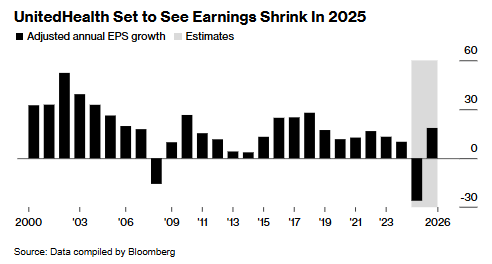
医疗保险巨头UnitedHealth(UNH)公布2025年第二季度财报,虽营收表现略高于市场预期,但盈利大 幅下滑,全年每股收益(EPS)指引更是"腰斩",引发市场剧烈反应,股价创下五年来新低。截至目 前,年内股价已累计下跌超44%,成为道琼斯指数中表现最疲软的成分股之一。医疗成本失控、定价逻 辑偏差、监管环境趋严等多重因素交织,令这艘曾经的"医保航母"陷入困局。 管理层也在财报电话会上承认,当前定价模型确实低估了真实的医疗支出增长。CEO表示,公司将全面 检视医保产品结构,未来将聚焦成本效率与精细化管理,并预计到2026年医疗费用率可能进一步上升至 近10%。他强调,公司有信心通过适时上调保费和改善运营流程,逐步平衡盈利。 除财务层面的挑战外,UNH还面临内部治理与外部监管风险。近期公司高层人事变动频繁,同时还陷 入司法部针对Medicare Advantage账单操作的调查中,投资者信心遭遇持续打击。在监管环境不断变 化、政策压力增强的背景下,公司未来增长路径的不确定性正在上升。 尽管如此,财报也并非全无亮点。营收的持续增长说明其核心医保业务仍具规模优势,公司亦未下调全 年收入目标,仍预计全年营收将在4 ...

Alignment Healthcare(ALHC) - 2025 Q2 - Earnings Call Transcript
2025-07-30 22:00
Financial Data and Key Metrics Changes - Health plan membership reached 223,700 members, representing a growth of approximately 28% year over year [4][15] - Total revenue for the second quarter was $1,000,000,000, increasing approximately 49% year over year [4][15] - Adjusted gross profit was $135,000,000, a 76% increase year over year, resulting in a consolidated Medical Benefit Ratio (MBR) of 86.7%, an improvement of 200 basis points [5][16] - Adjusted EBITDA was $46,000,000, surpassing guidance and producing an adjusted EBITDA margin of 4.5%, with a margin expansion of 360 basis points year over year [5][19] Business Line Data and Key Metrics Changes - The company demonstrated strong execution in provider engagement and clinical initiatives, leading to inpatient admissions per 1,000 in the low 140s [6][16] - The adjusted SG&A ratio improved to 8.8%, a decline of 160 basis points year over year, indicating effective cost management [5][18] Market Data and Key Metrics Changes - The company is positioned to capture additional market share, with current membership representing only 5% of the total Medicare Advantage enrollees in served counties [12] - The introduction of the V28 risk model changes has led to a shift in market dynamics, with large incumbent Managed Care Organizations (MCOs) losing share for the first time since 2014 [11] Company Strategy and Development Direction - The company is focused on deepening provider relationships and enhancing care management capabilities, aiming to improve chronic condition management and increase adoption of AIVA technology [9][10] - Investments are being made in administrative automation and care navigation to support long-term growth objectives [12][13] - The company aims to establish itself as a preferred Medicare Advantage platform, leveraging high star ratings and exceptional member satisfaction [10][11] Management's Comments on Operating Environment and Future Outlook - Management expressed confidence in achieving at least 20% growth in 2026, supported by strong fundamentals and market expansion opportunities [11][12] - The company is optimistic about its ability to navigate the evolving Medicare landscape and maintain high-quality care standards [10][11] Other Important Information - The company expects to be free cash flow positive in 2025, marking a significant milestone in its organizational maturity [25] - The Arizona HMO contract was revised from 3.5 to 4 stars for payment year 2026, reflecting the company's commitment to quality [13] Q&A Session Summary Question: Can you provide details on your provider relationships and how they differ from prior relationships? - Management highlighted improved visibility and control through collaboration with IPAs and medical groups, resulting in better outcomes and member satisfaction [28][30] Question: What is the outlook for SG&A as you continue to scale? - Management indicated that a unified data architecture allows for lower SG&A ratios, with potential for further reductions as operational efficiencies improve [36][38] Question: How does the final risk adjustment sweep benefit impact your earnings? - The $14,000,000 benefit was attributed to the 2024 final sweep and is considered a normal part of the business, not expected to significantly impact future earnings [44][46] Question: What is the company's stance on public advocacy in the healthcare sector? - Management emphasized the importance of advocating for senior care choices and differentiating the company from incumbents in the Medicare Advantage space [50][52] Question: How is the company leveraging predictive analytics in care management? - Management is focused on evolving machine learning algorithms to enhance personalized care and improve risk management [54][56]

医保成本困局难解 联合健康(UNH.US)盈利指引“跳水”股价跟跌
智通财经网· 2025-07-29 11:31
Group 1 - The company, UnitedHealth, reported disappointing annual profit guidance for Q2, forecasting adjusted EPS of at least $16 for 2025, significantly below analysts' expectations of $20.40, and revenue between $445.5 billion and $448 billion, compared to the expected $449.16 billion [1][2] - The company had previously projected adjusted EPS of $26 to $26.50 in April but withdrew this guidance in May, marking a substantial reduction from the original target of $29.50 to $30 set at the end of the previous year [2] - The management has committed to restoring growth by 2026 and returning to a long-term EPS growth target of 13%-16% [2] Group 2 - The healthcare insurance industry is facing challenges, with peers like Elevance Health, Centene, Molina Healthcare, and Oscar Health also lowering or withdrawing their earnings guidance due to issues with government healthcare programs [2][3] - The expiration of tax credits that have increased enrollment under the Affordable Care Act next year, along with a recent budget plan that will cut nearly $1 trillion in Medicaid funding, is expected to increase the uninsured population by 10 million over the next decade [3] - The company is experiencing a decline in profits from its Optum Health segment due to increased treatment volumes, pricing errors, and cuts in federal Medicare funding, which had previously been a significant growth driver [5] Group 3 - The latest earnings report showed that the company faced industry-wide issues related to the Affordable Care Act, with a provision for "accelerated recognition of future losses" being recorded [3] - The second-quarter earnings per share were $4.08, below the analyst estimate of $4.59, while revenue was $111.62 billion, slightly above the market expectation of $111.52 billion [3] - Following the earnings report, the company's stock price fell by 6.7% in pre-market trading, and it has dropped over 44% year-to-date due to the DOJ investigation and suspended earnings guidance [5]
医保五年累计支出12万亿,长护险全国推广预期增强
第一财经· 2025-07-25 02:48
Core Viewpoint - The article discusses the achievements and future plans of China's medical insurance system during the "14th Five-Year Plan" period, highlighting improvements in coverage, fund management, and the introduction of long-term care insurance [1][3]. Group 1: Medical Insurance Coverage - The national basic medical insurance coverage rate remains stable at around 95%, with a cumulative expenditure of 12.13 trillion yuan, averaging an annual growth rate of 9.1% [1][3]. - By 2024, the number of people covered by basic medical insurance is expected to reach 1.327 billion, with long-term care insurance coverage at 190 million [1][3]. - The direct settlement rate for cross-provincial medical expenses exceeds 90%, and the national medical insurance drug list has been unified, totaling 3,159 types of drugs [1][3]. Group 2: Long-Term Care Insurance - The long-term care insurance system is expected to be implemented nationwide soon, as the current pilot programs have shown positive results [4][7]. - As of June 2025, 253 million people are participating in maternity insurance, with cumulative expenditures of 438.3 billion yuan, benefiting 96.14 million people [6]. - The long-term care insurance aims to alleviate the financial burden of daily care for elderly individuals who have lost their ability to care for themselves, addressing the increasing demand for elderly care services [6][7]. Group 3: Fund Management and Regulation - The medical insurance fund is under increasing pressure, and the focus will be on ensuring fund safety and risk assessment during the "15th Five-Year Plan" period [4][8]. - The reform of payment methods has transitioned from a "post-payment" to a "pre-payment" system, promoting efficiency in medical institutions and reducing patient out-of-pocket expenses by approximately 5% year-on-year [9][10]. - The National Medical Insurance Administration has intensified efforts to combat fraud and misuse of medical insurance funds, recovering 16.13 billion yuan in the first half of the year through inspections of 335,000 medical institutions [10][11]. Group 4: Drug Price Governance - The article emphasizes the importance of drug price governance, with the government supporting market-driven pricing while also maintaining oversight to prevent price manipulation [12][13]. - Since 2018, the government has conducted 10 rounds of centralized drug procurement, covering 435 types of drugs, which has helped lower drug prices and improve accessibility [13][14]. - The National Medical Insurance Administration is committed to ensuring fair pricing practices and encourages public reporting of unusually high drug prices [14].