连锁超市

Search documents
沃尔玛(WMT.US)推出Peacock流媒体福利 庆祝Walmart+服务五周年
智通财经网· 2025-09-16 02:35
Core Insights - Walmart continues to enhance its Walmart+ membership by adding new benefits, including the Peacock streaming service, without increasing membership fees [1] - The addition of Peacock Premium aims to provide members with greater value and a more personalized entertainment experience [1] - Walmart+ has expanded from three core benefits at launch to twelve, maintaining an annual fee of $98 [1] Membership Growth and Strategy - Morgan Stanley reports that Walmart+ membership growth remains strong, with approximately 26.6 million members, representing about 20% household penetration in the U.S. [2] - Expanding the Walmart+ member base is a key element of Walmart's overall e-commerce strategy, enhancing delivery coverage and operational density [2] - The Walmart+ program is seen as a catalyst for building customer loyalty and attracting higher-income households, while also creating a high-margin recurring revenue stream [2]

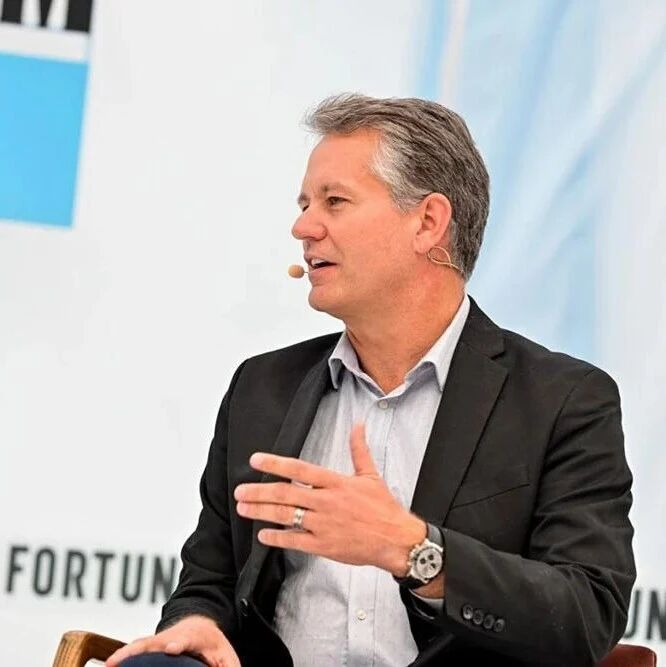
沃尔玛美国CEO:人工智能越来越重要,但公司员工人数不会减少
财富FORTUNE· 2025-09-15 13:04
Core Insights - Walmart's CEO John Furner believes that the company's employee count will remain stable over the next few years, despite the rise of artificial intelligence (AI) [2] - Walmart's revenue grew by 4.7% last year, reaching $462.42 billion, driven by market share gains from competitors like Target and Kroger [2] - The company expects a sales growth of up to 4.75% for the fiscal year 2025 due to strong first-quarter sales [2] Group 1 - Walmart employs approximately 1.6 million people, and the CEO anticipates that the workforce will not decrease despite AI advancements [2] - Many traditional jobs at Walmart will be replaced by new roles, as illustrated by an employee who transitioned from loading trucks to leading a robotics team [3] - The company is focused on extending employees' careers with higher-paying jobs and has a low employee turnover rate [4] Group 2 - Walmart is implementing an OpenAI certification program to encourage employees to embrace AI as a pathway for career development [4] - AI is being utilized to streamline daily workflows for store employees, significantly reducing the time spent on generating task lists [4] - AI also provides recommendations for inventory management and product selection for Walmart's sellers and wholesale suppliers, minimizing the need for manual labor [4]

三江购物:生产经营正常 无应披露而未披露的重大事项
Mei Ri Jing Ji Xin Wen· 2025-09-15 10:51
每经AI快讯,9月15日,三江购物(601116.SH)公告称,公司股票连续三个交易日收盘价格涨幅偏离值累 计超过20%,属于股票交易异常波动。经自查及向控股股东、实际控制人征询,公司不存在应披露而未 披露的重大信息。公司最新滚动市盈率为63.79倍,显著高于行业水平。同时,公司股票近期换手率较 高,显著高于行业水平。敬请广大投资者注意二级市场交易风险,理性决策,审慎投资。 ...

又是1元1家!苏宁易购再卖12座家乐福化债
Guan Cha Zhe Wang· 2025-09-12 15:33
Core Viewpoint - Suning.com is undergoing significant asset liquidation, specifically targeting its Carrefour subsidiaries, to alleviate financial burdens and focus on its core business of home appliances and 3C products [1][4][5]. Group 1: Asset Sale Details - Suning.com plans to sell 100% equity of 12 Carrefour China subsidiaries for a nominal price of 1 yuan each, totaling 12 yuan, effectively removing these loss-making entities from its consolidated financial statements [4][6]. - The subsidiaries being sold are located in cities including Changsha, Jinan, Zhuhai, Hohhot, Tianjin, Beijing, and Shijiazhuang, and have ceased operations with negative net assets valued between -655 million yuan and -17,100 yuan [4]. - This transaction is part of a broader strategy to restructure assets and debts, as the traditional hypermarket business has been adversely affected by external market conditions and changing consumer behaviors [4][5]. Group 2: Financial Implications - The sale is expected to increase the net profit attributable to the parent company by approximately 383 million yuan [6]. - In a previous transaction in June, Suning.com sold four Carrefour projects for a similar price structure, which resulted in an increase of about 572 million yuan in net profit [7]. - Despite these asset sales leading to apparent profitability, the underlying operational performance remains weak, with a projected non-recurring loss of 1.03 billion yuan for 2024, and a significant loss of 860 million yuan already recorded in the first half of the year [16][18]. Group 3: Strategic Focus - The company is committed to concentrating on its core business of home appliances and 3C products, aiming to streamline operations and reduce debt levels [5][17]. - The restructuring efforts are seen as critical for the company's turnaround, as it seeks to navigate through its financial challenges and improve overall performance [17].

高管因涉嫌职务犯罪被带走?大润发回应!
Xin Lang Cai Jing· 2025-09-12 10:05
Core Viewpoint - The company confirmed that its senior executive, Guan Mingwu, is under investigation by the police for suspected job-related crimes, and the case is currently in the investigation stage, with all information to be based on police announcements and results [1] Group 1 - The company maintains a commitment to legal and compliant operations, aiming to create a clean and upright corporate environment, and holds a zero-tolerance policy towards any illegal activities [1] - The company has a comprehensive internal supervision mechanism and compliance system, emphasizing that the personal actions of the executive do not represent the overall company [1] - Daily operations and various business activities of the company are continuing in an orderly manner, with ongoing efforts to enhance and optimize corporate governance and operational efficiency to better serve consumers [1]
三江购物连收3个涨停板
Zheng Quan Shi Bao Wang· 2025-09-11 02:13
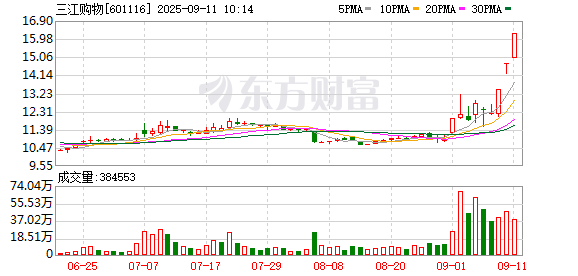
三江购物盘中涨停,已连收3个涨停板,截至9:36,该股报16.24元,换手率6.33%,成交量3465.01万 股,成交金额5.50亿元,涨停板封单金额为1.92亿元。连续涨停期间,该股累计上涨33.11%,累计换手 率为22.38%。最新A股总市值达88.94亿元。 证券时报·数据宝统计,两融数据来看,该股最新(9月10日)两融余额为1.77亿元,其中,融资余额 1.77亿元,较前一个交易日增加1553.39万元,环比增长9.63%,近3日累计减少389.02万元,环比下降 2.15%。 龙虎榜数据显示,该股因连续三个交易日内,涨幅偏离值累计达20%上榜龙虎榜1次,买卖居前营业部 中,沪股通累计净买入419.24万元,营业部席位合计净买入1911.74万元。 近日该股表现 | 日期 | 当日涨跌幅(%) | 换手率(%) | 主力资金净流入(万元) | | --- | --- | --- | --- | | 2025.09.10 | 9.99 | 8.63 | 1072.55 | | 2025.09.09 | 10.00 | 7.42 | 12801.57 | | 2025.09.08 | -1.61 | ...
家家悦集团股份有限公司关于股份回购实施结果暨股份变动的公告
Shang Hai Zheng Quan Bao· 2025-09-10 19:40
Group 1 - The company approved a share repurchase plan on September 11, 2024, intending to buy back between 10 million to 25 million shares with a total fund of no less than RMB 100 million and not exceeding RMB 200 million, at a maximum price of RMB 10 per share within 12 months [2][4] - The maximum repurchase price was adjusted to RMB 9.89 per share due to the implementation of the 2024 semi-annual profit distribution, and later increased to RMB 12.00 per share and then adjusted to RMB 11.92 per share [3][4] Group 2 - The company completed the share repurchase on September 10, 2025, having repurchased 10,020,200 shares, accounting for 1.57% of the total share capital, with a maximum price of RMB 10.90 per share and an average price of RMB 10.08 per share, totaling RMB 100,963,767 [4][5] - The funds used for the repurchase were from the company's own resources, ensuring no significant impact on daily operations or financial status, and the control of the company remains unchanged [5] Group 3 - As of the announcement date, the company's major shareholders and executives did not engage in buying or selling company shares during the repurchase period, except for a minor reduction by a director [6][7] - The repurchased shares will be stored in a dedicated securities account and are intended for conversion of the company's convertible bonds, with specific rights and restrictions outlined for these shares [7]

苏宁易购1元出售12家家乐福中国子公司股权,预计增利3.83亿元
Cai Jing Wang· 2025-09-10 14:10
Core Viewpoint - Suning.com plans to sell 12 subsidiaries of Carrefour China for 1 yuan each, expecting an increase in net profit attributable to shareholders of approximately 383 million yuan from this transaction [1][5][7]. Summary by Sections Transaction Details - Suning.com announced the signing of a share transfer agreement with Shanghai Qishufamily Enterprise Service Partnership, selling 100% equity of 12 companies for a total of 12 yuan [2][6]. - After the transfer, these companies will no longer be included in the consolidated financial statements of Suning.com [6]. Financial Impact - The transaction is expected to positively impact the company's financial status and operating results, with an estimated increase in net profit of about 383 million yuan based on preliminary calculations [3][7]. - As of the assessment date of March 31, 2025, the total equity value of the 12 target companies was negative, with one company, Changsha Keyoushi, having a book value of -161.44 million yuan and an assessed value of -35.38 million yuan [6][8]. Reasons for Sale - Suning.com cited external environmental impacts and changes in consumer behavior affecting the traditional hypermarket business of Carrefour China, along with liquidity issues, as reasons for the sale [3][6]. - The subsidiaries have ceased operations and carry significant debt burdens, making this transaction a means to effectively conduct asset and debt restructuring [3][7]. Strategic Focus - The company is committed to focusing on its core business in home appliances and consumer electronics, while continuing to streamline non-core business units to reduce overall debt levels [3][7].

三江购物:股票交易异常波动公告
Zheng Quan Ri Bao Zhi Sheng· 2025-09-10 13:43
证券日报网讯 9月10日晚间,三江购物发布公告称,公司股票于2025年9月8日、9日和10日连续三个交 易日内收盘价格涨幅偏离值累计超过20%,属于股票交易异常波动。经公司自查及向控股股东、实际控 制人征询,公司不存在应披露而未披露的重大信息。公司市盈率高于行业市盈率水平,提醒投资者注意 二级市场交易风险。 (编辑 李家琪) ...
国光连锁跌停,上榜营业部合计净卖出1041.17万元
Zheng Quan Shi Bao Wang· 2025-09-05 09:59
Group 1 - The stock of Guoguang Chain (605188) experienced a limit down today, with a turnover rate of 7.81% and a trading volume of 777 million yuan, showing a fluctuation of 4.05% [1] - The stock was listed on the Shanghai Stock Exchange due to a daily price deviation of -11.22%, with a net selling amount of 10.41 million yuan from brokerage seats [2] - Over the past six months, the stock has appeared on the trading list 16 times, with an average price increase of 1.06% the next day and an average decline of 0.16% in the following five days [3] Group 2 - The company reported a total revenue of 1.448 billion yuan in the first half of the year, representing a year-on-year growth of 6.50%, and a net profit of 19.8979 million yuan, up 4.15% year-on-year [3] - The main capital outflow today was 71.0081 million yuan, with a significant outflow of 28.7920 million yuan from large orders and 42.2161 million yuan from major orders [3] - The top buying brokerage was China Galaxy Securities, with a purchase amount of 20.7144 million yuan, while the top selling brokerage was Guotai Junan Securities, with a selling amount of 25.9035 million yuan [2][3]