Workflow
油气开采
icon
Search documents
东海局首次开展海域油气矿业权实地核查
Core Viewpoint - The Ministry of Natural Resources has initiated an independent on-site verification of oil and gas mining rights in offshore areas, emphasizing the importance of legal compliance in exploration and extraction activities for national security and ecological protection [1] Group 1: Regulatory Framework - The verification process is based on laws such as the Mineral Resources Law of the People's Republic of China and the Management Measures for the Public Disclosure of Exploration and Mining Information by Mining Right Holders [1] - The East China Sea Bureau is responsible for ensuring the proper management and supervision of marine natural resources [1] Group 2: Importance of Offshore Oil and Gas Resources - Offshore oil and gas resources are a crucial component of China's energy reserves, directly impacting national strategic security and the overall development of the industry [1] Group 3: Verification Process - The East China Sea Bureau employs strict behavioral norms and procedures, utilizing methods such as on-site inspections, report reviews, document comparisons, inquiries, and verification to identify and mitigate risks [1] - The verification will be conducted with a minimum of 5% of the offshore oil and gas mining rights in the jurisdiction being inspected, adhering to the "double random, one public" principle [1]
“地智先锋”,燃动科技攻关一线的红色引擎
Core Viewpoint - Jiangsu Provincial Geological Survey Institute emphasizes the integration of party leadership with geological technology development, focusing on national strategic needs and industry advancements to drive innovation and digital transformation in geological science [1][11]. Group 1: Political and Technological Integration - The institute addresses key technological challenges in digital platform construction, such as data integration of commercial software and low efficiency of AI models, by forming task forces led by party members to develop AI replacement models [3][12]. - Collaborative mechanisms are strengthened through a "Party Building + Collaboration" model, leading to the creation of a three-dimensional database for underground space resources in Taixing City, in partnership with local natural resource departments and research institutions [3][12]. - The institute promotes deep integration of industry, academia, and research by collaborating with universities on national deep-earth technology projects and establishing strategic partnerships with local governments [3][12]. Group 2: Responsibility and Innovation Mechanisms - A comprehensive mechanism is established that integrates party leadership into the entire process of technology planning, project initiation, resource allocation, and result transformation, ensuring that innovation outcomes serve industrial development [5][13]. - The institute optimizes its innovation system by implementing a structured approach to talent development, funding, and technology transfer, ensuring that innovative practices are effectively rooted in scientific work [5][13]. - The cultivation of research talent is emphasized through activities that instill a sense of mission and responsibility, aligning with the broader goals of national development [5][13]. Group 3: Accelerating Technology Application - The institute accelerates the transformation of technological achievements into productive forces by organizing party members to engage directly with industry needs, particularly in green and low-carbon technologies [6][13]. - Focus areas include the innovation and application of geothermal exploration technologies in the Yangtze River Delta, contributing to the establishment of efficient utilization models for regional geothermal resources [6][13]. - Research on carbon dioxide geological storage potential and key technologies for deep geological storage is being conducted, showcasing the institute's commitment to integrating scientific innovation with industrial application [6][13]. Group 4: Digital Transformation Initiatives - The institute identifies digital transformation as a critical breakthrough, leading initiatives to enhance geological work through digital upgrades and smart technology applications [8][7]. - A detailed plan for the digital transformation of geological work is developed, with responsibilities assigned to various departments to ensure effective implementation [8][7]. - The institute leverages advanced technologies such as digital twins and big data to create a digital foundation for urban geology, enhancing applications in urban planning and geological assessments [8][7]. Group 5: Future Outlook - Looking ahead, the institute aims to continuously enrich the integration of party leadership with technological innovation, accelerating digital transformation and the conversion of scientific achievements into sustainable development contributions [9].
深地经济:万亿新赛道的巴中实践
Xin Lang Cai Jing· 2025-11-20 02:22
Core Concept - The concept of "deep earth economy" has gained significant attention in the capital market as of October 2025, indicating a strategic shift towards resource extraction from deep within the Earth, impacting various sectors such as oil and gas, mining, and infrastructure [1] Group 1: Market Response and Strategic Initiatives - The capital market has reacted positively to the emergence of the deep earth economy, with multiple sectors showing strength, suggesting a multi-trillion yuan new growth avenue [1] - The Ministry of Natural Resources has outlined plans for the 14th Five-Year Plan, emphasizing the need for standardization in emerging industries such as deep-sea and deep-earth exploration [1][2] - A special fund has been established at the central level to guide social capital and accelerate the formulation of national standards in deep earth drilling and equipment manufacturing [1] Group 2: Resource Potential and Development Opportunities - China possesses significant deep and ultra-deep oil and gas resources, totaling 671 million tons of oil equivalent, which accounts for approximately 34% of the nation's total oil and gas resources [2] - The Sichuan Basin, particularly the city of Bazhong, is identified as a key area for deep oil and gas exploration, benefiting from favorable geological conditions and substantial resource reserves [3][5] - Bazhong's natural gas geological reserves are estimated at 1.4 trillion cubic meters, with shale oil resources around 25 million tons, indicating high economic value and development potential [5] Group 3: Investment and Development Metrics - From January to October this year, Bazhong completed investments of 1.692 billion yuan, a year-on-year increase of 63.5%, with a notable rise in the number of oil and gas wells [7] - The city has seen a significant increase in natural gas production, reaching 360 million cubic meters, a 71.4% year-on-year growth, and oil production of 14,000 tons, a 600% increase [7] Group 4: Industrial Layout and Future Plans - Bazhong aims to establish a "billion-level energy and chemical industry cluster," focusing on natural gas and oil chemical projects, with a total investment of approximately 13.15 billion yuan [11] - The city is targeting advanced materials and clean energy sectors, with investments planned for high-end products such as electronic-grade epoxy resin and carbon nanotubes [11] - The strategic deployment in Bazhong aligns with the anticipated growth of the deep earth economy, which is projected to exceed 5 trillion yuan during the 14th Five-Year Plan period [9] Group 5: Collaborative Efforts and Governance - The 2025 Bazhong Oil and Gas Development Conference highlighted the collaboration between state-owned enterprises and local government, forming a comprehensive support system for resource exploration and development [12][15] - A series of agreements were signed during the conference, showcasing the government's commitment to rapid project initiation and efficient service delivery [13][15] - Bazhong is positioning itself as a replicable model for the deep earth economy, integrating government organization, enterprise collaboration, and research support to achieve resource exploration breakthroughs [16]
开评:创业板指涨1.79% CPO、水产等板块涨幅居前
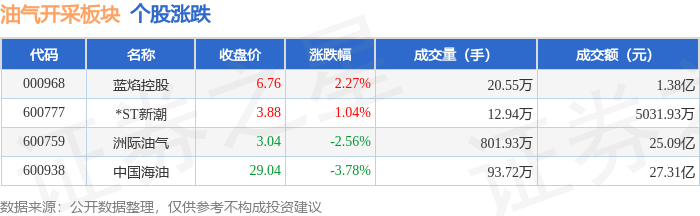
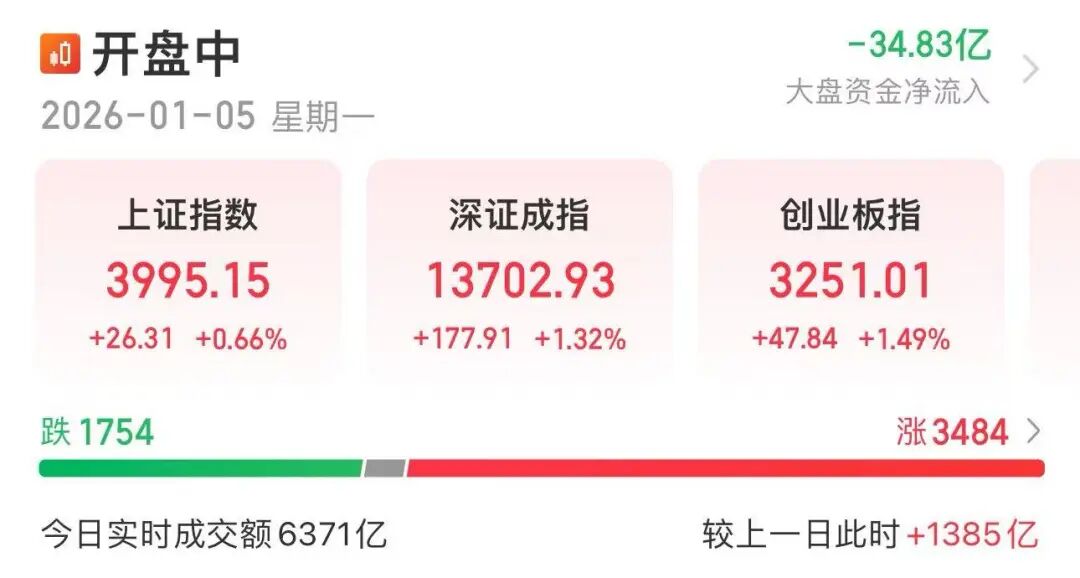
Core Viewpoint - The A-share market opened higher with all three major indices showing positive performance, indicating a bullish sentiment among investors [1] Market Performance - The Shanghai Composite Index increased by 0.35% - The Shenzhen Component Index rose by 1.03% - The ChiNext Index saw a significant gain of 1.79% [1] Sector Performance - Leading sectors with notable gains include: - CPO (Consumer Packaged Goods) - Aquaculture - Semiconductors - Memory Storage - Brokerage Firms - Sectors that experienced declines include: - Ice and Snow Tourism - Oil and Gas Extraction - Real Estate - Coal [1]
逆势上涨,风格再次切换
Ge Long Hui· 2025-11-19 14:16
Group 1 - Energy metals lead the market, with traditional dividend assets like oil, chemicals, and banks showing strength, particularly the "three oil giants" which have boosted the Hong Kong stock market's dividend ETF, Guangfa (520900), by 1.39% [1] - Since the fourth quarter, technology stocks have entered a valuation adjustment phase, while market funds have shifted towards dividend assets, indicating a style switch [3] - The "technology" and "dividend" sectors have alternated in performance, highlighting the importance for investors to understand and adapt to these style changes rather than betting on a single style [4] Group 2 - A stable asset allocation strategy is crucial for investment safety, with successful investors often choosing robust leaders as a ballast in their portfolios [5] - In China, key sectors such as energy, utilities, communications, and finance have benefited significantly from the country's rapid economic growth since 2000, with state-owned enterprises playing a vital role [6] - China Petroleum and Chemical Corporation (Sinopec) has seen its revenue grow from 360 billion yuan in 2000 to over 3 trillion yuan in 2024, a 7.5-fold increase, while maintaining stable net profits [6] Group 3 - Sinopec has distributed over 650 billion yuan in cash dividends since its listing in 2001, with a dividend yield consistently above 5% for the past decade [7] - China National Petroleum Corporation (CNPC) has also performed well, distributing 320 billion yuan in dividends from 2020 to 2024 while maintaining over 50% of domestic crude oil supply [7] - China Shenhua Energy, a leading coal enterprise, has seen its revenue grow nearly tenfold since its listing in 2007, with cumulative dividends exceeding 700 billion yuan and a dividend yield reaching 6.8% in 2024 [8] Group 4 - The trend of style switching in the A-share market is becoming more evident, with both "technology" and "dividend" sectors coexisting as viable investment options [9] - The performance of high-dividend indices has shown resilience during market downturns, with the Smart High Dividend Index demonstrating significant cumulative gains since 2017 [12] - The National Hong Kong Stock Connect Central Enterprise Dividend Index has also shown strong performance, with a cumulative increase of 119% since its inception [19] Group 5 - The high dividend ETF (159207) has consistently achieved positive returns from 2020 to 2024, with a cumulative increase of 111.54% over the past five years [15][17] - Hong Kong stocks often exhibit higher dividend yields compared to their A-share counterparts, making them attractive for investors seeking high-yield assets [17] - The top sectors in the National Hong Kong Stock Connect Central Enterprise Dividend Index include oil and petrochemicals, telecommunications, and transportation, with significant weight in leading state-owned enterprises [18] Group 6 - The cyclical nature of technology and high-dividend assets is a consistent pattern, with both sectors expected to grow in the context of China's stable economic growth and technological advancements [21] - Finding a balance in investment strategies across different market environments is essential for achieving long-term stable returns [21]
中企在中亚五国能源投资的法律风险及其防范
Sou Hu Cai Jing· 2025-11-19 12:05
Core Insights - Central Asia is a crucial region for China's Belt and Road Initiative, with significant oil and gas resources, particularly in Kazakhstan, Tajikistan, and Turkmenistan [1][2] - The second China-Central Asia Summit in June 2025 resulted in agreements to enhance energy cooperation across traditional and renewable sectors [1][2] - Chinese investments in Central Asia's energy sector have been increasing steadily since the Belt and Road Initiative was launched in 2013, with notable projects like the Angren power plant in Uzbekistan [2] Energy Investment Landscape - China has established a comprehensive energy cooperation framework with Central Asia, focusing on oil and gas exploration, development, refining, transportation, and sales [2] - As of 2025, the China-Central Asia gas pipeline has become a major supply route, with significant gas volumes being transported to China [7] - The total oil reserves in Kazakhstan are 3.9 billion tons, accounting for 1.7% of global reserves, while Turkmenistan holds 13.6 trillion cubic meters of natural gas [6] Legal Risks in Energy Investment - Legal frameworks in Central Asian countries present challenges for Chinese enterprises, including Kazakhstan's laws that allow the government to refuse mineral development rights [3] - Uzbekistan's mining rights are subject to cabinet approval and public bidding, leading to legal uncertainties [3] - Other countries like Tajikistan and Kyrgyzstan have strict regulations that can increase operational costs and complicate dispute resolution [3] Risk Mitigation Strategies - There is a need to revise and improve bilateral investment agreements between China and Central Asian countries to better protect Chinese investors [4] - Establishing a multilateral energy cooperation mechanism can help balance interests and reduce investment barriers [8] - Utilizing overseas investment insurance and the ICSID dispute resolution mechanism can provide additional protection for Chinese enterprises [9][10] Investment Dispute Resolution - ICSID is favored for resolving investment disputes due to its binding nature and recognition by member countries [10][11] - Most Central Asian countries, except Tajikistan, are members of the ICSID Convention, which allows for arbitration of investment disputes [11] - Chinese investors should consider the specific legal frameworks and reservation clauses when selecting dispute resolution mechanisms [11]
巴西石油学会主席罗伯托:冀科技创新驱动中巴领军碳减排
Zhong Guo Xin Wen Wang· 2025-11-19 10:06
Core Viewpoint - Brazil's oil industry leaders emphasize the importance of China as a global economic leader and advocate for deepening cooperation between Brazil and China in the field of carbon reduction through technological innovation and collaboration [1][2]. Group 1: China's Role in Carbon Reduction - China has become a global leader in economic development and is expected to play a significant role in carbon reduction efforts [1]. - China National Offshore Oil Corporation (CNOOC) is actively enhancing its natural gas production and promoting a carbon capture, utilization, and storage (CCUS) circular economy model [2]. Group 2: CNOOC's Initiatives in Brazil - CNOOC has established itself as the first foreign company in Brazil to achieve independent natural gas sales, aiming to optimize the energy structure and support local market development [2]. - The company is focusing on offshore wind power and renewable energy development, contributing to the green development of deepwater oil and gas fields [2]. Group 3: Global Cooperation and Recognition - CNOOC is expanding international cooperation in green energy, leveraging the complementary energy advantages of China and Brazil to enhance technology research and development [2]. - Gerard Gallagher from Ernst & Young praised China's innovative capabilities and its significant contributions to carbon reduction, highlighting the country's role in achieving global decarbonization goals [3].
多家上市公司被立案 多涉信披违规
Jin Rong Shi Bao· 2025-11-19 01:38
Core Viewpoint - The regulatory environment for listed companies in China has become increasingly stringent, with a significant rise in investigations and penalties for violations, particularly related to information disclosure and financial misconduct [1][9]. Group 1: Regulatory Actions - As of November 17, 2023, a total of 85 A-share companies or their related parties have been investigated by the China Securities Regulatory Commission (CSRC) this year, with 52 companies suspected of information disclosure violations [1]. - In November alone, multiple companies, including Hunan Kechuang Information Technology Co., Ltd., were notified of investigations for suspected violations of information disclosure laws [3]. - The CSRC has intensified its crackdown on securities violations, with a notable increase in administrative penalties and criminal prosecutions, reflecting a commitment to maintaining market integrity [9]. Group 2: Company-Specific Incidents - North University Pharmaceutical Co., Ltd. faced significant leadership challenges as its chairman and president, Xu Xiren, was arrested on criminal charges, leading to a temporary delegation of responsibilities [5][6]. - Other companies, such as Mahi Technology and Suzhou Futai Information Technology Co., Ltd., also reported investigations and the implementation of detention measures against their key executives [7]. - Administrative penalties were imposed on companies like Delisted Longyu and ST Tian Sheng for serious financial misconduct, with fines totaling over 30 million yuan for Longyu alone [4]. Group 3: Impact on Corporate Governance - The arrest of key executives raises concerns about potential power vacuums in corporate governance, emphasizing the need for robust internal controls and governance mechanisms to ensure continuity in operations [8]. - Legal experts suggest that companies must have contingency plans in place to manage leadership transitions effectively when key individuals are detained or arrested [8].
我省与中国石油集团签署战略合作协议
Xin Lang Cai Jing· 2025-11-19 00:04
Core Viewpoint - The Sichuan Provincial Government and China National Petroleum Corporation (CNPC) signed a strategic cooperation agreement to enhance collaboration in the development of the Chengdu-Chongqing economic circle and establish a national oil and gas production base in the Sichuan-Chongqing region [1] Group 1: Strategic Cooperation - The agreement aims to strengthen the mutual cooperation mechanism between central and local governments [1] - Both parties will focus on advancing the construction of a national oil and gas production base with a target of producing 100 billion cubic meters [1] Group 2: Key Participants - The signing ceremony was attended by key officials including Wang Xiaohui, Secretary of the Provincial Party Committee, and Shi Xiaolin, Governor of Sichuan Province [1] - The agreement was signed by Vice Governor Ren Jingdong and CNPC Vice General Manager Zhang Dawei [1]
北水动向|北水成交净买入74.66亿 北水继续抢筹阿里巴巴 绩前加仓小米集团
Zhi Tong Cai Jing· 2025-11-18 10:07
Core Viewpoint - The Hong Kong stock market saw significant net inflows from northbound trading, totaling HKD 74.66 billion, with notable buying in Alibaba, Xpeng Motors, and Xiaomi, while China National Offshore Oil Corporation and Tencent experienced the highest net sell-offs [1][2]. Group 1: Northbound Trading Activity - Northbound trading recorded a net buy of HKD 74.66 billion, with HKD 27.45 billion from the Shanghai Stock Connect and HKD 47.21 billion from the Shenzhen Stock Connect [1]. - The most bought stocks included Alibaba (HKD 37.70 billion buy, HKD 20.92 billion sell, net +HKD 16.78 billion), Xpeng Motors (net +HKD 8.29 billion), and Xiaomi (net +HKD 6.33 billion) [2][5]. - The most sold stocks were China National Offshore Oil Corporation (net -HKD 3.65 billion) and Tencent (net -HKD 1.91 billion) [7]. Group 2: Company-Specific Developments - Alibaba (HKD 09988) received a net buy of HKD 32.96 billion, with news of its Qianwen App entering public testing and strategic collaboration with Quark App [5]. - Xpeng Motors (HKD 09868) reported a narrowed Q3 loss of HKD 3.81 billion, with adjusted losses of HKD 1.5 billion, and projected Q4 revenue between HKD 215 billion and HKD 230 billion, reflecting a growth of 33.5% to 42.8% [5]. - Xiaomi (HKD 01810) saw a net buy of HKD 8.53 billion ahead of its earnings report, which showed a Q3 revenue of RMB 113.12 billion, up 22.3%, and an adjusted net profit of RMB 11.31 billion, up 80.9% [6]. - China Hongqiao (HKD 01378) attracted a net buy of HKD 8.32 billion, with plans to place 400 million shares, raising approximately HKD 114.9 billion [6]. - Semiconductor companies like SMIC (HKD 00981) and Hua Hong Semiconductor (HKD 01347) received net buys of HKD 5.15 billion and HKD 3.74 billion, respectively, with SMIC projecting annual sales exceeding USD 9 billion [6][7].