Display

Search documents
Corning(GLW) - 2025 Q4 - Earnings Call Transcript
2026-01-28 14:32
Financial Data and Key Metrics Changes - For Q4 2025, sales increased by 14% year-over-year to $4.41 billion, and EPS grew by 26% to $0.72 [5][20] - Operating margin expanded by 170 basis points to 20.2%, achieving the Springboard target a year early, and ROIC increased by 150 basis points to 14.2% [5][20] - For the full year 2025, sales grew by 13% to a record $16.4 billion, with EPS growing by 29% to $2.52 [20] Business Segment Data and Key Metrics Changes - In Optical Communications, Q4 sales were $1.7 billion, up 24% year-over-year, with net income increasing by 57% to $305 million [20][21] - Display segment sales for Q4 were $955 million, with net income of $257 million, exceeding targets for the year [21][22] - Specialty Materials saw Q4 sales rise by 6% to $544 million, with net income up 22% to $99 million [23] - Automotive segment sales were $440 million, down slightly year-over-year, while net income for the full year was up 3% [25] Market Data and Key Metrics Changes - The enterprise business within Optical Communications grew by 61% year-over-year, with hyperscale data center sales growing significantly faster [21] - The carrier networks business saw a 15% increase in sales for the full year, primarily driven by interconnect data centers [21] Company Strategy and Development Direction - The company upgraded its Springboard plan to add $11 billion in incremental annualized sales by the end of 2028, up from the original $8 billion target [7][17] - A multi-year agreement with Meta worth up to $6 billion was announced to support AI ambitions, reflecting a commitment to U.S. manufacturing and innovation [9][10] - The company aims to enhance profitability and cash generation while pursuing organic growth opportunities [31][33] Management's Comments on Operating Environment and Future Outlook - Management expressed confidence in achieving accelerated growth in Q1 2026, with core sales expected to rise by approximately 15% [8][26] - The company anticipates significant growth in the Optical Communications segment, supported by recent customer agreements [21][24] - Management noted that the financial profile has transformed significantly over the past two years, establishing a strong base for future growth [28][33] Other Important Information - The company plans to spend about $1.7 billion in capital expenditures for 2026, which is above the depreciation level [60][62] - The head of Investor Relations, Anne Nicholson, announced her retirement after 40 years of service [34][35] Q&A Session Summary Question: Are similar long-term agreements with other major customers included in the Springboard plan? - Management indicated that these agreements are significant but have not yet been fully included in the Springboard plan as they are still being finalized [39][40] Question: Is the optical fiber market experiencing supply constraints? - Management stated that there is enough fiber globally to meet demand, but they are expanding capacity for new high-density products due to robust demand [41][42] Question: Will Meta disproportionately increase purchases after the agreement? - Management clarified that while Meta's agreement is significant, they are concluding similar agreements with other major customers, which will expand the overall market [48][50] Question: How will the Meta deal be accounted for? - The deal will be accounted for in the enterprise business, while sales to carriers will be recorded in the carrier business [58] Question: What is the expected CapEx for 2026? - The company plans to spend about $1.7 billion in CapEx, which includes investments related to the Meta deal [60][67]

Corning(GLW) - 2025 Q4 - Earnings Call Presentation
2026-01-28 13:30
Full-Year 2025 Investor Call Corning Reports Fourth-Quarter and Full-Year 2025 Financial Results January 28, 2026 Forward-Looking and Cautionary Statements The statements contained in this presentation and related comments by management that are not historical facts or information and contain words such as "will," "believe," "anticipate," "expect," "intend," "plan," "seek," "see," "would," "target," "estimate," "forecast" or similar expressions are forward-looking statements. These forward-looking statement ...
97亿!LG Display拟扩产OLED
WitsView睿智显示· 2026-01-28 11:52
Core Viewpoint - LG Display aims to increase OLED panel shipments while maintaining last year's growth rate and reducing the disparity between the first and second halves of the year [1] Group 1: OLED Panel Shipments - In 2022, LG Display achieved a shipment target of approximately 70 million smartphone OLED panels [1] - For 2023, the company has set a target of around 7 million large-size OLED panels for TVs and monitors, representing a 10% increase from the previous year [1] - Despite uncertainties in the large-size OLED market, LG Display expects to ship about 6.5 million units in 2023, reflecting an 8% year-on-year growth [1] Group 2: Financial Performance - In 2025, LG Display anticipates sales of 25.81 trillion KRW (approximately 125.18 billion RMB) and an operating profit of 517 billion KRW (approximately 2.51 billion RMB), marking the first annual profit in four years [2] - The sales revenue from OLED products accounted for 61% of total sales, reaching a historical high [3] - In Q4 2025, LG Display reported sales of 72.01 trillion KRW (approximately 349.24 billion RMB) and an operating profit of 1.68 trillion KRW (approximately 8.17 billion RMB) [3] Group 3: Investment and Business Strategy - LG Display plans to increase equipment investment from 1 trillion KRW last year to approximately 2 trillion KRW (around 9.72 billion RMB) to enhance OLED technology competitiveness and future positioning [2] - The company has sold its Guangzhou LCD factory, marking the end of its large-size LCD business and is focusing on strengthening its OLED-centric business structure [3]

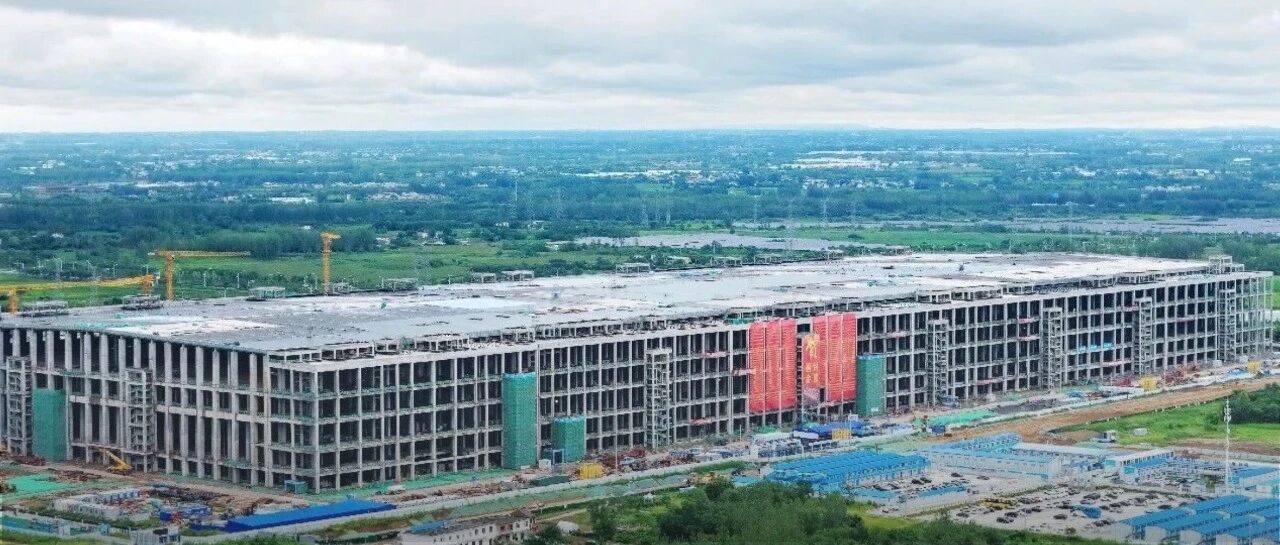
合肥国显8.6代AMOLED产线施工进度已达65%
WitsView睿智显示· 2026-01-27 03:54
Core Viewpoint - The Hefei Guoxian 8.6-generation AMOLED production line project is progressing well, with 65% completion expected to start cleanroom delivery in Q2 2024, and mass production scheduled for 2027 [1][4][5]. Group 1: Project Overview - The project covers an area of approximately 800,000 square meters, with a designed capacity of 32,000 glass substrates per month (size 2290mm × 2620mm) [4]. - It is the world's first 8.6-generation AMOLED production line utilizing Visionox's FMM-free technology (ViP technology), targeting medium-sized applications such as tablets, laptops, and automotive displays [4]. Group 2: Investment and Financing - The second phase of capital investment for the project amounts to 9.443 billion yuan, with contributions from Hefei Jianxiang and Hefei Xincheng, each investing 2.7625 billion yuan for a 31.13% stake, and Visionox investing 3.918 billion yuan for a 37.73% stake [4]. - Following the second phase investment, the registered capital of Hefei Guoxian will increase to 11.443 billion yuan, and it remains outside Visionox's consolidated financial statements [4]. Group 3: Industry Impact - The establishment of the Hefei Guoxian production line is expected to position Hefei as a core supply base for large-sized AMOLED panels globally, enhancing its technological influence and standard-setting capabilities [5]. - Over 30 supporting enterprises have settled in Hefei, with significant investments exceeding 1 billion yuan to attract additional supporting companies [5].

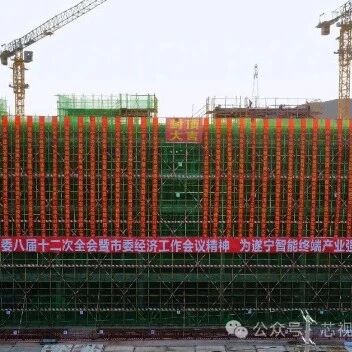
芯视佳四川OLED工厂封顶
WitsView睿智显示· 2026-01-19 09:47
Core Viewpoint - The article highlights the progress and strategic focus of the company in the OLED display technology sector, particularly in flexible OLED and silicon-based OLED products, which cater to advanced applications in smart wearables, automotive displays, and AR/VR technologies [1][2]. Group 1: Project Developments - The K5 factory project in Sichuan has successfully topped out, focusing on flexible OLED and silicon-based OLED high-definition display modules [1]. - The K3 factory in Jiangxi has completed its cleanroom construction, with the first production equipment arriving, indicating the company's capability for large-scale manufacturing of high-end OLED modules [2]. - The K3 factory has a total investment of 1 billion yuan, with a planned annual production capacity of 12 million flexible OLED modules in its first phase and an additional 2.5 million silicon-based OLED modules in the second phase, aiming for an annual output value exceeding 1 billion yuan upon full production [2]. Group 2: Product Focus and Applications - The K3 factory will produce OLED modules characterized by high resolution, brightness, low power consumption, ultra-thin design, and long lifespan, targeting next-generation near-eye display devices and various applications in consumer electronics, smart wearables, and automotive displays [2]. - The company is also advancing other projects, including the K2 project, which aims to establish a 12-inch silicon-based OLED production line with a total investment of 1.5 billion yuan and a planned monthly capacity of 4,000 wafers, primarily for AR/VR/MR applications [3]. - The K1 factory in Huainan, which began production in April 2023, focuses on silicon-based OLED micro-displays and flexible OLED modules, with an estimated annual output value of approximately 200 million yuan [3].
Ynvisible Interactive Inc. Marks Start of 2026 with Commercial Momentum Built in 2025 and Clear Execution Path Forward
TMX Newsfile· 2026-01-19 08:00
Core Insights - Ynvisible Interactive Inc. has transitioned from technology development to commercial execution in 2025, securing follow-on orders and establishing scalable manufacturing pathways [2][8] - The company is focusing on converting momentum into revenue in 2026, with an emphasis on the adoption of printed e-paper displays in next-generation products [5][8] Commercial Execution in 2025 - Ynvisible advanced its operations by securing follow-on orders and expanding into new geographic markets [2] - The company participated in major industry engagements, including CES 2026, receiving strong interest from global brand owners for printed e-paper displays [3][4] Market Engagements and Partnerships - Ynvisible secured a follow-on order exceeding 10,000 units for an at-home diagnostic platform, with potential annual volumes of up to 10 million units [6] - The company established a strategic manufacturing partnership with CCL Design for high-volume production in China and opened a new manufacturing facility in Norrköping, Sweden [6] Customer Interactions and Sales Leads - The company reported over 120 qualified sales leads and 300 direct customer interactions across various markets, including smart home, IoT, automotive, and medical sectors [7] - Active discussions are ongoing to convert advanced customer engagements into commercial supply agreements [7] CEO Commentary - The CEO highlighted the successful transition to commercial execution in 2025, with a focus on disciplined growth and building recurring commercial revenue in 2026 [8] Industry Positioning - Ynvisible is positioned to disrupt the low-cost and ultra-low power display industry, leveraging sustainable electronics and roll-to-roll printing production [9] - The company's printed e-paper displays are suitable for low-power applications, including digital signage and medical diagnostics [9]

全球市场进入“热战”阶段!车载显示屏与其他显示屏有何不同?
Zhong Guo Qi Che Bao Wang· 2026-01-19 04:13
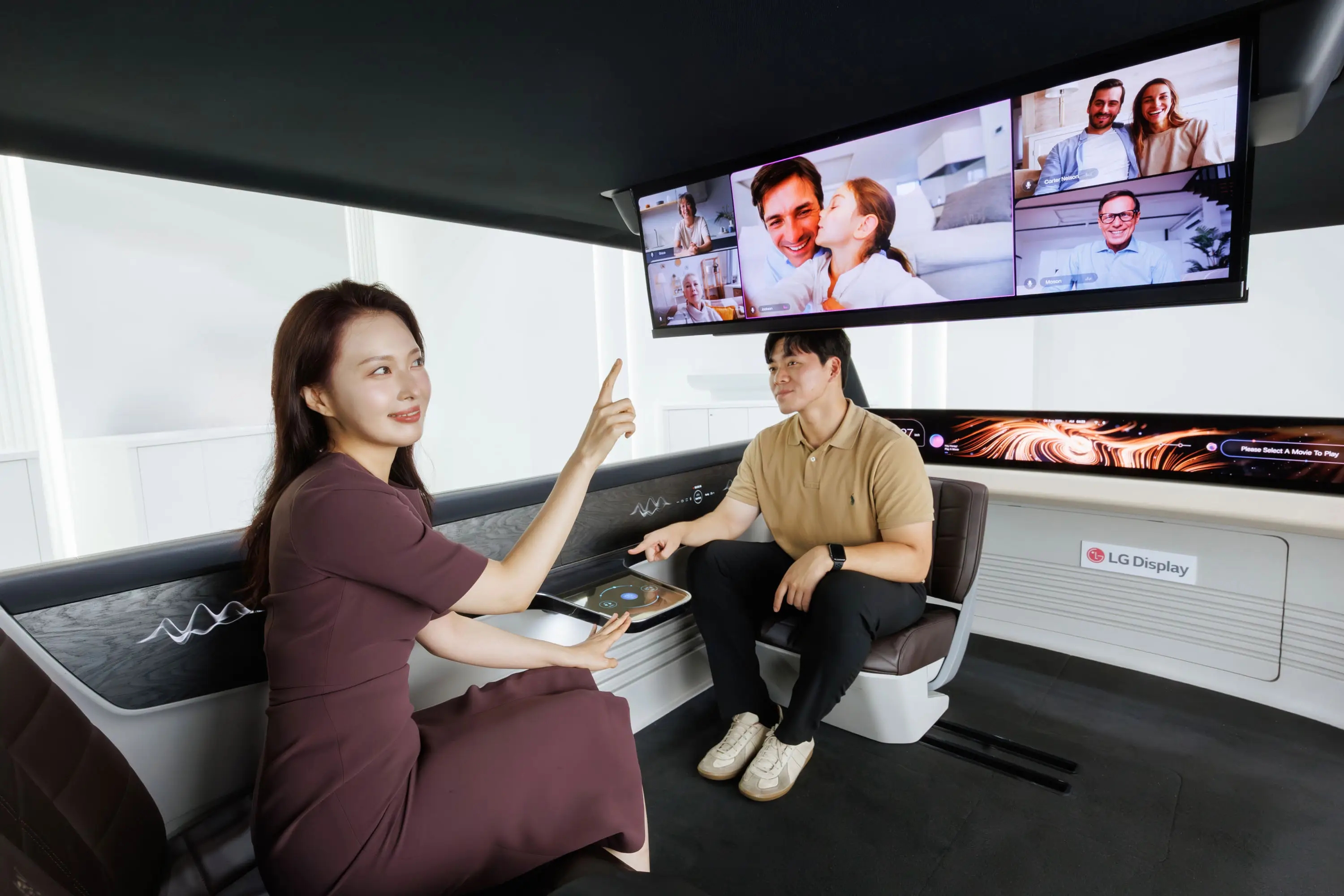
Core Insights - The automotive display market is experiencing rapid growth, driven by the increasing demand for larger and more interactive screens in vehicles [5][10] - LG Display has introduced advanced automotive displays, including a 51-inch P2P OLED display and a flexible OLED display for dashboards, highlighting the trend towards larger and more sophisticated in-car screens [4][5] - The transition from traditional displays to multifunctional, interactive screens is reshaping the automotive experience, making displays central to smart cockpit technology [10][12] Industry Trends - The global automotive display market is entering a competitive phase, with a shift from consumer electronics to automotive displays as a key growth driver [5][10] - The trend towards multi-screen setups in vehicles is becoming prevalent, with configurations including center screens, instrument panels, passenger entertainment screens, and rear displays [6][10] - The integration of advanced features such as touch interaction, voice control, and augmented reality navigation is enhancing the functionality of automotive displays [6][10] Technical Requirements - Automotive displays face unique challenges due to their operating environment, requiring them to withstand extreme temperatures (-30°C to 90°C) and vibrations from various road conditions [7][8] - The longevity of automotive displays is significantly higher than consumer electronics, with a lifespan of over ten years compared to 3-5 years for typical consumer displays [8] - Strict automotive certifications (e.g., IATF16949) ensure that automotive displays meet rigorous safety and performance standards, differentiating them from consumer-grade displays [8][9] Design Innovations - Special design features, such as anti-glare technology and multi-layer coatings, are being implemented to enhance visibility and user experience in automotive displays [9] - The future of automotive displays is leaning towards "display + interaction + intelligence" integration, which will require advanced technology and manufacturing capabilities [10][12] - Emerging display technologies like Mini-LED and MicroLED are gaining traction, promising higher brightness, contrast, and longevity for automotive applications [11][12] Market Opportunities - The automotive display market is poised for unprecedented growth, driven by the increasing adoption of smart cockpit concepts and the demand for larger, flexible displays [10][12] - Companies that invest in technology development and product innovation will be better positioned to compete in this evolving market landscape [12] - The automotive display is evolving from a simple display to a central hub for smart interactions, enhancing the overall travel experience for consumers [10][12]
AUO Suzhou Fab Named Talent Lighthouse by World Economic Forum
Globenewswire· 2026-01-16 13:00
Achieving Transformative Impact on the Workforce by Implementing AI Recruitment, Smart Scheduling, and Digital Agent AUO Suzhou Fab AUO Suzhou Fab has been recognized by the World Economic Forum (WEF)’s Global Lighthouse Network (GLN) in the Talent category, becoming the first in the global display industry to receive this honor. HSINCHU, Taiwan, Jan. 16, 2026 (GLOBE NEWSWIRE) -- AUO announced today (16th) that its Suzhou Fab has been recognized by the World Economic Forum (WEF)’s Global Lighthouse Netwo ...
可拉伸OLED迎来重大升级:保持亮度同时可拉伸200%
WitsView睿智显示· 2026-01-16 09:07
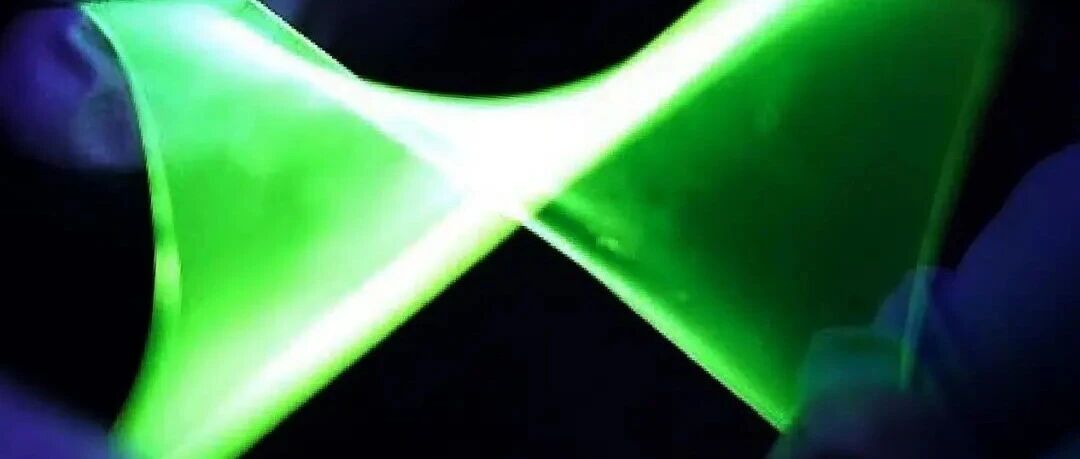
Core Viewpoint - A research team from Seoul National University and Drexel University has developed a new type of stretchable OLED that maintains brightness and durability even when stretched to 1.6 times its original length, addressing long-standing issues in the field [1][4]. Group 1: OLED Technology Overview - OLED is a thin "sandwich" structure that emits light when electricity is applied, involving organic materials sandwiched between two electrodes [2]. - The flexibility of OLEDs requires deposition on plastic-like substrates, but repeated bending and stretching can damage the electrodes or organic layers, leading to decreased brightness and efficiency [2]. Group 2: Innovations in Stretchable OLEDs - The research team redesigned the light-emitting layer to enhance the efficiency of exciton formation and light emission, achieving over 57% of excitons used for light compared to the traditional 12% to 22% [3]. - A thermoplastic polyurethane was used to improve the stretchability of the light-emitting layer, making it less prone to breakage during stretching [3]. Group 3: Advancements in Electrode Materials - The team utilized MXene, a two-dimensional nanomaterial, combined with silver nanowires to create transparent and highly stretchable electrodes, ensuring efficient charge transport [4]. - The new OLED prototype demonstrated a performance drop of only 10.6% when stretched to 60% of its maximum deformation, and maintained 83% of its luminous efficiency after 100 cycles of 2% deformation [4]. Group 4: Future Applications and Developments - The research team has created a full-color stretchable display and aims to optimize the OLED's lifespan and manufacturing processes for large-scale production [5]. - Potential applications include skin-like display sensors and advancements in physical artificial intelligence [5].
视涯科技IPO注册申请获证监会同意
WitsView睿智显示· 2026-01-16 09:07
Core Viewpoint - The China Securities Regulatory Commission (CSRC) has approved the registration application for the initial public offering (IPO) of Shiya Technology Co., Ltd., allowing the company to proceed with its plans to list on the STAR Market, marking it as the first company in the A-share market to focus on silicon-based OLED technology [1][2]. Group 1 - Shiya Technology, established in 2016, specializes in silicon-based OLED micro-displays and optical systems, as well as XR overall solutions [2]. - The company plans to issue no more than 100 million new shares, with total fundraising expected to reach 2.015 billion yuan. Approximately 1.609 billion yuan will be allocated to expand the production line for ultra-high-resolution silicon-based OLED micro-displays, increasing the capacity to 10.8 million screens [2]. - An additional 406 million yuan will be invested in the construction of a research and development center, focusing on upgrading silicon-based OLED micro-display driver chips and new display technologies [2].