
Renewables

Search documents
Brookfield Renewable Partners (NYSE:BEP) 2025 Investor Day Transcript
2025-09-25 20:57
Summary of Brookfield Renewable Partners 2025 Investor Day Company Overview - **Company**: Brookfield Renewable Partners (NYSE: BEP) - **Industry**: Renewable Energy Key Points and Arguments Market Position and Strategy - Brookfield Renewable Partners is positioned to outperform in the evolving energy market due to its unique assets and capabilities tailored to meet growing energy demands [1][2] - The company has established leadership positions in critical technologies and geographies, allowing for sustained attractive investment returns [5][12] - The business model focuses on low-cost renewable technologies, which are the cheapest form of bulk electricity production globally [4][11] Financial Performance - The company has set records across all relevant KPIs, with sustained distribution growth supported by a record year of financial performance [3][37] - Brookfield Renewable achieved an 11% growth in funds from operations (FFO) per unit, with a stable distribution growth of over 5% [37][38] - The company raised $34 billion in financing over the past year, enhancing liquidity to $4.7 billion [38][40] Growth Drivers - Three megatrends driving energy demand include: 1. Digitalization and AI, with data centers expected to drive 8% to 10% annual growth in power demand through 2050 [15][16] 2. Continued electrification across transport and industry [15] 3. Accelerating reindustrialization in developed markets [15] - The company has a robust pipeline of low-cost wind and solar projects, alongside significant investments in hydro, nuclear, and battery storage [10][11][22] M&A and Capital Recycling - Brookfield Renewable plans to deploy $9 to $10 billion over the next five years across organic development and acquisitions, with a focus on proprietary development opportunities [25][26] - The M&A pipeline exceeds $100 billion in enterprise value, with a disciplined approach to capital recycling that enhances growth and returns [26][30] - The acquisition of NAOWIN positions Brookfield as a leader in energy storage and battery development, a rapidly growing segment [10][23] Risk Management and Resilience - The company maintains a clean portfolio with no exposure to sectors facing significant headwinds, allowing it to capitalize on favorable market conditions [6][7] - Brookfield Renewable's disciplined investment approach focuses on downside protection and long-term contracted cash flows, ensuring stability amid market volatility [30][39] Future Outlook - The company expects to achieve a run rate of 10 gigawatts of annual development by 2027, contributing to significant FFO growth [32][50] - Brookfield Renewable is well-positioned to capture the tailwinds of major energy trends, including the U.S. ambition for energy dominance and increasing demand from tech companies [8][9] Additional Important Insights - The hydro portfolio is increasingly strategic, with long-term contracts enhancing cash flow visibility and financing opportunities [18][19] - The company emphasizes the importance of reliability in power supply, particularly for hyperscalers requiring high availability [16][17] - Brookfield Renewable's leadership in nuclear power through Westinghouse aligns with growing public support for nuclear energy [20][21] This comprehensive overview highlights Brookfield Renewable Partners' strategic positioning, financial performance, growth drivers, and future outlook in the renewable energy sector.

GST reforms set to reignite consumption growth, spur corporate profitability
The Economic Times· 2025-09-15 01:00
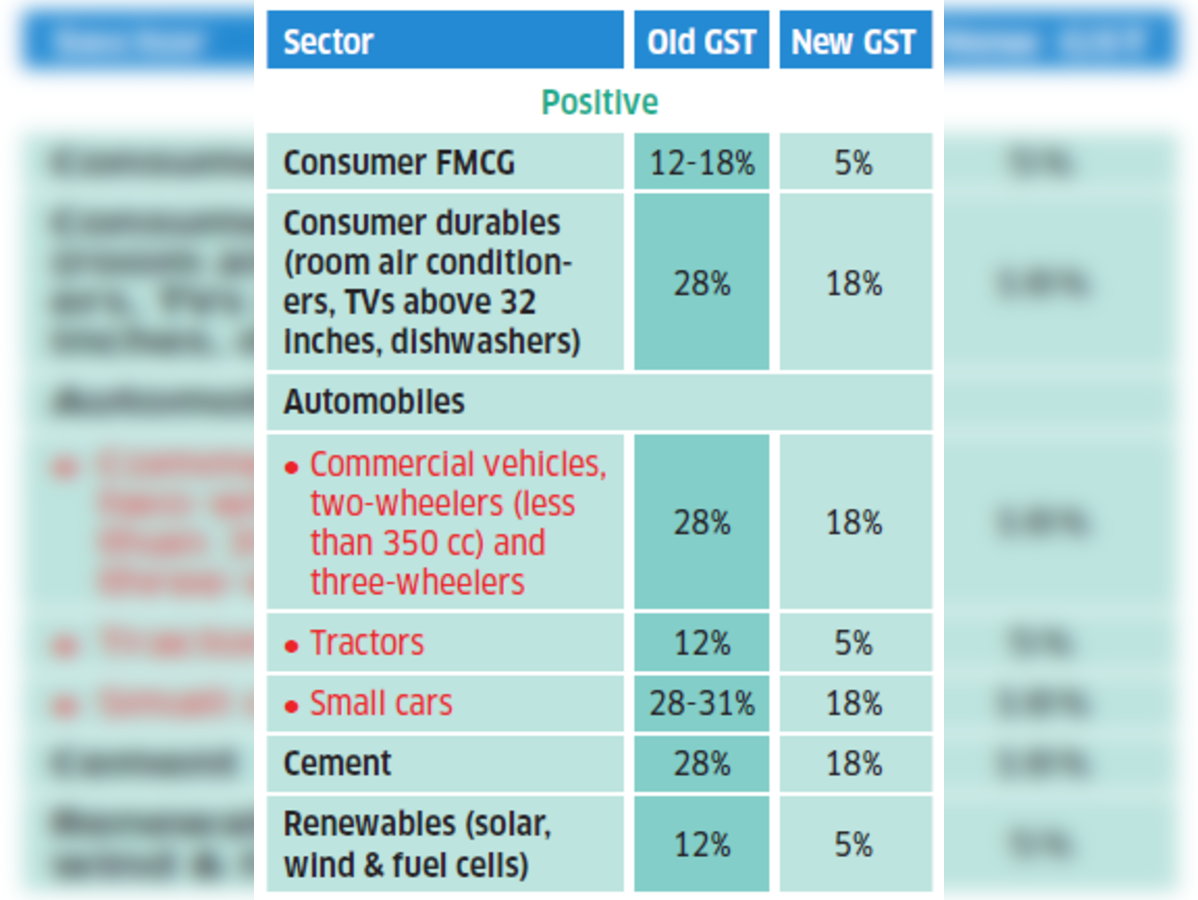
Consumption Sector - The recent GST reforms are expected to boost affordability and consumption across rural and urban markets, with around 90% of items moved from higher to lower tax slabs [1][38] - Experts anticipate a premiumisation effect among low- and middle-income households, as savings on essential goods will redirect purchasing power towards high-value consumption [2][38] - The consumption sector is projected to recover over the next 12-15 months, with private consumption growth expected to rise by 40-50 basis points in the second half of the current financial year [4][41] Corporate Profitability - Lower prices from GST reforms will create volume acceleration for producers, supporting profit margins and leading to an anticipated overall profitability increase of 1-1.5% relative to 2024-25 earnings [5][41] - The reforms are expected to stimulate demand for first-time buyers and replacement purchases, particularly during the festive season, with an industry expectation of a 10-15% improvement in demand for room air conditioners [22][41] Sector-Specific Impacts - Key beneficiaries in the consumer FMCG sector include Britannia Industries, Colgate Palmolive (India), Nestle India, and Emami due to reduced GST on essentials from 12-18% to 5% [11][15][41] - In the consumer durables sector, companies like LG, Daikin, Blue Star, and Dixon Technologies will benefit from reduced GST on room air conditioners and dishwashers from 28% to 18% [18][41] - The automobile sector, including Maruti Suzuki, TVS Motor, Hero MotoCorp, and Bajaj Auto, will see positive impacts from reduced GST rates on commercial vehicles and small cars [23][41] Infrastructure and Housing - The cement industry is expected to benefit from a reduction in GST from 28% to 9%, potentially lowering cement prices by Rs.25-30 per bag, which will support infrastructure and housing sectors [24][41] - Cost-efficient firms like Prism Johnson and Heidelberg Cement are positioned to enhance net realizations and margins over the medium to long term due to these reforms [25][41] Renewable Energy - The renewable energy sector will benefit from a reduction in GST on equipment from 12% to 5%, with key beneficiaries including Tata Power, JSW Energy, and Vikram Solar [26][41] - This reduction is expected to lower capital costs for solar and wind power projects, improving the internal rate of return and supporting government initiatives around renewable energy transition [31][41] Banking and Financial Services - Banks such as HDFC Bank, ICICI Bank, and IDFC First Bank are expected to benefit from increased demand for credit due to a pick-up in consumption and economic activities [32][41] - Non-Banking Financial Companies (NBFCs) focused on retail loans will also benefit from rising demand for consumer durables and vehicles [32][41] Insurance and Textiles - The insurance sector will face mixed impacts, with a reduction in GST on life and health insurance to nil, improving affordability but potentially diluting margins due to loss of input tax credit [33][41] - The textile industry will see a reduction in GST on fabrics and home textiles from 12% to 5%, benefiting companies like Sanathan Textiles and Grasim Industries [30][36][41] Oil and Gas - The oil exploration sector will be adversely impacted by an increase in GST from 12% to 18%, affecting companies like ONGC and Oil India [37][41] - The increase in costs for exploration and production is expected to dent cash flows significantly, with estimates of Rs.2,500-3,000 crore in losses for ONGC [40][41]


ICLN's Surge Despite US Rollbacks: Will It Last?
Seeking Alpha· 2025-09-02 17:45
Core Insights - The current government's shift away from clean energy policies has negatively impacted clean energy stocks, with rollbacks of greenhouse gas and methane regulations, cancellations of solar grants, and uncertainty surrounding IRA-linked incentives dismantling key demand drivers for renewables [1] Group 1: Clean Energy Sector - The rollback of regulations and incentives has created a challenging environment for clean energy investments [1] - Clean energy stocks are facing headwinds due to policy changes that undermine demand [1] Group 2: Investment Strategy - The focus is on building a resilient, income-generating portfolio with a long-term growth mindset, primarily through long-only strategies [1] - The investment approach blends dividend-paying equities, REITs, and selective growth opportunities while prioritizing capital preservation and compounding returns over time [1]

The Andersons, Inc. Names Steven Oakland to Board of Directors
Prnewswire· 2025-08-21 17:00
Core Viewpoint - The Andersons, Inc. has appointed Steven Oakland to its board of directors, effective August 21, 2025, enhancing its leadership with his extensive experience in the food and beverage industry [1][3]. Company Overview - The Andersons, Inc. is a North American agriculture company engaged in agribusiness and renewables sectors, committed to providing exceptional service, supporting employees and communities, and increasing company value [6]. Leadership Experience - Steven Oakland is the chairman, CEO, and president of TreeHouse Foods, Inc., the largest private label food and beverage producer in North America, with a significant manufacturing presence in the U.S. and Canada [2][3]. - Oakland has nearly 40 years of experience in the food and beverage industry, including senior roles at The J.M. Smucker Company, where he held various leadership positions [4]. Board Experience - Oakland has served on multiple boards, including Foot Locker from 2014 to 2025, and is currently on the boards of TreeHouse Foods, Inc. and FMI, The Food Industry Association [5]. Strategic Growth Focus - The chairman of The Andersons, Pat Bowe, expressed confidence in Oakland's industry knowledge and leadership experience, indicating that his addition to the board aligns with the company's focus on strategic growth opportunities [6].


Icahn Enterprises(IEP) - 2025 Q2 - Earnings Call Presentation
2025-08-04 14:00
Financial Results - Q2 2025 net loss attributable to IEP was $165 million, compared to a net loss of $331 million for Q2 2024[6] - Q2 2025 Adjusted EBITDA loss attributable to IEP was $43 million, compared to an Adjusted EBITDA loss of $155 million for Q2 2024[6] - Indicative net asset value as of June 30, 2025, was approximately $3.3 billion, an increase of $252 million compared to March 31, 2025[6] - The company declares a second quarter distribution of $0.50 per depositary unit[6] Segment Performance - Energy segment: Adjusted EBITDA decreased by $127 million to a loss of $24 million for Q2 2025 compared to $103 million in Q2 2024[17, 20] - Automotive segment: Adjusted EBITDA decreased $27 million for Q2 2025 compared to Q2 2024, impacted by higher labor costs and operating expenses[23, 24] - Investment segment: Returns of negative 0.5% for Q2 2025[12, 14] - All Other Segments: Q2 2025 Adjusted EBITDA attributable to IEP was $17 million compared to $28 million for Q2 2024[31] Energy Segment Details - Refining margin for Q2 2025 was $2.21 per throughput barrel, compared to $10.94 during Q2 2024[17, 20] - Renewable margin for Q2 2025 was $0.38 per vegetable oil throughput gallon, compared to $0.43 in Q2 2024[17, 20] - Q2 2025 average realized gate prices for UAN increased by 18% to $317 per ton and ammonia increased by 14% to $593 per ton when compared to Q2 2024[17, 19]

HF Sinclair(DINO) - 2025 Q2 - Earnings Call Transcript
2025-07-31 14:32
Financial Data and Key Metrics Changes - The company reported a second quarter net income attributable to shareholders of $208 million or $1.1 per diluted share, with adjusted net income of $322 million or $1.7 per diluted share compared to $150 million or $0.78 per diluted share in the same period of 2024 [15][16] - Adjusted EBITDA for the second quarter was $665 million compared to $406 million in 2024 [16] - The company returned $145 million in cash to shareholders, consisting of $50 million in share repurchases and $95 million in regular dividends [13] Business Line Data and Key Metrics Changes - In the refining segment, adjusted EBITDA was $476 million compared to $187 million in 2024, driven by higher adjusted refinery gross margins [16] - The Renewables segment reported adjusted EBITDA of negative $2 million, impacted by lower sales volumes and margins, with total sales volumes of 55 million gallons compared to 64 million gallons in 2024 [17][18] - The Marketing segment delivered $25 million in EBITDA, up from $15 million in 2024, driven by higher margins [18] - The Lubricants and Specialties segment reported EBITDA of $55 million, down from $97 million in 2024, primarily due to lower base oil margins and sales volumes [19] - The Midstream segment reported adjusted EBITDA of $112 million, slightly up from $110 million in the same period last year [19] Market Data and Key Metrics Changes - The company achieved an operating expense per throughput barrel of $7.32, nearing its goal of $7.25 per barrel [10] - The refining throughput averaged 616,000 barrels per day for the second quarter, down from 635,000 barrels per day in 2024 due to turnaround activities [16] Company Strategy and Development Direction - The company is focused on improving reliability, optimization, and integration, with a commitment to return excess cash to shareholders [8][14] - The company plans to continue executing its strategy with one remaining turnaround scheduled at the Puget Sound refinery [10] - The company is optimistic about refining margins, particularly in distillates, and believes its overall strategy is delivering organic growth [13][14] Management's Comments on Operating Environment and Future Outlook - Management expressed confidence in the fundamentals of each business, including refining, and noted improvements in reliability and operational performance [104][105] - The company anticipates continued strength in refining margins and is positioned well to take advantage of market opportunities [13][40] Other Important Information - The company has approximately $750 million remaining on its share repurchase authorization and has reduced its share count by over 58 million shares since the Sinclair acquisition [13] - The Board of Directors declared a regular quarterly dividend of $0.50 per share, payable on September 4, 2025 [13] Q&A Session Summary Question: Understanding strong performance in refining and capture rates - Management highlighted improvements in crude performance and flexibility in crude slate, contributing to strong capture rates despite market headwinds [24][26] Question: Balancing shareholder returns and bolt-on opportunities - Management reiterated commitment to shareholder returns while also pursuing organic growth opportunities, indicating a balance can be achieved [30][31] Question: Renewable diesel credits and market structure - Management confirmed recognition of producers' tax credits and expressed optimism about future market structure improvements for renewable diesel [35][40] Question: Operational performance and turnaround improvements - Management noted significant improvements in turnaround performance and reliability, indicating a successful operational excellence journey [42][45] Question: M&A perspective and market opportunities - Management stated a focus on bolt-on opportunities in marketing and lubricants, while being cautious about the current M&A landscape [72][74] Question: Renewable diesel sustainable EBITDA and SREs - Management expressed confidence in renewable diesel positioning and acknowledged potential impacts of SREs on RIN prices, indicating ongoing monitoring of the situation [96][100]

BP Pulls Out of Australia Hydrogen Project Amid Oil Pivot
ZACKS· 2025-07-25 13:46
Core Viewpoint - BP plc has announced its exit from the Australian Renewable Energy Hub (AREH), one of the largest planned green hydrogen projects globally, relinquishing its role as both operator and equity holder, where it held a 63.57% stake [1][9]. Group 1: Strategic Shift - The decision reflects BP's broader strategic pivot back to its core oil and gas operations, moving away from its initial low-carbon ambitions associated with the AREH project, which was estimated to cost around $36 billion and aimed to develop up to 26 gigawatts of solar and wind capacity to generate 1.6 million metric tons of green hydrogen annually [2][3]. - BP's withdrawal from the AREH initiative comes after underwhelming stock performance and increasing investor pressure, leading the company to reduce its planned spending on renewables and redirect funds towards traditional oil and gas ventures [3][6]. Group 2: Implications for AREH and Hydrogen Sector - BP's exit raises significant questions about the future of the AREH project, which was intended to be a flagship development in global green hydrogen production, necessitating remaining partners to reassess the project's financial and operational framework without BP's substantial capital and leadership [5][9]. - This move indicates a more cautious approach from BP towards unproven renewable projects, particularly in the green hydrogen sector, while reinforcing its commitment to oil and gas operations in the near term [6].


多行业资本支出追踪:尽管 2025 年支出延迟,中期资本支出前景增强-Multi-Industry Capex Tracker_ Medium-term capex picture strengthens despite spending being deferred in 2025
2025-07-23 02:42
Summary of Key Points from the Multi-Industry Capex Tracker Industry Overview - The report focuses on the multi-industry capital expenditure (capex) trends, analyzing approximately €3.1 trillion of capex across around 4,000 companies in 26 different end markets [1][7][43]. Core Insights - **Medium-term Capex Growth**: The medium-term capex growth has been revised upward slightly, now indicating a 5.9% compound annual growth rate (CAGR) for 2024-2028, which is a 0.4 percentage point increase from the previous update in April [7][13]. - **2025 Capex Downgrade**: For 2025, the capex growth expectation has been downgraded by 0.4 percentage points to 4.9%, attributed to some spending being deferred to 2026 due to tariff and policy uncertainties [7][8][13]. - **Sector Performance**: - **Strong Growth Areas**: Technology (specifically Datacenters) and Utilities (Power grids, Renewables) are expected to see favorable capex environments, with companies like Legrand, Schneider, Siemens, Prysmian, and Nexans recommended for investment [7][26]. - **Weak Growth Areas**: Sectors such as Biotech, Pulp & Paper, and REITs are experiencing the largest cuts in capex growth [7][8]. Additional Insights - **Geographical Drivers**: The US remains the primary driver of strength in the capex tracker, despite uncertainties regarding tariffs and interest rates. Europe is also expected to see strong investments in grid and defense [8][9]. - **Capacity Utilization**: Capacity utilization is below historical median levels in Europe but aligns with historical medians in the US and China. Elevated asset age in sectors like Oil & Gas, Vehicles, Airlines, and Healthcare indicates a need for replacement capex [8][9][21]. - **Macro Risks**: Key risks to the capex estimates for 2025 include tariff-driven inflation, structural overcapacity in China, and competitiveness issues for core capex spenders in Europe [9][10]. Sector-Specific Capex Growth Projections - **Datacenters**: Expected to grow at a CAGR of 23.0% for 2024-2028, with a 36.5% growth forecast for 2025 [20]. - **Renewables and Transmission**: Projected CAGR of 16.3% for 2024-2028, with 25.5% growth in 2025 [20]. - **Semiconductors**: Anticipated CAGR of 12.9% for 2024-2028, with 11.2% growth in 2025 [20]. - **Biotech**: Expected to decline with a CAGR of -8.1% for 2024-2028, and a -10.7% growth forecast for 2025 [20]. Conclusion - The capex tracker indicates a mixed outlook for various sectors, with technology and utilities poised for growth while others like biotech and pulp & paper face challenges. The overall capex environment remains healthy, but macroeconomic uncertainties could impact future investments [7][9][10].

CVR Energy to Release Second Quarter 2025 Earnings Results
Globenewswire· 2025-07-17 12:30
Group 1 - CVR Energy, Inc. plans to release its second quarter 2025 earnings results on July 30, after the close of trading on the New York Stock Exchange [1] - A teleconference call to discuss the earnings results will be held on July 31 at 1 p.m. Eastern [1] - The teleconference will be accessible via webcast and archived for 14 days [2] Group 2 - CVR Energy is a diversified holding company engaged in renewables, petroleum refining, marketing, and nitrogen fertilizer manufacturing through its interest in CVR Partners, LP [4] - The company owns 37 percent of the common units of CVR Partners, LP [4]


摩根士丹利:清洁技术-和解法案已获国会通过 -这意味着什么?
摩根· 2025-07-04 03:04
Investment Rating - The overall industry investment rating is "In-Line" [8]. Core Insights - The reconciliation bill passed by Congress is viewed as better than expected for most subsectors within the renewables space, removing a major overhang for the industry [2][3]. - Incremental buying is recommended for companies such as NEE, AES, BE, and FSLR due to the supportive provisions of the legislation [2]. - Strong industry growth is anticipated at least until 2028, with leading developers expected to continue strong growth and gain market share into 2030 [3]. Summary by Relevant Sections Large Scale Renewables - Full tax credits are available through mid-2030 for projects that started construction previously and for those starting through mid-2026 [3]. - The final version of the bill is slightly worse than initial expectations, but storage provisions remain favorable [3]. Manufacturing - Manufacturing tax credits remain unchanged, providing relief for FSLR [4]. Battery Storage - Tax credits for battery storage are significantly better than expected, available through 2033 before phasing down, positively impacting FLNC, NEE, and AES [4]. Residential Solar - The outcome for residential solar is challenging but better than bearish expectations for RUN, while ENPH and SEDG face more difficulties [5]. Fuel Cells - A new 30% tax credit for fuel cells through 2033 is a positive development for BE, enhancing the economic attractiveness of its products [6]. Nuclear - The nuclear sector remains neutral, with no significant changes for CEG, TLN, VST, and PEG [6]. Hydrogen - Clean hydrogen tax credits are better than expected, with elimination pushed to 2028, which is later than initially anticipated, providing modest positivity for PLUG [11]. Clean Fuel Production - Clean fuel production credits are extended through 2029, benefiting companies like DTE Energy and Dominion [20]. Foreign Entity of Concern (FEOC) Regulations - New restrictions on tax credits for projects involving prohibited foreign entities will begin in 2026, impacting eligibility based on material assistance thresholds [21][22]. Stock Ratings - Specific company ratings include Overweight for Bloom Energy Corp. (BE), First Solar Inc. (FSLR), and GE Vernova (GEV), while companies like Enphase Energy Inc. (ENPH) and Plug Power Inc. (PLUG) are rated Underweight [74].