Wireless Communication

Search documents
5G+AI带来新机遇,高通副总裁李晶:支持中国伙伴走向全球
Cai Fu Zai Xian· 2025-10-13 07:18
Group 1 - The emergence and rapid iteration of generative AI technologies are accelerating the integration of AI into daily life, while 5G technology is advancing towards the 5G-Advanced phase, providing faster transmission rates and lower latency, which supports digital transformation across various industries [1] - Qualcomm's Vice President, Li Jing, highlighted at the 2025 China Mobile Global Partner Conference that AI is creating epoch-making development opportunities, enhancing value beyond user experience, and accelerating implementation across industries [1][3] - The synergy between AI and connectivity technologies like 5G and 5G-A is expected to inject growth momentum into smart terminal innovation, as 5G-A offers low latency and high reliability, providing a solid foundation for AI applications [1] Group 2 - Qualcomm is focused on wireless communication and mobile computing technologies, continuously advancing 3G, 4G, 5G, and AI, while diversifying its business and expanding cooperation with Chinese industries [3] - At the conference, Qualcomm showcased flagship smartphones powered by the latest Snapdragon 8 Gen 2 platform, demonstrating strong AI capabilities that enable personalized smart experiences across applications [3] - Qualcomm has initiated the "AI Acceleration Program" with major Chinese partners to expand AI capabilities across more devices and explore various AI application scenarios, promoting large-scale implementation of intelligent technologies [5]



X @Investopedia
Investopedia· 2025-10-08 21:00
Partnership - AST SpaceMobile and Verizon Communications will partner [1] - The partnership aims to provide space-based cellphone service in the continental U_S [1]

WiFi 7,到底升级了啥?
半导体行业观察· 2025-10-05 02:25
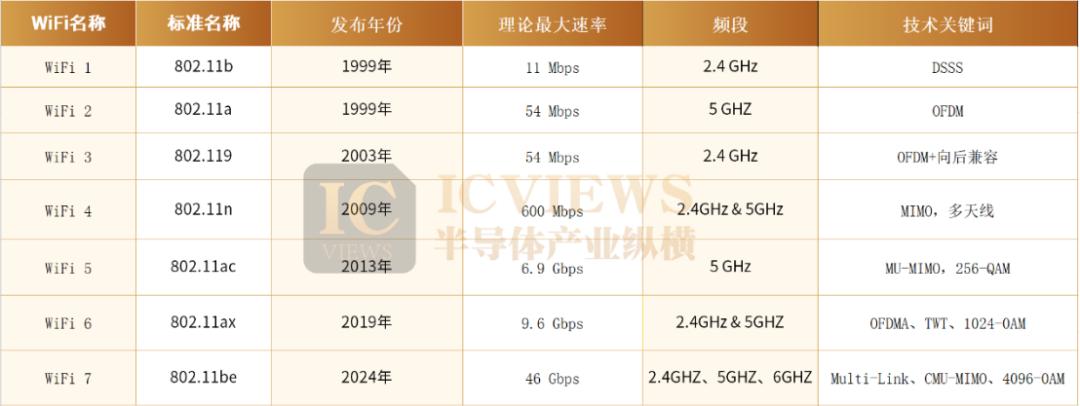
Core Insights - Wi-Fi 7, officially launching in January 2024, promises significant improvements in speed, latency, and efficiency, addressing common issues like buffering and video call interruptions [2][4][11] Technical Definitions - Speed refers to the theoretical maximum data transfer rate under ideal conditions, often misaligned with real-world performance [3] - Bandwidth indicates the maximum capacity of a communication channel, akin to the number of lanes on a highway [3] - Throughput measures the actual data transmitted in real-world scenarios, affected by various factors like congestion and hardware limitations [3] Wi-Fi 7 Technical Advancements - Wi-Fi 7 can achieve theoretical speeds up to 46 Gbps, five times faster than Wi-Fi 6E's 9.6 Gbps [4][8] - It doubles the maximum channel width from 160 MHz in Wi-Fi 6E to 320 MHz, enhancing data transmission capacity [4][8] - The introduction of 4096-QAM modulation allows Wi-Fi 7 to transmit 12 bits per symbol, significantly increasing data density compared to Wi-Fi 6E's 10 bits [4][8] Real-World Implications - Wi-Fi 7's Multi-Link Operation (MLO) enables simultaneous use of multiple frequency bands, improving speed and reliability [5][9] - Enhanced resource allocation through Multi-RU allows for adaptive bandwidth distribution based on device needs, optimizing performance for high-demand applications [6][9] - The upgraded Target Wake Time (TWT) feature improves battery efficiency for IoT devices, reducing charging frequency [6][9] User Experience Enhancements - Faster speeds enable multiple users to stream, game, and video conference simultaneously without issues [9] - Reduced disconnections due to intelligent frequency management and multi-band operation [9] - Smarter resource management ensures all devices receive adequate bandwidth, enhancing overall network performance [9] Performance Testing Results - Real-world tests show Wi-Fi 7 achieving TCP throughput of 3.5 Gbps in a 4500 square foot home, with 2 Gbps maintained at common distances [10] - In enterprise settings, Wi-Fi 7 can sustain 1 Gbps throughput at 40 feet distance on the 6 GHz band, nearly doubling Wi-Fi 6E performance [10] - Consistent low latency and high spectral efficiency were confirmed in various testing environments, indicating robust performance under load [10] Impact on IT and Network Infrastructure - Wi-Fi 7 is designed for future-proofing networks, accommodating bandwidth-intensive applications like AR/VR and smart home devices [11][13] - It requires compatible endpoints and updated infrastructure to fully leverage its capabilities, particularly in the 6 GHz band [12][13] - Awareness of current Wi-Fi standards and their limitations is crucial for effective network planning and upgrades [12][13]

Ondas Appoints Technologist and British Army Veteran Karl Eze as UK Strategic Advisor to Ondas Capital
Accessnewswire· 2025-09-19 12:40
Group 1 - Ondas Holdings Inc. has appointed Karl Eze as Strategic Advisor for the United Kingdom to enhance its presence in the region [1] - The appointment aims to support technology and defense development initiatives, aligning with Ondas Capital's international strategy [1] - Karl Eze brings a wealth of military, financial, and entrepreneurial experience to accelerate the company's growth in the UK market [1]

AT&T News Incorrectly Worries Investors About SBA Communications
Seeking Alpha· 2025-08-29 19:58
Core Viewpoint - The recent news regarding AT&T's acquisition of spectrum does not pose a significant negative impact on SBA Communications Corporation (SBAC) [1] Group 1: AT&T and EchoStar Transaction - AT&T acquired spectrum from EchoStar for approximately $23 billion, which is about $7 billion more than EchoStar's original cost of around $16 billion [3][7] - EchoStar's market capitalization increased from approximately $8.5 billion to $16.2 billion following the transaction, reflecting a total enterprise value increase of about $7.7 billion [7] - AT&T plans to deploy the 3.45 GHz spectrum quickly, while the 600 MHz spectrum will experience a modest delay due to necessary equipment adjustments [6][10] Group 2: Implications for SBAC - The transaction is expected to enhance AT&T's fixed wireless home internet service, which could lead to increased demand for cell towers as more home internet connections transition to cellular networks [11][13] - SBAC's management has indicated that signed leases are in place, suggesting a stable revenue stream despite potential concerns about AT&T reducing new contracts [19][20] - The overall sentiment remains positive for SBAC, as the acquisition by AT&T is seen as a move that will not diminish the need for tower infrastructure [21][22]


研判2025!中国近场通信(NFC)行业产业链、市场规模及重点企业分析:智慧城市与数字经济驱动下,智能家居与智能交通成未来增长新引擎[图]
Chan Ye Xin Xi Wang· 2025-08-22 01:28
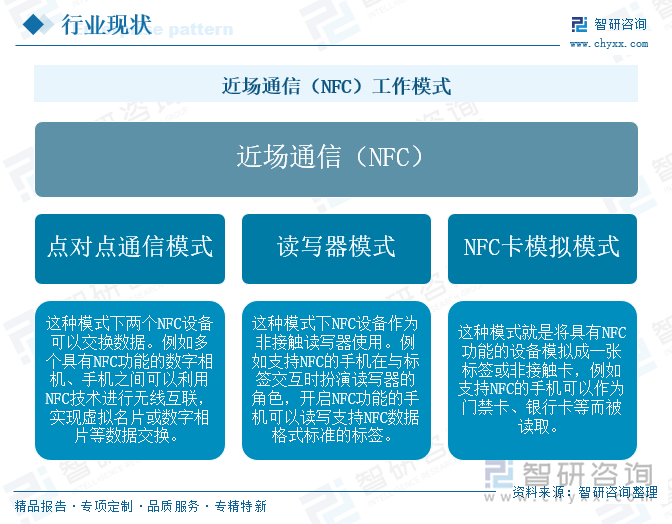
Industry Overview - Near Field Communication (NFC) technology is maturing in China, with applications in mobile payments, public transportation, smart access control, and smart homes [1][11] - The market size of the NFC industry in China is projected to reach approximately 92.5 billion yuan in 2024, representing a year-on-year growth of 21.72% [1][11] - The continuous development of the digital economy and smart city initiatives is expected to further expand the application scenarios of NFC technology, particularly in smart homes and smart transportation [1][11] Technical Characteristics - NFC operates at a frequency of 13.56 MHz, allowing for non-contact point-to-point data transmission within approximately 10 centimeters [1][7] - NFC technology is based on RFID technology and features high security, ease of use, and high transmission rates [1][4] - Compared to other short-range wireless communication technologies, NFC has a lower cost and higher security, making it attractive to many enterprises since its inception in 2003 [4][5] Industry Chain - The upstream of the NFC industry chain includes chips, metal materials, electronic components, plastic materials, and antennas [7] - The midstream involves NFC production and system integration, while the downstream applications include mobile payments, public transportation, smart homes, smart access control, automotive electronics, and wearable devices [7] Market Dynamics - The number of mobile payment transactions in China reached 51.365 billion in the first quarter of 2025, with a year-on-year growth of 15.86% [9] - The total amount of mobile payments was 152.64 trillion yuan, showing a slight increase of 0.37% year-on-year [9] - The simplification of payment processes and enhanced security have led to increased consumer adoption of mobile payment methods, with NFC technology significantly lowering payment barriers [9] Key Companies - Huawei HiSilicon is a leading domestic communication chip design company, known for its high integration and low power consumption NFC chips [13][14] - Unisoc focuses on high-security NFC chips, which have passed multiple international and domestic security certifications [13][14] - Fudan Microelectronics is one of the early entrants in the NFC field, with a high market share in various applications including internet, finance, and smart locks [13][14] - Other notable companies include Macrocard New Technology, which specializes in NFC tags and devices, and Xi'an Unisoc, which provides high-security NFC chip solutions [14] Development Trends - NFC technology is increasingly integrating with AI, 5G, and blockchain, enhancing its application scenarios towards smart and personalized solutions [18] - The technology is expanding beyond traditional payment fields into smart cities, retail, and healthcare, creating a seamless living ecosystem [19][20] - Standardization and industry collaboration are crucial for high-quality market development, with NFC payment standards already implemented in 28 countries and regions [21]




Wi-Fi 8 像个老司机
3 6 Ke· 2025-08-17 23:35
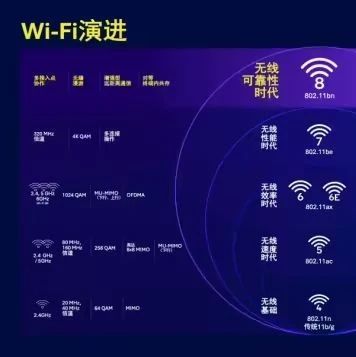
Core Viewpoint - Qualcomm China announced that the IEEE 802.11bn standard is expected to be completed by 2028, which will serve as the foundation for Wi-Fi 8, focusing on reliability and performance in complex environments [1][11]. Group 1: Wi-Fi Evolution - The transition from Wi-Fi 6 and Wi-Fi 7 focused on speed, bandwidth, and frequency, while Wi-Fi 8 aims to enhance stability and reliability [2][11]. - The Wi-Fi standards have evolved from Wi-Fi 1 to Wi-Fi 7, with each generation corresponding to an IEEE 802.11 protocol, showing significant improvements in speed, frequency, stability, and security [2][3]. Group 2: Wi-Fi 7 Market Situation - Wi-Fi 7's commercial progress is ongoing, with 23% of global telecom operators expected to offer Wi-Fi 7 products by Q1 2025 [7]. - Major companies like Qualcomm and Broadcom are providing Wi-Fi 7 chips that meet various bandwidth needs, supporting both consumer and enterprise applications [7][8]. - Wi-Fi 7 has been piloted in critical sectors such as healthcare and transportation, demonstrating its application in real-time data transmission and high-definition monitoring [8]. Group 3: Challenges Facing Wi-Fi 7 - Wi-Fi 7 faces limitations due to spectrum resource constraints, particularly the lack of allocation for the 6GHz band in China, which restricts its performance [9]. - The maturity of core technologies like MLO and 4096-QAM is still in question, affecting compatibility and performance [9][10]. - Deployment environments pose challenges, as outdated infrastructure can bottleneck Wi-Fi 7's high throughput capabilities [10]. Group 4: Wi-Fi 8 Innovations - Wi-Fi 8 aims to improve throughput by at least 25% in complex signal environments and reduce latency and packet loss during roaming [11][12]. - The introduction of multi-access point coordination technology allows multiple APs to work together, enhancing overall network performance [12]. - Wi-Fi 8 is expected to excel in industrial automation, XR applications, and high-density public spaces, providing reliable connectivity for critical tasks [12][13][14]. Group 5: Conclusion - Wi-Fi 8 emphasizes stability over sheer speed, addressing the shortcomings of Wi-Fi 7 and aiming to create new application scenarios in emerging technologies like AI and XR [14].
Peraso(PRSO) - 2025 Q2 - Earnings Call Transcript
2025-08-11 21:30
Financial Data and Key Metrics Changes - Total net revenue for Q2 2025 was $2.2 million, down from $3.9 million in the prior quarter and $4.2 million in Q2 2024 [20] - Product revenue in Q2 2025 was $2.2 million, compared to $3.8 million in the prior quarter and $4.1 million in Q2 2024 [20] - GAAP gross margin decreased to 48.3% in Q2 2025 from 69.3% in the prior quarter and 55.5% in the year-ago quarter [22] - GAAP operating expenses for Q2 2025 were $2.9 million, down from $3.2 million in the prior quarter and $6.8 million in Q2 2024 [22] - GAAP net loss for Q2 2025 was $1.8 million, or a loss of $0.31 per share, compared to a net loss of $0.5 million or a loss of $0.08 per share in the prior quarter [23] Business Line Data and Key Metrics Changes - Revenue from millimeter wave products was $2.2 million in Q2 2025, up from $1.5 million in the prior quarter and $0.7 million in Q2 2024, indicating a significant growth trajectory [22] - The company achieved over 2 million cumulative shipments of mmWave devices, highlighting its market leadership [6] Market Data and Key Metrics Changes - Fixed wireless access continues to be the largest and fastest-growing market opportunity for mmWave technology, driven by demand for high-speed broadband connectivity [8] - The company has seen a steady recovery in market demand and customer orders for fixed wireless access solutions throughout the first half of the year [8] Company Strategy and Development Direction - The company is focused on expanding its market presence in tactical communications and military defense applications, leveraging its mmWave technology [10] - The company aims to convert successful proof of concepts into initial production orders to sustain future growth [10][19] - The company is exploring potential strategic alternatives, including mergers or asset sales, to enhance its financial position [25] Management's Comments on Operating Environment and Future Outlook - Management expressed confidence in the growing demand for mmWave technology and its ability to address critical communication challenges in tactical defense environments [10] - The company anticipates record quarterly revenue contribution from mmWave products in Q3 2025, supported by a healthy backlog [26] Other Important Information - The company had approximately $1.8 million in cash and equivalents as of June 30, 2025, with a net change of approximately $1 million during the quarter [24] - The company is actively pursuing non-dilutive financing opportunities to strengthen its balance sheet [39] Q&A Session Summary Question: Can you provide more details on the military engagements and drone opportunities? - Management highlighted stealth communication capabilities as a key advantage in military applications, with ongoing engagements to adapt technology for drone use [32] Question: Can you confirm the legitimacy of the acquisition proposal and provide updates on the business outlook? - Management confirmed the validity of the proposal and indicated ongoing efforts to explore various capital-raising opportunities [39] Question: How is inventory trending, and have you burned through previous inventory issues? - Management noted improvements in inventory movement, with significant orders being filled and replenishment of certain products underway [41] Question: Are there opportunities for non-recurring engineering (NRE) work with the military? - Management confirmed that NRE is part of their strategy, with ongoing projects expected to lead to production and additional revenue [44][63]

Peraso(PRSO) - 2025 Q2 - Earnings Call Presentation
2025-08-11 20:30
Business Highlights - Peraso的mmWave模块被Tachyon Networks选中,用于最新的户外60 GHz固定无线解决方案[16] - 公司于2025年6月开始初步生产出货先进的60 GHz无线解决方案,以支持战术通信应用[19] - 公司于2025年6月获得了首个60 GHz无线解决方案的生产订单,该解决方案用于客户在教育市场中使用的视频系统[25] Technology and Applications - Peraso的mmWave技术本质上是一种隐形协议,具有低概率检测、低概率拦截和抗干扰能力[21] - Peraso的解决方案具有高数据速率(3 Gbps)、低延迟(<5 ms)和低干扰的优点,适用于专业视频传输等应用[25] - DUNE平台专为密集城市网络环境设计,采用集成的HW/SW解决方案,利用mmWave模块,具有DUNE接入协议、波束成形、多千兆位和低延迟等技术优势[16] Pipeline Growth - 客户机会渠道从2023年第四季度的11个增加到2025年第二季度的19个[26] - SKU机会渠道从2023年第四季度的70个增加到2025年第二季度的83个[28] - 生产中的客户SKU从2023年第四季度的31个增加到2025年第二季度的59个[29]
Wi-Fi 8,性能全面升级,2028年见!
猿大侠· 2025-08-06 04:11
Core Viewpoint - Wi-Fi 8 is being defined to ensure reliable performance in complex environments, even under network congestion and interference, aiming to provide excellent connectivity [1][3]. Group 1: Wi-Fi 8 Features and Standards - Wi-Fi standards are developed by a global team of engineers and technical experts within the IEEE 802.11 framework, with multiple tech companies actively participating in the Wi-Fi 8 standardization process [3]. - The current Wi-Fi performance metrics can achieve multi-gigabit throughput, latency below 10 milliseconds, and a packet loss rate of less than 0.1%. Wi-Fi 8 aims to surpass Wi-Fi 7 and achieve quantifiable performance improvements in challenging scenarios [3][5]. - Wi-Fi 8 is expected to serve as a foundational connectivity base for a thriving ecosystem, introducing new features during the 802.11bn standardization process [5][7]. Group 2: Development Timeline and Future Impact - The 802.11bn standard is a collaborative effort within the 802.11 working group, which is making steady progress and has reached a high level of consensus on most new standard content. Wi-Fi Alliance certification is expected in January 2028, with final approval from the working group in March [11]. - The 802.11bn working group will continue to refine and finalize the foundational standards for the future Wi-Fi 8 generation, which is anticipated to be applied to billions of devices over the next decade [11].