核能

Search documents
俄罗斯准备向印度转让核技术
第一财经· 2025-11-11 05:07
Core Viewpoint - The cooperation between Russia and India in the nuclear energy sector is advancing to a new level, potentially involving higher localization and technology transfer [3][4]. Group 1: Project Negotiations - Russia and India are negotiating new projects, including discussions on small nuclear power plants, both land-based and floating [4]. - The CEO of the Russian state nuclear corporation highlighted the unique capability of Russia in operating floating nuclear power plants, referencing the "Akademik Lomonosov" floating nuclear power plant in Pevek, Arctic region [4]. Group 2: Localization Potential - There is significant potential for increasing the localization of Russian technology in India, particularly in the context of small facilities [4].

俄罗斯准备向印度转让核技术,莫斯科和新德里正在谈判
Zhong Guo Xin Wen Wang· 2025-11-11 05:03
Group 1 - The core viewpoint is that Russia and India are advancing their cooperation in the nuclear energy sector, potentially involving higher levels of localization and technology transfer [1][3] - The discussions are taking place ahead of a summit between Russian President Putin and Indian Prime Minister Modi, focusing on bilateral projects [1] - Russia is negotiating new projects with India, including discussions on small nuclear power plants, both land-based and floating [3] Group 2 - The CEO of the Russian State Atomic Energy Corporation, Alexey Likhachev, highlighted the unique capability of the corporation in operating floating nuclear power plants, referencing the Akademik Lomonosov, which has been operational in the Arctic port city of Pevek for the past five years [3] - There is significant potential for increasing the localization of Russian technology in India, particularly in small facility projects [3]
正式投用!我国建成国际先进量子放射性计量实验室
中国能源报· 2025-11-11 04:38
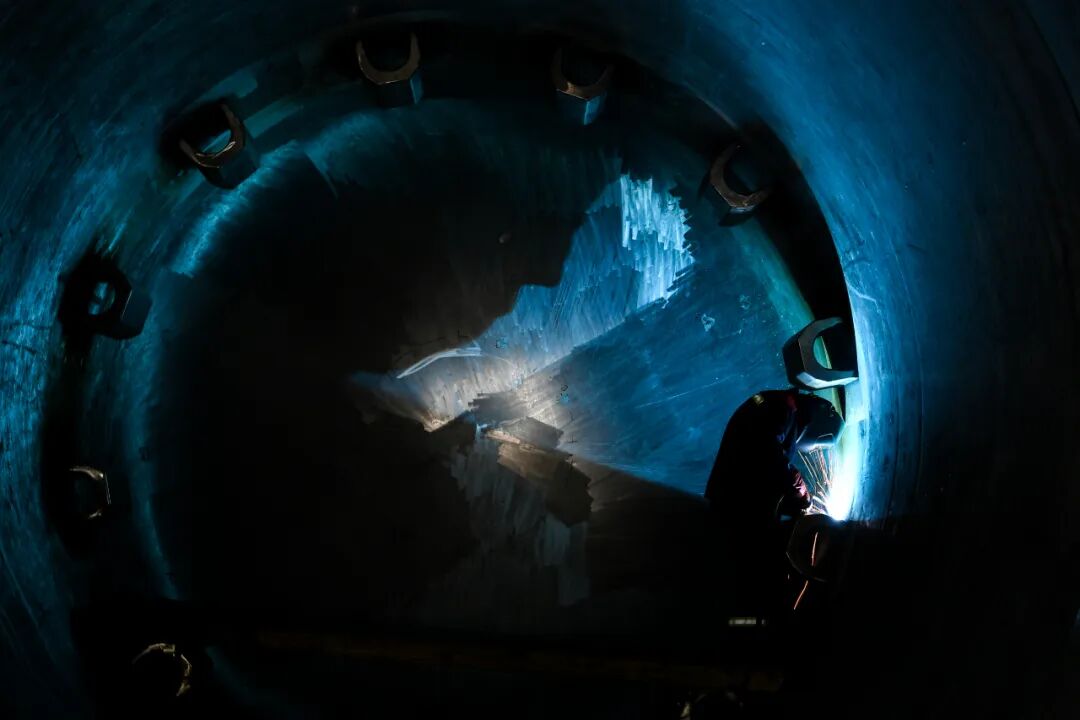
Core Viewpoint - The establishment of the quantum radioactive metrology laboratory marks a significant advancement in China's quantum metrology technology, achieving international standards and filling a gap in low-temperature quantum magnetic calorimetry [1][3]. Group 1: Importance of Metrology - Metrology is a crucial foundation for technological innovation, industrial development, and public welfare, serving as an essential support for building an integrated national strategic system and capabilities [3]. - Quantum metrology is likened to a high-precision "fiber laser ruler," focusing on the measurement of microscopic particles in the quantum realm to achieve precise measurements [3]. Group 2: Laboratory and Platform Details - The quantum radioactive metrology laboratory, led by the China National Nuclear Corporation's China Institute of Atomic Energy, is the first domestic platform based on magnetic calorimetry to achieve low-energy γ-ray single-photon pulse detection [5]. - The laboratory significantly enhances the energy resolution of γ-ray detection to the order of hundreds of electron volts (eV), improving the analysis capabilities of key radionuclides [5]. - The research team has successfully developed core components such as the quantum magnetic calorimeter sensor chip, marking a breakthrough in domestic signal detection based on magnetic calorimetry [5]. Group 3: Ionizing Radiation Metrology Platform - The ionizing radiation metrology equipment "one line, multiple uses" research and development platform aims to address the "bottleneck" technology challenges in high-end instruments [8]. - This platform integrates innovative research and development, precision manufacturing, strict validation, and reliable assurance, forming a complete chain from material storage to product testing [8]. - It establishes a closed-loop system covering "design-development-manufacturing-assembly-testing-optimization," accelerating the transformation of innovative results into mature products to meet high-end application and market demands [8].

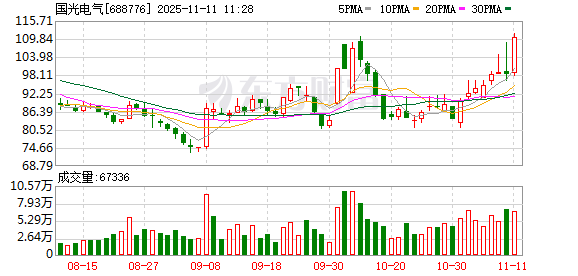
可控核聚变概念震荡反弹 国光电气涨超10%
Xin Lang Cai Jing· 2025-11-11 03:28
Core Viewpoint - The controlled nuclear fusion concept is experiencing a rebound, with companies like Guoguang Electric seeing a rise of over 10% in their stock prices due to recent advancements in fusion technology [1] Group 1: Industry Developments - The nuclear industry is witnessing a resurgence in interest, particularly in the controlled nuclear fusion sector, as evidenced by the stock performance of related companies [1] - The Southwest Institute of Physics has developed the world's largest "artificial sun" International Thermonuclear Experimental Reactor (ITER) and recently passed critical design reviews for key technologies and processes [1] Group 2: Company Performance - Guoguang Electric's stock increased by over 10%, indicating strong market sentiment towards companies involved in nuclear fusion technology [1] - Other companies such as Yongding Co., China Nuclear Engineering, Yingjie Electric, Hahai Welding, and Changfu Co. also experienced stock price increases, reflecting a broader positive trend in the sector [1]

可控核聚变板块异动拉升,国光电气涨超11%
Mei Ri Jing Ji Xin Wen· 2025-11-11 03:27
Core Viewpoint - The controllable nuclear fusion sector experienced significant upward movement, with several companies showing notable stock price increases [2] Company Performance - Guoguang Electric surged over 11% [2] - Yongding Co., Ltd. rose more than 7% [2] - Other companies such as China Nuclear Construction, Yingjie Electric, Haheng Huaton, and Changfu Co., Ltd. also saw stock price increases [2]


A股可控核聚变概念股拉升,中国核建涨超7%
Ge Long Hui A P P· 2025-11-11 03:25
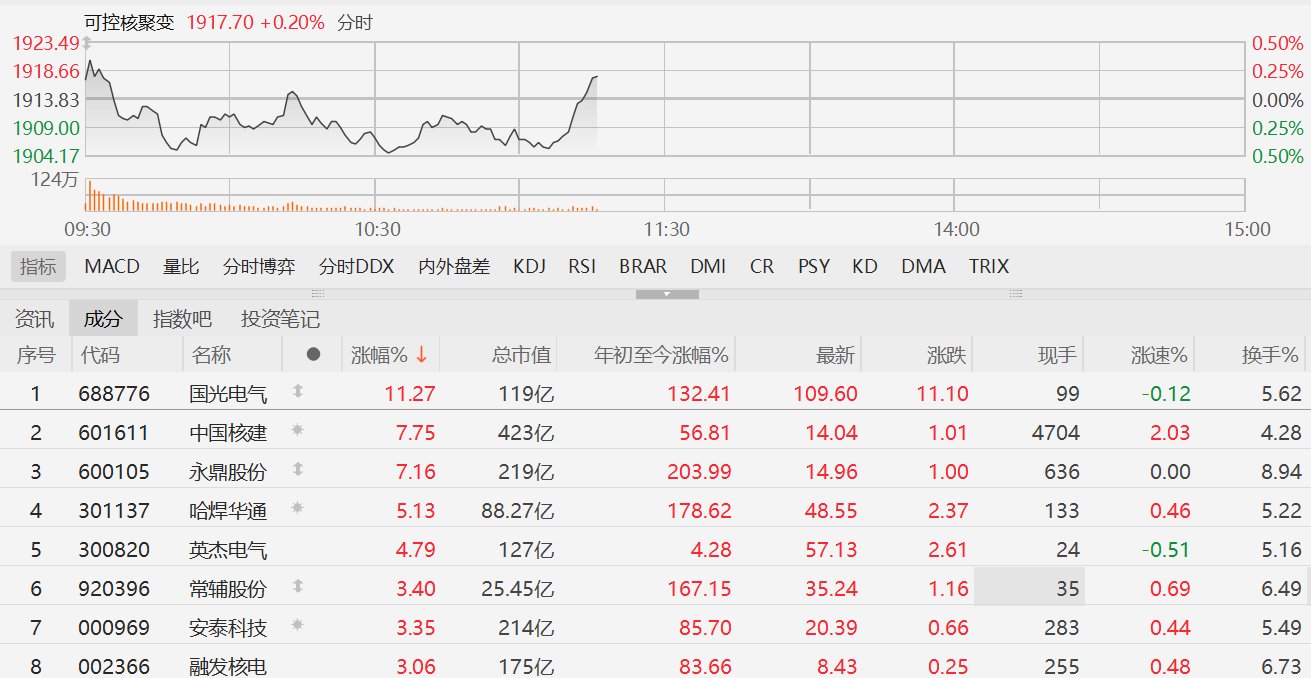
Group 1 - The A-share market saw a surge in stocks related to controllable nuclear fusion, with Guoguang Electric rising over 11% [1] - China Nuclear Engineering and Yongding Co. both increased by more than 7%, while Hahai Huaton rose over 5% [1] - Other notable gainers included Yingjie Electric, Changfu Co., Antai Technology, and Rongfa Nuclear Power, all of which saw increases of over 3% [1] Group 2 - Guoguang Electric's market capitalization reached 11.9 billion, with a year-to-date increase of 132.41% [2] - China Nuclear Engineering's market cap was 42.3 billion, with a year-to-date increase of 56.81% [2] - Yongding Co. had a market cap of 21.9 billion, with a year-to-date increase of 203.99% [2]


佳电股份:为山东石岛湾核电站提供关键的主氦风机设备
Xin Lang Cai Jing· 2025-11-10 13:04
Core Viewpoint - The company indicates that thorium molten salt reactors and high-temperature gas-cooled reactors are candidate technologies for the fourth generation of nuclear energy systems, offering higher safety, better nuclear fuel utilization efficiency, and reduced nuclear waste generation [1] Group 1 - Thorium molten salt reactors are part of the fourth generation nuclear energy technology options [1] - High-temperature gas-cooled reactors are also considered as a viable technology for the fourth generation nuclear energy systems [1] - These technologies promise enhanced safety features compared to previous generations [1] Group 2 - The nuclear fuel utilization efficiency of these fourth generation systems is expected to be higher [1] - The generation of nuclear waste is anticipated to be lower with the implementation of these technologies [1]

中核科技:具备核燃料真空阀及浓缩铀生产关键阀门成套供货能力
Zheng Quan Shi Bao Wang· 2025-11-10 08:48
Group 1 - The company, China Nuclear Technology (中核科技), has the capability to supply complete sets of valves for second and third generation nuclear power units, as well as key valves for fourth generation nuclear power units [1] - The company also possesses the ability to supply complete sets of critical valves for nuclear fuel vacuum and enriched uranium production [1]

进博会央企“购物车”提质向新,促全球产供链更深度链接
Di Yi Cai Jing· 2025-11-10 06:28
Group 1 - Multiple central enterprises achieved record high signing amounts during the 8th China International Import Expo, with over 20,000 participants and 58 specialized teams formed for procurement [1] - The current international industrial division of labor is undergoing profound adjustments, emphasizing the need for global supply chain cooperation [1] - Central enterprises have established over 8,000 institutions and projects in more than 180 countries, with overseas assets exceeding 9 trillion yuan, contributing positively to global technological progress and economic growth [1] Group 2 - China National Offshore Oil Corporation (CNOOC) signed contracts exceeding $13 billion, marking a historical high for a single expo, with a focus on oil, gas, and advanced technology services [2] - Sinopec signed agreements with 34 partners from 17 countries, with a total procurement amount exceeding $40.9 billion, and emphasized the increase in technology cooperation, particularly in AI and green development [2] - Sinopec's cumulative signing amount since the first expo in 2018 has surpassed $325 billion [2] Group 3 - China National Machinery Industry Corporation (Sinomach) signed 143 cooperation agreements totaling nearly $25.1 billion, focusing on high-end equipment and smart technology applications in domestic manufacturing [3] - China National Nuclear Corporation (CNNC) signed 8 procurement contracts with foreign enterprises, promoting global nuclear energy innovation and collaboration [3] - CNNC emphasized the importance of digitalization in enhancing global nuclear industry competitiveness and building resilient supply chains [3] Group 4 - The global industrial supply chain is a crucial platform for cooperation and development among countries, with a focus on deepening collaboration in traditional sectors like equipment manufacturing and energy [4] - There is a push for the integration of artificial intelligence with traditional industries and the development of strategic emerging industries such as new energy and materials [4] - The exploration of new industries and business models in fields like quantum technology and biomanufacturing is encouraged to stimulate cooperative momentum [4]
Think It's Too Late to Buy This Leading Nuclear Start-Up? Here's Why There's Still Time.
The Motley Fool· 2025-11-09 23:32
Core Insights - Oklo's stock has increased over 450% this year, leading to a market capitalization of approximately $18 billion, despite having no revenue or operational reactors [2][5] - The company is focused on developing small nuclear reactors with fuel recycling capabilities, which can provide reliable power for extended periods without refueling [3][4] - Oklo's growth potential hinges on generating revenue and obtaining regulatory approval for its reactors [5][8] Company Overview - Oklo is designing small nuclear reactors, termed "powerhouses," that are expected to operate for a decade or more without refueling, making them suitable for AI data centers [4] - The company recently acquired Atomic Alchemy, a radioisotope start-up, which could enable revenue generation from radioisotope production as early as 2026 [7] - Oklo estimates the radioisotope market to be valued at approximately $55.7 billion, although this is still a projection [7] Financial Position - As of June, Oklo had a cash position of about $227 million, which could be bolstered if the company successfully integrates its recent acquisition and begins revenue generation [8] - The company's current stock price is $5.30, with a day’s range between $97.09 and $112.42, and a 52-week range from $17.14 to $193.84 [6][7] Regulatory Landscape - Obtaining regulatory approval is a critical factor for Oklo, with the company aiming to activate its first reactor by 2027 [8] - The timeline for regulatory approval is accelerated, and successful execution could lead to significant growth opportunities for patient investors over the next decade [8]