
高等教育

Search documents
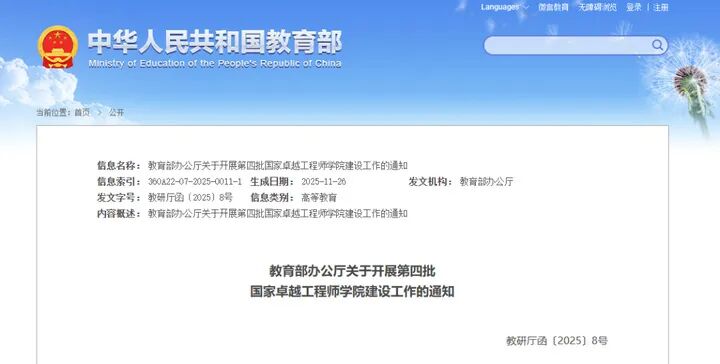
10所大学入列,国家卓越工程师学院建设高校增至42所
Xin Lang Cai Jing· 2025-12-20 02:49
Group 1 - The Ministry of Education announced the fourth batch of universities approved for the construction of National Excellent Engineer Colleges, totaling 10 institutions [1] - The initiative aims to deepen the integration of education and industry in the training of master's and doctoral engineers, aligning with national strategic talent development goals [1][2] - A total of 42 universities have been approved for the construction of National Excellent Engineer Colleges across four batches [3] Group 2 - The reform in training excellent engineers has seen nearly 26,000 master's and doctoral students jointly recruited and trained by universities and enterprises, with over 2,000 graduates already employed [2] - The approach includes breaking traditional disciplinary barriers in engineering education and establishing a council responsible for university-enterprise collaboration [2] - The establishment of 50 National Excellent Engineer Colleges and innovation research institutes in key regions like Beijing, Shanghai, and the Guangdong-Hong Kong-Macau Greater Bay Area is part of the strategy [2]
“三聚焦、三关键”提升研究生学术素养与科研能力
Xin Lang Cai Jing· 2025-12-19 22:32
Core Viewpoint - The Marxism College of Liaoning Petrochemical University emphasizes the integration of classic Marxist literature into graduate education, aiming to enhance theoretical literacy and research capabilities among students through innovative teaching and assessment methods [1][2][3]. Group 1: Educational Framework - The college has developed a new model for graduate talent cultivation centered on classic literature, classroom teaching, assessment, and thesis work, ensuring a solid foundation in Marxist theory [1]. - Courses such as "Selected Readings of Marxist Classic Authors" and "Introduction to Marxist Chinese Classics" are offered to achieve comprehensive coverage in graduate training [2]. Group 2: Innovative Assessment Methods - The college has introduced a standardized assessment system for academic levels in Marxist classic literature, which includes unified topics, examinations, and grading processes [2]. - A management approach for the academic assessment of classic Marxist literature has been established to ensure rigorous evaluation [2]. Group 3: Academic Engagement and Innovation - The college has hosted 39 sessions of the "Bosi Forum," inviting renowned scholars to deepen theoretical research and interpretation of Marxist classics [2]. - Weekly reading sessions have been organized, totaling 89, focusing on core literature and providing diverse activities for students to grasp the historical context and theoretical frameworks of classic works [2]. Group 4: Practical Application and Community Engagement - The college has formed 10 reading groups focused on Marxist classics, with five groups selected for funding by the Chinese Higher Education Society, ranking among the top in Liaoning Province [3]. - Students are encouraged to participate in national activities related to the spirit of the 20th National Congress of the Communist Party, achieving notable recognition among 325 participating universities [3]. - The college promotes practical learning by organizing visits to historical and revolutionary education sites, enhancing the understanding of Marxist classics through experiential learning [3].
在田野中成长,在实践中成才
Xin Lang Cai Jing· 2025-12-19 19:25
"同学们,收入数字的背后,是一个家庭的生计、一个孩子的未来和一片土地的希望……"青年教师 胡兰丽在课堂上讲述"收入"这一指标时,总会结合自己在评估工作中遇到的真实故事。 她口中的"调查",是江西财经大学统计与数据科学学院持续开展了近10年的一项评估实践,累计 5000余人次师生参与。江西财经大学的师生们奔赴云南、贵州、四川、湖北等8个省份的300余个脱贫 县,承担脱贫核查评估、巩固脱贫成果后评估等工作。 近年来,江西财经大学统计与数据科学学院践行"从实践中来、到实践中去",在持续的、大规模的 社会实践中提炼科学问题,确定研究方向。 "过去我们总在理论模型中推演现实,直到真正走进脱贫县、走进农户家,才发现现实情况的复 杂。"江西财经大学统计与数据科学学院副院长郭露深有感触。 (来源:光明日报) 转自:光明日报 "我曾经以为统计学就是公式和数据,直到跟着老师去调查,我才明白数据背后的真实生活更加值 得关注。"江西财经大学研究生熊禹溱这样感慨。 历经许多次入户调查、座谈访谈、实地调查等评估实践,她清晰地意识到,自身以往的研究方向 虽"广"却"散",于是她的研究重心从贫困测度到乡村振兴评价,再到国家创新体系效能测度, ...
三所学院拟更名为大学
Xin Lang Cai Jing· 2025-12-19 18:23
转自:成都日报锦观 本报讯 (成都日报锦观新闻记者 宋妍妍) 19日,四川省教育厅官网发布关于2025年第四批拟申报 高校设置事项的公示。其中,成都体育学院拟申报更名为成都体育大学,成都医学院拟申报更名为成都 医科大学,四川交通职业技术学院拟申报本科层次职业学校,学校名称为四川交通职业技术大学。 本次公示时间为2025年12月19日至2025年12月25日。 正在公示 三所学院拟更名为大学 ...
北京怀柔千名大学生将受聘中小学校科技班主任
Xin Lang Cai Jing· 2025-12-19 17:25
Core Viewpoint - The "Guohai Plan" initiated in Huairou District, Beijing, aims to appoint technology class teachers in primary and secondary schools, marking a national first in promoting collaborative innovation in science and education [1][2] Group 1: Project Overview - The "Guohai Plan" will recruit 1,000 graduate and outstanding undergraduate students from the University of Chinese Academy of Sciences to serve as technology class teachers in local schools [1] - The plan will be implemented in three phases, with each teacher expected to conduct 6-8 classes per academic year [1] Group 2: Responsibilities and Curriculum - Technology class teachers will be responsible for science popularization lectures, practical guidance, and leading science clubs, covering topics such as cutting-edge scientific knowledge and inspiring stories of scientists [2] - The initiative aims to achieve simultaneous progress in knowledge dissemination, skill development, spiritual enrichment, and value guidance [2] Group 3: Context and Background - Huairou Science City, covering an area of 100.9 square kilometers, is a core part of Beijing's international science and technology innovation center, housing 29 operational large scientific facilities and 26,000 research personnel [1] - The University of Chinese Academy of Sciences, located within Huairou Science City, has over 12,000 students and is a significant contributor to the national "Outstanding Youth Fund" recipients [1]
一堂横跨欧亚的实践课!海南探索自贸港人才培养新模式→
Sou Hu Cai Jing· 2025-12-19 16:03
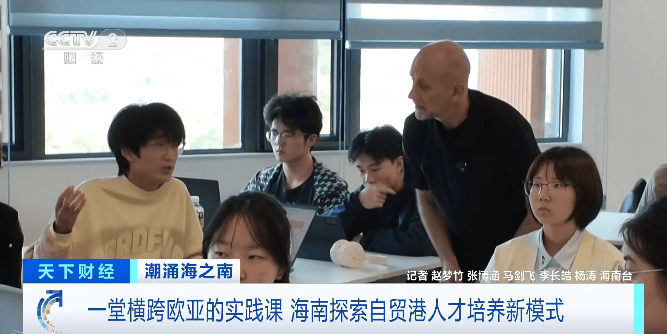
(央视财经《天下财经》)随着海南自贸港建设不断深入,对国际化应用型人才的需求日益迫切,这片 热土如何汇聚世界的智慧,又如何为自贸港培养未来人才?在海南比勒费尔德应用科学大学,一位德国 老师、一群中国学生,正在尝试用一堂横跨欧亚的实践课给出答案。 这里不像传统大学课堂,更像是在探讨一个真实的企业项目。用4000元预算完成5万元的采购任务—— 这是一道德国老师抛出的、经典又棘手的商业考题。 海南比勒费尔德应用科学大学讲师德尔克·珂兰的教学经验,源于他在德国法兰克福机场、汉堡港等地 近40年的工作经验。他常说,希望自己培养出来的学生,不仅懂技术,更懂如何在商业规则下解决实际 问题。在封关运作前夕,珂兰带的大三学生带着在海南课堂积累的经验,踏上了前往德国实习的旅程。 "实践嵌入式"教学,正是这所中国首个境外高校独立办学项目自带的"德国基因"。海南比科大所在的儋 州市,也是海南自贸港对外开放的重要口岸——洋浦港的所在地,眼下,全岛封关运作,也让珂兰看到 了学生技能应用的新天地。 海南比勒费尔德应用科学大学讲师 德尔克·珂兰:我预计封关运作后,洋浦港的吞吐量将会不断增加。 当有更多集装箱船进港,港口的自动化程度需求也相应 ...

江苏3所高校入选!教育部公布第四批国家卓越工程师学院建设高校名单
Xin Hua Ri Bao· 2025-12-19 14:17
Group 1 - The Nanjing University National Excellence Engineer College was officially inaugurated in Suzhou, focusing on cultivating engineers with strong technical innovation capabilities and problem-solving skills for complex engineering issues [1] - The Ministry of Education announced the fourth batch of National Excellence Engineer Colleges, with 10 universities approved for construction, including Nanjing University, China University of Mining and Technology, and Jiangnan University from Jiangsu [1][3] - A total of 42 universities have been approved for the National Excellence Engineer College initiative across four batches, with Jiangsu having six national-level colleges, indicating a strong position in engineering talent cultivation [4] Group 2 - The Ministry of Education released the "Excellence Engineer Education Certification Standards," which is the first global certification standard focusing on engineering master's and doctoral education, addressing gaps in the current international engineering education certification system [4] - The certification emphasizes a systematic and organized approach, creating a comprehensive evaluation system that aligns with China's national conditions and industry needs [4] - The standards will facilitate the integration of educational standards with engineering professional qualifications, empowering engineers throughout their career lifecycle [4]
徐州工程学院金融学院开展考研学子送温暖座谈会
Xin Lang Cai Jing· 2025-12-19 13:18
随后,几位考研学子代表结合自身备考经历,分享心得感悟。他们有的详解高效复习计划与时间管理技 巧,有的坦诚倾诉备考中的迷茫与自我怀疑,有的热情传递突破学习瓶颈后的喜悦与对未来的憧憬。真 挚的话语、朴实的情感引发在场同学强烈共鸣。这场分享不仅是备考经验的交流,更是信心与力量的传 递,让同学们感受到 "同路人" 的温暖。最后,院领导为同学们发放暖冬慰问品,传递学院的深切关 怀。 会上,李浩代表学院党委向全力备战考研的同学们致以诚挚问候与坚定支持。他表示,同学们为目标拼 搏的身影,是校园里最亮丽的风景。结合金融专业特色,他针对最后冲刺期提出三点希望:一是聚焦战 略,优化资源配置,通过精准复盘查漏补缺、强化真题模拟实战,同时兼顾劳逸结合,保持学习 "流动 性";二是保持定力,锤炼强大内心,正视备考压力并转化为动力,拒绝外界干扰、坚定考研信念,用 积极暗示自我激励;三是凝聚合力,实现协同增效,在备考中相互扶持、共同进步,主动向老师同学求 助,传承金融学子优良学风,展现青春风采。 一直以来,徐州工程学院金融学院秉持 "温度育人" 理念,将金融专业特色与学生成长需求深度融合。 此次考研关键期的送温暖活动,既为学子带来物质与精 ...
南大国家卓越工程师学院揭牌,江苏3所高校入选第四批国家卓越工程师建设高校名单
Yang Zi Wan Bao Wang· 2025-12-19 12:15
Group 1 - Nanjing University officially established the National Excellence Engineer College on December 19, focusing on cultivating engineers with strong technical innovation capabilities and problem-solving skills in complex engineering issues [1] - The Ministry of Education announced the fourth batch of universities approved for the National Excellence Engineer College program, with 10 universities included, among which Nanjing University, China University of Mining and Technology, and Jiangnan University are from Jiangsu [1] - A total of 42 universities have been approved for the National Excellence Engineer College program across four batches, with Jiangsu having six universities, maintaining a leading position nationally and covering multiple strategic fields such as energy, intelligent manufacturing, and new materials [1] Group 2 - On December 10, the Ministry of Education released the "Excellence Engineer Education Certification Standards," which is the first global certification standard focusing on engineering master's and doctoral education, filling a gap in the current international engineering education certification system [2] - The certification system emphasizes systematic and organized approaches, constructing a comprehensive evaluation system that aligns with China's national conditions and industry needs [2] - The standards will facilitate the integration of educational standards with engineering professional qualifications, continuously empowering engineers throughout their career development [2]
通苏嘉甬铁路苏南特大桥、通泰扬特大桥有新进展
Xin Lang Cai Jing· 2025-12-19 12:12
Group 1: Infrastructure Development - The Tong-Su-Jia-Yong Railway's Su-Nan Grand Bridge has successfully completed the continuous beam closure, marking significant progress towards the goal of full line operation [3] - The Su-Nan Grand Bridge spans 25 kilometers and faces high technical requirements and construction difficulties, making it a key project for the Tong-Su-Jia-Yong Railway [3] - As of now, 6,326 out of 6,498 foundation piles have been completed, representing 97.35% of the design target [3] - The Tong-Tai-Yang Grand Bridge, the longest high-speed railway bridge under construction globally, has also achieved a significant milestone with the successful closure of the cable-stayed bridge over the Beijing-Hangzhou Grand Canal [4] - The Tong-Tai-Yang Grand Bridge measures approximately 172.9 kilometers in length and features complex structures and high construction challenges [4] Group 2: Economic Performance - In November, Zhejiang Province's industrial added value increased by 6.5% year-on-year, with 24 out of 37 industrial sectors showing positive growth [6] - Key industries such as petroleum processing, automotive, and railway shipbuilding saw substantial growth rates of 31.4%, 23.2%, and 17.5% respectively, contributing to a 4.5 percentage point increase in overall industrial growth [6] - The added value of high-tech manufacturing and strategic emerging industries grew by 11.8% and 11.5% respectively, indicating a sustained enhancement of innovative momentum [6] - Retail sales of consumer goods reached 359 billion yuan in November, with a year-on-year growth of 0.7%, and significant growth in online consumption [7] - The total retail sales for the first eleven months amounted to 3.57 trillion yuan, reflecting a growth of 4.4% [7] Group 3: Educational Development - Nanjing University announced the full operation of its Suzhou campus, focusing on integrating technology and industry innovation [5] - The campus will emphasize fields such as artificial intelligence, new generation information technology, and advanced manufacturing [5]
