马克思主义理论

Search documents
中国新型政党制度中的制度—文化互动
Xin Lang Cai Jing· 2026-02-02 21:08
Core Viewpoint - The formation of China's new political party system is a complex process shaped by the dual tension of "centralization-democracy," influenced by Marxist theory, traditional Chinese political culture, and modern democratic values [1] Group 1: Theoretical Foundations - Marxism provides the theoretical foundation for leadership and unity within the political system [1] - Traditional Chinese culture emphasizes "great unity" and "harmony," fostering a politically inclusive mindset [1] - Democratic values contribute to a modern orientation that emphasizes the role of the people and collective consensus [1] Group 2: Historical Context - Each stage of party relations is influenced by the specific ideological and cultural context of its time [1] - The "May 1st Declaration" marked a key moment where the Communist Party and various democratic parties united under the ideal of "the world belongs to the public" [1] - The logical sequence of "political initiative - party response - consensus building - collective action" became the foundation for multi-party cooperation after the establishment of New China [1] Group 3: Cultural Integration - The political system has undergone over a century of localization adjustments, ultimately aligning with the traditional Chinese political culture that emphasizes "great unity" and "harmony" [1] - This alignment has profoundly shaped the form and spiritual core of the political party system in China [1]
杭州打造新时代文明实践新范式
Mei Ri Shang Bao· 2026-01-14 03:14
Core Viewpoint - The signing ceremony in Hangzhou aims to integrate higher education resources with the New Era Civilization Practice Centers, fostering a collaborative framework that supports theoretical dissemination and practical innovation [1]. Group 1: Collaboration and Agreements - Ten New Era Civilization Practice Centers from various districts in Hangzhou signed cooperation agreements with nine Marxist colleges, including Zhejiang University and China Academy of Art, to enhance resource sharing and collaborative education [1]. - This initiative is expected to serve as a model for collaboration between universities and local communities, promoting the integration of theory and practice [1]. Group 2: Development Goals - The next steps involve jointly developing grassroots theoretical courses, creating practical teaching cases, and cultivating volunteer service brands to leverage the theoretical and talent advantages of Marxist colleges for the benefit of the New Era Civilization Practice Centers [2]. - The collaboration aims to inject continuous momentum into Hangzhou's efforts to build a high ground of spiritual civilization and promote high-quality development [2].
北京市出台10条支持措施 推进高校马克思主义学院高质量发展
Xin Lang Cai Jing· 2026-01-03 22:20
Group 1 - The Beijing Municipal Education Commission and the Municipal Propaganda Department have released measures to enhance the high-quality development of Marxist colleges in Beijing, focusing on strengthening the leadership of the Party in these institutions [1] - The new measures consist of 10 key initiatives that include 37 specific actions aimed at improving the construction and research capabilities of Marxist theory disciplines, enhancing the quality of ideological and political education, and fostering high-level talent development in Marxist theory [1] - The measures also emphasize the integration of Marxist colleges into the broader development strategy of the capital, including the construction of Marxist colleges in private, vocational, and art institutions [1] Group 2 - The Beijing School Ideological and Political Course Multidisciplinary Collaborative Innovation Center will be upgraded and is set to be established in June 2024, leveraging resources from the Chinese Academy of Social Sciences to support the development of Marxist theory disciplines and ideological education [2] - Starting in 2026, the center will initiate six actions to facilitate collaboration between experts from various disciplines and ideological course teachers, creating workshops for in-depth discussions on innovative theories of the Party [2] - The center will also select ideological course teachers for visiting studies at research institutes, promoting cross-disciplinary training and public lectures to enhance the teaching and understanding of ideological education [2][3] Group 3 - The center will focus on addressing significant theoretical and practical issues in ideological education, establishing interdisciplinary teams to produce teaching and academic outcomes that effectively address students' ideological concerns [3] - An annual development report will be created to provide strategic planning and insights for the construction of ideological courses in the capital [3]
北京出台支持高校马克思主义学院高质量发展“十条措施”
Xin Lang Cai Jing· 2025-12-27 05:19
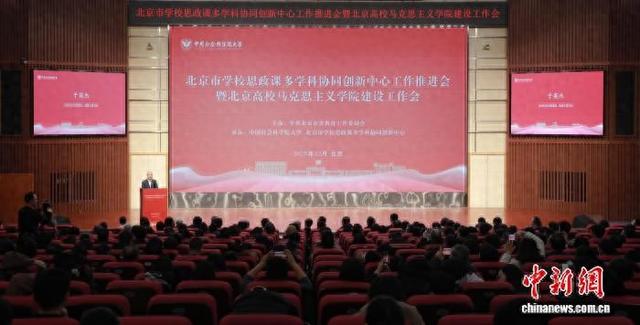
Core Viewpoint - The meeting aims to enhance the quality development of Marxist education in Beijing's higher education institutions by leveraging the resources of the Chinese Academy of Social Sciences [1][3]. Group 1: Establishment of the Multidisciplinary Center - The "Multidisciplinary Center for Ideological and Political Education in Beijing Schools" will be established in June 2024, relying on the Chinese Academy of Social Sciences [3]. - The center will utilize expertise in political science, economics, and law to support the construction of Marxist theory disciplines and reform of ideological education [3]. Group 2: Key Actions and Initiatives - The center will implement six major actions aimed at enhancing the quality of Marxist education, including multi-disciplinary visiting programs for teachers and public courses on "Chinese Governance" [3]. - Specific projects include the "Multi-disciplinary Collaborative Innovation Research Project" and the promotion of high-quality ideological courses [3]. Group 3: Measures for Development - The measures jointly issued by the Beijing Municipal Education Commission and the Propaganda Department include 10 measures and 37 specific actions to strengthen the leadership of Marxist education [4]. - These measures focus on improving the research capabilities of Marxist theory, enhancing the quality of teaching, and integrating Marxist education into the broader development of the capital [4].

实事求是 鞠躬尽瘁
Xin Lang Cai Jing· 2025-12-26 19:01
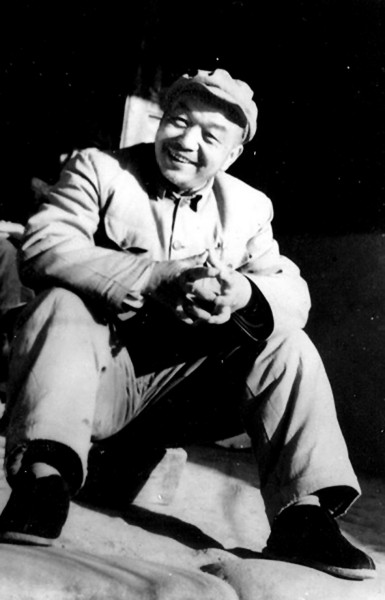
Core Viewpoint - The article commemorates Jiang Longji, a prominent educator and revolutionary figure in China, highlighting his contributions to education and his lasting impact on various universities in China, particularly during the revolutionary period and the establishment of the People's Republic of China [11][30]. Group 1: Early Life and Education - Jiang Longji was born on December 24, 1905, in a peasant family in Shaanxi Province and was influenced by the May Fourth Movement during his youth [12]. - He joined the Communist Party of China in June 1927 and pursued studies in Marxist theory while studying in Japan and Germany [12][13]. Group 2: Educational Philosophy and Contributions - Jiang Longji believed that "education is the foundation of the nation" and emphasized the importance of revitalizing education for national development [13]. - He served in various educational roles, including principal of Xi'an No. 2 Middle School and later as vice president of Yan'an University, where he established a new educational system that produced over 6,000 anti-Japanese cadres [14][19]. Group 3: Leadership at Universities - After returning to Peking University in 1952, Jiang Longji focused on strengthening the Party's leadership and improving the university's educational quality, leading to significant advancements in teaching and research [15][16]. - At Lanzhou University, he emphasized the importance of teaching quality and established a comprehensive educational framework that integrated research and practical skills [17][18]. Group 4: Respect for Faculty and Student Development - Jiang Longji was known for his respect for faculty, often engaging with teachers to understand their needs and support their research endeavors [24][25]. - He fostered a supportive environment for students and faculty, encouraging academic freedom and collaboration while maintaining high standards for educational quality [27][28]. Group 5: Legacy and Recognition - Jiang Longji's contributions to education and his commitment to socialist values earned him high regard among students and faculty, with many recognizing his influence on their understanding of the Party and education [29][30]. - His ideals and educational philosophy continue to resonate, forming an integral part of the "Lanzhou University spirit" and inspiring future generations [30].
一体推进教育科技人才发展 加快实现高水平科技自立自强(深入学习贯彻习近平新时代中国特色社会主义思想)
Ren Min Ri Bao· 2025-12-26 01:11
Core Viewpoint - The article emphasizes the importance of integrating education, technology, and talent development as a strategic approach to achieve high-quality development and technological self-reliance in China [2][4]. Group 1: Importance of Integrated Development - Xi Jinping highlights that education, technology, and talent are foundational and strategic supports for building a modern socialist country, advocating for their organic combination to enhance high-quality development [2][4]. - The integration of education, technology, and talent is seen as a necessary evolution of Marxist theory, emphasizing their interdependence and mutual support [3]. Group 2: Strategic Significance - High-quality development is deemed essential for modernizing China, with a focus on optimizing educational structures and talent cultivation to meet new production demands [4]. - The strategic decision to build a strong educational, technological, and talent framework by 2035 aims to leverage these sectors for high-quality development [4]. Group 3: Response to Technological Changes - The article discusses the need to seize opportunities presented by new technological revolutions and industrial transformations, advocating for a coordinated approach to education and talent development [5]. - It notes that the rapid pace of technological change necessitates an adaptive educational model that aligns with emerging fields and technologies [5]. Group 4: Achievements and Current Status - Since the 18th National Congress, China has made significant strides in education and technology, achieving historical advancements and establishing itself as a leader in various metrics, including the number of high-level research papers and patents [6]. - The country has developed a large and diverse talent pool, with over 220 million total talent resources and 7.24 million R&D personnel in 2023, maintaining a leading position globally [6]. Group 5: Implementation Strategies - The article outlines the need for a comprehensive approach to implement the integration of education, technology, and talent, emphasizing the importance of political leadership and policy coordination [8]. - It suggests enhancing the synergy between national strategic technology forces and major scientific tasks to foster innovation and talent development [9]. Group 6: Focus Areas for Talent Development - The article identifies key areas for talent cultivation, including artificial intelligence, integrated circuits, and biotechnology, advocating for the establishment of high-level research platforms and training bases [10]. - It emphasizes the importance of aligning educational programs with national strategic needs and enhancing the training of STEM talents [10]. Group 7: Evaluation and Incentives - The article calls for reforms in evaluation and incentive systems to stimulate innovation and commitment among scientific personnel, advocating for a shift away from traditional metrics towards more effective evaluation methods [12]. - It highlights the need for a supportive environment that encourages talent mobility and the integration of high-level talents into enterprises [12].
“三聚焦、三关键”提升研究生学术素养与科研能力
Xin Lang Cai Jing· 2025-12-19 22:32
Core Viewpoint - The Marxism College of Liaoning Petrochemical University emphasizes the integration of classic Marxist literature into graduate education, aiming to enhance theoretical literacy and research capabilities among students through innovative teaching and assessment methods [1][2][3]. Group 1: Educational Framework - The college has developed a new model for graduate talent cultivation centered on classic literature, classroom teaching, assessment, and thesis work, ensuring a solid foundation in Marxist theory [1]. - Courses such as "Selected Readings of Marxist Classic Authors" and "Introduction to Marxist Chinese Classics" are offered to achieve comprehensive coverage in graduate training [2]. Group 2: Innovative Assessment Methods - The college has introduced a standardized assessment system for academic levels in Marxist classic literature, which includes unified topics, examinations, and grading processes [2]. - A management approach for the academic assessment of classic Marxist literature has been established to ensure rigorous evaluation [2]. Group 3: Academic Engagement and Innovation - The college has hosted 39 sessions of the "Bosi Forum," inviting renowned scholars to deepen theoretical research and interpretation of Marxist classics [2]. - Weekly reading sessions have been organized, totaling 89, focusing on core literature and providing diverse activities for students to grasp the historical context and theoretical frameworks of classic works [2]. Group 4: Practical Application and Community Engagement - The college has formed 10 reading groups focused on Marxist classics, with five groups selected for funding by the Chinese Higher Education Society, ranking among the top in Liaoning Province [3]. - Students are encouraged to participate in national activities related to the spirit of the 20th National Congress of the Communist Party, achieving notable recognition among 325 participating universities [3]. - The college promotes practical learning by organizing visits to historical and revolutionary education sites, enhancing the understanding of Marxist classics through experiential learning [3].
奚洁人:忠诚的智慧和力量|上海“马克思主义理论突出贡献专家”系列访谈
Xin Lang Cai Jing· 2025-12-19 04:18
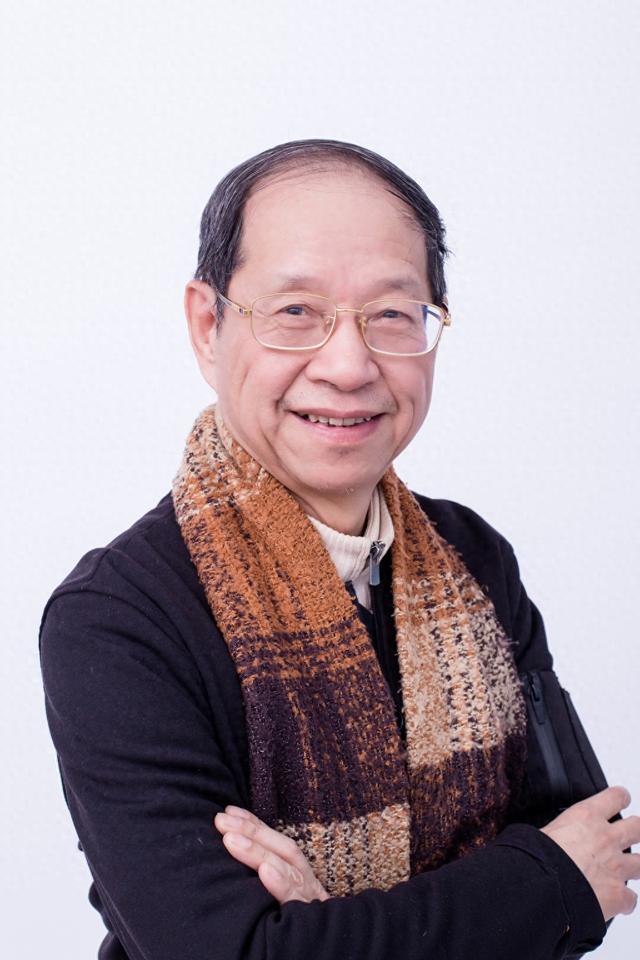
Core Viewpoint - The article discusses the establishment of the "Shanghai Marxist Theory Discipline Development Support Plan (2025-2027)" aimed at promoting the study and dissemination of Xi Jinping's Thought on Socialism with Chinese Characteristics for a New Era, highlighting the recognition of experts in Marxist theory and their contributions to education and research [1]. Group 1: Recognition and Contributions - The "Shanghai Marxist Theory Discipline Development Support Plan" has recognized 10 experts for their outstanding contributions to Marxist theory, 9 as distinguished teachers, and 29 as key young and middle-aged talents [1]. - The series of interviews with recognized experts aims to showcase their significant contributions to the construction and academic development of Marxist theory in higher education [1]. Group 2: Personal Journey and Academic Focus - The expert, Xi Jieren, has a long-standing commitment to the study of Marxist theory, having received numerous national awards for his work, including recognition from the Central Propaganda Department and the National Press and Publication Administration [5]. - Xi's journey into Marxist theory began in his youth, influenced by Mao Zedong's teachings, leading to a lifelong dedication to the subject through various academic and leadership roles [6][7]. Group 3: Theoretical Insights and Methodology - Xi emphasizes the importance of integrating Marxist theory with practical work, advocating for a dual approach that combines theoretical study with real-world application [6][9]. - The concept of "two combinations," which refers to integrating Marxism with Chinese realities and traditional culture, is highlighted as a significant theoretical framework in contemporary Chinese political discourse [9][10]. Group 4: Educational Philosophy and Leadership Development - The article discusses the importance of loyalty to Marxism in educational settings, emphasizing the need for leaders to be committed to Marxist principles and the socialist core values [17][18]. - Xi has initiated various forums and educational programs aimed at enhancing leadership skills among youth, focusing on the importance of Marxist theory in contemporary leadership practices [22][23].
把握“守界”与“跨界” 推动思政教育高质量发展
Xin Hua Ri Bao· 2025-12-18 21:34
Group 1 - The core issue is how the discipline of ideological and political education can expand its boundaries while maintaining its essence, emphasizing the need for a dialectical unity between "guarding boundaries" and "cross-disciplinary integration" for high-quality development [1] Group 2 - "Guarding boundaries" is essential for establishing the discipline's foundation, focusing on the strategic choice of ideological, political, and practical aspects, and creating a recognizable knowledge framework centered on the formation and development of ideological concepts, political views, and moral norms [2] - The core value of the discipline is to cultivate virtue, which should guide all academic activities and practical teaching, ensuring alignment with the fundamental question of "what kind of person to cultivate, how to cultivate, and for whom to cultivate" [2] - A self-aware method selection mechanism should be established to protect the discipline's characteristics, avoiding the simple transplantation of methods from other disciplines and fostering a unique methodological system [2] Group 3 - "Cross-disciplinary integration" serves as a driving force for the discipline's development, requiring a proactive fusion based on established boundaries, with a clear understanding of the subjectivity and purpose of the integration [3] - A value-based screening mechanism should be established to evaluate and filter interdisciplinary knowledge, ensuring that the integration remains aligned with the core mission of cultivating virtue and ideological attributes [3] - The integration process should rely on a solid disciplinary core and mature theoretical framework to decode, digest, and reconstruct external knowledge, ultimately forming new knowledge and paradigms that enhance the discipline's explanatory power and practical effectiveness [3] Group 4 - Achieving a dialectical unity between guarding boundaries and cross-disciplinary integration requires adherence to the guiding position of Marxism and the fundamental task of cultivating virtue, while also responding to contemporary challenges with an open attitude [4] - The discipline should engage in cross-disciplinary research, such as "political education + psychology" and "political education + sociology," while ensuring that explorations do not deviate from the essence of the discipline [4] - A cross-disciplinary evaluation system should be constructed to assess both the maintenance of disciplinary boundaries and the effectiveness of cross-disciplinary innovations, ensuring that the discipline does not lose its fundamental characteristics in the process of open integration [4]
张允熠:中国化的马克思主义要始终保持蓬勃的生机与活力|上海“马克思主义理论突出贡献专家”系列访谈
Xin Lang Cai Jing· 2025-12-16 04:31
Core Viewpoint - The article discusses the establishment of the "Shanghai Marxist Theory Discipline Development Support Plan (2025-2027)" aimed at promoting the study and dissemination of Xi Jinping's Thought on Socialism with Chinese Characteristics for a New Era, emphasizing the importance of Marxist theory in education and its integration with Chinese culture [1]. Group 1: Development of Marxist Theory - The plan includes recognition of 10 experts for outstanding contributions to Marxist theory, 9 teaching masters, and 29 young and middle-aged backbones in the field [1]. - The initiative is guided by various Shanghai municipal departments, aiming to create a stronghold for Marxist theory education and research [1]. Group 2: Individual Contributions - Zhang Yunyi, a prominent figure in Marxist theory research, has received numerous accolades and emphasizes the collective nature of such honors, attributing his success to institutional support [5][6]. - Zhang's academic journey began with a focus on political education, leading to a long career in teaching and researching Marxist theory, influenced by his mentor [6]. Group 3: Integration of Chinese Culture and Marxism - Zhang discusses the significance of integrating Marxism with Chinese culture, highlighting that Marxism has been adapted to fit the Chinese context, which is crucial for its acceptance and application [7][10]. - He argues that Marxism has absorbed valuable elements from human civilization, including Chinese cultural aspects, which is essential for understanding its development [8][10]. Group 4: Educational Approaches - Zhang advocates for a comprehensive educational approach, emphasizing the need for students to connect various fields of knowledge, such as philosophy, history, and literature, to enhance their understanding of Marxism [20][21]. - He stresses the importance of quality teaching materials and the role of teachers in engaging students actively in the learning process [22][23].