
水利工程建设

Search documents
覆盖范围占国土面积的比例达80.3%——现代水网贯通发展动脉
Jing Ji Ri Bao· 2026-01-10 21:56
Core Viewpoint - The Chinese government is accelerating the construction of major water conservancy projects to enhance water security and support economic development, with significant investments planned for the coming years [1][2][5]. Group 1: Current Projects and Investments - Major water conservancy projects are being expedited, including the Bai Ze Water Conservancy Hub in Fujian and the Jiang-Yan Water Diversion Project in Hubei, with the national water network now covering 80.3% of the country's land area [1][2]. - The Ministry of Water Resources announced that 27 major projects with a total investment of 203.8 billion yuan are set to commence by 2025, focusing on flood control, water supply, and irrigation [2][5]. - The Chongqing Yuxi Water Resource Allocation Project, expected to be completed by the end of 2025, will provide 1.012 billion cubic meters of water annually, supporting a population of 10 million and a regional GDP of 14 trillion yuan [2]. Group 2: Future Plans and Strategic Goals - The Ministry of Water Resources plans to implement several major projects by 2026, including the Taihu Taipu River Phase II Project and the Hubei Jiang-Yan Supplementary Water Project, which will enhance flood discharge and water supply capabilities for millions of people [3]. - The construction of large irrigation areas in Guangdong and Jiangxi is also planned, with a total designed irrigation area of 6.09 million acres [3]. Group 3: Societal Benefits and Environmental Impact - The national water network is improving water resource allocation and supply security, benefiting more citizens, such as those in Shandong and Hebei who are transitioning to higher-yield crops and accessing better water quality [4]. - The Ministry of Water Resources is focusing on ecological restoration and river management, with 88 major river and lake restoration actions initiated since 2022, resulting in significant improvements in waterway connectivity and ecological water levels [4]. Group 4: Financing and Investment Strategies - The Ministry of Water Resources is reforming water investment financing, with a total investment of 5.68 trillion yuan completed during the 14th Five-Year Plan, of which 2.05 trillion yuan (36.1%) came from local government bonds, bank loans, and social capital [5][6]. - A new financing model is being established, combining government funding, financial credit, and social capital to support the construction of the national water network, which is seen as a key driver for expanding domestic demand [6].
渠江流域骨干防洪工程建设上紧发条
Xin Lang Cai Jing· 2026-01-10 21:36
Project Overview - The Gujun Reservoir project in Wanyuan City has a total investment of approximately 2.938 billion yuan, with a maximum dam height of 77.4 meters and a total storage capacity of 127 million cubic meters. It is one of the 150 major water conservancy projects approved by the State Council [2] - As of the end of 2025, the project has completed an investment of 2.02 billion yuan, accounting for 68.7% of the total investment [2] Project Progress - The main construction of the Gujun Reservoir began in August 2023 and is currently in a peak construction phase, with over 400 construction and management personnel and more than 100 construction vehicles on site [2] - The project aims to complete the dam's topping by the end of 2026 and achieve full completion by April 2027 [2] Construction Techniques and Management - The project team is focusing on concrete quality control and resource allocation during the critical phase of dam concrete pouring. They are also advancing the construction of supporting facilities such as the power plant and fishway [2][4] - Innovative techniques, such as the use of rock-fill concrete, have improved the efficiency of cofferdam construction by approximately 20% and reduced overall costs by over 15% [4] - Continuous 24-hour shifts and meticulous construction management are being implemented to ensure timely progress and resource availability [4] Flood Control and Economic Impact - The Gujun Reservoir is primarily a flood control project with a flood storage capacity of 8.9 million cubic meters. It aims to enhance the flood control capacity of the region significantly [5] - Once completed, the reservoir will provide an additional 12 million cubic meters of quality water, supporting rural revitalization and high-quality industrial development [5] - The reservoir's construction is expected to improve flood control standards for nearby towns and promote ecological tourism, contributing to the green economic transformation [5]

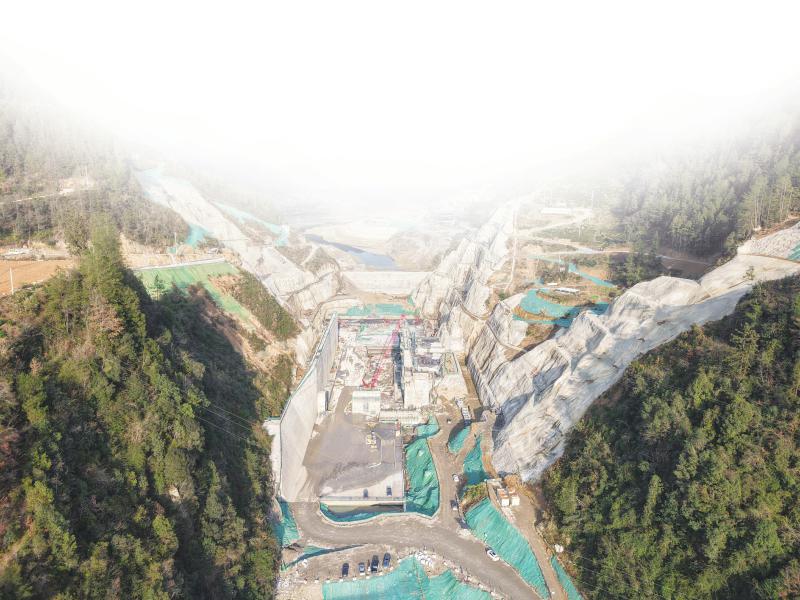
国家水网覆盖范围已达国土面积80.3%
Xin Lang Cai Jing· 2026-01-09 18:43
Core Points - The national water network in China has reached 80.3% coverage of the country's land area, indicating significant progress in water resource management [1] - The government plans to accelerate the modernization of irrigation areas, including the Dujiangyan area in Sichuan, as part of its ongoing water infrastructure improvements [1] - By 2025, China will initiate 27 major water conservancy projects, including the Sichuan diversion project, to enhance the national water network and improve water supply and flood control capabilities [1] Investment and Infrastructure - During the 14th Five-Year Plan period, China has completed water conservancy construction investments totaling 5.68 trillion yuan, with over 1 trillion yuan invested annually since 2022 [1] - The government aims to complete 9,420 rural water supply projects, enhancing water security for 134 million rural residents, with a target rural tap water coverage rate of 96% [1] - In 2026, the Ministry of Water Resources will implement a series of major water conservancy projects in line with the "15th Five-Year Plan" for water security [1]
为保障防洪安全、供水安全、粮食安全、生态安全作出贡献——国新办发布会介绍国家水网建设成果
Xin Hua She· 2026-01-09 12:49
Core Insights - The news highlights the progress and achievements of China's national water network construction, emphasizing its role in ensuring flood control, water supply, food security, and ecological safety [1][2][3] Group 1: National Water Network Construction Progress - During the 14th Five-Year Plan period, a total investment of 5.68 trillion yuan was made in water conservancy construction across the country [1] - The national water network now covers 80.3% of the country's land area, providing water security for major national strategies and key economic zones [1][2] - In the past year, significant projects such as the Huanghe Guxian Water Conservancy Hub and the Chongqing Yuxi Water Resource Allocation Project were completed, contributing to the overall goals of the water network [2] Group 2: Agricultural Water Security - By the end of 2025, the irrigated area of arable land is expected to reach 109 million acres, an increase of over 5.3 million acres compared to the end of the 13th Five-Year Plan [3] - The Ministry of Water Resources has initiated the construction of seven large irrigation districts and modernized 157 medium and large irrigation districts [3] - A comprehensive reform of agricultural water pricing has been implemented over an area of 108.6 million acres, promoting water-saving practices in agriculture [3] Group 3: Disaster Prevention and Ecological Benefits - In the past year, 6,894 large and medium-sized reservoirs stored 120.2 billion cubic meters of floodwater, reducing urban flooding incidents by 1,082 times and protecting 8.3 million acres of farmland [4] - The Ministry of Water Resources has made significant progress in groundwater management, with shallow and deep groundwater levels in North China rising by 3.76 meters and 7.65 meters, respectively, compared to 2020 [6] Group 4: Future Plans and Investments - The Ministry of Water Resources plans to implement a series of major water conservancy projects by 2026, focusing on flood safety and water resource allocation [7] - Investment in water conservancy infrastructure is supported by local government bonds, bank loans, and social capital, which accounted for 36.1% of the total investment during the 14th Five-Year Plan [7]
国家水网覆盖范围已占国土面积的80.3%
Zhong Yang Ji Wei Guo Jia Jian Wei Wang Zhan· 2026-01-09 06:52
"十四五"期间181项重大水利工程开工建设 推进大规模、高水平的水利基础设施建设,投资是重要基础。陈敏介绍,2025年完成水利建设投资1.28 万亿元,吸纳就业315万人,有效发挥稳增长、促就业作用。"十四五"期间,全国完成水利建设投资 5.68万亿元,2022年以来连续4年完成投资超过了1万亿元。 1月9日,国务院新闻办公室举行新闻发布会介绍国家水网建设情况。据悉,2025年,水利部全力推进国 家水网骨干输排水通道、重要调蓄结点和省、市、县级水网建设,圆满完成全年目标任务。目前,国家 水网覆盖范围占国土面积的比例达80.3%,为国家重大战略实施、重要经济区、重要城市群、能源基 地、粮食主产区、重点生态功能区、重要水运通道提供了水安全保障。 2025年是"十四五"规划收官之年,多项重大水利工程高效推进。淮河干流浮山以下段行洪区调整和建 设、四川引大济岷、湖南洞庭湖重点垸堤防加固、广东黄茅峡水利枢纽、北京二道河水库等27项重大水 利工程开工,黄河古贤水利枢纽工程建设高质量推进,重庆渝西水资源配置工程全线通水,内蒙古引绰 济辽主体工程完工,陕西东庄水利枢纽、浙江开化水库等工程实现关键节点目标。此外,新建广西黑水 ...
太浦河后续一期工程可行性研究报告正式获批
Shui Li Bu Wang Zhan· 2026-01-08 15:10
本站讯 近日,国家发展改革委正式批复太浦河后续一期工程可行性研究报告,标志着这项纳入《国家 水网建设规划纲要》的太湖流域综合治理骨干工程前期工作取得突破性进展,工程即将开工建设。 太浦河地跨苏浙沪两省一市,工程承载多重功能,2005年太浦河后续工程前期工作启动以来,由于上下 游、省际间诉求存在较大差异,工程方案长期难以达成一致意见。在水利部的指导下,太湖局加强统筹 协调,坚持系统治理、公开透明,树立流域"一盘棋"思想,组织两省一市持续深化技术论证,促进各方 团结治水、求同存异,以久久为功的韧劲,终于在2021年9月推动两省一市就工程总体布局方案和分期 实施意见达成一致。此后,太湖局牵头组织开展太浦河后续一期工程可行性研究工作,会同相关省市集 智攻关、挂图作战、多方奔走、协同推进,全力推进可研及各项前置要件办理。在水利部的全力帮助和 国家相关部委的关心指导下,可研审查以及移民、航评、用地等前置要件审批均创造了"加速度"。太浦 河后续一期工程可研报告顺利获批是太湖水利人接续奋斗二十载取得的艰辛硕果,也是长三角一体化协 同治水的生动实践。 下一步,太湖局将推动太浦河后续一期工程尽快开工建设,打造集防洪、排涝、供水、 ...
“十五五”期间我国将加快建设现代化水网
Yang Shi Wang· 2026-01-07 11:56
Core Viewpoint - The article emphasizes the acceleration of the construction of a modernized water network in China during the "14th Five-Year Plan" period, focusing on safety, efficiency, and sustainability [1] Group 1: Infrastructure Development - The construction of a comprehensive, safe, reliable, efficient, green, intelligent, and well-regulated modern water network will be prioritized [1] - Key projects include the completion of the South-to-North Water Diversion Middle Line and the planning and construction of major inter-basin and inter-regional water diversion projects [1] Group 2: Water Resource Management - The article highlights the advancement of regional river and lake connectivity and the construction of water diversion and drainage projects [1] - There will be a focus on the construction of control and storage projects, as well as key water source projects, aiming to establish a modernized reservoir management system [1] Group 3: Agricultural and Rural Water Supply - The initiative includes modernizing irrigation areas, with an additional 40 million acres of irrigated farmland planned [1] - The goal is to enhance rural water supply standards and management models, increasing the rural tap water coverage rate to 98% and ensuring that large-scale water supply projects cover 78% of the rural population [1]
建成后将进一步提升全省供水保障能力 水利工程和灌区改造多点开花
Si Chuan Ri Bao· 2026-01-07 00:21
Core Viewpoint - The construction of major water conservancy projects in Sichuan, including the Gongxi River aqueduct and the Tizi Kou irrigation area, is progressing steadily, enhancing the province's water supply security and supporting agricultural needs. Group 1: Project Progress - The Gongxi River aqueduct, part of the Tizi Kou irrigation project, is 708 meters long and currently undergoing multiple construction processes, including the installation of templates and concrete pouring [1] - The double-arch structure of the Gongxi River aqueduct is the first of its kind in Sichuan's water conservancy sector, designed to minimize ecological impact due to its location in a wetland nature reserve [2] - As of December 2025, the Tizi Kou irrigation project has completed 143 main tunnels and 28 branch tunnels, with a total investment of 113.04 billion yuan [3] Group 2: Investment and Economic Impact - In 2025, Sichuan completed water conservancy investments totaling 702 billion yuan, representing a 5% year-on-year increase, which plays a crucial role in stabilizing investment and growth [3] - The ongoing construction of the Shitan Reservoir irrigation area aims to ensure water supply for spring farming, with multiple channels undergoing renovation to meet local agricultural needs [4] Group 3: Future Plans - During the 14th Five-Year Plan period, Sichuan will implement 75 medium-sized irrigation area renovation projects and 16 new small irrigation areas, further improving the irrigation and drainage system [5]
陇原“水盆子”蓄满民生福 甘肃2025为民实事水利项目健全水网脉络
Xin Lang Cai Jing· 2026-01-05 04:16
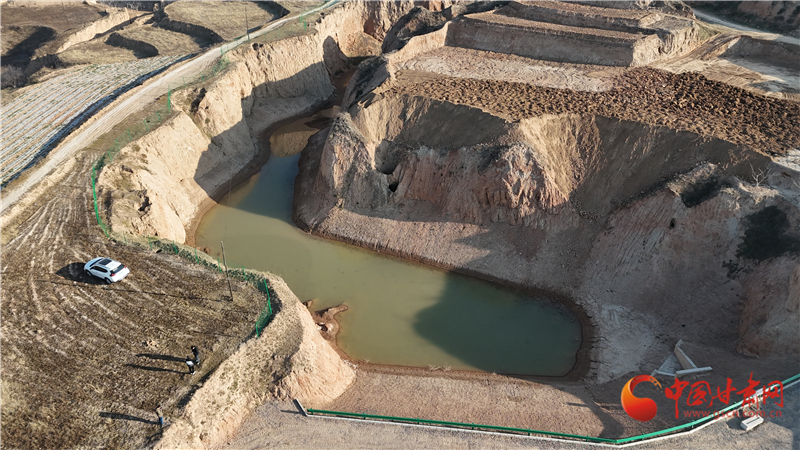
甘谷县淤地坝项目 西北角·中国甘肃网记者 宋芳科 2025年,甘肃省委、省政府连续五年将农村水利惠民工程列为年度为民实事。全省水利系统锚定群众饮水安全、 农业灌溉保障两大目标推进建设,提前完成年度各项建设任务,为陇原乡村振兴注入坚实水利动能。 省委、省政府多次召开专题会议,研究部署农村水利惠民工程建设工作。省水利厅履行牵头职责,细化制定工作 方案,建立"组织领导、资金保障、建设管理、调度指导、宣传引导、奖补激励"六位一体推进机制。通过召开专 题会、现场推进会等方式,明确省市县各级责任主体,强化部门协同配合,构建起上下联动、齐抓共管的工作格 局。 高台县小微调蓄池 针对项目分布广、类型多的特点,全省水利系统推行"挂图作战、倒排工期"管理模式,建立详实工作台账,紧盯 施工关键节点,实施全过程管控。建设人员抢抓施工黄金期,优化施工组织方案,加大人力物力投入,采取轮班 作业等举措加快建设进度。该工程于2025年11月15日全面完工,累计实施小型水库、调蓄水池、淤地坝、水窖等 各类"水盆子"工程684个,完工682个,完成年度建设任务,落实总投资6.29亿元。 资金保障层面,在积极争取中央资金支持、确保省级配套资金足额 ...
【我在大国工程当工匠】比三峡大坝高出62米!他们在戈壁挑战“世界之最”
Xin Lang Cai Jing· 2026-01-04 20:04
Core Viewpoint - The construction of the Dashi Gorge Water Conservancy Hub in Xinjiang, which is the world's highest concrete-faced rockfill dam at 247 meters, represents a significant achievement in modern water conservancy engineering, addressing flood control, irrigation, power generation, and ecological regulation [1]. Group 1: Project Overview - The Dashi Gorge Water Conservancy Hub is taller than the Three Gorges Dam by 62 meters and is designed to handle complex geological and climatic conditions [1]. - The project is a collaboration led by China Energy Engineering Group Gezhouba Company, showcasing the dedication and expertise of its builders over five years [1]. Group 2: Key Personnel and Their Contributions - Xu Shumei, the deputy manager of the project, emphasizes quality control, implementing a three-tier quality inspection network and optimizing material usage, saving 2,240 tons of fly ash and over 20 million yuan in costs [2][4]. - Li Dongfei, the project manager, has transformed traditional construction methods by integrating technology, leading to the development of a smart management cloud platform with an investment of over 80 million yuan [4]. - Mei Lin, a renowned hoisting engineer, successfully completed the precise installation of a 367-ton generator rotor, overcoming challenges posed by strong winds and complex canyon conditions [5][7]. Group 3: Technological Innovations - The project utilizes a smart management system with 2,300 monitoring points for real-time tracking of dam conditions, enhancing safety and efficiency [4]. - Innovations such as the "joint-type" chute design were inspired by ancient armor, addressing deformation issues caused by high winds during construction [4]. Group 4: Project Timeline and Future Outlook - The Dashi Gorge project is on track to have its first generator operational by July 2026, which will significantly benefit the irrigation of 8 million acres of farmland and local communities [8].