
Servers

Search documents
【风口研报】AI服务器散热+高速连接器+光模块CAGE,这家公司多业务线协同发力,精准卡位AI服务器高增长领域
财联社· 2026-01-07 13:48
Group 1 - The article highlights the company's strategic positioning in the AI server market through its multi-business lines, including AI server cooling, high-speed connectors, and optical modules, which are expected to drive significant growth [1] - The company is also expanding its presence in the precision transmission market through robotics, leveraging its comprehensive layout in motors, reducers, joint modules, and control algorithms, showcasing a high degree of self-manufacturing capability for core components [1]


清华同方配额管理一体机超强R628 G2 - SMEQ特价促销
Xin Lang Cai Jing· 2026-01-07 10:52
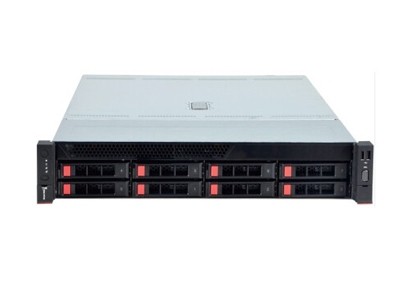
Group 1 - The Tsinghua Tongfang Super R628 server is currently on promotion at a price of 128,288 yuan, including a 13% special invoice [1][4] - The server is designed for enterprise-level quota management and features a 2U rack-mounted design [1][4] - It is equipped with an Intel Xeon Silver 4314 processor, featuring 16 cores and 32 threads, with a base frequency of 2.4 GHz [1][4] Group 2 - The server comes standard with 32GB of ECC DDR4 memory, which can be expanded up to 3TB [1][4] - It includes three 4TB enterprise-grade hard drives that support hot-swapping and RAID 0, 1, and 10 configurations [1][4] - The network capabilities feature dual Gigabit Ethernet ports and a variety of interfaces, along with a platinum-rated power supply for energy efficiency [1][4] Group 3 - A key advantage of the server is its real-time streaming video quota management functionality, which offers strong scalability [1][4] - The server can achieve remote monitoring through an iBMC module and optional software [1][4] - Tsinghua Tongfang Co., Ltd. is a high-tech company controlled by Tsinghua Holdings, established in June 1997 and listed on the Shanghai Stock Exchange [3][5]


长城擎天EF723FT-2000+服务器 自主算力底座的稳健之选
Xin Lang Cai Jing· 2026-01-07 10:52
Core Viewpoint - The Great Wall Qingtian (EF723FT-2000+/64 cores/2.2GHz/128GB/550W1) server is being promoted at a special price of 32,800 yuan, including a 13% special invoice, highlighting its high performance and reliability as a domestic computing platform [1][5]. Product Features - The server is powered by the domestic Feiteng FT-2000+/64 processor, featuring a 64-core architecture and 8-channel DDR4 ECC memory, providing robust computing power for multi-threaded concurrent tasks, especially in complex business processing and high-density virtualization environments [1][5]. - It adopts a compact 2U rack design with a modular expansion architecture, supporting multiple PCIe high-speed expansion slots, allowing flexible adaptation to AI acceleration cards, high-speed network interfaces, and large-capacity storage devices [1][5]. - The system integrates a domestic BMC intelligent management platform, supporting remote monitoring, firmware upgrades, and fault prediction, combined with the Kirin operating system and PKS security architecture to ensure a secure operational environment [1][5]. Application Scenarios - The server is widely used in industries with core demands for data sovereignty and system security, such as in power control systems where it serves as a core operational workstation for real-time monitoring and control tasks [3][6]. - In financial and government data centers, its high scalability and domestic ecosystem efficiently support applications like intelligent risk control, video analysis, and AI-assisted decision-making, enabling localized data processing and privacy protection [3][6]. - In artificial intelligence training and inference, its open expansion capabilities support multi-card parallel processing, accelerating model fine-tuning and edge intelligence deployment, reducing reliance on cloud resources [3][6].

数据中心市场洞察:服务器整体分析-Hardware Technology-Datacenter Market Insights – Part 1 Overall Servers
2026-01-07 03:05
Summary of Datacenter Market Insights – Overall Servers Industry Overview - The report focuses on the **datacenter market**, specifically the **server segment** within the **Asia Pacific** region, highlighting trends and insights for the third quarter of 2025 (3Q25) [1][8]. Key Insights - **Total Server Shipments**: There was a **14% year-over-year (y/y)** growth in total server shipments in 3Q25, primarily driven by demand from the **cloud sector** for both **AI** and general servers [1][2]. - **Global Shipments**: Global server shipments reached **4.2 million units** in 3Q25, remaining flat quarter-over-quarter (q/q) but showing a **14% y/y** increase. The growth was largely attributed to cloud demand, despite some impacts from tariff pull-ins [2][11]. - **AI Server Demand**: AI servers continue to be a strong growth area, with expectations for robust demand throughout 2026. The report notes that AI server yields are improving as original design manufacturers (ODMs) and original equipment manufacturers (OEMs) enhance testing capacities [3][5][15]. Vendor Performance - **Dell**: Experienced a **1% decline** in total server shipments q/q, but its average selling price (ASP) increased by **11%** [3]. - **Lenovo**: Reported a **14% increase** in total server shipments, attributed to strong performance from Microsoft's general servers, although its ASP declined by **17%** [3]. - **Super Micro**: Saw a **20% decline** in total server shipments q/q, but its ASP increased by **9%** [3]. - **Aggregate ODM Shipments**: Totaled **1,827k units**, down **4% q/q** but up **37% y/y**. The market share for ODMs decreased by **1.8 percentage points** to **43.5%** [4][15]. Segment Performance - **High-End Servers**: Shipments grew **384% y/y** and **3% q/q** in 3Q25, indicating strong demand for AI servers [12]. - **Mid-Range Servers**: Increased by **32% y/y** and **6% q/q** [12]. - **Entry-Level Servers**: Grew by **10% y/y** but saw a **1% decline** q/q [12]. Regional Insights - The **US** market outperformed others with a **18% y/y** increase in shipments, followed by **APxJ** at **17%**. Other regions like **Western Europe**, **Japan**, and **Rest of World (RoW)** experienced declines [11]. Future Outlook - The report anticipates continued growth in AI server shipments through 2026, with general compute servers expected to grow in the **5-10% range** [15]. - **Preferred Picks**: The report highlights several companies as preferred investment picks, including **Wistron**, **Hon Hai**, **FII**, **Wiwynn**, and **Quanta** [6]. Additional Notes - The report emphasizes the ongoing transition in server technology, particularly the shift from traditional GPU servers to more advanced rack-scale systems [3]. - The ASP for ODM direct servers increased by **7% q/q** to approximately **US$36.5k**, reflecting a higher contribution from AI servers [14]. This summary encapsulates the key findings and insights from the datacenter market report, providing a comprehensive overview of the current state and future expectations within the server segment.

浪潮英信NF5468M5 高性能机架服务器订购赠卡
Xin Lang Cai Jing· 2026-01-07 01:51
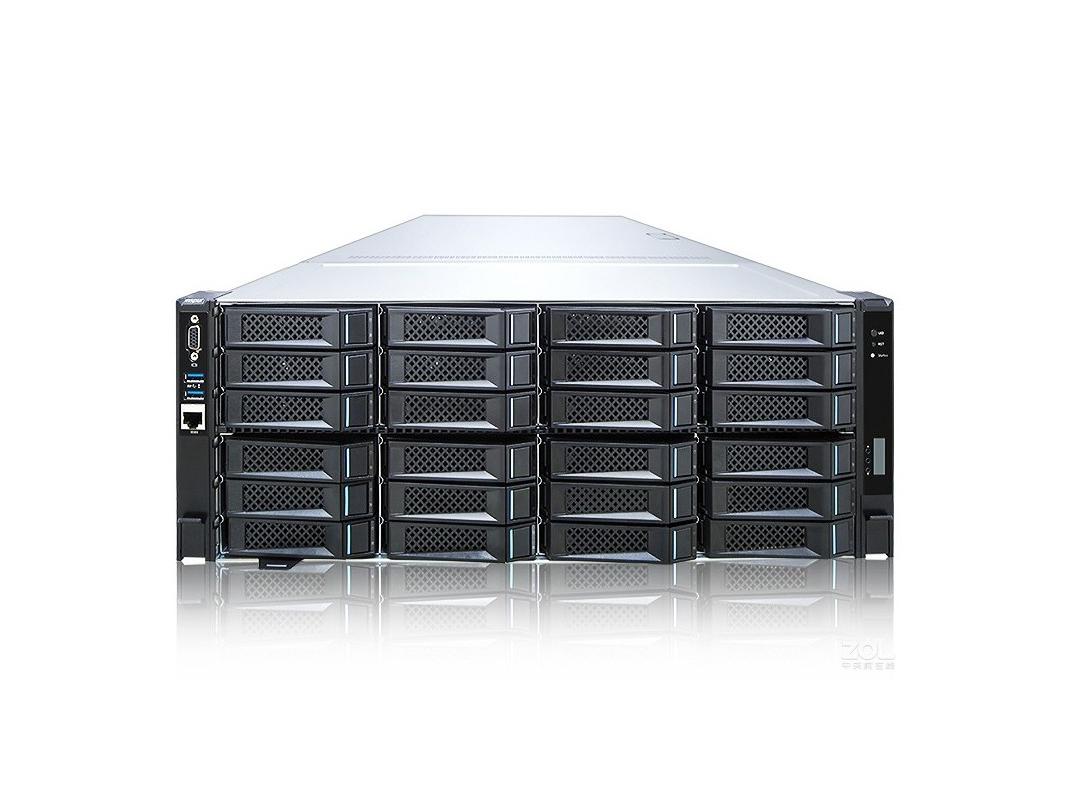
Core Viewpoint - The Inspur Yingxin NF5468M5 server is being promoted at a discounted price by Beijing Kechuang Tengda, showcasing its advanced capabilities tailored for modern data centers, particularly in AI, virtualization, and large-scale database applications [1][4][9]. Group 1: Product Features - The NF5468M5 server is a 4U dual-socket rack server powered by dual Intel Xeon Gold 5218 processors, offering exceptional parallel processing capabilities and system stability [1][7]. - It features a high-density architecture with flexible I/O configurations, supporting up to 20 PCIe 3.0 expansion slots for AI accelerator cards, high-speed network cards, and storage controllers [1][7]. - The server utilizes ECC DDR4 memory technology to ensure data integrity and supports hot-swappable storage configurations, balancing capacity and performance for critical business operations [1][7]. Group 2: Application Scenarios - The NF5468M5 is suitable for various enterprise-level scenarios, including AI training and inference, virtualization platforms, large-scale database clusters, and real-time data analytics [4][9]. - In the AI domain, it supports multiple GPU topologies, seamlessly integrating with mainstream accelerator cards to efficiently support deep learning model training and deployment [4][9]. - Its multi-core, high-concurrency characteristics significantly enhance resource utilization in virtualized environments, aiding cloud platform elasticity [4][9]. Group 3: Company Overview - Inspur is recognized as a leading provider of computing platforms and IT application solutions in China, and it is the largest server manufacturer and server solution provider in the country [6][10]. - The company operates two publicly listed entities in China, "Inspur Information" and "Inspur Software," along with a listing on the Hong Kong Stock Exchange [6][10].

浪潮NF5280M5服务器 强劲算力赋能多元业务场景特惠
Xin Lang Cai Jing· 2026-01-07 01:51
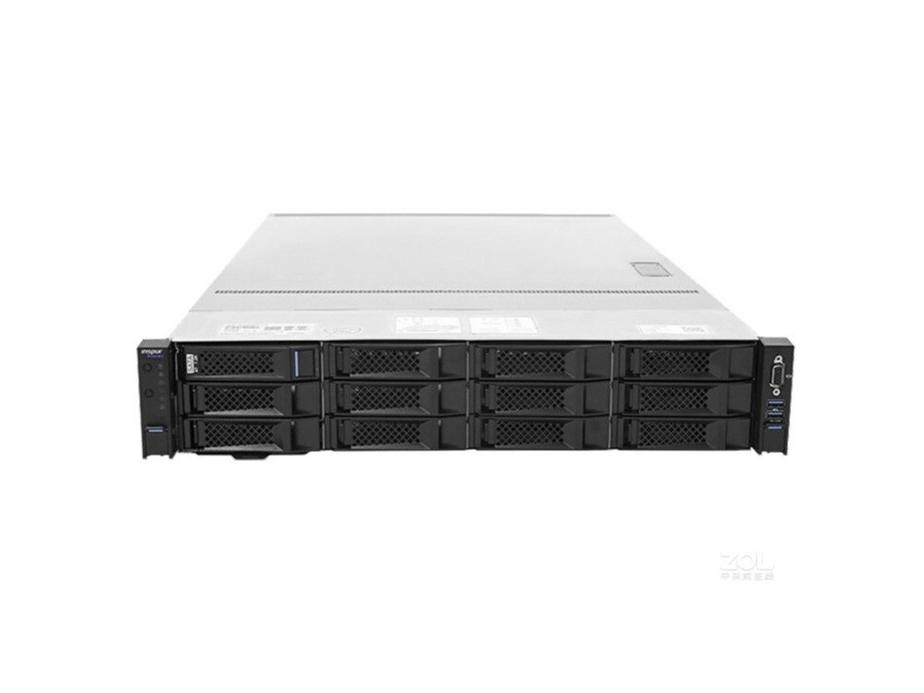
【中关村在线北京行情】近日,浪潮英信NF5280M5服务器在中关村在线商家"北京科创腾达(渠道经销商)"特价促销,价格优惠, 【商家活动】赠品:京东E卡 (购买一件及以上,赠完即止)更多优惠详情请致电或微信 13146627892。浪潮NF5280M5服务器搭载 双路Xeon Gold 5218处理器,构建起强劲的计算核心,凭借多核多线程架构带来卓越的并行处理能力,可轻松应对高密度计算负 载。搭配128GB大容量内存,为多任务并行运行提供充足支撑,有效降低内存瓶颈对业务处理效率的影响。存储方面,6块1.2TB硬 盘组成的大容量存储阵列,不仅能满足海量数据的本地存储需求,还可通过灵活的RAID配置保障数据安全与读写性能。整机采用 全模块化设计,拥有丰富的扩展插槽,支持多种网络接口与加速卡配置,兼具智能管理功能,可实时监控运行状态并简化部署维护 流程,展现出稳定可靠、灵活适配的产品特性。 依托出色的硬件配置与性能优势,该服务器适配多种核心应用场景。在云计算领 域,其强劲算力可支撑虚拟化集群部署,为公有云、私有云平台提供稳定的算力输 出;面对大数据分析任务时,大容量内存与存储的协同配合,能高效处理海量数据 检索与分 ...
全球服务器-ASIC 服务器规模扩张;人工智能全机架服务器的芯片平台呈多元化趋势-Global Server_ ASIC servers expanding; AI full racks see diversifying chip platform
2026-01-05 15:43
Summary of Global Server and AI Server Market Insights Industry Overview - The report focuses on the global server market, particularly AI training servers, AI inferencing servers, general servers, and high-performance computing (HPC) servers. It also discusses the capital expenditure (capex) trends of leading cloud service providers (CSPs) in the US and China. Key Insights Market Estimates and Growth Projections - The total addressable market (TAM) for global servers is projected to grow significantly, with estimates of **US$433 billion**, **US$606 billion**, and **US$764 billion** for the years 2025, 2026, and 2027 respectively, reflecting year-over-year growth rates of **71%**, **40%**, and **26%** [18][27]. - AI server shipments are expected to increase to **2,605k units** by 2027, with a notable rise in high-power AI servers, which are projected to grow by **56%**, **67%**, and **34%** YoY from 2025 to 2027 [14][12]. AI Server Segment Insights - The report anticipates a total of **19k**, **55k**, and **80k** full rack AI servers to be shipped in 2025, 2026, and 2027 respectively, with a TAM size of **US$55 billion**, **US$165 billion**, and **US$255 billion** for the same years [12][9]. - ASIC adoption in AI chips is expected to rise, accounting for **38%**, **40%**, and **50%** of AI chips in 2025, 2026, and 2027 respectively, up from previous estimates [1][3]. Capital Expenditure Trends - Leading US CSPs are forecasted to increase their capex budgets by **78%**, **37%**, and **15%** YoY from 2025 to 2027, an increase from previous estimates of **67%**, **23%**, and **15%** [10][27]. - Chinese CSPs are also expected to grow their capex by **62%**, **17%**, and **9%** YoY during the same period, up from **55%**, **8%**, and **6%** [30][31]. AI Chip Demand - The demand for AI chips is projected to reach **11 million**, **16 million**, and **21 million** units in 2025, 2026, and 2027 respectively, driven by the increasing volume of AI servers [1][9]. - The implied number of AI chips for training and inferencing is expected to be **20,838k units** by 2027, with a mix of **50%** GPU and **50%** ASIC chips [22][23]. Additional Insights - The growth in AI server shipments is supported by the increasing applications of AI technologies and the introduction of new chip platforms, including AMD's "Helios" AI server rack [1][9]. - The report highlights the importance of baseboard-based AI servers, which offer greater customization and lower costs for clients, contributing to a more positive demand outlook [12]. Conclusion - The global server market, particularly in the AI segment, is poised for substantial growth driven by increased demand for AI infrastructure and significant capital investments from leading cloud service providers. The shift towards ASIC chips and diversified chip platforms is expected to further enhance market dynamics in the coming years.
高盛聚焦全球服务器市场变革:ASIC服务器持续扩张,AI整机柜芯片平台走向多元化
Zhi Tong Cai Jing· 2026-01-05 14:12
Group 1 - Goldman Sachs has updated its global server market forecast, expecting total revenue to reach $433.1 billion, $606.1 billion, and $763.9 billion in 2025, 2026, and 2027 respectively, with year-on-year growth rates of 71%, 40%, and 26% [2] - AI training servers are identified as the core growth engine, with projected revenues of $234.8 billion, $369.8 billion, and $506.2 billion for the same years, reflecting year-on-year growth rates of 97%, 57%, and 37% [2] - The report highlights a structural transformation in the global server market, driven by accelerated ASIC server penetration and significant capital expenditure growth from global cloud service providers, maintaining a high prosperity period from 2025 to 2027 [1][2] Group 2 - ASIC chip penetration in AI servers is expected to increase, with forecasts of 38%, 40%, and 50% for 2025, 2026, and 2027 respectively, up from a previous estimate of 45% for 2027 [3] - The demand for AI chips corresponding to AI servers is projected to reach 11 million, 16 million, and 21 million units in 2025, 2026, and 2027, representing increases of 7%, 17%, and 26% from previous forecasts [3] - The AI rack server market is shifting from reliance on Nvidia to a more diversified competition, with non-Nvidia solutions like AMD's Helios expected to gain market share [4] Group 3 - High-power AI training servers are projected to see significant growth, with shipment forecasts of 692,000, 952,000, and 1,227,000 units for 2025, 2026, and 2027, and corresponding market sizes of $180.2 billion, $205.2 billion, and $251.1 billion [5] - AI inference servers are expected to grow steadily, with shipment forecasts of 470,000, 539,000, and 656,000 units, and market size increasing from $29.8 billion to $48.4 billion from 2025 to 2027 [6] - The general server market is returning to normal growth, with shipment growth rates of 11%, 8%, and 2% for 2025, 2026, and 2027, and revenue growth rates of 51%, 19%, and 5% [7] Group 4 - Key companies in the server supply chain include ODM manufacturers like Wistron, Quanta, and Hon Hai, with Hon Hai being a leader in AI server market share [8] - Liquid cooling manufacturers such as AVC and Auras are highlighted for their roles in the cooling solutions for AI servers, with AVC providing custom cooling solutions for Nvidia's platforms [10][11] - TSMC is recognized as a foundational player in the AI chip and ASIC manufacturing sector, while companies like Chenbro and GCE are noted for their roles in critical components for server manufacturing [12]


华为FusionServer 2288H V5企业级计算服务器特价
Xin Lang Cai Jing· 2026-01-04 12:25
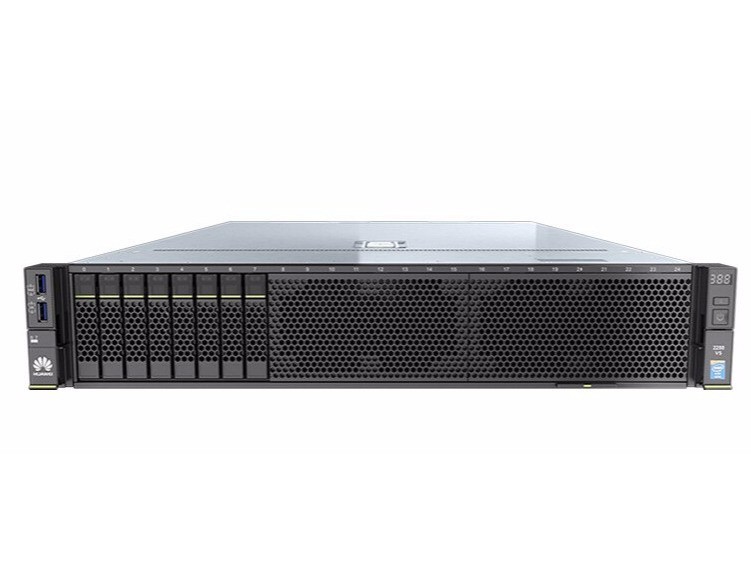
【中关村在线北京行情】近日,华为 FusionServer Pro 2288H V5服务器在中关村在线商家"北京神州普华 (钻石经销商)"特价促销,现货价58800元含 13%专票,【商家活动】赠品:京东E卡 (购买一件及以上,赠 完即止)更多优惠详情请致电或微信 13911719964。华为FusionServer 2288H V5作为一款2U机架式服务 器,在性能与扩展性上表现卓越。它搭载英特尔至强可扩展处理器,多核心多线程的设计使其在多任务处 理时游刃有余。内存方面,支持多条DDR4 ECC内存,不仅确保了数据的准确性,还大幅提升了读写速 度。存储配置十分灵活,多种硬盘配置方案可满足不同规模的存储需求,全SSD配置更是显著增强了I/O性 能。网络功能丰富,板载网卡与灵活网卡插卡的搭配,提供了多样的网络接口选择,众多的PCIe扩展插槽 也为服务器的扩展提供了广阔空间。此外,华为iBMC芯片以及可选配的FusionDirector管理软件,赋予了 它强大的智能管理能力,可实现全生命周期的智能化管理。 在应用场景上,华为FusionServer 2288H V5有着广泛的适用 性。在云计算虚拟化领域,它能够高 ...
100%兼容国产主流软硬件生态!联想问天WR5215 G5服务器发布
Xin Lang Cai Jing· 2026-01-04 10:22
Core Insights - Lenovo has launched its first 2U single-socket server, the Lenovo Wentiang WR5215 G5, based on the AMD EPYC processor, featuring a 50% increase in CPU core count compared to the previous generation [1][3] - The server is designed to provide robust computing power for high-load scenarios such as AI training, virtualization, and scientific computing, with up to 3TB of TruDDR5 memory and 14 PCIe expansion slots [1][3] Performance and Efficiency - The Lenovo Wentiang WR5215 G5 achieves a 25% significant improvement in AI workload performance through deep software-hardware integration optimization [1][3] - Its single-socket design can save up to 25% in overall power consumption compared to traditional dual-socket solutions, while the Lenovo Wentiang Haishen liquid cooling technology enhances cooling capacity by 100% [1][2][4] Compatibility and Cost Savings - The server is fully compatible with mainstream domestic software and hardware ecosystems, having completed deep adaptation and mutual certification with operating systems like Tongxin UOS and Kirin, as well as various domestic databases and virtualization platforms [2][4] - This compatibility helps users achieve smooth migration to domestic platforms and significantly reduces core CPU software licensing costs by up to 50% [2][4] Green Computing Initiatives - The Lenovo Wentiang WR5215 G5 can be equipped with Lenovo Wentiang Haishen liquid cooling technology, which covers CPU, memory, power supply, and GPU, effectively supporting the construction of data centers with a PUE value below 1.2, aligning with sustainable development goals [2][4]
