软饮料
Search documents
食品饮料行业2025年二季度基金持仓分析:白酒板块基金持仓比例环比下降,大众品板块略有增持
Guoxin Securities· 2025-07-23 05:17
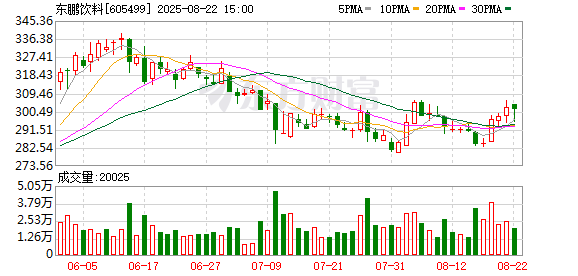
Investment Rating - The food and beverage industry maintains an "Outperform the Market" rating [4][5][37] Core Viewpoints - The food and beverage industry has a fund holding ratio of 6.2%, which is a decrease of 1.86 percentage points from the previous quarter, ranking fifth among Shenwan's primary industries. The overall overweight ratio for the industry is 1.37%, which has decreased by 1.34 percentage points [1][12] - The liquor sector remains the most heavily weighted, but its overweight ratio has declined, while the consumer goods sector has seen an increase in fund holdings [2][17] Summary by Sections Fund Holdings Analysis - In Q2 2025, the liquor sector's fund holding ratio decreased by 2.07 percentage points to 4.5%, with an overweight ratio down by 1.52 percentage points to 1.35%. Excluding Moutai, the liquor sector's fund holding ratio fell by 1.61 percentage points to 2.61% [2][17] - The consumer goods sector saw increases in fund holdings for soft drinks, snacks, and condiments, with the soft drink sector's fund holding ratio rising by 0.15 percentage points to 0.41% [2][18] Individual Stock Performance - Major liquor stocks such as Kweichow Moutai and Wuliangye saw a decrease in the number of funds holding their shares, with Moutai's holding ratio dropping to 1.88% and Wuliangye's to 0.89% [29][30] - In contrast, stocks like Dongpeng Beverage and Yanjing Beer received increased allocations, with Dongpeng's holding ratio rising to 0.35% [29][30]
可口可乐:“快乐肥宅水” 依然是最稳避风港?
3 6 Ke· 2025-07-23 00:01
Core Viewpoint - Coca-Cola (KO.US) reported its Q2 2025 earnings, showing a slight miss in revenue expectations but maintaining a stable overall performance despite high base effects from the previous year [2][8]. Revenue Performance - Coca-Cola achieved a total revenue of $12.54 billion in Q2 2025, a year-on-year increase of 1.4%, which was slightly below market expectations [2][7]. - Organic revenue growth was 5%, with a decline in concentrate sales volume by 1% due to high base effects from the previous year [2][7]. - Concentrate prices increased by 6%, driven by a higher proportion of premium products in the mix [2]. Regional Insights - Emerging markets, including China, India, and Latin America, showed higher growth rates compared to mature markets like North America and Western Europe, although the Asia-Pacific region experienced a slowdown [3][4]. - The competitive landscape in China, with the rise of local brands, has impacted Coca-Cola's performance in that market [3]. Product Category Performance - The no-sugar cola segment continued to grow significantly, with a year-on-year increase of 14%, while classic cola saw a decline of 1% [4]. - Other product categories, except for ready-to-drink coffee, experienced declines due to high base effects from the previous year [4]. Profitability Metrics - Coca-Cola's gross profit margin improved by 1.3 percentage points to 62.6%, supported by effective cost management and a shift towards higher-margin products [5][7]. - Operating profit margin saw a substantial increase of 12.8%, indicating enhanced operational efficiency [8]. Future Guidance - The company expects to achieve organic growth of 5%-6% for the full year 2025, consistent with previous forecasts [6]. Strategic Initiatives - Coca-Cola is focusing on targeted strategies for different consumer segments, including increasing the availability of smaller packaging and family packs in discount channels for lower-income consumers, while emphasizing health-oriented products for higher-income groups [9]. - The company plans to expand its distribution network in emerging markets, particularly through non-retail channels, and will introduce localized product innovations to meet regional consumer preferences [9]. Investment Perspective - Coca-Cola's strong brand presence and localized operations provide it with a robust risk resilience, making it an attractive option for investors seeking stable returns [10].
可口可乐(KO.US)FY25Q2电话会:下半年有信心实现销量正增长
智通财经网· 2025-07-22 23:31
Core Insights - Coca-Cola reported a 1% year-over-year decline in overall shipments for Q2 FY25, but achieved a 5% organic revenue growth and a 4% increase in comparable earnings per share despite adverse currency and tax impacts [1] - Free cash flow, excluding Fairlife or contingent payments, reached $3.9 billion, up approximately $600 million year-over-year, driven by strong core business performance and reduced tax burden [1] - The company maintained its guidance for 2025, expecting organic revenue growth of 5% to 6% [1] Regional Performance - In the Asia-Pacific region, overall shipments declined, but revenue growth was achieved, with notable declines in Thailand, Indonesia, and Vietnam offset by growth in Australia and the Philippines [2] - China saw shipment growth due to strong performance of Coca-Cola trademark products in the foodservice channel, while India experienced a decline due to early monsoon and geopolitical conflicts [2] - The company is expanding refillable offerings and increasing store coverage to address shipment declines [2] Strategic Adjustments - The "pivot" strategy refers to the company's ability to quickly adapt to changing market conditions, with improvements noted in Q2 after a weaker Q1 performance [3] - The company plans to increase investments to drive growth, particularly in markets like Mexico and India, which are expected to rebound [4] North America Insights - North America showed improvement in Q2 with revenue growth and stable consumer spending, despite challenges faced by low-income groups [6] - The company is focusing on targeted marketing to address the needs of Hispanic consumers, who have shown recovery in Q2 [6] - Profitability in North America improved due to productivity gains and effective cost management, with a return to normal profit margins compared to four years ago [6] Global Consumer Trends - Overall consumer resilience was noted, with strong performance in North America, Europe, the Middle East, Africa, and China, while some regions like India, Mexico, Japan, and Southeast Asia showed unexpected weakness [7] - The company plans to leverage marketing, innovation, and revenue growth management to continue driving growth in the second half of the year [7] Product Innovations - Coca-Cola plans to launch a cane sugar-sweetened beverage in the U.S. this fall, expanding its product offerings to meet diverse consumer preferences [8] - The company is exploring various new product ideas, including fiber-based innovations, while maintaining a focus on successful product series development [8] Fairlife Brand Performance - Fairlife continues to see double-digit growth, although the pace has slowed due to capacity constraints and a higher base from the previous year [9] - The company is optimistic about future growth with new production capacity expected to come online in early 2026 [9] EMEA Region Outlook - The EMEA region showed positive growth in Q2, with both volume and pricing structures improving, driven by strong performance in Coca-Cola and flavored beverages [9] - The company is focusing on value strategies to cater to price-sensitive consumers in the region [9]
中金 | 软饮料系列报告四——椰子水新兴成长赛道
中金点睛· 2025-07-22 23:23
Core Viewpoint - The coconut water industry is experiencing rapid growth driven by increasing consumer health awareness and the popularity of coconut-flavored products, particularly in China, where the market is expected to reach $1.1 billion by 2024 with a CAGR of 60.8% over the past five years [3][13]. Industry Growth Prospects - The coconut water market in China is projected to grow significantly, with a market size of $1.1 billion by 2024, reflecting a CAGR of 60.8% from $0.1 billion in 2019 [3][13]. - Per capita consumption of coconut water in China is only 0.1 liters per person, significantly lower than in the US (1.1 liters) and Thailand (0.2 liters), indicating potential for growth [16][18]. - The supply and demand dynamics are expected to drive continued rapid growth in the coconut water industry in China [18]. Competitive Landscape - The market is characterized by a CR5 of 43.4%, with IFBH holding a leading market share of 33.9%, indicating a fragmented competitive landscape with many emerging brands [3][29]. - Coconut water brands can be categorized into four types: international brands, local brands, emerging brands, and new retail brands, with the market still evolving [29]. Key Competitive Factors - Supply chain management, brand strength, and price-to-quality ratio are identified as critical competitive factors in the coconut water industry [4][34]. - The quality of coconut water is highly dependent on the quality of raw materials, which are primarily imported, making supply chain efficiency crucial [4][35]. - Strong brand recognition is essential due to the high level of product homogeneity, with consumers relying heavily on brand trust [4][48]. Consumer Trends - There is a growing consumer preference for natural and healthy beverages, with coconut water being favored for its low sugar and calorie content, as well as its rich electrolyte profile [21][24]. - The target consumer base is expanding beyond young urban consumers and fitness enthusiasts to include middle-aged individuals and families, indicating a broader market potential [24][26]. Supply Side Developments - The market is seeing increased participation from multiple brands, with traditional and new brands entering the space, enhancing market cultivation [27]. - The supply chain is becoming more resilient through diversified sourcing strategies to mitigate risks associated with climate impacts on raw material supply [28][39]. - Innovations in processing and packaging technologies are improving product quality and efficiency, which is vital for market expansion [28][46]. Pricing and Value Proposition - The average price of coconut water has decreased significantly, with a 40% drop from 2.51 yuan per 100ml in 2018 to 1.49 yuan in 2024, making high price-to-quality brands more appealing to consumers [52][53]. - Brands are increasingly focusing on product innovation and functional benefits to enhance product value and appeal to health-conscious consumers [55][56].
再秀强大定价权!可口可乐(KO.US)Q2有机销售、盈利强劲,今秋在美推出蔗糖可乐
Zhi Tong Cai Jing· 2025-07-22 13:26
可口可乐公司(KO.US)公布了第二季度财务业绩,调整后每股收益为 0.87 美元,市场预期0.83 美元。该 季度营收同比增长0.8%至125亿美元,而市场预期为 125.5 亿美元;不过,调整后营收为 126.2 亿美元, 而预期为 125.4 亿美元。 可口可乐公司公布第二季度归属于股东的净利润为 38.1 亿美元,每股收益为 88 美分,高于去年同期的 24.1 亿美元和每股 56 美分。二季度营业利润大幅增长63%,营业利润率达到34.1%,而上年同期为 21.3%。调整后营业利润率为34.7%,较上年同期的32.8%有所提升。 可口可乐将在美国推出甘蔗糖浆可乐 可口可乐公司还宣布,计划于今年秋季在美国推出一款以甘蔗糖为原料的新款同名可乐产品。就在不到 一周前,美国总统特朗普在社交媒体平台的一篇帖子中表示,该公司已同意在美国销售的可口可乐饮料 中使用蔗糖。而此次声明正是在那之后发布的。 数十年来,可口可乐一直使用高果糖玉米糖浆来为其在美国的招牌产品增添甜味,因为这种糖浆比蔗糖 便宜。而美国卫生与公众服务部部长小罗伯特·肯尼迪一直强烈反对使用这种成分。 肯尼迪一直致力于去除美国食品中的许多人工和高度加 ...
食品饮料行业跟踪报告:6月餐饮增速放缓,白酒有望筑底企稳
Shanghai Aijian Securities· 2025-07-22 13:00
Investment Rating - The report rates the food and beverage industry as "stronger than the market" [2][47]. Core Insights - The food and beverage sector has shown a slight increase of 0.68% in the week from July 14 to July 18, underperforming slightly compared to the Shanghai Composite Index, which rose by 0.69% [2][6]. - The white liquor segment is expected to stabilize after a period of decline, with major brands maintaining stable prices [3][21]. - The soft drink sector is entering a peak season, with expectations of continued growth driven by new product launches [3][34]. - The snack food segment has shown mixed performance, with some companies experiencing significant profit declines due to rising costs and increased marketing expenses [3][36]. Summary by Sections 1. Market Performance - The food and beverage sector's performance ranked 14th among 31 sub-industries, with soft drinks leading the gains at +2.02% [2][9]. - The overall valuation of the food and beverage sector is at a historical low, with a PE-TTM of 21.26x, placing it in the 16th percentile over the past 15 years [4][13]. 2. White Liquor - The white liquor industry has seen collective declines in performance, but signs of stabilization are emerging [3][21]. - Major brands like Moutai and Wuliangye have maintained stable pricing, with Moutai's price at 1930 RMB per bottle [21][22]. 3. Beer - Beer production in June 2025 was 4.12 million kiloliters, a slight decrease of 0.2% year-on-year, attributed to weak restaurant consumption [3][26]. 4. Dairy Products - Dairy production in June 2025 reached 254.6 thousand tons, up 4.1% year-on-year, but the industry is experiencing mixed performance among companies [3][28]. 5. Soft Drinks - The soft drink sector is expected to maintain high growth rates, with a production increase of 3.2% in June 2025 [3][34]. 6. Snacks - The snack food sector has shown varied results, with some companies like Ganyuan Foods reporting significant profit declines due to rising costs [3][36].
食品饮料行业 2025 年中报前瞻:白酒出清探底,食品亮点频现
Huachuang Securities· 2025-07-22 09:25
Investment Rating - The report maintains a "Recommended" rating for the food and beverage industry, particularly highlighting opportunities in the liquor sector and food products [1] Core Insights - The liquor industry is undergoing extreme pressure testing, with a significant focus on inventory clearance and bottoming out of financial reports. The second quarter has shown weak demand due to seasonal factors and regulatory impacts, leading to a notable decline in sales and pricing pressures [5][10] - High-end liquor brands like Moutai are expected to maintain growth, while mid-tier brands face challenges with declining revenues and profits. The overall industry is in a deep clearance phase, with potential for recovery as regulations stabilize [5][12] - The consumer goods sector shows mixed performance, with snacks and beverages remaining strong, while other segments like frozen foods and chain restaurants face ongoing demand pressures [20][25] Summary by Sections 1. Liquor Sector - The liquor industry is experiencing extreme pressure, with weak demand in the second quarter and significant inventory levels. Major brands like Moutai and Wuliangye are expected to show modest growth, while others like Yanghe and Luzhou Laojiao are facing declines [5][11][12] - Moutai's revenue is projected to grow by 7% in Q2, while Wuliangye is expected to see a 1% increase. In contrast, brands like Yanghe and Luzhou Laojiao are forecasted to decline by 35% and 8% respectively [11][12] 2. Consumer Goods - The overall demand for consumer goods remains weak, but segments like snacks and beverages are performing well. For instance, East Peak is expected to see a 33% increase in revenue, while other snack brands are also showing positive trends [20][25] - The beverage sector is projected to see positive growth, with major brands like Qingdao Beer and Yanjing expected to report increases in revenue and profit [25][26] 3. Investment Recommendations - The report suggests focusing on high-performing stocks in the short term while considering long-term investments in liquor brands that are currently at their bottom. Brands like Moutai and Gujing are recommended for their lower risk profiles [7][8] - For consumer goods, companies like Anqi and East Peak are highlighted for their growth potential, while traditional dairy brands like Yili and Mengniu are suggested for a bundled investment approach [7][8]
特朗普想让可乐改回蔗糖,之前的配方已经用了41年
3 6 Ke· 2025-07-22 02:37
Core Viewpoint - The discussion around Coca-Cola's sweetener source has intensified following former President Trump's comments advocating for the use of real cane sugar instead of high fructose corn syrup (HFCS) in Coca-Cola products sold in the U.S. [1][3][5] Group 1: Trump's Comments and Company Responses - Trump expressed gratitude towards Coca-Cola's management for agreeing to consider using cane sugar in their products, labeling it a positive move [1][3] - Coca-Cola acknowledged Trump's enthusiasm for their brand and indicated that they would soon share more information about innovative products in their lineup [3] - PepsiCo's CEO stated that they would cater to consumer preferences for sugar and natural ingredients if there is a clear demand [3][5] Group 2: Historical Context of Sweetener Use - The switch from cane sugar to HFCS in Coca-Cola began in 1984, driven by cost considerations and the availability of cheap corn in the U.S. [5][19] - HFCS became popular due to government subsidies for corn production, which lowered its production costs compared to cane sugar [5][19] - Consumer calls for a return to cane sugar have persisted since the initial switch, reflecting a growing awareness and concern over ingredient sourcing [5][19] Group 3: Economic Implications of Sweetener Choices - The cost of HFCS is significantly lower than that of cane sugar, with estimates suggesting that switching to cane sugar could increase product costs by 10% to 15% [19][26] - In 1985, Coca-Cola and PepsiCo anticipated substantial savings from using HFCS, with Coca-Cola estimating a savings of approximately $30 million annually [26] - The market for HFCS surged, with its usage in the U.S. expected to increase by 500,000 tons annually following the switch [26] Group 4: Consumer Sentiment and Advocacy - Consumer backlash against the use of HFCS has been notable, with some advocating for a return to cane sugar due to health concerns associated with HFCS [31] - The discussion around sweeteners has gained traction, with political figures also voicing opposition to HFCS, linking it to health issues like childhood obesity [31] - Over the past two decades, the usage of HFCS in the U.S. has been gradually declining, while the consumption of cane sugar has been on the rise [31]
娃哈哈争产案第二被告曝光;农夫山泉回应红色尖叫二手炒至88元;小米汽车回应摄影图涉嫌抄袭特斯拉丨邦早报
创业邦· 2025-07-21 23:53
Group 1 - The article discusses the high resale prices of the "Red Scream" beverage, which has been marked up to 88 yuan, indicating a more than 9-fold premium over its original price [2] - The beverage is reported to be nearing its expiration date, with a production date before July 31, 2024, and a shelf life of 12 months [2] - The company, Nongfu Spring, has confirmed that the red packaging of "Scream" contains ginseng and has been discontinued, and they are monitoring the situation regarding the inflated prices on second-hand platforms [2] Group 2 - Nvidia CEO Jensen Huang highlighted the long-standing collaboration with Xiaomi and the ongoing projects in AI and autonomous driving software [9] - Huang also acknowledged Huawei's significant innovation and capabilities, stating that the Chinese AI market will progress regardless of Nvidia's presence [9] - He emphasized the competitive yet respectful relationship between Nvidia and Huawei, viewing them as competitors but also as admirable entities [9] Group 3 - JD.com has launched its first self-operated takeaway store named "Qixian Xiaochu," which operates on a "takeaway + self-pickup" model without dine-in options [13] - The company aims to introduce a new business model in the takeaway market that differs significantly from Meituan, focusing on food safety [13] - The sudden announcement of the cessation of operations by the home improvement brand Liangjiaju has raised concerns among consumers and suppliers [13] Group 4 - Tea brand Cha Bai Dao has officially entered the Singapore market, opening two stores in popular shopping malls, with long wait times reported [13] - The brand has also secured franchise rights in South Korea, indicating plans for rapid expansion in Southeast Asia [13] Group 5 - Uber has launched an official mini-program on WeChat, initially available in Hong Kong and Japan, with plans for expansion to other countries [17] - The program allows users to book rides directly through WeChat, enhancing accessibility and convenience [17] Group 6 - The Chinese internet user base has reached 1.123 billion, with an internet penetration rate of 79.7%, reflecting significant growth in digital infrastructure [26] - The report indicates that the development of new information infrastructure is supporting the growth of the digital economy [26]
未来一周财报:TSLA、GOOGL、INTC、NOW等
美股研究社· 2025-07-21 12:33
Core Viewpoint - The upcoming earnings reports from major companies in technology, energy, industrial, and consumer sectors will provide significant insights into corporate health and macroeconomic conditions [1]. Group 1: Technology Sector - Tesla (NASDAQ: TSLA) and Google (NASDAQ: GOOGL) are the focal points among the "Seven Giants" in the technology sector, with other notable companies including Intel (NASDAQ: INTC), ServiceNow (NYSE: NOW), IBM (NYSE: IBM), and NXP Semiconductors (NASDAQ: NXPI) [1]. - Tesla is expected to report a 22% decline in profit and a 12% drop in revenue, with a 14% decrease in vehicle deliveries to 384,122 units [11][13]. - Google is anticipated to show strong double-digit growth in both revenue and profit, with a consensus revenue expectation of $22.36 billion and earnings per share forecasted at $0.40 [14][19]. Group 2: Telecommunications Sector - Verizon (NYSE: VZ) is set to report a 3% year-over-year increase in revenue and profit, with a consensus revenue expectation of $33.71 billion and earnings per share forecasted at $1.19 [4][5]. - Analysts maintain a cautious outlook on Verizon, with some suggesting a "hold" rating due to growth concerns, while others highlight its attractive valuation and stable dividend yield of 6.5% [4]. Group 3: Consumer Sector - Coca-Cola (NYSE: KO) is expected to report earnings with a consensus revenue of $12.56 billion and earnings per share of $0.84, having exceeded earnings expectations in the past eight quarters [7][9]. - Analysts are divided on Coca-Cola's outlook, with some expressing concerns over its reliance on price increases rather than sustainable volume growth, while others emphasize its strong fundamentals and dividend stability [7]. Group 4: Energy Sector - Phillips 66 (NYSE: PSX) is projected to see a 27% decline in profit and a 17% drop in revenue, with earnings per share expected at $0.01 and revenue forecasted at $11.88 billion [23][25]. - Analysts maintain a "buy" rating for Phillips 66, citing its diversified business strength and shareholder returns through dividends and buybacks, despite concerns over high valuations relative to peers [23].