大单品依赖症

Search documents
全链”上市!美妆企业争做“第一股
Shen Zhen Shang Bao· 2026-01-16 00:33
Core Viewpoint - The beauty industry is experiencing a surge in IPO activities, with over 41 companies aiming for public listings in 2025, while simultaneously facing challenges with 10 companies exiting the capital market [1][4]. Group 1: IPO Activities - In December, Lin Qingxuan successfully listed on the Hong Kong Stock Exchange, marking it as the first high-end domestic skincare stock in Hong Kong [1]. - Major domestic beauty brands like Naturals, Proya, and Marubi are also pursuing listings, with Proya and Marubi aiming for dual listings in both A-shares and H-shares [1]. - The IPO wave includes a diverse range of companies across the beauty supply chain, including raw material suppliers and packaging companies, with 8 companies like Vicky Technology and Jiakai Biotechnology also in the IPO race [2]. Group 2: Market Challenges - Despite the IPO enthusiasm, 10 beauty-related companies have exited the A-share or New Third Board markets, indicating a stringent selection process by capital markets [4]. - Many companies, including Naturals and Vicky Technology, have faced delays in their IPO processes, often remaining in the application or advisory stages [4]. - The third-quarter report for 2025 shows that only a few beauty companies have maintained revenue growth, with many facing significant operational pressures [5]. Group 3: Industry Dynamics - The beauty industry is characterized by a dual trend of IPO excitement and market exits, highlighting the need for companies to address issues such as heavy reliance on marketing over research and development [6]. - Companies like Naturals have reported high marketing costs, with sales and marketing expenses reaching 57% of revenue, while R&D investment has decreased significantly [6]. - The reliance on flagship products, such as Lin Qingxuan's dependence on its essence oil, poses additional challenges for sustainable growth [7].

“全链”上市!美妆企业争做“第一股”
Shen Zhen Shang Bao· 2026-01-15 17:51
Core Viewpoint - The beauty industry is experiencing a surge in IPO activities, with over 41 beauty-related companies aiming for IPOs in 2025, indicating a robust interest in capital markets within this sector [2][3]. Group 1: IPO Activities - In December 2024, Lin Qingxuan successfully listed on the Hong Kong Stock Exchange, marking it as the first high-end domestic skincare stock in Hong Kong [2]. - Major domestic beauty brands such as Naturals, Proya, and Marubi have initiated their IPO processes, with Proya and Marubi already listed on A-shares, aiming for a dual listing in Hong Kong [2][3]. - The IPO wave includes a diverse range of companies from the beauty supply chain, including raw material suppliers, packaging companies, and brand operators [2][3]. Group 2: Market Dynamics - Since the end of 2024, there has been a notable trend of companies exiting the capital market, with 10 beauty-related companies having withdrawn from A-shares or the New Third Board [5]. - Many companies are facing delays in their IPO processes, with some, like Naturals and Weiqi Technology, still in the application or advisory stages despite having significant revenue [5][6]. - The A-share beauty companies reported a total revenue of 27.707 billion yuan and a net profit of 3.753 billion yuan in the first three quarters of 2025, with Proya leading at 7.098 billion yuan, showing only a slight growth of 1.89% year-on-year [6]. Group 3: Challenges in the Industry - The beauty industry is grappling with challenges such as an overemphasis on marketing at the expense of research and development, as evidenced by Naturals' marketing costs significantly outweighing its R&D investments [7][8]. - Companies like Lin Qingxuan are heavily reliant on a single product category for revenue, which poses risks to their long-term growth and stability [8]. - The current market environment is increasingly selective, favoring companies with solid market foundations, clear brand positioning, and strong technological barriers [5][7].

“全链”上市!美妆企业争做“第一股” 去年40多家相关企业冲刺IPO,也有10家告别资本市场
Shen Zhen Shang Bao· 2026-01-15 17:43
Core Insights - The beauty industry is experiencing a surge in IPO activity, with over 41 beauty-related companies aiming for IPOs since 2025, covering various segments of the supply chain [1][2] - The trend of companies seeking to become the "first stock" in their respective niches is prominent, with several brands targeting specific categories such as whitening and anti-hair loss [3] - Despite the IPO enthusiasm, there are challenges as 10 beauty-related companies have exited the capital market, indicating a stricter selection process by investors [4] IPO Activity - Numerous companies are preparing for IPOs, with notable brands like Gu Yu, Lin Qingxuan, and Plant Doctor submitting applications in 2025 [2][3] - The IPO wave includes not only brand companies but also raw material suppliers and packaging companies, indicating a comprehensive industry interest [2] - Specific milestones include Lin Qingxuan becoming the first high-end domestic skincare stock in Hong Kong and other brands aiming for dual listings [1][2] Financial Performance - In the first three quarters of 2025, eight listed beauty companies reported a total revenue of 27.707 billion yuan and a net profit of 3.753 billion yuan [5] - The leading company, Proya, achieved a revenue of 7.098 billion yuan, showing only a slight year-on-year increase of 1.89%, while Shanghai Jahwa reported a 10.83% growth [5] Industry Challenges - The beauty industry faces significant challenges, including a heavy reliance on marketing over research and development, which could hinder long-term growth [6][7] - Companies like Natural Hall and Lin Qingxuan have shown a concerning trend of low R&D investment compared to their marketing expenditures, with R&D costs declining as a percentage of revenue [6][7] - The industry's dependency on flagship products poses risks, as seen with Lin Qingxuan's reliance on its essence oil for revenue [7]
半年营收破百亿后,东鹏饮料再掏13亿分红
Guo Ji Jin Rong Bao· 2025-08-22 14:48
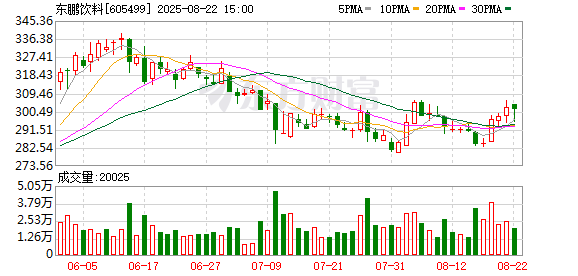
Core Viewpoint - Dongpeng Beverage reported record high revenue and net profit for the first half of 2025, indicating strong financial performance and growth potential in the beverage industry [2] Financial Performance - The company achieved revenue of 10.737 billion yuan, a year-on-year increase of 36.37% [2] - The net profit attributable to shareholders reached 2.375 billion yuan, up 37.22% year-on-year [2] - Dongpeng Beverage's profitability ranks second in the industry, only behind Nongfu Spring [2] Product Dependency and Growth - Dongpeng Beverage's performance is heavily reliant on its flagship product, Dongpeng Special Drink, which accounts for approximately 77.91% of total revenue in the first half of 2025, down from around 90% previously [5] - The energy drink segment generated revenue of 8.36 billion yuan, reflecting a year-on-year growth of 21.9%, but this growth rate has slowed compared to previous years [5] - The company is diversifying its product line with new offerings such as electrolyte water "Dongpeng Water", unsweetened tea "Oolong Tea", and coffee products "Dongpeng Coffee" [5] Marketing and Investment - Dongpeng Beverage increased its marketing expenses to 1.682 billion yuan, a rise of 37.27% year-on-year, with channel promotion costs up by 61.20% [7] - The company is focusing on multi-channel marketing strategies, including sports event sponsorships and advertising [7] Dividend Policy - Dongpeng Beverage announced a cash dividend of 2.5 yuan per share, totaling 1.3 billion yuan for shareholders [9] - Since its IPO in 2021, the company has distributed cash dividends totaling 6.6 billion yuan, with a dividend payout ratio of 63.62% [10] Ownership Structure - The ownership of Dongpeng Beverage is highly concentrated, with the founder Lin Muqin and his family holding 62.91% of the shares [12] - Lin Muqin's family is expected to receive approximately 818 million yuan from the recent dividend distribution [12]