
Banking

Search documents
Much of world economy has coped better than expected with tariffs, SNB chairman says
Reuters· 2026-02-24 18:15
Group 1 - The global economy has shown more resilience than expected despite the impact of U.S. tariffs and uncertainty, according to Swiss National Bank Chairman Martin Schlegel [1] - Approximately 25% of Swiss companies surveyed reported being negatively affected by tariffs, while nearly 33% chose not to take any measures in response [2] - Inflation in Switzerland has remained low, with a January reading of 0.1%, at the lower end of the SNB's target range of 0-2% for annual inflation [2] Group 2 - UBS has promoted Lisa Golia to lead its U.S. wealth management advisers, effective March 1, after serving as chief operating officer for the business for the past two years [5]


Citrini AI report terrified Wall Street. Here’s why its vision is a boon for Bitcoin’s price
Yahoo Finance· 2026-02-24 17:07
Core Viewpoint - The report co-authored by Alap Shah and Citrini Research predicts that artificial intelligence will significantly disrupt the economy by replacing many white-collar jobs and reducing consumer spending, which could negatively impact various industries and economies [2][3]. Industry Impact - Industries such as insurance, banking, and food delivery are expected to be heavily affected by the advancements in AI, leading to potential mass layoffs and economic downturns [3]. - The report suggests that as AI automates commerce, it may favor the use of stablecoins over traditional payment methods, which could negatively impact payment companies' stock prices [5]. Cryptocurrency Market Reaction - Despite the negative outlook presented in the report, some experts believe that the cryptocurrency market, particularly Bitcoin, could benefit from the economic conditions described, similar to the response seen after the pandemic when the Federal Reserve increased money supply [4][6]. - The report indicates that the decline in traditional payment systems could lead to a rise in cryptocurrency prices, as seen in past economic downturns [6][7].
Rotation The Has Been Underway. The Case for Thoughtful Diversification Grows Stronger
Etftrends· 2026-02-24 16:12
Market Overview - The S&P 500 reached new all-time highs in January, with the S&P 500 Equal Weight Index outperforming its market cap-weighted counterpart, gaining 3.4% compared to 1.5% [1] - International developed equities led gains at 5.8%, followed by US small-caps at 5.5% and emerging market equities at 5.1% [1] - Bonds performed well, with municipal bonds rising 0.7%, high yield credits gaining 0.6%, and Treasury Inflation Protected Notes increasing 0.5% [1] - Commodities saw strong returns, with silver up 17.1%, crude oil gaining 15.0%, gold rising 12.3%, and broad-based commodities increasing 11.2% [1] Federal Reserve Update - The Federal Reserve held the federal funds rate steady at 3.50—3.75% during the January FOMC meeting, marking the first hold after three consecutive cuts [1] - Economic activity continues to expand, with Q3 GDP growth at 4.4% and a slight decline in the unemployment rate from 4.5% to 4.4% [1] - Consumer confidence fell to 84.5 in January, the lowest since May 2014, indicating growing caution among households [1] Market Sentiment and Asset Performance - The announcement of Kevin Warsh as the new Fed Chair introduced uncertainty, as he is viewed as a hawkish candidate, impacting market expectations [1] - Debasement assets like silver and gold had a strong run but faced pressure following Warsh's nomination, with gold and silver prices dropping approximately 10% and 29% respectively in a single day [1] - Despite short-term consolidation, structural drivers for debasement assets remain, including persistent inflation and fiscal pressures [1] Earnings Growth Outlook - Mid-cap and small-cap stocks are projected to show strong earnings growth, with S&P 400 mid-caps expected to grow EPS by 19% and S&P 600 small-caps by 14% [1] - The contribution of smaller stocks to overall market earnings is expected to rise, indicating opportunities beyond mega-cap names [1] - Equal-weight, sector-neutral strategies targeting the S&P 500 are anticipated to see approximately 13% growth, reinforcing the case for diversification [1] Investment Strategy - The market rotation has been ongoing since April of the previous year, with emerging markets and mid-caps outperforming the S&P 500 [1] - Investors are encouraged to prepare portfolios for a strong US economy, with GDP growth tracking around 5% for Q4 and potential fiscal stimulus from new legislation [2] - The case for thoughtful diversification is emphasized, particularly in light of expected further rate cuts [2]

A Fed in Transition
Etftrends· 2026-02-24 15:11
Core Insights - The Federal Reserve (Fed) is expected to maintain its credibility despite facing challenges such as leadership transition and political pressures [1][2] - The Fed has decided to hold interest rates steady as the labor market stabilizes and inflation risks diminish [1][2] Fed's Current Policy and Economic Context - The Federal Open Market Committee (FOMC) left the Fed funds rate unchanged at 3.50% to 3.75% during its January 28th meeting, with a vote of 10 to 2 in favor of this decision [1] - The Fed has cut rates by a total of 75 basis points over the previous three meetings, but the bond market has not reacted significantly, keeping mortgage rates above 6% [1] - The bond market does not anticipate inflation moderating to the Fed's 2% target in the near term, leading to an underweight position in fixed income across balanced portfolios [1][2] Leadership Transition Challenges - Chairman Powell's term is set to end in May, with Kevin Warsh nominated as his successor, which raises concerns about the Fed's independence due to political pressures from the Trump administration [1][2] - The Department of Justice (DOJ) has issued subpoenas to Powell regarding congressional testimony, adding complexity to the leadership transition and potentially threatening the Fed's independence [1][2] Market Outlook and Investment Strategy - The Fed is expected to pause and assess economic data to support its current monetary policy, with a best-case scenario involving cooperation among government branches to reduce market volatility [2] - The focus is on sectors such as technology, financials, and industrials that generate significant free cash flow, with a preference for stocks over bonds as the bond market signals that further rate cuts are not warranted [2]
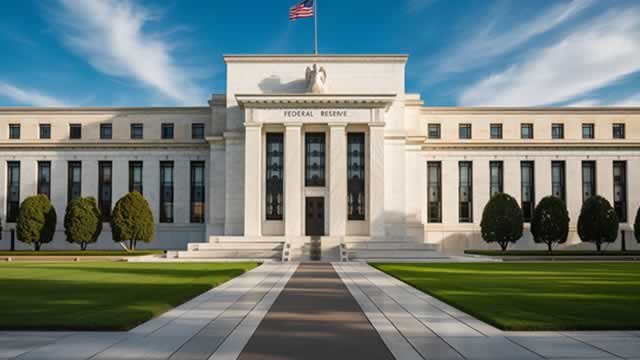
全球宏观- 噪音多于(宏观)新闻-Global Views_ More Noise Than (Macro) News
2026-02-24 14:19
Summary of Key Points from the Conference Call Industry Overview - The report discusses the global economic outlook, focusing on macroeconomic trends and their implications for various sectors, particularly in the context of geopolitical risks and market volatility [1][4]. Core Economic Insights - **Global Growth Outlook**: The optimistic baseline outlook for 2026 remains unchanged, with expectations for global growth to outperform consensus due to fading tariff effects, fiscal support, and easier financial conditions [1][4]. - **Inflation Trends**: Inflation is projected to fall towards target levels in most economies, driven by reduced tariff impacts and moderation in wages and rents. Core CPI inflation adjusted for shelter distortions is at a post-pandemic low of 2.6% in January 2026 [1][13]. - **US Economic Indicators**: Recent consumer news indicates softer conditions, with rising delinquencies and weak retail sales. However, timely indicators suggest solid spending, and improvements in the labor market are noted, with a drop in the unemployment rate to 4.28% [5][7]. Regional Economic Performance - **US**: Real GDP growth is forecasted at 2.4% for 2026, slightly above consensus expectations [3]. - **Euro Area**: Growth is expected to be around 1.4% for 2026, with specific challenges noted in Germany and France [3]. - **China**: The current account surplus is projected to be 3.7% of GDP in 2025, indicating strong export performance despite domestic demand softness [26]. Labor Market Dynamics - **Tech Employment**: A notable drop in tech employment has been observed, with concerns about potential job losses due to the AI revolution. However, tech jobs represent only 2.3% of overall payrolls, suggesting limited overall impact [8][12]. - **Recession Probability**: The probability of a recession in the next 12 months is estimated at 20%, with labor market risks leaning to the downside [7]. Monetary Policy Outlook - The Federal Open Market Committee (FOMC) is expected to maintain rates, with potential cuts of 25 basis points in June and September 2026 as inflation decreases [14][16]. - The European Central Bank (ECB) is facing challenges related to GDP underperformance compared to the US, attributed to societal choices and structural issues within the EU [19]. Market Strategy Insights - **Investment Strategy**: The report suggests a neutral stance on US rates, a bearish outlook on Germany, and a bullish view on the UK and Japan. Equity strategists recommend diversification beyond large-cap US technology stocks [27]. - **Commodity Outlook**: The report remains bullish on gold while being bearish on LNG and European natural gas, with tactical views on oil due to oversupply concerns [27]. Additional Considerations - The report emphasizes the importance of structural reforms in Europe to enhance economic integration and competitiveness against the US and China [19]. - Japan's economic fundamentals show gradual improvement, but aggressive monetary tightening is not anticipated due to low inflation and wage growth [21][23]. This summary encapsulates the key points from the conference call, highlighting the economic outlook, regional performance, labor market dynamics, monetary policy expectations, and market strategies.

The Perfect Storm For A Market Collapse
247Wallst· 2026-02-24 14:16
Market Collapse Risks - The article discusses the potential for a market collapse similar to the 2008 crash, where the S&P 500 fell by 38.5% [1] - Current risks are broader and more complex than those seen in previous downturns, with private markets showing signs of distress [1] - Blue Owl (NYSE: OWL) has seen its stock decline by 30% over the past month, raising concerns about the accuracy of its management's risk assessments [1] Credit Market Concerns - JPMorgan CEO Jamie Dimon has warned about deteriorating credit quality, indicating that large banks are engaging in risky behaviors [1] - The private credit market, valued at $1.8 trillion, is experiencing red flags reminiscent of the 2007 financial crisis [1] Impact of AI on Employment - A report from Citrini Research suggests that AI could lead to the loss of millions of jobs, particularly in white-collar sectors, which account for 75% of discretionary spending [1] - This potential job loss could significantly impact consumer spending and overall economic stability [1] Market Valuation Issues - The S&P 500 has seen a three-year return of 70%, raising questions about whether the market is overvalued [1] - Many megacap tech stocks are beginning to stabilize as investors speculate on which companies will succeed in the AI landscape [1] Tariff Implications - The evolving legality of tariffs poses additional uncertainty for major American companies, with FedEx suing the federal government to recover tariff costs [1] - The unpredictability of tariffs complicates the market environment and could contribute to a sharp market decline [1]


Fed's Goolsbee calls for a hold on cuts as current rate of inflation is 'not good enough'
CNBC· 2026-02-24 13:00
Core Viewpoint - The Federal Reserve Bank of Chicago's President Austan Goolsbee stated that interest rate cuts are not appropriate until there is more evidence of inflation decreasing towards the Fed's 2% target [1][2]. Inflation Indicators - Recent indicators show inflation is declining from its highs but remains above the Fed's 2% target, with core inflation at 3% as of December, up 0.2 percentage points from November [2][3]. - Goolsbee emphasized that the Fed has previously misjudged inflation as transitory and should avoid repeating that mistake [2]. Rate Cut Considerations - Goolsbee expressed that front-loading rate cuts is imprudent given the current inflation situation, highlighting that prices are a pressing concern for the public [3]. - He noted that a 3% inflation rate is unacceptable and not aligned with the Fed's commitment to a 2% target, indicating that stalling at 3% poses various risks [4]. Market Expectations - Markets anticipate that the Federal Open Market Committee will maintain current rates until at least June, with a 50% chance of a cut in June and a 71% probability of a cut in July, following three quarter-percentage-point cuts enacted in late 2025 [5]. Labor Market Insights - Fed Governor Christopher Waller indicated that the labor market may be stronger than previously thought, which could reduce the necessity for further rate cuts [6][7]. - Waller suggested that if job growth continues to improve, it would lessen the case for cuts, although he remains cautious about the reliability of recent payroll data [7].

Dwindling Stock Bulls See Signs of Hope in Rise of Pessimism
Yahoo Finance· 2026-02-24 10:30
Market Sentiment - US stocks have been experiencing a prolonged period of volatility, with a notable shift in investor sentiment as the number of bears has surpassed bulls for the first time since November [1] - A Deutsche Bank measure indicates that discretionary equity positioning is now underweight, suggesting a cautious approach among investors [1] Investment Strategy - The current market conditions, characterized by a "rare combination of pessimism and strong breadth," are viewed positively for US equities, leading to an overweight allocation by some strategists [2] - Investors are increasingly rotating from large-cap tech stocks into smaller, riskier stocks, as well as sectors like energy, materials, and consumer staples [3] Performance Metrics - The S&P 500 index is down 0.8% from its recent high set on October 28, with a 2% decline from that level as of Monday [3] - The Russell 2000 Index and an equal-weight version of the S&P 500 have both increased by at least 5.2% this year, indicating a shift in investment focus [3] Earnings Outlook - Corporate earnings are showing positive growth, with S&P 500 companies expected to report a 13% increase in profits for the fourth quarter, surpassing the anticipated growth of just under 9% [5]
UK to regulate Netflix and other streamers in line with broadcasters
Reuters· 2026-02-24 10:05
Core Viewpoint - The UK government announced that streaming services like Netflix, Amazon Prime Video, and Disney+ will be required to follow the same content and accessibility regulations as traditional broadcasters, aiming to protect audiences and ensure accurate news reporting [1]. Group 1: Regulatory Changes - Streaming services with over 500,000 UK users must adhere to new standards set by Ofcom, which include accurate and impartial news reporting and protection against harmful content [1]. - The inclusion of streaming services under Ofcom's broadcasting code is intended to safeguard audiences from harmful content and ensure accessibility services, such as subtitles, are provided [1]. Group 2: Market Context - Approximately two-thirds of UK households subscribe to at least one major streaming service, with 85% of people using an on-demand service monthly, compared to 67% who watch live TV [1].

India's GDP growth likely at 8.1% in Q3FY26 amid domestic demand boost: SBI report
The Economic Times· 2026-02-24 07:18
Economic Growth Outlook - India's economy is projected to maintain strong growth momentum, with GDP expected to expand by around 8.1% in Q3FY26, supported by strong domestic demand and steady economic activity across sectors [1][10] - The first advance estimates indicate that India's GDP is projected to grow at 7.4% in FY26, primarily driven by domestic demand [5][10] Consumption Trends - High-frequency economic indicators suggest resilient economic activity during Q3FY26, with strong rural consumption supported by positive signals from both farm and non-farm activities [2][10] - Urban consumption has shown steady improvement, aided by fiscal stimulus and increased spending since the last festive season [2][10] GDP Base Year Revision - India has updated its GDP base year from 2011-12 to 2022-23, with new series scheduled for release on February 27, 2026, aimed at better reflecting the current structure of the economy [7][11] - The revision is expected to incorporate additional data and revisions, with previous quarterly GDP figures for the first and second quarters likely to change [6][10] Consumer Price Index Update - The base year for the Consumer Price Index (CPI) has been updated to 2024, which will provide a more accurate measure of inflation based on current consumption patterns [8][11] - The Reserve Bank of India (RBI) is examining the revision of the inflation targeting range following the CPI base year update, which will be considered in the next policy [8][11]
