
Apparel Retail

Search documents
Torrid Q4 Earnings Call Highlights
Yahoo Finance· 2026-03-19 22:37
Core Insights - The company reported a decline in fourth-quarter net sales to $236.2 million from $275.6 million year-over-year, with comparable sales down 10% [1][4] - Full-year fiscal 2025 net sales reached $1.0 billion, with adjusted EBITDA of $63.6 million, exceeding expectations [2][4] - The company is focusing on customer growth initiatives and operational reset for fiscal 2026, including store optimization and sub-brand expansion [3][4] Financial Performance - Fourth-quarter gross profit was $70.9 million, down from $92.6 million, with a gross margin of 30% compared to 33.6% a year earlier [1] - The company reported a net loss of $8.1 million for the quarter, compared to a net loss of $3.0 million in the prior year [5] - Cash and cash equivalents at the end of the quarter totaled $200 million, with inventory down 8% to $136.5 million [6] Operational Changes - The company closed 151 stores in fiscal 2025, achieving 85% of planned closures, with expectations to close up to 30 more [7][8] - Store closures resulted in approximately $18.5 million in operating expense savings for fiscal 2025, with an additional $40 million expected in fiscal 2026 [8] - Customer retention levels have met or exceeded internal models, with customers shifting to remaining stores and digital platforms [7] Merchandising Strategy - Torrid is expanding five data-driven sub-brands, projecting sales growth from over $70 million in fiscal 2025 to approximately $110 million in fiscal 2026 [3][9] - The opening price point (OPP) strategy now represents about 30% of total assortment, with plans to increase to nearly 40% [11] - The company reintroduced footwear after a pause due to tariffs, with expectations for a more profitable return in the second half of fiscal 2026 [14][15] Fiscal 2026 Outlook - The company guided for fiscal 2026 net sales of $940 million to $960 million and adjusted EBITDA of $65 million to $75 million, indicating potential margin expansion [16] - Capital expenditures are expected to be between $8 million and $10 million [17] - The focus for fiscal 2026 will be on accelerating customer file growth through retention and reactivation strategies [18]

Torrid (CURV) - 2026 Q4 - Earnings Call Transcript
2026-03-19 21:32
Financial Data and Key Metrics Changes - For fiscal 2025, the company achieved net sales of $1 billion and adjusted EBITDA of $63.6 million, reaching the top end of its guidance [4][22] - In Q4, net sales were $236.2 million, down from $275.6 million in the prior year, with a comparable sales decline of 10% [23] - Gross profit for Q4 was $70.9 million, with a gross margin of 30%, compared to 33.6% in the prior year [23] - SG&A expenses decreased by $11.4 million to $62.4 million, representing 26.4% of net sales [23][24] - The net loss for Q4 was $8.1 million, or $0.08 per share, compared to a net loss of $3 million, or $0.03 per share, in the previous year [24] Business Line Data and Key Metrics Changes - The company saw strength in dresses, with growth for four consecutive quarters, and a turnaround in knit tops in the latter half of Q4 [6][7] - Sub-brands generated over $70 million in sales in 2025, with projected growth of approximately 60% in 2026 to around $110 million [11] - The footwear category was successfully reintroduced, with sold-out limited assortments, and is expected to contribute positively in the back half of 2026 [7][15] Market Data and Key Metrics Changes - The company closed 151 stores in fiscal 2025, with an additional 11 closures in Q1 2026, optimizing its store footprint [8][25] - Customer retention rates from closed locations have performed consistently with historical levels, validating the network strategy [25][26] - The company entered 2026 with a balanced inventory position of $136.5 million, down 8% [25] Company Strategy and Development Direction - The primary focus for 2026 is accelerating customer file growth through retention, reactivation, and acquisition [4][7] - The company aims to optimize its channel, product, and pricing platforms, with a disciplined approach to product development [20][19] - The opening price point strategy now represents approximately 30% of total assortment and is expected to grow to nearly 40% [16][20] Management Comments on Operating Environment and Future Outlook - Management acknowledged economic pressures affecting customer spending and emphasized the importance of accessible pricing [36][51] - The company expects to face headwinds in the first half of 2026 but anticipates a positive impact in the second half, particularly from the footwear category [15][47] - The outlook for fiscal 2026 includes expected net sales of $940 million to $960 million and adjusted EBIT of $65 million to $75 million [27] Other Important Information - The company has completed a substantial two-year transformation, optimizing its channel, product, and pricing platforms [20] - The marketing investment decreased by $1.9 million to $13.5 million, reflecting a more disciplined approach [24] - The company has over 7 million lapsed customers reachable through owned marketing channels, presenting a significant opportunity for reactivation [19][20] Q&A Session Summary Question: Insights on sub-brands performance and growth expectations - Management expressed satisfaction with sub-brands, highlighting strong performers and adjusting growth expectations to mid-teens for 2026 [31][32] Question: Reasons for customer lapses and reactivation strategies - Management noted economic pressures as a primary reason for lapses and emphasized targeted segmentation and personalized messaging for reactivation [36][37] Question: Sales cadence during the holiday season and tariff impacts - Management reported improvement in January sales and acknowledged tariff pressures affecting margins, particularly in footwear [42][44] Question: Marketing plans for pricing and loyalty program changes - Management discussed a shift towards less reliance on Torrid Cash and more focus on opening price points and targeted promotions to drive frequency [50][51] Question: Future pricing and promotional strategies - Management indicated a more personalized approach to promotions and pricing, leveraging opening price points and sub-brands to engage customers [67][68] Question: Consumer behavior changes and expectations regarding refunds - Management observed consistent consumer behavior but noted economic pressures influencing spending; no outsized expectations related to tax refunds were embedded in guidance [75][77]
Torrid (CURV) - 2026 Q4 - Earnings Call Transcript
2026-03-19 21:32
Financial Data and Key Metrics Changes - For fiscal 2025, the company achieved net sales of $1 billion and adjusted EBITDA of $63.6 million, reaching the top end of its guidance [4][22] - In Q4, net sales were $236.2 million, a decline from $275.6 million in the prior year, with a comparable sales decline of 10% [23] - Gross profit for Q4 was $70.9 million, with a gross margin of 30%, down from 33.6% the previous year [23] - SG&A expenses decreased by $11.4 million to $62.4 million, representing 26.4% of net sales [23] Business Line Data and Key Metrics Changes - The company saw strength in dresses, with growth for four consecutive quarters, and a positive turnaround in knit tops during the latter half of Q4 [6][14] - Sub-brands generated over $70 million in sales in 2025, with projected growth of approximately 60% to $110 million in 2026 [11] - The footwear category was successfully reintroduced, with sold-out limited assortments, and is expected to contribute positively in the second half of 2026 [7][15] Market Data and Key Metrics Changes - The company closed 151 stores in fiscal 2025, with an additional 11 closures in Q1 2026, optimizing its store footprint [8][25] - Customer retention rates from closed locations have met or exceeded historical levels, indicating strong brand health [25] Company Strategy and Development Direction - The primary focus for 2026 is to accelerate customer file growth through targeted marketing strategies aimed at acquiring new customers and reactivating lapsed ones [7][19] - The company is implementing a disciplined approach to product development, balancing innovation with reliability, and enhancing its merchandising process [10][14] - The opening price point strategy now represents approximately 30% of total assortment, expected to grow to nearly 40% in stores [16] Management Comments on Operating Environment and Future Outlook - Management acknowledged economic pressures affecting consumer spending, which have been addressed through the opening price point initiative [36] - The company expects to face headwinds in the first half of 2026 due to footwear reintroduction but anticipates positive impacts in the second half [15][47] - The outlook for fiscal 2026 includes expected net sales of $940 million to $960 million and adjusted EBIT of $65 million to $75 million, reflecting margin expansion [27][28] Other Important Information - The company ended Q4 with $200 million in cash and cash equivalents, providing adequate liquidity for its plans [24][25] - Inventory totaled $136.5 million, down 8%, reflecting tighter management and the reduction of the store base [25] Q&A Session Summary Question: Insights on sub-brands performance and growth expectations - Management expressed satisfaction with sub-brands, highlighting strong performers and adjusting growth expectations to mid-teens for the upcoming year [31][32] Question: Reasons for customer lapses and reactivation strategies - Management noted economic pressures as a primary reason for customer lapses and emphasized targeted segmentation and personalized messaging for reactivation [36][37] Question: Sales cadence during the holiday season and tariff impacts - Management reported improvement in sales in January and acknowledged tariff pressures affecting margins, particularly in the footwear category [42][44] Question: Marketing plans for 2026 regarding pricing and loyalty - Management indicated a shift towards less reliance on Torrid Cash redemption and a focus on everyday opening price point opportunities to drive customer engagement [50][51] Question: Strategic outlook for 2026 and pricing promotions - Management confirmed a pivot towards a more offensive strategy, focusing on customer file growth and personalized marketing efforts [62][68]
Torrid (CURV) - 2026 Q4 - Earnings Call Transcript
2026-03-19 21:30
Financial Data and Key Metrics Changes - For fiscal 2025, the company achieved net sales of $1 billion and adjusted EBITDA of $63.6 million, reaching the top end of its guidance [4][21] - In Q4, net sales were $236.2 million, down from $275.6 million in the prior year, with a comparable sales decline of 10% [22] - Gross profit for Q4 was $70.9 million, with a gross margin of 30%, compared to 33.6% in the prior year [22] - SG&A expenses decreased by $11.4 million to $62.4 million, representing 26.4% of net sales [22] - The net loss for Q4 was $8.1 million, or $0.08 per share, compared to a net loss of $3 million, or $0.03 per share, in the previous year [23] Business Line Data and Key Metrics Changes - The company saw strength in dresses, with growth for four consecutive quarters, and a positive turnaround in knit tops during the latter half of Q4 [5][6] - Sub-brands generated over $70 million in sales in 2025, with a projected growth of approximately 60% to $110 million in 2026 [10] - The footwear category was successfully reintroduced, with sold-out limited assortments, and is expected to contribute positively in the second half of 2026 [6][12] Market Data and Key Metrics Changes - The company closed 151 stores in fiscal 2025, with an additional 11 closures in Q1 2026, optimizing its store footprint [7][24] - Customer retention rates from closed locations have performed consistently with historical levels, validating the network strategy [24] Company Strategy and Development Direction - The primary focus for 2026 is to accelerate customer file growth through retention, reactivation, and acquisition strategies [6][15] - The company is implementing targeted, segmented marketing to acquire new customers and reactivate lapsed ones, with over 7 million lapsed customers reachable through owned marketing channels [17][18] - The company aims to leverage its omni-channel ecosystem to enhance customer engagement and retention [8][9] Management's Comments on Operating Environment and Future Outlook - Management acknowledged economic pressures affecting customer spending, which has been addressed through the opening price point strategy [34][35] - The company expects to enter 2026 with a stronger operating structure and anticipates capturing an additional $40 million in expense savings from store closures [25][26] - For fiscal 2026, the company projects net sales of $940 million to $960 million and adjusted EBIT of $65 million to $75 million, indicating margin expansion [26] Other Important Information - The company has strategically right-sized its channels and optimized its pricing platforms, entering a phase of maximization and scale [18] - The opening price point strategy now represents approximately 30% of the total assortment and is expected to grow to nearly 40% [14] Q&A Session Summary Question: Insights on sub-brands and their performance - Management expressed satisfaction with the progress of sub-brands, highlighting strong performers and adjusting growth expectations [31][32] Question: Customer retention and reactivation strategies - Management noted that economic pressures were a primary reason for customer lapses and emphasized the effectiveness of the opening price point strategy in reactivating customers [35][36] Question: Sales cadence during the holiday season and tariff impacts - Management reported positive sales momentum in January and acknowledged tariff pressures affecting margins, particularly in the footwear category [42][44] Question: Marketing plans and loyalty program changes - Management discussed a shift in promotional strategies, reducing reliance on Torrid Cash and focusing on price point messaging to drive customer engagement [51][52] Question: Future growth and pricing strategies - Management indicated a pivot towards a more offensive strategy, focusing on refining customer segmentation and promotional efforts to enhance frequency and engagement [62][66]
Torrid Reports Fourth Quarter and Fiscal 2025 Results and Initiates Fiscal 2026 Guidance
Businesswire· 2026-03-19 20:05
Core Insights - Torrid Holdings Inc. reported a transformational year in 2025, achieving $1 billion in net sales and $63.6 million in Adjusted EBITDA, exceeding expectations [2][6][7] - The company closed 151 unproductive stores and launched five sub-brands, generating approximately $70 million in sales [2][3] - The operational foundation has been optimized for 2026, focusing on marketing efforts to grow the customer base and enhance loyalty [2] Financial Highlights for Q4 Fiscal 2025 - Net sales for Q4 were $236.2 million, a decrease of 14.3% from $275.6 million in the same quarter last year [5][6] - Adjusted EBITDA for Q4 was $5.1 million, or 2.2% of net sales, down from $16.7 million, or 6.1% of net sales, in the previous year [5][7] - The company reported a net loss of $8.1 million, or ($0.08) per share, compared to a net loss of $3.0 million, or ($0.03) per share, in Q4 of the previous year [5][29] Full Year Fiscal 2025 Financial Metrics - Total net sales for the fiscal year were $1,000.1 million, down 9.4% from $1,103.7 million the previous year [6][7] - The company experienced a net loss of $7.0 million, or ($0.07) per share, compared to a net income of $16.3 million, or $0.16 per share, in the prior year [7][29] - Adjusted EBITDA for the full year was $63.6 million, or 6.4% of net sales, compared to $109.1 million, or 9.9% of net sales, last year [7][6] Store Optimization and Strategy - The company closed 77 stores in Q4 as part of its Store Footprint Optimization Project, ending the year with a total of 483 stores [3][5] - The strategic decisions made in 2025 are aimed at strengthening the business and improving operational efficiency [2][3] Outlook for Fiscal 2026 - For Q1 of fiscal 2026, Torrid expects net sales between $236 million and $244 million and Adjusted EBITDA between $14 million and $18 million [12] - For the full year, the company anticipates net sales between $940 million and $960 million and Adjusted EBITDA between $65 million and $75 million [12]


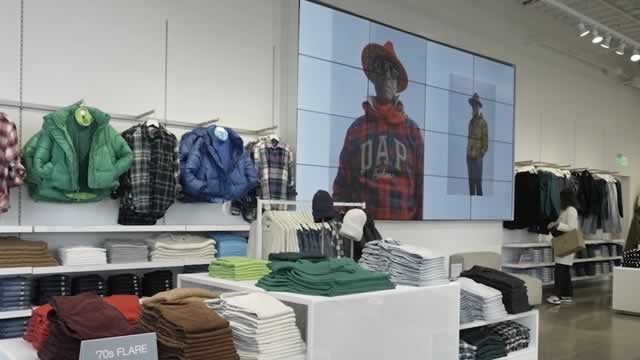
Gap's Positive Comps Streak: Near-Term Strength or Peak Cycle?
ZACKS· 2026-03-19 17:26
Core Insights - The Gap, Inc. (GAP) is experiencing a turnaround with eight consecutive quarters of positive comparable sales, indicating a recovery in its core business [1][8] - The company's focus on product relevance, merchandising, and brand storytelling has helped it reconnect with consumers across various income groups [1][2] - Despite macroeconomic uncertainties, Gap's ability to maintain consistent comparable sales growth raises questions about the sustainability of this momentum [1] Financial Performance - In the fourth quarter, Gap reported a 3% increase in comparable sales, with the Gap brand achieving a 7% growth, Old Navy at 3%, and Banana Republic at 4% [1][8] - For the full year, net sales grew by 2%, with comparable sales also up by 3%, reflecting steady demand despite external pressures [1] - Athleta, however, saw a 10% decline in comparable sales during the quarter, indicating uneven performance across segments [1][3] Operational Strategy - Gap's operational discipline, including reduced discounting and improved inventory management, has supported margins and brand perception [2] - The company's strategic focus on brand reinvigoration and cultural relevance is particularly effective for Old Navy and the flagship Gap brand [2] - Investments in new growth areas such as beauty, accessories, and "fashiontainment" demonstrate management's intent to diversify revenue streams [2] Market Position and Valuation - Gap's shares have increased by 6.3% over the past six months, contrasting with a 2.8% decline in the industry [4] - The company trades at a forward price-to-earnings ratio of 10.27X, significantly lower than the industry average of 16.10X [9] - The Zacks Consensus Estimate indicates year-over-year growth of 2.5% in sales and 7.9% in earnings for the current fiscal year, with a projected 2.7% rise in sales and 12.2% growth in earnings for the next fiscal year [11]


Destination XL Group, Inc. Q4 2025 Earnings Call Summary
Yahoo Finance· 2026-03-19 16:41
Core Insights - The company attributed a fiscal 2025 comparable sales decline of 8.4% to ongoing challenges in the big and tall sector, worsened by severe arctic weather in January that disrupted nearly 300 stores [1] - A shift in consumer behavior was identified, with shoppers prioritizing 'need' over 'want' due to macroeconomic pressures such as inflation, interest rates, and reduced government subsidies [1] - The impact of GLP-1 weight-loss medications was noted, with approximately 25% of customers potentially using them, leading to temporary purchase deferrals or 'trading down' to lower-priced private brands during their weight-loss journey [1] Inventory Management - The company successfully managed inventory levels down 2.6% year-over-year through disciplined receipt management and selective markdowns to avoid excess buildup while protecting merchandise margins [1] Brand Performance - There was a strategic outperformance of private brands over national collections, driven by superior fit consistency and better value perception for discerning consumers [1] Financial Position - The company maintained a strong balance sheet with no debt and $28.8 million in cash, providing the necessary flexibility to navigate current demand volatility [1]
Weekly Jobless Claims Softer-Than-Expected
ZACKS· 2026-03-19 16:11
Economic Indicators - Initial Jobless Claims fell to 205K from an estimated 215K, marking the lowest level since early January, indicating a robust labor market [2] - Continuing Claims remained below 1.9 million for the 10th consecutive week, coming in at 1.857 million, down from a revised 1.860 million the previous week [3] - The Philly Fed manufacturing survey reached 18.1, the highest since September of the previous year, reflecting three consecutive months of positive growth [4] Company Earnings Reports - Alibaba (BABA) reported a 47% decline in earnings to $1.01 per share, with shares down 7% in pre-market trading, compounding year-to-date losses to approximately 15% [5] - Darden Restaurants (DRI) met earnings expectations with $2.95 per share and revenues of $3.35 billion, but shares fell 4% due to rising gas prices affecting outlook [6] - Duluth Holdings (DLTH) experienced a 21% surge in pre-market trading after reporting earnings of $0.23 per share, exceeding expectations by 155.6%, with revenues of $215.9 million also outperforming [7] - FedEx (FDX) is expected to report fiscal Q3 earnings with anticipated year-over-year earnings growth of -8.2% and revenue growth of +6.45%, with shares up 20% year to date [8]





Can Carter's Retail Strength Offset Tariff Pressures in 2026?
ZACKS· 2026-03-19 16:05
Core Insights - Carter's, Inc. (CRI) experienced strong performance in the U.S. Retail segment during Q4 2025, with net sales growth of 9% and comparable sales up 4.7%, marking the third consecutive quarter of gains [1][8] - The Baby segment was particularly strong, achieving its sixth consecutive quarter of growth, highlighting its significance in the product portfolio [1] Financial Performance - The U.S. Retail segment's profitability declined due to higher product costs from tariff pressures and increased investment, although higher pricing helped mitigate some of these costs [2] - For 2026, the company anticipates net sales growth in the low to mid-single digits compared to 2025, with growth expected across all segments [3] Strategic Initiatives - To address cost pressures, Carter's plans to close around 60 lower-margin stores in 2026 and simplify operations by reducing product choices by 20-30% [4] - The company aims to improve efficiency by accelerating its product development cycle by three months [4] Market Position - CRI's shares have increased by 16.9% over the past six months, contrasting with a 21.9% decline in the industry [5] - The company trades at a forward price-to-earnings ratio of 11.64X, significantly lower than the industry's average of 22.05X [7] Earnings Estimates - The Zacks Consensus Estimate indicates a year-over-year earnings decline of 24.2% for the current fiscal year, with a projected growth of 17.7% for the next fiscal year [9]


Duluth Q4 Earnings Call Highlights
Yahoo Finance· 2026-03-19 14:56
Core Insights - The company reported a fourth-quarter adjusted EBITDA of $17.5 million, reflecting an 8.1% margin and a significant improvement of 460 basis points [1] - Despite a 10.5% year-over-year decline in net sales to $215.9 million, gross margin expanded by 890 basis points to 53% due to a promotional reset and pricing discipline [2][3] - The company achieved a net income of $7.8 million, an increase of $13.4 million, with reported EPS of $0.22 and adjusted EPS of $0.23 [2] Financial Performance - For fiscal 2025, net sales were reported at $565.2 million, down 9.8%, with gross margin expanding by 420 basis points to 53.4% [7] - Adjusted EBITDA for the year was $24.9 million, an increase of $10.3 million year over year, with nearly $17 million in positive free cash flow [8] - The company ended the year with over $141 million in liquidity and no outstanding debt, while inventory decreased by 21.1% to $131.3 million [9] Operational Improvements - The company emphasized enhancements in fulfillment and customer service, achieving a reduction in average click-to-ship time and customer service wait times during peak holiday demand [4] - Management highlighted a "business reset" focusing on disciplined promotions, expense control, and operational streamlining, which supported gross margin expansion [5][6] - The company is consolidating logistics and fulfillment operations, with a focus on efficiency and cost savings through direct sourcing from factories [15][17] Sales Channel Performance - Retail sales showed resilience, with a 4.7% increase in fourth-quarter retail net sales to $71.6 million, while direct channel sales declined by 16% due to reduced promotional activity [11][12] - The retail channel's growth was supported by new store openings and improved in-stock levels, contrasting with the direct channel's challenges [12][13] Future Guidance - For fiscal 2026, the company projects net sales between $540 million and $560 million, with adjusted EBITDA expected to be between $26 million and $30 million [19] - The company anticipates first-half sales pressure due to ongoing promotional adjustments, with expectations for stabilization in the second half [20] - Gross margin is expected to expand by approximately 100 basis points to around 54.4%, driven by a continued promotional reset and sourcing savings [22]