
Railways

Search documents
西部陆海新通道重点项目建设取得新进展 茅岭江特大桥连续梁合龙
Zhong Guo Xin Wen Wang· 2026-01-13 07:59
Core Insights - The successful completion of the main span of the Maoling River Bridge marks significant progress in the construction of the Nanfang Railway's Qinzhou to Fangchenggang section, which is a key project in the Western Land-Sea New Corridor [1] Group 1: Project Overview - The Nanfang Railway Qin-Fang section is a vital transportation route for goods in Southwest and Central South China, currently operating on a single line [1] - The project aims to alleviate transportation bottlenecks due to increasing demand for rail-sea intermodal transport, with cargo volume at Fangchenggang Station expected to reach 45.255 million tons in 2025, a 10.5% increase year-on-year [1] - The Maoling River Bridge, a control project of the entire line, spans 1,087.94 meters and features 33 piers, with the maximum pier height reaching 22 meters [1] Group 2: Construction Details - The main span of the continuous beam is 88 meters, divided into 23 segments, with a three-tier control system established to ensure construction quality [2] - The project faced significant challenges due to the bridge's location over the Maoling River, which has a water depth of 8 to 12 meters and is subject to extreme weather conditions [2] - Innovative construction techniques, including the use of double-walled steel cofferdams and specific excavation methods, were employed to ensure safety during underwater construction [2] Group 3: Strategic Importance - The Nanfang Railway Qinzhou to Fangchenggang section, extending 53.33 kilometers, is part of the key transportation hub projects outlined in the overall plan for the Western Land-Sea New Corridor [3] - The project is expected to be completed and operational this year, significantly enhancing the transportation capacity of Guangxi's railway to the sea and improving port logistics in the Beibu Gulf region [3] - This development is crucial for promoting coordinated regional development and enhancing the international connectivity between Guangxi and Vietnam [3]
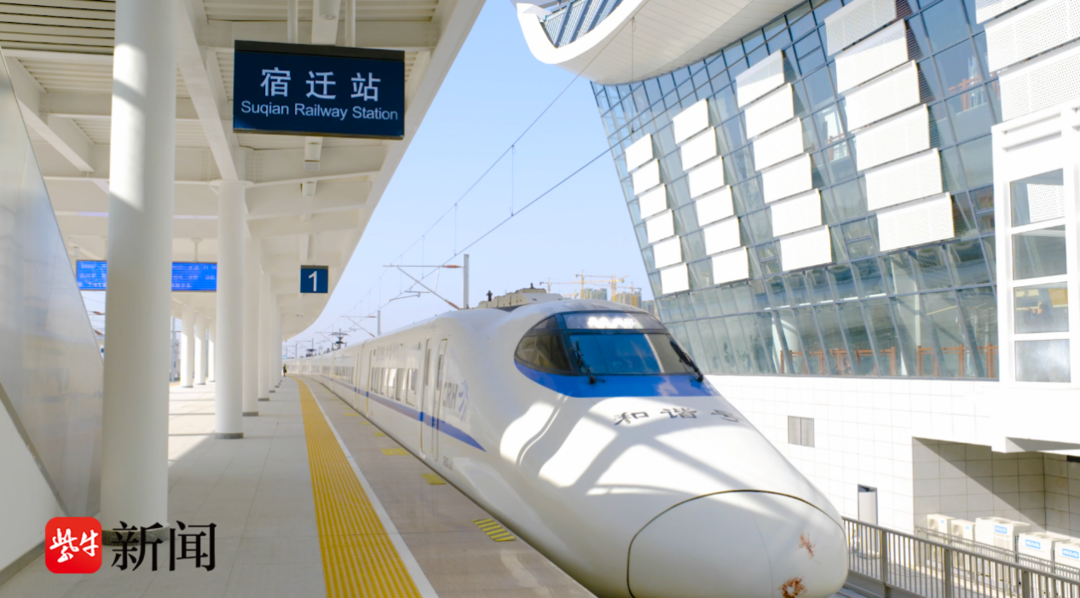
最快3小时02分可达,宿迁至北京高铁再添新班次
Yang Zi Wan Bao Wang· 2026-01-13 04:59
Core Viewpoint - The introduction of new high-speed train services between Suqian and Beijing is set to enhance travel efficiency, reducing travel time significantly and providing more options for commuters [2][4]. Group 1: New Train Services - On January 26, a new quarterly train schedule will be implemented, adding G68/G797 high-speed train services between Suqian and Beijing South Station [2]. - The G68 train will take approximately 3 hours and 2 minutes to travel from Suqian to Beijing, saving 40 minutes compared to previous services [2]. - The G797 train will depart from Beijing South Station at 14:04 and arrive in Suqian at 17:37, with a total travel time of 3 hours and 33 minutes [2][3]. Group 2: Increased Frequency and Convenience - With the addition of these new trains, the daily round-trip frequency between Suqian and Beijing will increase to 12 trains, providing a range of travel options throughout the day [4]. - This enhancement significantly improves high-speed rail efficiency and offers convenient same-day return options for business travelers [4]. - Passengers can check train schedules and purchase tickets through the 12306 website, app, and offline ticket counters [4].

夏家隧道进洞施工 合池铁路获新进展
Xin Lang Cai Jing· 2026-01-09 17:39
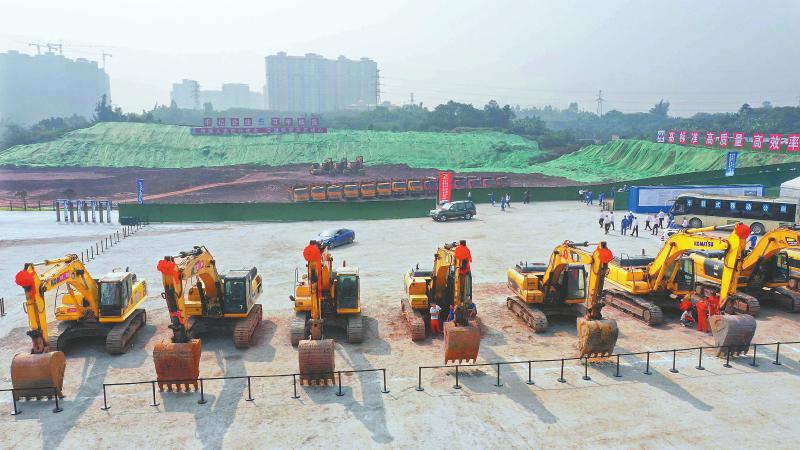
Core Points - The construction of the Xiajia Tunnel, the first tunnel to commence excavation for the Hefei-Chizhou Railway, marks significant progress in the railway's development [1] - The tunnel, located in Cuiping County, has a total length of 1,676 meters and a maximum burial depth of approximately 148 meters, designed for a speed of 250 km/h [1] - The project is part of China's 14th Five-Year Plan for railway development, spanning approximately 199.5 kilometers from Hefei West Station to Jiuhua Mountain Station in Chizhou, with an expected operational readiness by 2029 [1] Construction Details - The Xiajia Tunnel is divided into two fully mechanized construction areas and employs a wall-mounted excavation technique to navigate complex geological conditions, including faults and water bodies [1] - The project is a collaborative investment by Anhui Railway Group and the cities of Hefei, Tongling, and Chizhou [1]
Rail Vision Advances Indian Market Entry with Demonstration for Senior Governmental Officials from Multiple Government Departments
Globenewswire· 2026-01-06 12:32
Core Insights - Rail Vision Ltd. is expanding its activities in India, having commenced a Proof of Concept (POC) for key stakeholders in the Indian Railway industry [1][2][6] - The Indian Railways is one of the largest networks globally, with a route length of 69,181 km and carrying 6.905 billion passengers annually in the 2023-24 fiscal year, generating revenues of approximately US$28.4 billion [3] - The POC aims to demonstrate Rail Vision's Mainline product capabilities under challenging local conditions, which is crucial for potential large-scale adoption [2][6] Company Overview - Rail Vision is a development stage technology company focused on revolutionizing railway safety and the data-related market through advanced artificial intelligence technology [7] - The company has developed systems designed to enhance safety, increase efficiency, and reduce costs for railway operators, with aspirations to advance autonomous train technology [7] Market Opportunity - The Indian market presents a significant growth opportunity for Rail Vision, supported by collaboration with local partner Sujan Industries and increasing stakeholder engagement [6][7] - The Indian Railways operates a fleet of over 17,000 locomotives, with a notable shift towards full electrification, indicating a progressive environment for technological advancements [4]


渝昆高铁四川段、重庆段同步启动建设 这条高铁将给四川带来什么?
Si Chuan Ri Bao· 2026-01-06 07:00
Core Viewpoint - The Yukun High-Speed Railway is a significant component of China's medium- and long-term railway network, enhancing connectivity and economic development in the Sichuan region, particularly in the cities of Luzhou and Yibin [1][4]. Group 1: Project Overview - The Yukun High-Speed Railway will connect Chongqing and Kunming, with a total length of 699 kilometers and a design speed of 350 kilometers per hour, featuring 20 stations [2][3]. - In Sichuan, the railway spans approximately 186 kilometers and includes 6 stations, making it the second longest in the four provinces it traverses, after Yunnan [3]. Group 2: Economic Impact - The railway is expected to accelerate the development of Luzhou and the surrounding Sichuan region, which currently lacks direct national railway connections [3][5]. - The Yukun High-Speed Railway will enhance the strategic position of the southern Sichuan region in the province's open development strategy, strengthening economic ties with Chongqing and Yunnan [4][5]. Group 3: Connectivity and Infrastructure - The railway will create a triangle of connectivity between Luzhou, Yibin, and Zigong, facilitating new travel routes to Chongqing and Kunming [3][6]. - The integration of the Yukun High-Speed Railway with existing and planned rail lines will form a comprehensive high-speed rail corridor from Chengdu to Kunming, significantly reducing travel time from approximately 6.5 hours to around 2.5 hours [8]. Group 4: Future Development - The ongoing construction of multiple high-speed rail lines in Sichuan, including the Chengdu to Zigong and Chengdu to Yibin lines, indicates a broader strategy to leverage high-speed rail for regional economic growth [6][8]. - The development of the Yukun High-Speed Railway is seen as a critical support for Sichuan's participation in the China-ASEAN framework, promoting regional integration and economic collaboration [8].
衢州铁路枢纽客流平稳
Xin Lang Cai Jing· 2026-01-04 17:59
Core Insights - The railway department reported that during the New Year's holiday transportation period from December 31, 2025, to January 4, 2026, approximately 95,000 passengers were sent from Quzhou Station, while Quzhou West Station sent 7,840 passengers [1] - The passenger flow during this holiday was primarily driven by tourism, family visits, and commuting, showing a pattern of concentrated travel at the beginning and end of the holiday, with relatively stable traffic in the middle [1] - The opening of the Hangzhou-Quzhou high-speed railway has enhanced the regional transportation network, contributing positively to the holiday travel dynamics [1] Passenger Statistics - Quzhou Station averaged nearly 19,000 passengers per day, with a peak of 27,500 passengers on New Year's Day [1] - Quzhou West Station recorded a total of 7,840 passengers over the five-day holiday, with 7,520 passengers disembarking [1] - On January 3, Quzhou West Station had its peak day with 2,227 passengers sent and 1,523 passengers disembarking [1] - Other stations such as Longyou North Station, Kaihua Station, and Changshan Station sent 1,635, 5,007, and 4,737 passengers respectively during the holiday [1]
2025年,多条新线开通,哪一条经过你的家乡?
新华网财经· 2026-01-04 11:45
Core Viewpoint - The article highlights the expansion of China's high-speed rail network, projecting that by 2025, the operational mileage will exceed 50,000 kilometers, significantly enhancing connectivity and promoting economic development across various regions [1]. Group 1: New High-Speed Rail Lines - The Chongqing to Qianjiang segment will strengthen the connection between the Chengdu-Chongqing economic circle and the Chang-Zhu-Tan urban agglomeration, injecting strong momentum into the socio-economic development along the route [3]. - The Shenyang to Baihe segment, part of the Shenjia high-speed rail, aims to promote comprehensive revitalization in Northeast China and boost tourism resource development along the line [6][7]. - The Xiangyang East to Jingmen West line will further improve the high-speed rail network layout in the western Hubei region, facilitating high-quality development in the middle reaches of the Yangtze River [10][11]. Group 2: Specific Line Details - The Chongqing to Changsha line spans 242 kilometers with a design speed of 350 km/h, achieving a fastest travel time of 5 hours and 3 minutes [5]. - The Beijing Chaoyang to Changbai Mountain line covers 430 kilometers, also designed for 350 km/h, with a travel time of 4 hours [8]. - The Nanning to Pingxiang East line, supporting the development of border ethnic areas, is 19 kilometers long with a design speed of 250 km/h, allowing for a travel time of 1 hour and 15 minutes [16][17]. Group 3: Regional Economic Impact - The Baotou to Huinong line, spanning 422 kilometers, is expected to promote high-quality development in the Yellow River basin and support the implementation of the new era's western development strategy [23][25]. - The Hangzhou West to Quzhou West line, part of the Yangtze River economic belt, will enhance regional connectivity and facilitate integrated development in the Yangtze River Delta [26][28]. - The Hefei to Suxian line will further improve the regional road network structure, promoting high-quality development in the Yangtze River Economic Belt and the Yangtze River Delta integration [39][41]. Group 4: Overall Network Development - The "Eight Vertical and Eight Horizontal" high-speed rail network is becoming more integrated, with new lines extending and new stations being established, contributing to a dynamic and prosperous China where people and goods can move freely [42].

铁路迎来假日返程客流高峰 这些方向余票充足
Yang Shi Wang· 2026-01-03 05:01
Core Viewpoint - The railway system in China is experiencing a significant increase in passenger traffic during the New Year holiday period, with measures in place to ensure safe and orderly travel [1] Group 1: Passenger Traffic - On January 2, the national railway sent 12.213 million passengers, with an expected 17.45 million on January 3, marking the peak return flow of travelers [1] - Popular departure cities include Guangzhou, Beijing, and Chengdu, while major arrival cities are Beijing, Guangzhou, and Shanghai [1] Group 2: Train Operations - Various railway bureaus are adding numerous trains to accommodate the surge in passenger demand, including 1,343 additional passenger trains on January 3 [1] - Specific additions include 47 high-speed trains from Taiyuan to destinations like Beijing and Xi'an, and 48 trains from Zhengzhou to popular cities [2][3] Group 3: Services and Amenities - Railway departments are implementing measures to enhance passenger experience, such as increasing train capacity, providing heating, food, and water services, and offering assistance to vulnerable groups [1] - Guangzhou station has introduced 72 real-name verification channels and 46 security check channels, along with a dedicated "love/urgent passenger channel" [6]
海南与粤港澳大湾区将实现高铁直达!网友:一整个期待住了
中国基金报· 2026-01-02 16:12
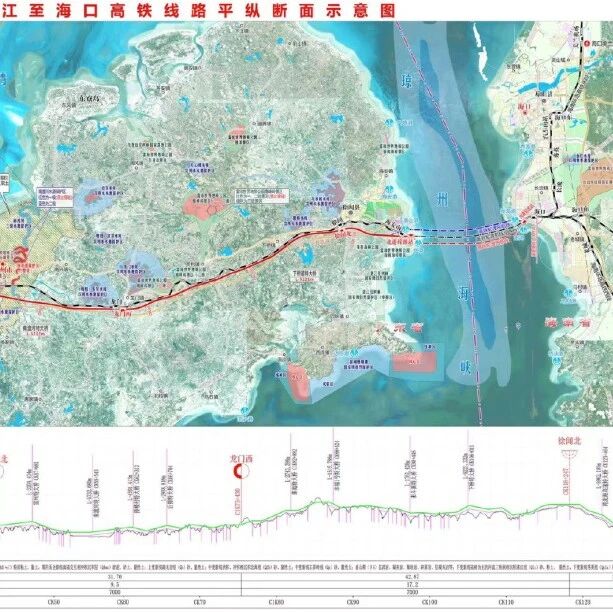
Core Viewpoint - The Zhanhai High-speed Railway project is a significant infrastructure initiative aimed at connecting the Guangdong-Hong Kong-Macao Greater Bay Area with the Hainan Free Trade Port, facilitating efficient transportation and economic integration between these two major national economic zones [4][7]. Group 1: Project Overview - The Zhanhai High-speed Railway will start from Zhanjiang City in Guangdong Province, passing through Leizhou and Xuwen, and will include a ferry crossing of approximately 23 kilometers across the Qiongzhou Strait to Haikou City in Hainan Province [4][5]. - The project is part of the national "Eight Vertical and Eight Horizontal" high-speed railway network, serving as a crucial transportation link between Hainan and the mainland [4][7]. Group 2: Time Efficiency - Once completed, the travel time from Zhanjiang to Xuwen is expected to be reduced from around 2 hours to under 30 minutes, while the journey from Zhanjiang to Haikou is anticipated to decrease from 3-4 hours to under 2 hours, creating an efficient transportation loop across the Qiongzhou Strait [5][9]. Group 3: Strategic Importance - The Zhanhai High-speed Railway will enable seamless connectivity between the Hainan Ring Island High-speed Railway and the national high-speed rail network, fostering resource sharing and industrial collaboration between the Greater Bay Area and the Hainan Free Trade Port [7][10]. - The project aims to transform the geographical role of western Guangdong from a peripheral area to a frontline region, promoting industrial upgrades in manufacturing and modern logistics under the influence of free trade policies [13]. Group 4: Project Timeline - The Zhanhai High-speed Railway is striving to be completed and operational during the "14th Five-Year Plan" period [8][9].
Rail Vision's Advanced Railway Safety Technology to Be Showcased at CES 2026 by Israel Railways
Globenewswire· 2026-01-02 12:39
Core Insights - Rail Vision Ltd. is an early commercialization stage technology company focused on revolutionizing railway safety and the data-related market, with its products to be showcased at CES 2026 through Israel Railways [1][4] Group 1: Company Overview - Rail Vision has developed AI-driven technologies aimed at enhancing railway safety, operational efficiency, and reducing costs for railway operators [4] - The company believes its technology can significantly improve railway safety globally and create value for all stakeholders in the train ecosystem, including passengers and freight companies [4] Group 2: Collaboration and Event Participation - Israel Railways, a long-term client of Rail Vision, will present Rail Vision's technologies at the Israel National Pavilion during CES 2026, highlighting their real-world applications [2][3] - David BenDavid, CEO of Rail Vision, will be present at the event to discuss the company's technologies and explore potential partnerships [3][4] Group 3: Technology Impact - Rail Vision's systems are currently in use by Israel Railways to detect obstacles, enhance safety, and improve operational efficiency on main lines [3] - The company aims to advance the concept of autonomous trains into practical reality through its innovative technologies [4]