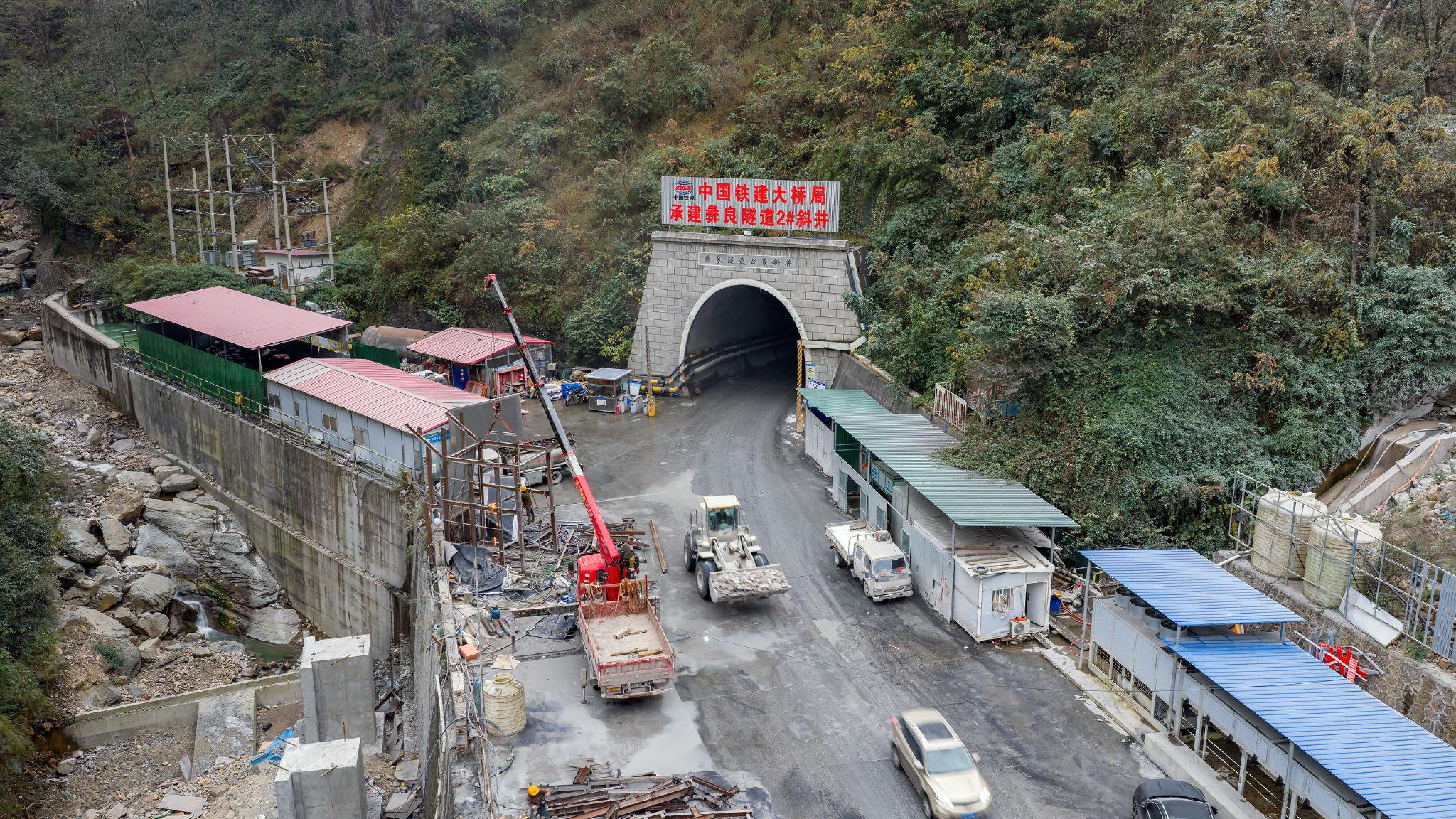
渝昆高铁

Search documents
佳节里的坚守 岗位上的担当
Xin Lang Cai Jing· 2026-02-18 20:20
Core Insights - The construction industry in Yunnan is actively progressing with key projects during the Spring Festival, showcasing commitment and innovation in challenging conditions [1][2] Group 1: Project Developments - The Wenshan-Mengzi Railway, spanning 101.9 kilometers, is a crucial transportation line connecting Wenshan and Honghe, featuring a high bridge-tunnel ratio of 81.3% and complex geological conditions [1] - The Yukun High-Speed Railway's construction involves a total of 24,720.5 meters of enclosed layer work, with over 600 workers actively engaged on-site [2] - The Kunming Changshui International Airport expansion project is leveraging BIM technology for digital construction, enhancing efficiency in the installation of mechanical and electrical systems [2] Group 2: Workforce Commitment - Hundreds of workers from China State Construction Engineering Corporation's Yunnan branch have chosen to remain on-site during the holiday to ensure timely project delivery, including the Songming Experimental Middle School [2] - The company has organized cross-regional family visits, sending New Year gifts and letters to the families of workers, fostering a sense of community and support [3] - The construction sites are decorated with festive elements, creating a warm atmosphere for workers who are away from their families during the holiday season [3]
开年以来真“硬核”,多个重要工程项目建设报喜
Xin Hua Wang· 2026-02-05 03:47
Core Viewpoint - Multiple significant engineering projects have made progress since the beginning of 2026, contributing to high-quality development in China [2]. Group 1: Nuclear Power Projects - The Zhangzhou Nuclear Power Unit 2 officially commenced commercial operation on January 1, 2026, marking the completion of the "Hualong One" Zhangzhou Nuclear Power Phase I project [4]. - The Zhangzhou Nuclear Power Base, which is the largest of its kind globally, is expected to provide approximately 60 billion kilowatt-hours of clean electricity annually, optimizing the power distribution in Fujian Province [4]. - The first nuclear power unit of the Jiangsu Xuwei Nuclear Energy Heating Power Plant began concrete pouring on January 16, 2026, entering the main construction phase [11]. Group 2: Railway Projects - The Ba Mountain Village Tunnel of the Yuwan High-Speed Railway successfully broke through on January 4, 2026, marking a significant milestone in the construction of the railway [7]. - The Yuwan High-Speed Railway, part of China's "Eight Vertical and Eight Horizontal" high-speed rail network, has a total length of 251 kilometers and a design speed of 350 kilometers per hour [8]. - The longest tunnel of the Lanzhou-Cooperation Railway, the Xigu Tunnel, achieved a breakthrough on January 27, 2026, indicating key progress in the project [14]. Group 3: Water Diversion Projects - The export section of the Yangtze River to Han River Water Diversion Project was completed on January 30, 2026, becoming the first section to be fully connected [16]. - This project is a significant part of the national water network and aims to connect the Yangtze River reservoir with the Danjiangkou Reservoir over a total length of 194.7 kilometers [17]. Group 4: High-Speed Rail Projects - The bridge construction for the Yukun High-Speed Railway was completed on February 3, 2026, marking the end of bridge construction for this railway [19].


渝昆高铁桥梁建设全部完成 标志着工程进入全面冲刺阶段
Yang Shi Xin Wen· 2026-02-03 06:19
Core Viewpoint - The completion of the bridge construction for the Yukun High-Speed Railway marks a significant milestone, allowing the project to enter the final phase of construction, which includes track laying and subsequent engineering work [3][9]. Group 1: Project Overview - The Yukun High-Speed Railway is a crucial part of China's "Eight Vertical and Eight Horizontal" high-speed rail network, connecting major cities in the southwest region, starting from Chongqing West Station and ending at Kunming South Station [5]. - The railway is designed for a maximum speed of 350 kilometers per hour, significantly reducing travel time between Chongqing and Kunming to approximately two and a half hours upon full operation [9]. Group 2: Construction Progress - With the completion of the bridge construction, the tunnel engineering is 99% finished, and the project is now fully entering the final construction phase, focusing on ballastless track and post-station engineering [9]. - The construction team utilized innovative technology, including the BeiDou navigation system, to achieve precise path planning and dynamic correction during the construction process, successfully completing the prefabrication and installation of 309 box girders after 49 instances of line closure [8].
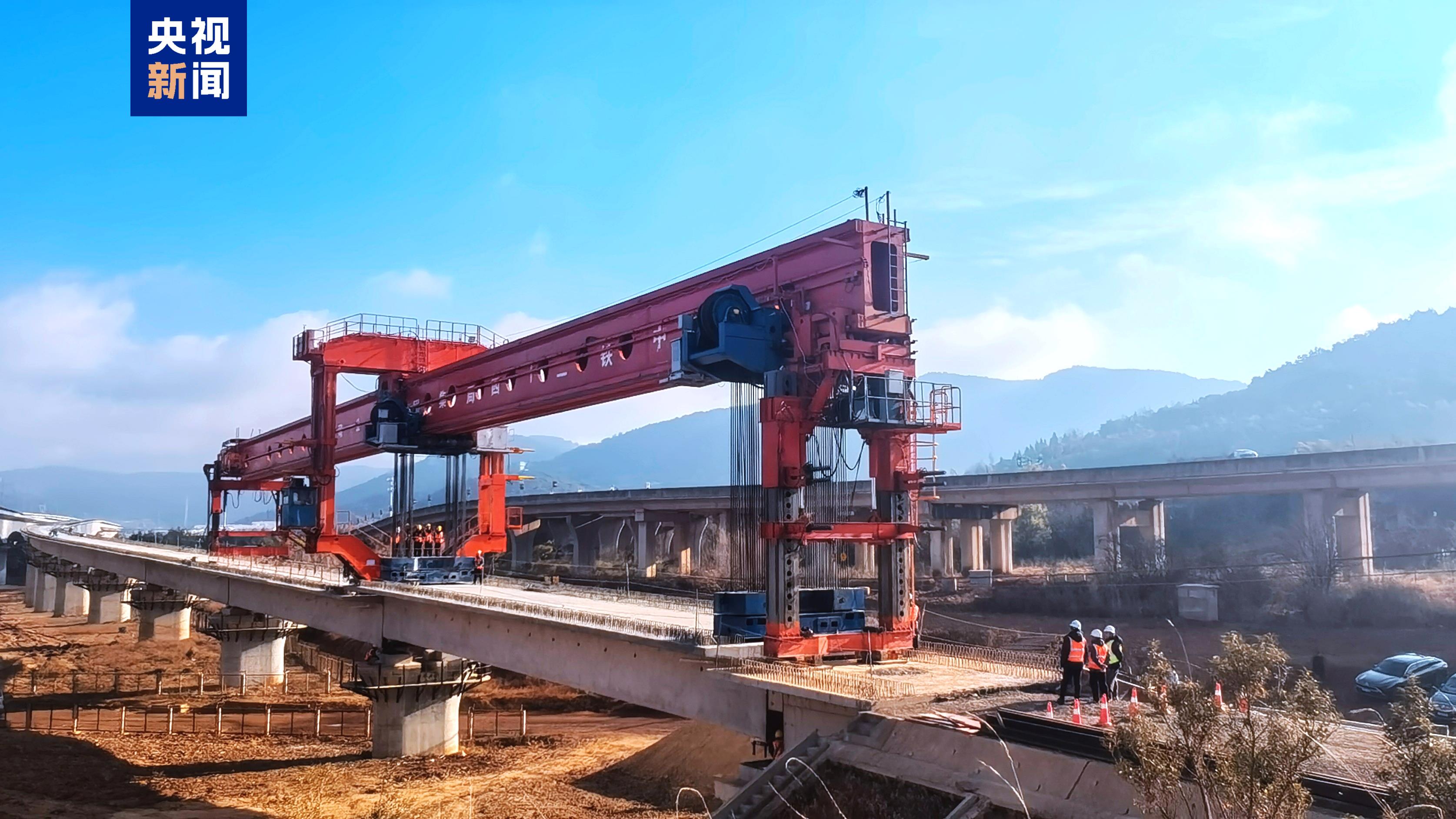
成都50分钟到重庆、2小时到万州、3小时到昆明!最新进展→
Xin Lang Cai Jing· 2026-01-17 01:15
Core Insights - The Chengyu Middle Line High-Speed Railway, Chengda-Wanzhou High-Speed Railway, and Yukun High-Speed Railway are making significant progress in construction, enhancing connectivity in the region [1][4][10] Group 1: Chengyu Middle Line High-Speed Railway - The Chengyu Middle Line High-Speed Railway is approximately 292 kilometers long with a design speed of 350 km/h, expected to be completed by 2027, reducing travel time from Chengdu to Chongqing to about 50 minutes [4] - Key construction milestones include the successful completion of signal replacement and line switching at the Biali Station, facilitating the railway's integration into Chengdu Station [1][2] Group 2: Chengda-Wanzhou High-Speed Railway - The Chengda-Wanzhou High-Speed Railway's fifth segment has successfully placed the last box girder, measuring 32.6 meters long and weighing 700 tons, as part of a critical construction phase [5][7] - The project aims to complete all bridge construction tasks before the Spring Festival, with a focus on ensuring high precision in the box girder installation [7] Group 3: Yukun High-Speed Railway - The Yukun High-Speed Railway has achieved a significant milestone with the safe completion of the Huashan Song Tunnel, leaving only one tunnel remaining in the Yunnan section [10][11] - The railway spans approximately 700 kilometers, with the Yunnan section being 388.6 kilometers long, and is expected to enhance economic connectivity between the Chengdu-Chongqing economic circle and the central Yunnan urban cluster [13]
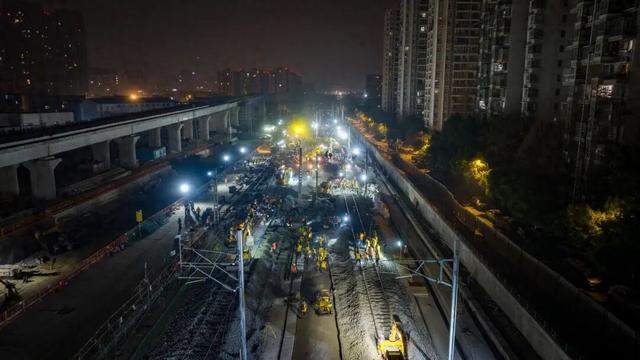
两条时速350公里高铁,建设进度再刷新
Xin Lang Cai Jing· 2026-01-14 20:45
Core Insights - The Chongqing-Kunming High-Speed Railway (Yukun High-Speed Railway) and the Xiong'an-Xinzhou High-Speed Railway (Xiongxin High-Speed Railway) have made significant progress in their construction, with key tunnels successfully completed, indicating that both projects are entering their final stages of development [1][3][5] Group 1: Yukun High-Speed Railway - The Yukun High-Speed Railway is a crucial part of China's "Eight Vertical and Eight Horizontal" high-speed rail network, with a total length of approximately 700 kilometers and a design speed of 350 kilometers per hour [3] - The railway is being constructed in segments, with the Yibin East to Yibin section (15 kilometers) expected to be operational by December 26, 2023, and the Chongqing West to Yibin East section (192 kilometers) set to open on September 29, 2024 [3] - Once fully operational, the railway will significantly reduce travel time between Chongqing and Kunming, enhancing connectivity between the Chengdu-Chongqing economic circle and the central Yunnan urban agglomeration, thereby promoting high-quality economic and social development along the route [3] Group 2: Xiongxin High-Speed Railway - The Xiongxin High-Speed Railway, which connects Xiong'an New Area to Xinzhou, has a total length of approximately 342 kilometers and a design speed of 350 kilometers per hour, also forming part of the "Eight Vertical and Eight Horizontal" high-speed rail network [5] - The successful completion of the North Taihang Mountain Tunnel marks a significant milestone, laying a solid foundation for the timely opening of the entire line [5] - The railway is expected to strengthen transportation links between Shanxi and the Beijing-Tianjin-Hebei region, facilitating economic and social development along the route and supporting regional collaborative growth [5]
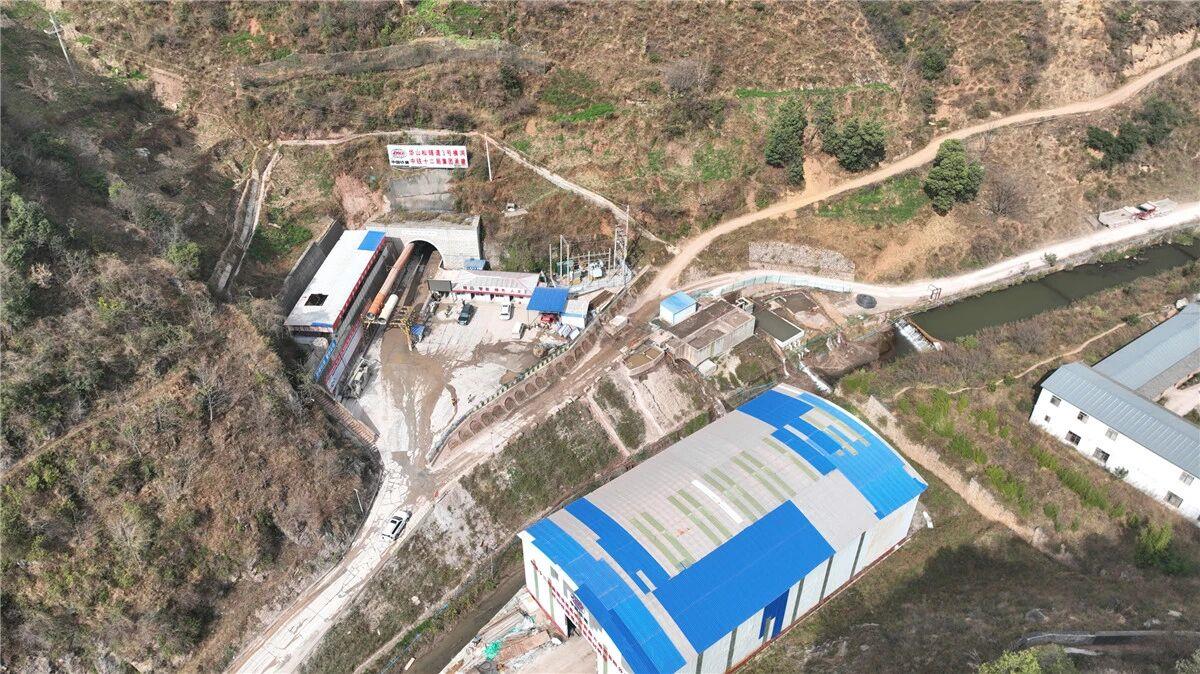
渝昆高铁华山松隧道贯通,云南段53座隧道仅剩1座尚未贯通
Zheng Quan Shi Bao Wang· 2026-01-11 04:40
Core Viewpoint - The completion of the Huashan Song Tunnel marks a significant milestone in the construction of the Yukun High-speed Railway, indicating that the project is entering its final phase of development [1] Group 1: Project Progress - The Huashan Song Tunnel, a key project of the Yukun High-speed Railway, was successfully completed after over 1500 days of construction efforts by China Railway 12th Bureau [1] - With the completion of this tunnel, only one out of the 53 tunnels in Yunnan remains, laying a solid foundation for the overall completion and opening of the railway line [1] - The project is now in the final sprint phase towards completion [1]
渝昆高铁华山松隧道贯通 云南段仅剩最后一座隧道未通
Xin Lang Cai Jing· 2026-01-10 09:08
Core Viewpoint - The Huashansong Tunnel, a key project of the Yukun High-speed Railway, has successfully completed its construction after over 1500 days of challenging work, with only one tunnel remaining to be completed in the Yunnan section of the railway [1][3] Group 1: Project Details - The Huashansong Tunnel is located in the Yunnan Province, with a total length of 16.4 kilometers, classified as a level I high-risk tunnel and the second longest single-hole double-track tunnel along the Yukun High-speed Railway [1][3] - The geological conditions of the tunnel are extremely complex, with nearly 90% of the surrounding rock classified as level IV and V, and it traverses 23 fault lines and areas with developed karst features, posing significant construction challenges [1] Group 2: Construction Techniques - The construction team utilized advanced techniques such as advanced horizontal drilling, deepening blast holes, and transient electromagnetic methods for precise geological detection, allowing them to anticipate geological changes [3] - A combined construction approach of "circular excavation, reserved core soil, and staged support" was adopted, along with surrounding radial grouting and advanced small conduit + pipe shed techniques to successfully overcome challenges related to surrounding rock instability [3] Group 3: Project Progress - The overall construction of the Yukun High-speed Railway has entered a critical phase, with an average of 11,000 construction personnel and 1,300 large machinery units deployed daily to expedite tunnel engineering, ballastless track, and post-station construction [3] - The Yukun High-speed Railway spans approximately 700 kilometers, with the Yunnan section measuring 388.6 kilometers, marking the first high-speed railway in Yunnan with a speed of 350 kilometers per hour, significantly reducing travel time between Chongqing and Kunming upon completion [3]
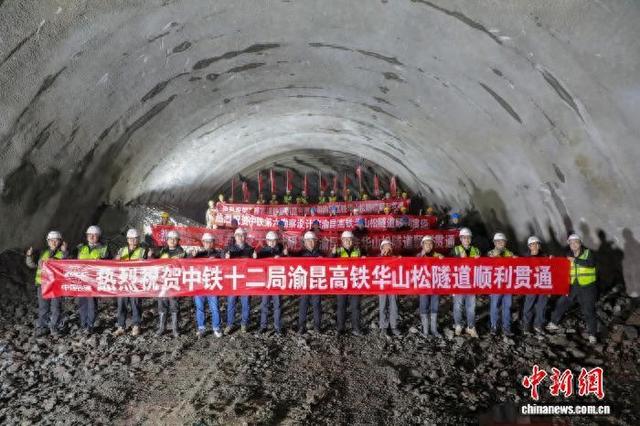
渝昆高铁控制性工程华山松隧道贯通
Xin Hua She· 2026-01-10 06:27
Core Viewpoint - The successful completion of the Huashan Song Tunnel, a key project of the Yukun High-Speed Railway, marks a significant milestone in the construction of the railway, which is expected to enhance economic development in the regions along the route [1] Group 1: Project Details - The Huashan Song Tunnel, located in the Yunnan Province, has a total length of 16.4 kilometers and is classified as a high-risk tunnel due to its complex geological conditions [1] - The tunnel construction faced challenges such as crossing 23 fault lines and areas with developed karst topography, which could lead to instability and collapse if water is encountered [1] - The construction team employed a combination of "circular excavation, reserved core soil, and stepped support" to address the challenges of surrounding rock instability [1] Group 2: Railway Significance - The Yukun High-Speed Railway spans approximately 700 kilometers, with the Yunnan section measuring 388.6 kilometers, making it the first high-speed railway in Yunnan capable of reaching speeds of 350 kilometers per hour [1] - Once operational, the railway will reduce travel time between Chongqing and Kunming to approximately two and a half hours, significantly impacting regional economic and social development [1] - The construction of the Yukun High-Speed Railway is currently in the final stages, focusing on tunnel engineering, ballastless track, and post-station construction [1]
渝昆高铁四川段、重庆段同步启动建设 这条高铁将给四川带来什么?
Si Chuan Ri Bao· 2026-01-06 07:00
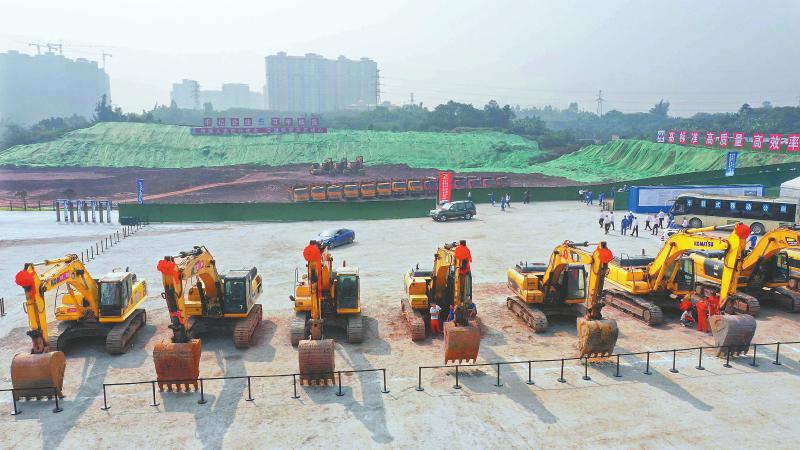
Core Viewpoint - The Yukun High-Speed Railway is a significant component of China's medium- and long-term railway network, enhancing connectivity and economic development in the Sichuan region, particularly in the cities of Luzhou and Yibin [1][4]. Group 1: Project Overview - The Yukun High-Speed Railway will connect Chongqing and Kunming, with a total length of 699 kilometers and a design speed of 350 kilometers per hour, featuring 20 stations [2][3]. - In Sichuan, the railway spans approximately 186 kilometers and includes 6 stations, making it the second longest in the four provinces it traverses, after Yunnan [3]. Group 2: Economic Impact - The railway is expected to accelerate the development of Luzhou and the surrounding Sichuan region, which currently lacks direct national railway connections [3][5]. - The Yukun High-Speed Railway will enhance the strategic position of the southern Sichuan region in the province's open development strategy, strengthening economic ties with Chongqing and Yunnan [4][5]. Group 3: Connectivity and Infrastructure - The railway will create a triangle of connectivity between Luzhou, Yibin, and Zigong, facilitating new travel routes to Chongqing and Kunming [3][6]. - The integration of the Yukun High-Speed Railway with existing and planned rail lines will form a comprehensive high-speed rail corridor from Chengdu to Kunming, significantly reducing travel time from approximately 6.5 hours to around 2.5 hours [8]. Group 4: Future Development - The ongoing construction of multiple high-speed rail lines in Sichuan, including the Chengdu to Zigong and Chengdu to Yibin lines, indicates a broader strategy to leverage high-speed rail for regional economic growth [6][8]. - The development of the Yukun High-Speed Railway is seen as a critical support for Sichuan's participation in the China-ASEAN framework, promoting regional integration and economic collaboration [8].
我国时速350公里最长高铁隧道贯通
Huan Qiu Wang· 2025-12-10 14:25
Core Viewpoint - The successful completion of the Yiliang Tunnel, a critical project for the Yukun High-Speed Railway, marks a significant achievement in China's high-speed rail construction under complex geological conditions, laying a solid foundation for the entire line's operation [1][3]. Group 1: Project Details - The Yiliang Tunnel, located in Zhaotong City, Yunnan Province, spans 24.8 kilometers with a design speed of 350 kilometers per hour and a maximum depth of 920 meters, making it the longest and fastest high-speed rail tunnel in China [3]. - The tunnel traverses the Umon Mountain area, known for its complex geological structures, including rock bursts, high ground temperature, water inflow, and soft rock deformation, presenting significant construction challenges [3][5]. Group 2: Construction Techniques - The construction team implemented various measures to address high ground stress rock bursts, including stress release, fiber-reinforced concrete spraying, and increased prestressed anchor rods to ensure safety and progress [5]. - To tackle high-temperature environments and drainage issues, an intelligent temperature control system was developed, maintaining working conditions around 30°C, and a multi-level drainage system was established with a daily capacity of 345,000 cubic meters [5]. Group 3: Technological Innovations - A research team led by experts was formed to address the unique challenges of the Umon Mountain range, resulting in a proprietary technology system with three provincial-level construction methods and seven national patents, along with one international patent application [5]. Group 4: Economic Impact - The Yukun High-Speed Railway, approximately 700 kilometers long with a 388.6-kilometer segment in Yunnan, will reduce travel time between Chongqing and Kunming to about two and a half hours, significantly enhancing connectivity and promoting high-quality economic development in the Chengdu-Chongqing economic circle and the central Yunnan urban agglomeration [6].