
农业机械

Search documents
智慧农机助力农业生产
news flash· 2025-05-27 19:01
Core Viewpoint - The article highlights the advancements in agricultural mechanization in China, showcasing various innovative technologies being implemented to enhance efficiency in farming operations [1] Group 1: Technological Innovations - Heilongjiang Jixi City Beidahuang (600598) has introduced a "seedling transport train" to address the challenges of seedling transportation, along with wide and narrow row transplanting machines and intelligent inspection drones [1] - Heilongjiang Qianjin Farm is utilizing transplanting robots (300024) and plans to develop supporting seedling transport robots in the future [1] - In Xinjiang Bazu and Shuo County, multi-rotor agricultural drones equipped with Beidou navigation systems are achieving precise fertilization [1] - Zhejiang Tongxiang's digital vegetable seedling factory is employing fifth-generation seedling grafting robots [1] Group 2: Industry Trends - China is accelerating the mechanization of agriculture, aiming to enhance the intelligence level of agricultural machinery and support innovation in the seed industry [1]


新疆农业现代化提速 农机“智变”助增产
Zhong Guo Xin Wen Wang· 2025-05-27 15:43
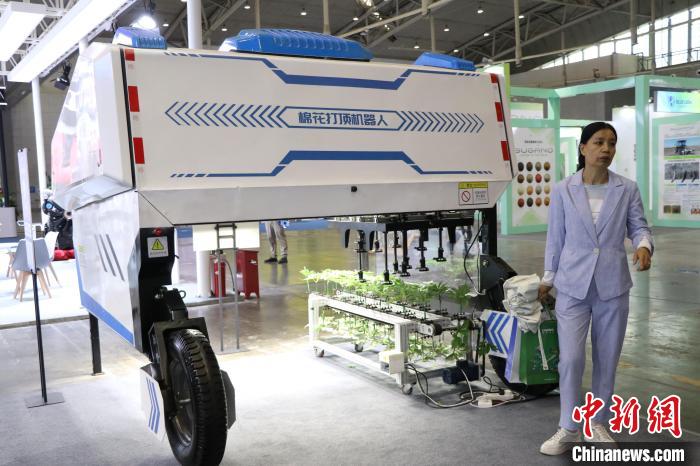
Group 1 - The world's first cotton intelligent topping robot was showcased at the 2025 Xinjiang International Agricultural Machinery Expo, featuring "dual-eye vision 3D reconstruction + AI planning algorithm" for high-precision and efficient operations [1][3] - The robot achieves over 95% operational accuracy and can cover 15 acres per hour, equivalent to the work of over 20 people [3] - Xinjiang's cotton planting area reached 36.719 million acres in 2024, with a comprehensive mechanization rate exceeding 97% and a machine harvesting rate surpassing 90% [3][5] Group 2 - Xinjiang Boshiran Intelligent Agricultural Machinery Co., Ltd. showcased upgraded cotton picking machines at the expo, focusing on a complete manufacturing system covering the entire cotton cultivation process [3] - The company has established four production bases in Xinjiang and has a sales and service network that extends to Central Asia, Europe, and South America [3] - The expo featured a wide range of agricultural machinery related to various crops, including corn, tomatoes, peppers, apples, and grapes [3] Group 3 - The self-propelled pepper harvesting machine can achieve a daily operational capacity of 150 acres, equivalent to the efficiency of over 100 workers [4][5] - Xinjiang has been actively promoting agricultural mechanization and the transformation of the agricultural machinery industry, with a comprehensive mechanization level of over 90% in 2024, ranking among the top in China [5]

优质品牌培育,让更多“商河造”产品走向全国
Qi Lu Wan Bao Wang· 2025-05-27 09:00
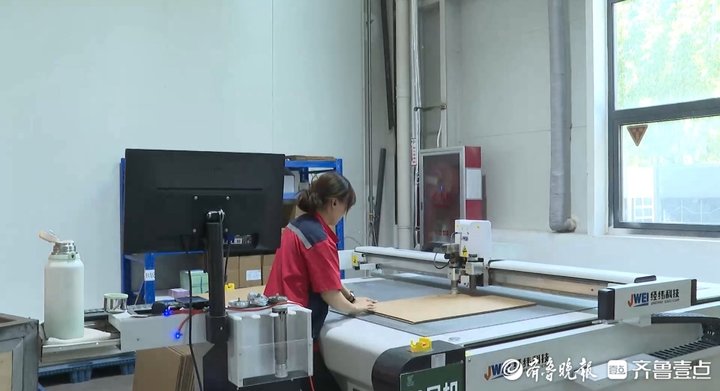
Group 1 - The Shandong YeHua Paper Products Packaging Co., Ltd. has established itself as a leading technology-driven production enterprise with an annual production capacity of 96 million square meters of corrugated boxes and a daily output of nearly 400,000 boxes [4][6] - The local government in Shanghe County has initiated a quality brand cultivation recognition program to help local enterprises transition from strong hardware capabilities to strong brand recognition, aiming to enhance the market presence of "Shanghe-made" products [1][6] - The program categorizes brand cultivation into manufacturing, service, and high-quality agriculture, with assessment indicators including economic benefits, technological innovation, quality development, and brand building [4][6] Group 2 - The recognition program aims to provide one-on-one technical guidance to interested enterprises, helping them understand the importance of brand value and the processes involved in brand building [6][8] - Local enterprises like Jinan Huaqing Agricultural Machinery Technology Co., Ltd. are highlighted for their innovative products, such as a garlic planting machine that improves planting efficiency, showcasing the potential of local brands [8][9] - The initiative seeks to create a brand cultivation database in Shanghe County, enhancing the competitive market landscape and promoting regional characteristics through effective brand storytelling [8][9]
迎战“三夏”保粮丰
Jing Ji Ri Bao· 2025-05-26 22:13
Core Viewpoint - The article highlights the efforts and strategies implemented in Yexian County, Henan Province, to ensure a successful summer harvest, focusing on agricultural mechanization, technology integration, and safety measures. Group 1: Agricultural Production and Mechanization - Yexian County has a cultivated area of 1.23 million acres, with 960,000 acres dedicated to wheat planting this year [1] - The county relies on 37 agricultural machinery cooperatives, managing over 5,000 machines, with a peak daily harvesting capacity expected to exceed 86,000 acres [1] - A green channel has been established to facilitate the safe passage of agricultural machinery, with over 20 service stations set up for free repairs and fuel supply [1] Group 2: Technology Integration - The county is promoting a "smart summer harvest" system through the Ministry of Agriculture and Rural Affairs' demonstration project, utilizing drone remote sensing for real-time monitoring of wheat fields [2] - The efficiency of harvesting has improved by over 30% due to the use of mobile technology for monitoring crop maturity and moisture levels [2] - A weather monitoring system has been implemented, providing updates every three hours and ensuring timely weather alerts to farmers [2] Group 3: Safety and Emergency Management - Regular safety inspections are conducted on grain storage facilities and drying centers, with immediate rectifications for identified issues [3] - Training sessions on safe operation and production standards for machinery operators have been organized, with over 300 safety warning signs distributed [3] - Emergency management departments have prepared resources for potential adverse weather conditions, including water pumps and waterproof materials [2][3]
上门回收、补贴加码 青海农机报废“加速跑”
news flash· 2025-05-26 17:48
Core Insights - The current potato planting season in Qinghai is marked by a significant increase in the replacement of old agricultural machinery, with local farmers actively purchasing new equipment [1] - In 2024, Qinghai Province reported the scrapping of 3,148 old agricultural machines, which is nearly 40 times the total scrapping volume since the implementation of the national agricultural machinery scrapping subsidy policy in 2018 [1] - Over 6,000 old agricultural machines have been scrapped in less than six months, indicating a doubling of the scrapping rate within a short period [1]
夏粮主产区即将迎来大规模机收 多种农机具大显身手
Yang Shi Wang· 2025-05-25 02:18
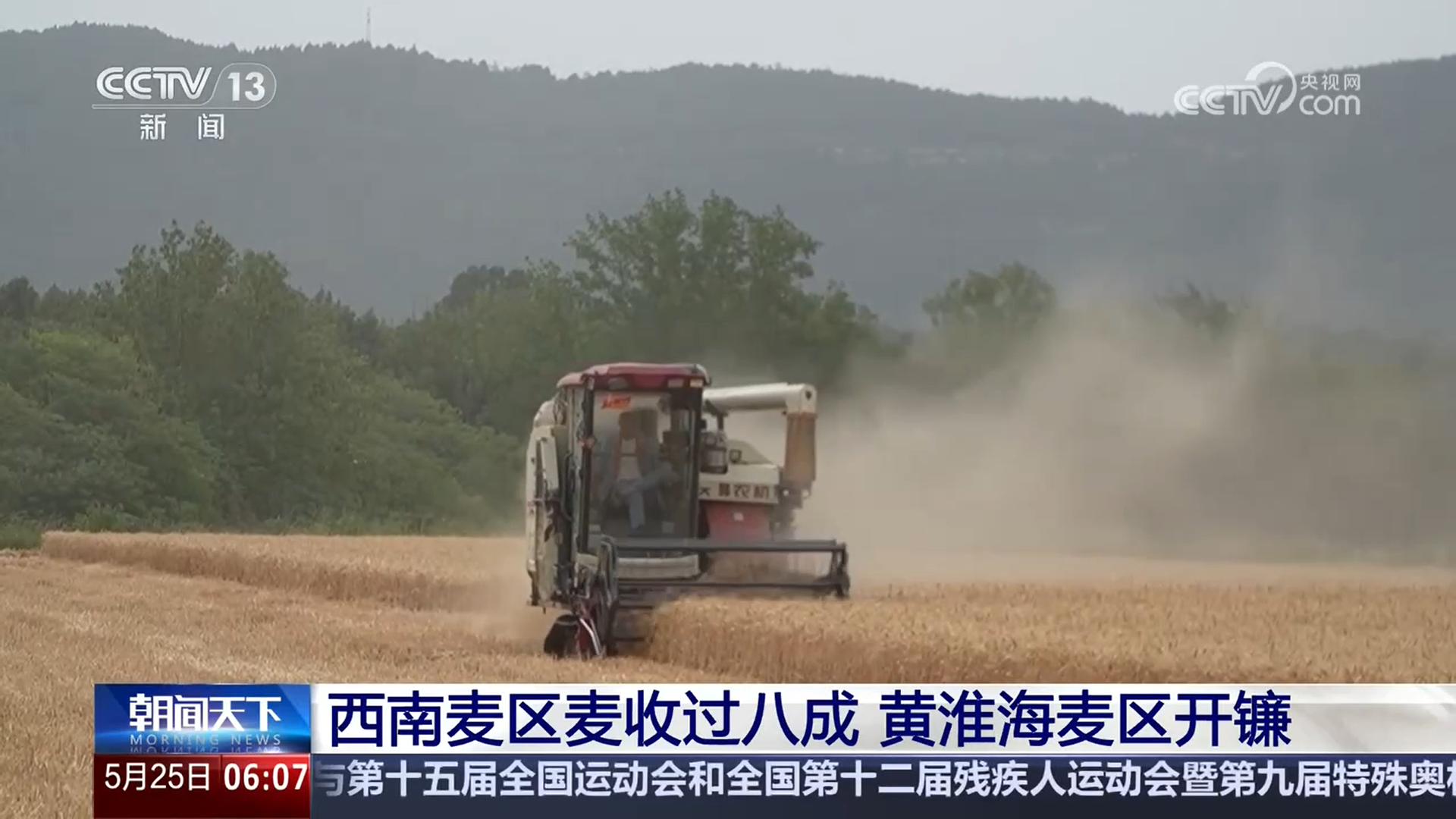
Group 1 - The national wheat harvesting is progressing from south to north, with over 80% of the harvest completed in the Southwest wheat region and the Huang-Huai-Hai region entering the harvesting phase [1] - Sichuan, a key area in the Southwest wheat region, has completed the harvesting of approximately 6.2 million acres, with expectations to finish by the end of the month, slightly ahead of last year [3] - In Hubei province, over 90% of the 15 million acres of wheat has been harvested, with grain purchasing enterprises already acquiring more than 150 million jin of new wheat [3] Group 2 - The Huang-Huai-Hai region is the largest and most productive wheat area in China, with mechanical harvesting activities ramping up in Henan, Anhui, and Jiangsu [3] - In Anhui province, approximately 43.42 million acres of wheat are being harvested, with farmers working to collect wheat at the right maturity to minimize losses [3] - In Henan province, 85 million acres of wheat are entering the suitable harvesting period, with over 20% already harvested [4] Group 3 - The "Three Summer" period is characterized by the use of various agricultural machinery for harvesting, planting, and management [5] - Summer harvesting machinery includes combine harvesters, balers, and dryers, which are essential for efficient grain collection and storage [7] - The summer planting machinery consists of seeders, transplanters, and tillers, which prepare the land and plant crops after the harvest [9] Group 4 - The use of advanced agricultural machinery is increasing, with smart technologies such as Beidou and 5G being integrated into farming practices, including autonomous machines and agricultural drones [9]
一位斯洛伐克老人同中国的情缘
Xin Hua Wang· 2025-05-25 01:50
Group 1 - The article highlights the enduring friendship and cooperation between Slovakia and China, as exemplified by Edward Šebó's role in promoting agricultural collaboration [1][2] - Edward Šebó, the chairman of Slovak United Industrial Company, has been appointed as a cooperation promotion advisor for the China-Czech-Slovak Friendship Farm in Hebei, China [1] - The historical context includes the donation of 670 sets of agricultural machinery from Czechoslovakia to China in 1956, which laid the foundation for ongoing agricultural cooperation [1][2] Group 2 - Šebó's family has a background in grape cultivation and winemaking, and he established a winery in partnership with the China-Czech-Slovak Friendship Farm, serving as a model for agricultural cooperation between Slovakia and China [2] - The farm has hosted multiple editions of the China-Central and Eastern Europe Wine Competition, showcasing the cultural and economic ties between the regions [2] - The establishment of the China-Central and Eastern Europe (Cangzhou) SME Cooperation Zone in 2018 further emphasizes the growth of collaborative efforts in the region [2] Group 3 - Šebó emphasizes the importance of remembering past collaborations and achievements as a foundation for future cooperation between China and Europe [3]
甘肃通渭:“双补”赋能农机驰骋 解锁乡村振兴动力密码
Zhong Guo Fa Zhan Wang· 2025-05-23 09:19
Core Insights - The introduction of a "double subsidy" policy in Tongwei County significantly reduces the cost of agricultural machinery for farmers, allowing them to save nearly 40% on purchases [1][2] - The policy aims to enhance agricultural mechanization and modernize farming practices in the region, with a target of exceeding 75% mechanization rate by the end of 2025 [2] Subsidy Policy - The "double subsidy" policy allows farmers to receive both provincial and county-level subsidies, creating a differentiated support system [1] - In 2023, the county secured a total of 15.3 million yuan in central financial subsidies, benefiting 964 households with a total of over 6.43 million yuan in subsidies [1] Agricultural Machinery Optimization - The subsidy program covers 23 categories and 146 types of agricultural machinery, leading to a significant optimization of the machinery structure in Tongwei County [2] - The proportion of tillage machinery has reached 47%, and the number of grass and livestock industry machinery has increased by 10% [2] Modernization and Innovation - The county is actively promoting the replacement of old agricultural machinery with energy-efficient and safe new equipment, completing the scrapping and updating of 723 old machines last year [2] - Plans are in place to pilot smart agricultural technologies, including Beidou navigation and unmanned machinery, to further enhance agricultural modernization [2]
三农记者的麦田日记丨“河南就像第二故乡”
He Nan Ri Bao· 2025-05-22 23:55
Core Viewpoint - The article highlights the efficient support system established in Dengzhou for cross-regional harvesting, emphasizing the provision of services and resources to assist harvesting machine operators during the busy wheat harvesting season. Group 1: Service Initiatives - Dengzhou has set up five reception service stations for cross-regional harvesting machines to ensure smooth agricultural production during the "Three Summer" period [3] - The service stations provide "warm packages" containing essential items such as operation guidelines, towels, soap, mineral water, and heat-relief medications to the harvesting machine operators [1][3] - The local agricultural machinery industry association expresses a welcoming attitude towards external operators, aiming to alleviate their concerns through thoughtful services [3] Group 2: Operational Efficiency - A significant influx of cross-regional harvesting machines has been reported in Dengzhou, indicating a mobilization for the wheat harvesting season [3] - The service stations help operators connect with local agricultural departments, facilitating efficient coordination and reducing the chances of operators being unable to find work [2][3] - The local authorities are actively managing the flow of harvesting machines based on the actual needs of various townships, ensuring timely harvesting as wheat matures [3]
三农记者的麦田日记丨24小时待命的“农机医生”
He Nan Ri Bao· 2025-05-21 23:33
又到一年麦收时。麦浪翻滚,农机驰骋,金色的田野收获着希望。麦香氤氲中发生着哪些新的故事?本 报今起开设"三农记者的麦田日记"栏目,请跟随记者的所见所闻所感,倾听中原大地加快建设农业强省 的足音,体味"中原粮仓"牢牢扛稳粮食安全重任的担当。 核心提示 时间:5月21日星期三 地点:邓州市 天气:晴 5月21日一大早,邓州市佳霖农业机械销售有限公司的维修师王刚就接到一个系统发来的派修单。 派修信息显示,在陶营乡胡营村的一处麦田里,正在收获小麦的农机因为出现故障不得不暂停作业。 "你好刘师傅,你现在给我发个位置,我这就过去给你换传感器零件。"王刚迅速和收割机机手取得联 系。 "维修系统显示,他这个收割机需要换传感器零件,我现在取了零件就可以过去,更换过程很快。"和我 们搭着话,王刚快步走进公司的农业专用配件室,在众多配件里取出维修要用的配件,动作快速准确。 "出发!去胡营村。"一声招呼,我们随王刚一起上了车。 15分钟后,我们来到了胡营村,来自山东德州的机手刘海彬和几个人正在田里焦急地等待。 "其实这个零件坏了不影响用,我教你操作一下,下次再遇到类似情况可以先继续使用,不耽误收麦 子。"王刚对刘海彬说,"一会儿再给 ...