
证券交易所

Search documents
上交所、深交所、北交所,刚刚发布!
Zhong Guo Ji Jin Bao· 2025-09-05 10:51
Core Viewpoint - The three major stock exchanges in China have taken significant steps towards enhancing sustainable development information disclosure by revising the "Sustainable Development Report Preparation Guidelines" and inviting public feedback until September 19, 2025 [1][3]. Group 1: Purpose and Goals - The revision aims to guide listed companies in actively practicing sustainable development principles and to further standardize the disclosure of sustainable development information [3]. - The updated guidelines are expected to provide clearer and more actionable instructions for companies, particularly aiding small and medium-sized enterprises in adapting to ESG disclosure requirements [4][5]. Group 2: New Guidelines and Framework - Three new application guidelines have been introduced: "Pollutant Emissions," "Energy Utilization," and "Water Resource Utilization," which complement the previously released overall framework and climate change guidelines [4]. - The revisions follow principles such as reinforcing conceptual guidance, clarifying disclosure points, providing reference examples without imposing additional mandatory disclosures, and ensuring continuous improvement [5]. Group 3: Current Practices and Trends - A-share listed companies have shown significant progress in sustainable development information disclosure, with over 1,300 companies in the Shanghai market alone publishing separate sustainability reports in 2024, representing 57% of the total [6]. - In the Shenzhen market, 1,164 companies proactively published sustainability reports for 2024, accounting for over 40% of the total [6]. - The ESG investment ecosystem is expanding, with over 162 index products based on the China Securities ESG evaluation, collectively exceeding 260 billion yuan in scale, indicating a steady flow of long-term capital towards companies committed to sustainable development [7]. Group 4: Future Developments - The China Securities Regulatory Commission plans to guide the three exchanges in launching more detailed guidelines on various topics, gradually establishing a more complete, transparent, and practical sustainable development information disclosure rule system [8].

港交所陈翊庭:港交所正处理超200宗上市申请近半数为科技企业
Xin Lang Cai Jing· 2025-09-05 10:09
Group 1 - The Hong Kong stock market continues to show strong momentum, with over 200 companies currently processing listing applications, nearly half of which are from technology firms [1] - As of the end of August this year, there are 24 biotech companies under the 18A listing application process, along with 12 specialized technology companies that have submitted applications under the 18C chapter [1] - These companies span various cutting-edge fields, including visual intelligence, metaverse and digital content platforms, smart driving, and robotics, highlighting the strong appeal and inclusiveness of the Hong Kong market for innovative enterprises [1]

港交所,最新发声
Zhong Guo Zheng Quan Bao· 2025-09-05 08:12
Group 1 - The Hong Kong Stock Exchange (HKEX) is experiencing a significant increase in overseas investor participation in new stock subscriptions, particularly in technology companies, indicating strong international interest in China's technological innovation [1][2] - As of the end of August, the total financing amount for new stock issuance reached HKD 137.5 billion, a nearly sixfold increase compared to the same period in 2024, surpassing the global new stock financing growth rate [2] - The "A+H" listing model has been particularly successful, accounting for 70% of the total financing amount in the first half of the year, showcasing the strong momentum of the interconnection between mainland and Hong Kong markets [2] Group 2 - The total amount of refinancing reached HKD 358 billion by the end of August, more than double the amount raised in the new stock market during the same period, with nearly 40% of this coming from technology companies [3] - HKEX has been actively optimizing its listing system to support the development of technology companies, including the launch of a dedicated "Tech Company Fast Track" for specialized technology and biotech companies [4] - As of the end of August, there were 24 biotech companies and 12 specialized technology companies applying for listing under the new system, reflecting the strong appeal and inclusiveness of the Hong Kong market for innovative enterprises [4]
纳斯达克拟提高上市门槛 德勤:是否促使中概股转向香港上市有待观察
智通财经网· 2025-09-05 07:48
Group 1 - Nasdaq plans to modify listing rules, requiring companies primarily operating in China to raise at least $25 million in their public offerings, equivalent to nearly HKD 200 million [1] - Deloitte's South China managing partner, Ou Zhenxing, noted that the Hong Kong Stock Exchange has a lower fundraising threshold compared to Nasdaq, but companies must still meet listing criteria including profitability [1] - The proposal aims to strengthen liquidity and shareholder base for smaller listed companies, preventing excessive concentration of shares that could lead to significant price volatility [1] Group 2 - Nasdaq intends to increase the public float market value requirement for new listings to a minimum of $15 million and expedite the delisting process for companies with low trading volumes [1] - Approximately 80% of Chinese companies listed on Nasdaq in the first half of the year raised less than $25 million, indicating that smaller companies may consider listing on Hong Kong's GEM, although current liquidity and lack of institutional investors may limit this option [1]
摩根士丹利:市场交易量正慢慢由美股回流至港股
智通财经网· 2025-09-05 07:30
Core Viewpoint - The influx of capital into Hong Kong stocks has been significant this year, with approximately $129 billion flowing in, surpassing the total for the previous year, indicating a strong recovery and interest from international investors [1] Group 1: Market Activity - Southbound capital has been very active this year, with a cumulative inflow of about $129 billion into Hong Kong stocks, exceeding last year's total [1] - The average daily trading volume has maintained above $30 billion, nearly doubling year-on-year [1] - The discount of H-shares to A-shares continues to narrow, suggesting a shift in investor preference towards Hong Kong stocks [1] Group 2: Investor Sentiment - International investors are noticeably refocusing on the Hong Kong market, with increased participation from foreign capital in new stock issuances [1] - Sovereign funds and long-term capital are showing a very positive impact on the market, with recent inquiries from European and American investors [1] - Despite the rise in valuations of leading Chinese companies, there is still perceived potential for significant upside in valuations compared to U.S. stocks [1] Group 3: New Listings - The pricing, subscription multiples, and post-listing performance of new stocks in Hong Kong this year have been significantly better than in the past two years [1] - The increasing number of genuinely innovative companies listing in Hong Kong is a major attraction for foreign capital [1] - It is estimated that there will be many large new stock issuance projects exceeding $1 billion in the Hong Kong capital market in the coming months, indicating continued market activity [1]
香港交易所集团行政总裁陈翊庭:目前正在处理的上市申请超200家
Zheng Quan Ri Bao Wang· 2025-09-05 05:47
Group 1 - The core viewpoint of the article highlights the significant increase in international investor participation in Hong Kong's new stock market, particularly in technology companies, reflecting global capital's recognition of Chinese tech innovation [1][2] - In the first half of the year, Hong Kong's financial market was active, with record-high trading volumes in the spot market, derivatives market, and Stock Connect, leading to a new high in new stock market financing, totaling HKD 134.5 billion, a nearly sixfold increase compared to the same period last year [1] - The "A+H" listing model was particularly prominent, accounting for 70% of the fundraising amount in the first half of the year, indicating strong momentum in the linkage between mainland and Hong Kong markets [1] Group 2 - The Hong Kong Stock Exchange is currently processing over 200 listing applications, with half being technology companies, indicating a robust pipeline for new tech listings [1] - The total amount of refinancing as of the end of August was more than double the new stock financing amount, with nearly 40% of refinancing activities coming from technology companies, showcasing long-term confidence in the tech sector [1] - The introduction of the "Tech Company" special line has led to 24 applications from biotech companies and 12 applications from specialized tech companies, covering various cutting-edge fields such as visual intelligence and robotics, demonstrating the market's inclusivity and attractiveness for innovative enterprises [2]
港交所总裁陈翊庭:A+H股占新股融资七成、海外投资者热情高,新股融资额重回全球交易所榜首
Mei Ri Jing Ji Xin Wen· 2025-09-05 03:29
Core Insights - Hong Kong Stock Exchange (HKEX) has experienced a strong market performance in the first half of the year, with record trading volumes in spot and derivative products, as well as in the Stock Connect program with mainland China [1][3] - New equity financing in Hong Kong reached HKD 134.5 billion by the end of August, marking a nearly sixfold increase compared to the same period in 2024, with A+H listings accounting for 70% of total financing [3] - The interest from international investors in subscribing to new shares, particularly in technology companies, indicates a growing confidence in China's technological innovation [3] Company and Industry Developments - The total amount of refinancing for companies listed in Hong Kong reached HKD 358 billion by the end of August, more than double the new equity fundraising during the same period, with nearly 40% of this coming from technology firms [3] - The Hong Kong Stock Exchange has launched a "Tech Company Fast Track" to provide one-stop listing consultation services for specialized technology and biotech companies, enhancing communication efficiency and transparency [3][5] - As of the end of August, there are 24 biotech companies and 12 specialized tech companies with listing applications in process, showcasing Hong Kong's strong appeal and inclusivity for innovative enterprises [4] Regulatory Changes - HKEX has implemented reforms to optimize the new share pricing mechanism and public market requirements, which include relaxing public shareholding ratio requirements and increasing institutional investor participation in new share pricing [5]
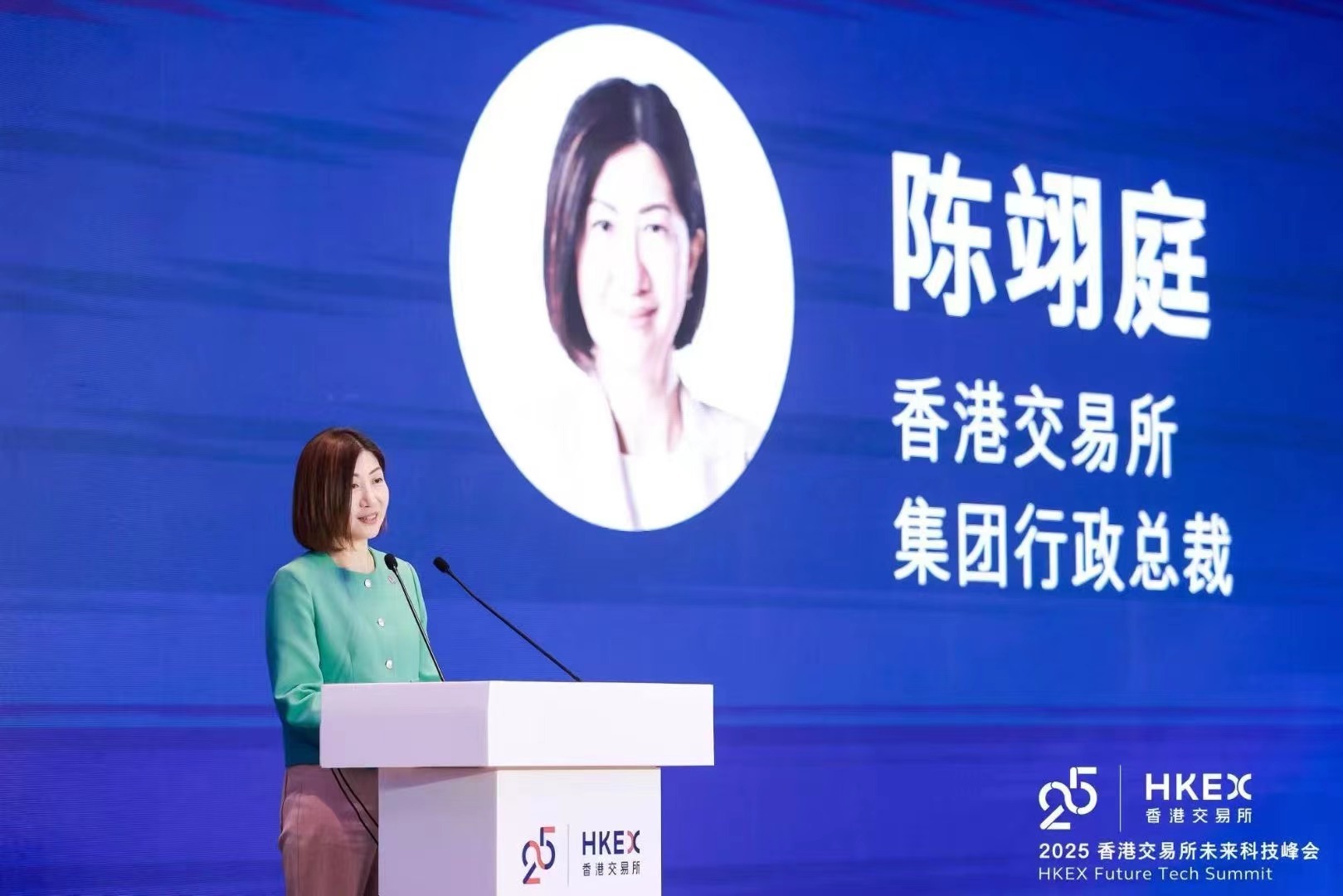
港交所陈翊庭:海外投资者参与新股认购热情明显上涨
Zheng Quan Shi Bao Wang· 2025-09-05 02:16
MACD金叉信号形成,这些股涨势不错! 责任编辑:杨赐 9月5日,在香港交易所举办的未来科技峰会上,香港交易所行政总裁陈翊庭表示,海外投资者参与新股 认购的热情明显上涨,近期,不少国际长线资金都积极参与了一些科创公司的新股认购,显示了国际投 资者对中国科技创新的浓厚兴趣。 她还表示,目前港股新股市场的强劲势头仍在持续,目前上市科正在处理的上市申请超过200家企业, 其中接近一半来自科技企业。 ...
纳斯达克拟调整上市规则:提高公众持股门槛并强化对中国公司IPO要求
Ge Long Hui A P P· 2025-09-05 01:47
Core Viewpoint - Nasdaq has proposed significant rule changes to the SEC aimed at enhancing the quality of listed companies and strengthening investor protection, which will directly impact Nasdaq-listed companies, particularly regarding public shareholding thresholds, delisting processes, and IPO requirements for Chinese companies [1] Group 1: Public Shareholding Threshold - The proposed rule increases the minimum public shareholding threshold from $5 million to $15 million, ensuring that listed companies have sufficient liquidity and a broad investor base, thereby enhancing market stability and the reliability of stock price performance [1] Group 2: Delisting and Trading Suspension Measures - For companies with a market capitalization below $5 million, the proposed rule accelerates the process for trading suspension and delisting, meaning that companies failing to meet financial performance standards or having low market capitalization will face quicker regulatory actions and delisting risks, improving overall market transparency and safety [1] Group 3: IPO Requirements for Chinese Companies - Nasdaq has introduced specific requirements for Chinese companies, mandating that funds raised through IPOs must reach at least $25 million, aimed at ensuring that Chinese enterprises have adequate capital strength when listing on Nasdaq and enhancing investor confidence in their financial stability, which may directly affect some Chinese companies planning to go public in the U.S. [1]

陈翊庭:今年港股新股融资大幅增长 A+H模式贡献七成
Zhi Tong Cai Jing· 2025-09-05 01:40
Group 1 - The core viewpoint of the article highlights a significant recovery in the Hong Kong stock market's IPO financing, with a total of HKD 137.5 billion raised by the end of August, representing a nearly sixfold increase compared to the same period in 2024, which outpaces the overall performance of the global IPO market [1] - The CEO of Hong Kong Exchanges and Clearing (HKEX) noted that the increased activity in IPO financing reflects a sustained enhancement in market confidence, particularly emphasizing the strong performance of the "A+H" listing model, which accounted for 70% of the total financing in the first half of the year, serving as a crucial driver for market growth [1] - Industry insiders believe that HKEX's institutional innovations and the active participation of mainland enterprises are bringing new development opportunities to the Hong Kong capital market, further solidifying Hong Kong's status as an international financial center [1]