
科技企业上市

Search documents
港股IPO开年高景气:科技赋能焕新颜、质效把控守底线
Sou Hu Cai Jing· 2026-02-23 06:01
Group 1 - The Hong Kong IPO market has shown significant activity in early 2026, with 24 companies successfully listed by February 23, achieving a record of zero first-day price drops for new stocks [2] - Mainland companies, such as XWANDA and Igor, are driving this IPO surge, indicating a strong future for the Hong Kong IPO market [2] - Over 140 companies have submitted listing applications since the beginning of 2026, marking a new wave of IPO activity, particularly from technology firms [3] Group 2 - The concentration of technology companies is a key driver of market vitality, with 66 out of the 140 companies being in software services, biomedicine, and hardware sectors [4] - The Hong Kong IPO market raised over HKD 280 billion in 2025, with technology firms accounting for approximately 70% of the total fundraising [5] - Major tech companies like Zhipu and Zhaoyi Innovation have reached market capitalizations exceeding HKD 100 billion, highlighting the growing importance of tech in the market [5] Group 3 - Concerns about a potential backlog of IPO applications and the quality of new listings have emerged, with over 488 companies currently waiting to go public [6] - The Hong Kong Stock Exchange (HKEX) has assured that it will maintain a balance in supply and demand, preventing an IPO backlog, and is committed to high-quality listings [6][7] - HKEX plans to implement reforms in listing regulations and improve market efficiency, aiming for a sustainable and competitive IPO environment [9]




科技企业踊跃上市凸显创新活力
Zheng Quan Ri Bao· 2025-11-25 16:48
Core Insights - The technology attributes of China's capital market have been increasingly highlighted since November, with a surge in technology companies going public and preparing for IPOs [1] Group 1: Technology Companies Going Public - The A-share market has seen the emergence of a "domestic GPU first stock," Moer Thread Intelligent Technology, which opened for subscription on November 24 at a price of 114.28 yuan per share [2] - As of November 25, 96 companies have gone public in the A-share market this year, with 64 new stocks issued on the Sci-Tech Innovation Board, Growth Enterprise Market, and Beijing Stock Exchange, raising over 56.2 billion yuan [2] - Newly listed technology companies are focusing on strategic emerging industries such as new generation information technology, new materials, biotechnology, and high-end equipment manufacturing [2] Group 2: Unlisted Technology Leaders Preparing for IPOs - Unlisted technology leaders are actively advancing their IPO preparations, with Yushu Technology entering the counseling acceptance phase for its IPO [3] - The listing cases of leading technology companies set benchmarks for the industry, encouraging more firms to seek financing through technological innovation [3] Group 3: Policy Support for Technology Companies - The surge in technology company IPOs is supported by a continuous enhancement of the policy framework and institutional innovation, shifting the listing evaluation criteria from "profit-oriented" to "technology-oriented" [3][4] - The China Securities Regulatory Commission has introduced several policy documents aimed at providing a financial service system that aligns with the entire chain of technological innovation activities [4] - Local governments are also actively promoting the listing of technology companies, with Zhejiang Province setting a goal for over 80% of new listed companies to be in the technology sector by 2027 [4] Group 4: Market Narrative Shift - The policy tilt from central and local governments allows technology companies to access capital markets earlier, shifting the market narrative from "scale expansion" to "hardcore innovation and industrial upgrading" [5]
港交所陈翊庭:香港IPO融资额全球第一,科技企业占近半申请
Zhong Guo Jing Ying Bao· 2025-10-22 05:45
Core Insights - Hong Kong's IPO financing amount ranks first globally this year, driven by recent listing policy reforms that have revitalized the capital market and attracted numerous high-quality companies, particularly in the technology sector [1] - Nearly half of the companies that have submitted listing applications are from the technology sector, indicating a significant shift towards tech-focused listings [1] - International investors are increasingly active in the Hong Kong IPO market, with a notable rise in participation from overseas investors, particularly from Europe, the Middle East, and emerging markets, reflecting strong confidence in China's technological innovation [1] - The performance of "A+H" listed companies has been outstanding, accounting for nearly half of the total IPO financing in the first nine months, showcasing the strong momentum of the interconnectedness between the mainland and Hong Kong markets [1]

【锋行链盟】新加坡证券交易所IPO流程及核心要点
Sou Hu Cai Jing· 2025-10-05 17:12
Core Viewpoint - Singapore Exchange (SGX) serves as a leading international securities exchange in Southeast Asia, attracting numerous companies from the Asia-Pacific region and globally for Initial Public Offerings (IPOs). The IPO process is characterized by market-driven, efficient, and stringent information disclosure standards, divided into two main segments: Mainboard for mature companies and Catalist for high-growth firms [2]. SGX IPO Process - The typical SGX IPO process takes 6-12 months, with the Catalist segment potentially being shorter. The process includes several stages: 1. Preliminary preparation and strategic planning (1-3 months) 2. Due diligence and document drafting (2-4 months) 3. Submission of listing application and review (2-4 months) 4. Roadshow and pricing (1-2 months) [2][3][4][5]. Self-Assessment and Team Formation - Companies must choose between the Mainboard and Catalist based on their scale, profitability, and industry characteristics. The Mainboard is suitable for mature companies with specific financial metrics, while the Catalist is designed for high-growth firms without mandatory profitability requirements, relying on sponsor evaluations and market recognition [6][8]. - A core intermediary team is essential, including: - Sponsor: Leads the entire listing process, responsible for due diligence and compliance guidance. - Lawyer: Handles legal compliance. - Accountant: Audits financial statements according to international standards. - Underwriter (optional): Assists with roadshows, pricing, and share sales [6]. Comprehensive Due Diligence - The intermediary team conducts a thorough examination of the company across various dimensions, focusing on: - Ownership structure and compliance history. - Financial authenticity and tax compliance. - Business sustainability and competitive advantages. - Compliance risks related to environmental and labor laws [6][19]. Prospectus Drafting and Submission - The prospectus must comply with the Securities and Futures Act (SFA) and SGX listing rules, detailing business operations, financials, risk factors, and management information, subject to legal and SGX pre-review [6][19]. Listing Conditions: Mainboard vs. Catalist - **Mainboard Requirements**: - Profitability tests: Cumulative profit of at least SGD 10 million over three years, with at least SGD 2 million in the most recent year. - Market capitalization/income tests: Minimum market cap of SGD 300 million with recent income of SGD 30 million [7]. - **Catalist Requirements**: - No mandatory profitability requirements, but sponsors must demonstrate sufficient operational history (typically ≥2 years) and growth potential [8]. SGX Review Focus Areas - SGX emphasizes the adequacy of information disclosure, sustainability of financial data, and corporate governance during the review process [19]. Key Factors for IPO Success - Engaging in global roadshows to present company value and growth strategies to institutional investors is crucial. The underwriter determines pricing based on investor demand, ensuring oversubscription [18]. - Post-listing, companies must adhere to ongoing compliance obligations, including regular reporting and disclosure of significant events [18]. Special Trends: ESG and Technology-Friendly Policies - SGX has intensified its focus on Environmental, Social, and Governance (ESG) disclosures, requiring IPO companies to detail their ESG strategies in the prospectus [21]. - The Catalist segment supports technology firms, allowing them to substitute profitability metrics with indicators of research progress and market validation [21].
港交所行政总裁陈翊庭:港股IPO申请超200宗 近半为科技企业
Shang Hai Zheng Quan Bao· 2025-09-05 20:21
Group 1 - The core viewpoint is that the Hong Kong stock market has seen a significant increase in new stock issuance this year, with total financing reaching HKD 134.5 billion by the end of August, nearly six times higher than the same period in 2024, surpassing the global new stock financing growth rate [1] - The "A+H" listing model has performed exceptionally well, with related enterprises accounting for 70% of total financing in the first half of the year, indicating strong momentum between the A-share and Hong Kong markets [1] - Nearly 40% of the total refinancing this year has come from technology companies, reflecting global investors' long-term optimism towards the tech sector [1] Group 2 - The Hong Kong Stock Exchange launched the "Tech Company Fast Track" in May to provide one-stop listing consultation services for 18C special technology companies and 18A biotech companies, aimed at improving communication efficiency and transparency [1][2] - As of the end of August, there are 24 biotech companies and 12 special technology companies currently processing listing applications, showcasing the market's strong appeal and inclusiveness for innovative enterprises [2] - The Hong Kong Stock Exchange is processing over 200 listing applications, with nearly half being technology companies, indicating sustained interest from international long-term funds in China's tech innovation [4]

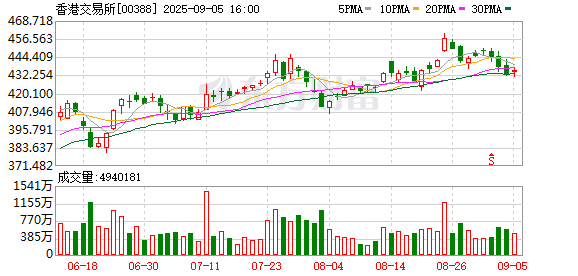
港交所陈翊庭:港交所正处理超200宗上市申请近半数为科技企业
Xin Lang Cai Jing· 2025-09-05 10:09
Group 1 - The Hong Kong stock market continues to show strong momentum, with over 200 companies currently processing listing applications, nearly half of which are from technology firms [1] - As of the end of August this year, there are 24 biotech companies under the 18A listing application process, along with 12 specialized technology companies that have submitted applications under the 18C chapter [1] - These companies span various cutting-edge fields, including visual intelligence, metaverse and digital content platforms, smart driving, and robotics, highlighting the strong appeal and inclusiveness of the Hong Kong market for innovative enterprises [1]
科学家创业,融资成功却上市失败!
Sou Hu Cai Jing· 2025-08-15 09:50
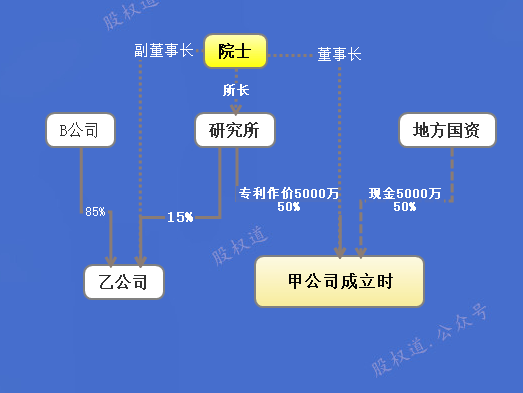
Core Viewpoint - The company faced a failed IPO attempt on the Sci-Tech Innovation Board despite significant initial funding and a high valuation due to complex ownership and governance issues involving a prominent academician [1][42]. Group 1: Company Background - The company, referred to as Company A, was established in 2011 with a registered capital of 100 million yuan, with equal ownership from a research institute and local state-owned assets [3]. - The academician served as the chairman of Company A while not holding shares directly, and also held a vice-chairman position in another company, Company B [4][6]. Group 2: Ownership Changes - In 2016, Company C acquired a 56.5% stake in Company A, subsequently transferring 40% of that stake to the academician for just 1 yuan, raising concerns about the legitimacy of this transaction [13][25]. - By 2018, the academician had accumulated a total of 56.48% ownership in Company A, with Company C retaining 40.19% [26]. Group 3: IPO Preparation and Challenges - In 2020, Company A attempted to list on the Sci-Tech Innovation Board, incurring significant costs to restructure its ownership and comply with regulatory requirements [29]. - The IPO application was met with scrutiny regarding the academician's dual roles and the legitimacy of the share transfers, leading to questions about potential conflicts of interest and governance compliance [39][41]. Group 4: IPO Outcome - The first attempt to list was postponed due to concerns over the academician's share acquisition process and the potential for state asset loss [38][42]. - Ultimately, the IPO was denied primarily due to doubts about the company's technical independence and governance structure, despite the academician's financial contributions [40][42].

市场观察人士:链接科技企业与全球资本,港股市场重塑新生态
news flash· 2025-05-26 18:24
Core Viewpoint - The Hong Kong stock market is experiencing a surge in technology company listings, with many firms possessing core technologies and global competitive advantages flocking to the Hong Kong Stock Exchange [1] Group 1: Market Dynamics - A number of technology companies have successfully listed, while others are awaiting hearings or are in the process of preparing for their listings [1] - Market observers indicate that the Hong Kong stock market is evolving into a crucial hub for global technology capital, attracting thriving mainland technology firms and connecting them with global investors seeking quality targets [1] Group 2: Role of Hong Kong Stock Exchange - The Hong Kong Stock Exchange is playing a significant bridging role, increasingly becoming a "super link" between the technology industry and international capital [1] - This transformation not only enriches the industrial structure of the Hong Kong stock market but also enhances its strategic position in the international financial landscape [1]
市场成交缩量,上证50走势偏强
Hua Tai Qi Huo· 2025-05-23 05:33
Report Industry Investment Rating - Not provided in the content Core Viewpoints - The tax reform proposal passed by the US House of Representatives to gradually cancel tax incentives in the clean energy sector has put pressure on the entire photovoltaic industry chain, and the three major US stock indexes show a differentiated pattern. China continues to improve the science - technology financial support system and strengthens the financing guarantee for technology - based enterprises through multi - dimensional policy tools. The market is in a shrinking adjustment with structural characteristics, and the trend of the Shanghai Stock Exchange 50 Index is more certain [3] Summary by Directory 1. Market Analysis - **Domestic Policy**: The Financial Regulatory Administration is formulating policies for the high - quality development of science - technology insurance and promoting insurance funds to participate in major national science - technology tasks. The CSRC will support science - technology enterprises that break through key core technologies to use the "green channel". Nearly 100 institutions have issued over 250 billion yuan of science - technology innovation bonds. The CSRC will optimize the domestic listing environment for science - technology enterprises, implement a more flexible and precise new - share issuance counter - cyclical adjustment mechanism, and support high - quality red - chip science - technology enterprises to return to the domestic market [1][2] - **Overseas Policy**: Trump's tax - cut bill passed the House of Representatives and will be submitted to the Senate for review. The bill plans to cut taxes by over 4 trillion US dollars in the next decade, cut at least 1.5 trillion US dollars in spending, and raise the US debt ceiling by 4 trillion US dollars, which is lower than the Senate's expectation of 5 trillion US dollars [1] - **Stock Index Performance**: In the spot market, the three major A - share indexes closed down. The Shanghai Composite Index fell 0.22% to 3380.19 points, and the ChiNext Index fell 0.96%. Only the banking, media, and household appliance sectors closed up, while the beauty care, social services, basic chemicals, and environmental protection sectors led the decline. The trading volume of the Shanghai and Shenzhen stock markets decreased slightly to 1.1 trillion yuan. Overseas, the three major US stock indexes closed mixed, with the Dow Jones Industrial Average remaining flat at 41859.09 points, the S&P 500 Index falling 0.04% to 5842.01 points, and the Nasdaq Composite Index rising 0.28% to 18925.73 points [2] - **Futures Market**: In the futures market, the basis of IF, IC, and IM rebounded. The trading volume and open interest of IH, IC, and IM increased simultaneously [2] 2. Macro - economic Charts - The content mainly includes charts showing the relationship between the US dollar index and A - share trends, US Treasury yields and A - share trends, RMB exchange rates and A - share trends, and US Treasury yields and A - share style trends [6][9][10] 3. Spot Market Tracking Charts - **Stock Index Performance**: The daily performance of major domestic stock indexes on May 22, 2025, shows that the Shanghai Composite Index fell 0.22%, the Shenzhen Component Index fell 0.72%, the ChiNext Index fell 0.96%, the CSI 300 Index fell 0.06%, the Shanghai Stock Exchange 50 Index rose 0.87%, the CSI 500 Index fell 0.95%, and the CSI 1000 Index fell 1.08% [12] - **Other Charts**: Charts of the trading volume of the Shanghai and Shenzhen stock markets and the margin trading balance are also included [12] 4. Stock Index Futures Tracking Charts - **Trading Volume and Open Interest**: The trading volume and open interest data of IF, IH, IC, and IM are presented. For example, the trading volume of IF is 72125 (a decrease of 5644), and the open interest is 233159 (a decrease of 1805) [15][17] - **Basis**: The basis data of different contracts (current month, next month, current quarter, and next quarter) of IF, IH, IC, and IM are provided, along with their changes [37] - **Inter - period Spread**: The inter - period spread data and their changes between different contract months (next month - current month, next quarter - current month, etc.) of stock index futures are given [42][43]
5月22日晚间新闻精选
news flash· 2025-05-22 13:46
Group 1 - The central bank announced a 500 billion MLF operation with a fixed amount and interest rate bidding, with a term of one year [1] - The Financial Regulatory Bureau stated that the first batch of pilot reforms for long-term investment of insurance funds is 50 billion, the second batch is 112 billion, and a third batch of 60 billion is pending approval, totaling 222 billion [2] - The CSRC's Chief Risk Officer emphasized the continuous optimization of the domestic listing environment for technology companies, supporting high-quality red-chip tech firms to return to domestic listings [3] Group 2 - Xiaomi launched the Xiaomi 15S Pro, Pad 7 Ultra, and Watch S4, all equipped with the self-developed Xuanjie chip; the Xiaomi YU 7 was officially released, positioned as a "luxury high-performance SUV" [4] - Three Life Health reached a cooperation with Pfizer on project 707, with uncertainties regarding the sales milestone payments and royalties [5] - Nanjing Port saw an 8-day cumulative increase of 102.4%, with individual investors accounting for 88.47% of purchases [5]



