基金销售

Search documents
公告速递:财通资管丰和两年定开债券基金暂停大额申购、转换转入、定期定额投资业务
Sou Hu Cai Jing· 2025-12-23 01:31
证券之星消息,12月23日财通证券资产管理有限公司发布《财通资管丰和两年定期开放债券型证券投资 基金暂停大额申购、转换转入、定期定额投资业务公告》。公告中提示,为维护财通资管丰和两年定期 开放债券型证券投资基金的稳定运作,保护基金份额持有人的利益,自2025年12月23日起财通资管丰和 两年定期开放债券型证券投资基金暂停大额申购、转换转入、定期定额投资业务,申购、转换转入上限 金额为1.0万元,下属分级基金调整明细如下: (3)自2025年12月23日起,本公司将调整本基金A类、C类份额在"北京汇成基金销售有限公司、上海 基煜基金销售有限公司"的大额申购(含转换转入、定期定额投资)业务。届时起,若单日单个基金账 户单个渠道的单笔申购(含转换转入、定期定额投资)金额超过人民币1亿元(不含)的,本公司将有 权对超过1亿元的部分予以拒绝。若单日单个基金账户单个渠道多笔累计申购(含转换转入、定期定额 投资)金额超过人民币1亿元的,则对申请按照申请金额从大到小排序,逐笔累加至符合不超过人民币1 亿元(含)限额的申请确认成功,对超过1亿元的部分及其余笔数本公司将有权予以拒绝。本基金A类份额 和C类份额分别单独判断。 (4 ...


海富通基金管理有限公司关于旗下部分基金新增易方达财富管理基金销售(广州)有限公司为销售机构并参加其申购费率优惠活动的公告
Xin Lang Cai Jing· 2025-12-21 20:41
Core Viewpoint - The announcement details the partnership between Hai Futong Fund Management Co., Ltd. and E Fund Wealth Management Fund Sales (Guangzhou) Co., Ltd., allowing E Fund Wealth to sell certain open-end funds from Hai Futong starting December 23, 2025, with promotional fee rates for investors [1][3]. Group 1: Applicable Funds and Business Operations - The specific funds that will be available for sale through E Fund Wealth are not listed in the announcement [1]. - Investors can open accounts, subscribe, and redeem the mentioned open-end funds through E Fund Wealth starting from December 23, 2025, with the process subject to E Fund Wealth's regulations [1]. Group 2: Investor Eligibility and Fee Discounts - The fee discount activity applies to investors who meet legal and contractual requirements [2]. - From December 23, 2025, investors purchasing the specified open-end funds through E Fund Wealth will benefit from a fee discount with no restrictions on the discount rate, except for fixed fee transactions [3][6]. Group 3: Important Notes and Contact Information - The fee discount is applicable only to the front-end fee model of the funds during the normal subscription period at E Fund Wealth [6]. - Investors are encouraged to read the fund contracts, prospectuses, and related legal documents for detailed information [5]. - For inquiries, investors can contact E Fund Wealth or Hai Futong Fund Management through their respective websites and customer service numbers [9].
新规在路上!基金销售要“变天”?
Guo Ji Jin Rong Bao· 2025-12-18 15:04
Core Viewpoint - The China Securities Investment Fund Industry Association (CSRC) has issued a draft regulation aimed at standardizing fund sales behavior, enhancing investor protection, and supporting the high-quality development of public funds [1][8]. Group 1: General Promotion and Marketing Behavior - The draft regulation specifies that fund performance must be displayed for a minimum of six months and prohibits annualized performance displays for periods under one year [2]. - Fund performance rankings must be based on publicly available data from fund evaluation agencies for periods longer than three years, including necessary disclosures [2]. - The use of terms like "positive return" or "probability of positive return" is banned to prevent misleading investors about risks [2][3]. - Fund managers and sales institutions are required to avoid exaggerated or misleading promotional language and cannot promote fund size or growth [2][3]. Group 2: Live Streaming Regulations - The draft includes strict guidelines for live streaming promotions, stating that only qualified personnel can conduct fund-related discussions [4]. - Non-qualified platforms are prohibited from engaging in fund sales or collecting investor transaction information [4]. - Live streaming scripts must undergo compliance review, and platforms must maintain records of promotional materials for at least 20 years [4]. Group 3: Fee Disclosure - Fund management and sales institutions must clearly disclose all fees associated with fund transactions, including subscription, redemption, and maintenance fees [5]. - Sales institutions are required to provide detailed information about service fees and cannot use misleading statements regarding fee waivers [5]. Group 4: Long-term Orientation in Sales Performance - The draft emphasizes the need for a scientific approach to sales performance evaluation, focusing on long-term investor outcomes rather than short-term sales metrics [6]. - The traditional focus on sales volume is to be replaced with metrics that assess investor profitability and retention over longer periods [6]. - Performance evaluation criteria must include a minimum assessment period of one year for sales activities and three years for investor outcomes [6]. Group 5: Industry Impact and Future Directions - The new regulations are seen as a significant shift in the industry, aiming to correct previous marketing practices that prioritized scale over investor returns [8]. - The draft is part of a broader initiative to enhance investor experience and ensure that sales practices align with long-term investment goals [8][9]. - The industry is encouraged to focus on investor education and transparent fee structures to build trust and improve client relationships [9].
【利得基金】基金销售新规划定多重红线
Sou Hu Cai Jing· 2025-12-18 08:19
Group 1: Fund Sales Regulation - The China Securities Investment Fund Industry Association issued a draft regulation aimed at improving fund sales practices, focusing on investor interests and addressing issues like "heavy sales, light service" [1] - Key measures include prohibiting the display of annualized performance for funds with a duration of less than one year, banning the promotion of fund managers' personal achievements, and requiring certified personnel for live sales [1] - The regulation emphasizes a shift towards a sales philosophy centered on the real long-term returns for investors [1] Group 2: Hong Kong Stock Exchange Technology Index - The Hong Kong Stock Exchange launched the Hang Seng Tech 100 Index, which tracks the performance of the 100 largest technology companies listed in Hong Kong [2] - The index covers six major innovation themes: artificial intelligence, biotechnology and pharmaceuticals, electric vehicles and smart driving, information technology, internet, and robotics [2] Group 3: QDII Product Subscription Limits - Recent adjustments to subscription limits for certain QDII products have raised market attention, with thresholds changing from 100,000 yuan to as low as 100 yuan within three days [3] - Many QDII products are now imposing very low subscription limits, with some set at 100 yuan or below [3] - Experts advise investors to avoid blindly chasing QDII products with opened quotas, as this does not guarantee good performance or optimal investment timing [3] Group 4: Market Outlook - Huatai Securities suggests focusing on structural clues from the Central Economic Work Conference, emphasizing domestic demand, innovation in AI, and the importance of financial technology [4] - The report highlights the need for risk management in real estate and encourages investment in energy and construction sectors [4] - The upcoming Federal Reserve meeting is expected to influence market liquidity, with a dovish outlook anticipated [4] Group 5: Investment Recommendations - Following recent economic meetings, the focus is on sector-specific investment opportunities, particularly in AI, lithium batteries, military, and certain consumer goods [5] - The report suggests adjusting investment strategies to increase exposure to seasonal, industrial, and policy-driven themes while reducing allocations to domestic cyclical assets [5] Group 6: Focus on Consumer and Cyclical Sectors - Dongfang Securities identifies a potential resurgence in mid-cap blue-chip stocks, particularly in the consumer sector, which has been undervalued [6] - The cyclical sector is also highlighted for its potential due to technological empowerment and supply constraints, with a focus on new materials and strategic metals [6] - The report recommends monitoring themes such as aerospace, nuclear fusion, and semiconductor sectors for investment opportunities [6]
基金销售行为规范出台 哪些卖基金的“常见操作”不再合规了?
2 1 Shi Ji Jing Ji Bao Dao· 2025-12-17 23:24
Core Viewpoint - The recent draft of the "Regulations on the Sales Behavior of Publicly Raised Securities Investment Funds" aims to enhance compliance and standardization in the fund sales industry, marking a significant shift towards high-quality development and stricter regulatory oversight [1][10][21] Group 1: Sales Behavior Regulations - The draft consists of nine chapters and 37 articles, addressing various aspects such as general promotion, live marketing, and performance assessment of sales activities [1][10] - The new regulations build upon previous guidelines from the China Securities Regulatory Commission (CSRC) and introduce more detailed requirements for emerging sales models in the fund industry [1][10] Group 2: Performance Display Requirements - Fund performance must be displayed for a minimum of six months, and annualized returns cannot be shown for funds with less than one year of operation [2][12] - Rankings must be based on data from fund evaluation agencies for periods of three years or more, including necessary disclosures about the evaluation agency [2][12] Group 3: Prohibited Marketing Practices - The use of terms like "guaranteed returns" or "positive return probability" is prohibited to prevent misleading investors about risks [3][14] - Fund managers and sales institutions are restricted from linking fund awards to individual fund managers, emphasizing the importance of the research team and investment platform instead [3][4][14] Group 4: Fund Size and Growth Promotion - Fund managers and sales institutions are not allowed to promote fund size or growth, breaking the trend of "size equals income" [5][15] - The focus should shift towards demonstrating excess returns over benchmarks and risk-return ratios, rather than emphasizing fund size [5][15] Group 5: Live Marketing Regulations - Live marketing personnel must have appropriate qualifications, and platforms must disable tipping features [6][18] - A comprehensive compliance mechanism is required for live broadcasts, including pre-approval of scripts and post-broadcast record-keeping for at least 20 years [6][18][19] Group 6: Sales Performance Assessment - Sales performance assessments must include both the status of fund sales and investor profit/loss situations, with a focus on long-term investment outcomes [9][20] - The regulations aim to shift the industry focus from short-term sales tactics to long-term investor retention and satisfaction [9][20] Group 7: Overall Impact on the Industry - The draft represents a critical step in reshaping the fund sales ecosystem, promoting a shift from a scale-driven approach to one focused on investor interests [10][21] - The implementation of these regulations is expected to enhance investor trust and the overall quality of the fund industry [10][21]
蚂蚁基金,大动作!
Zhong Guo Ji Jin Bao· 2025-12-14 11:20
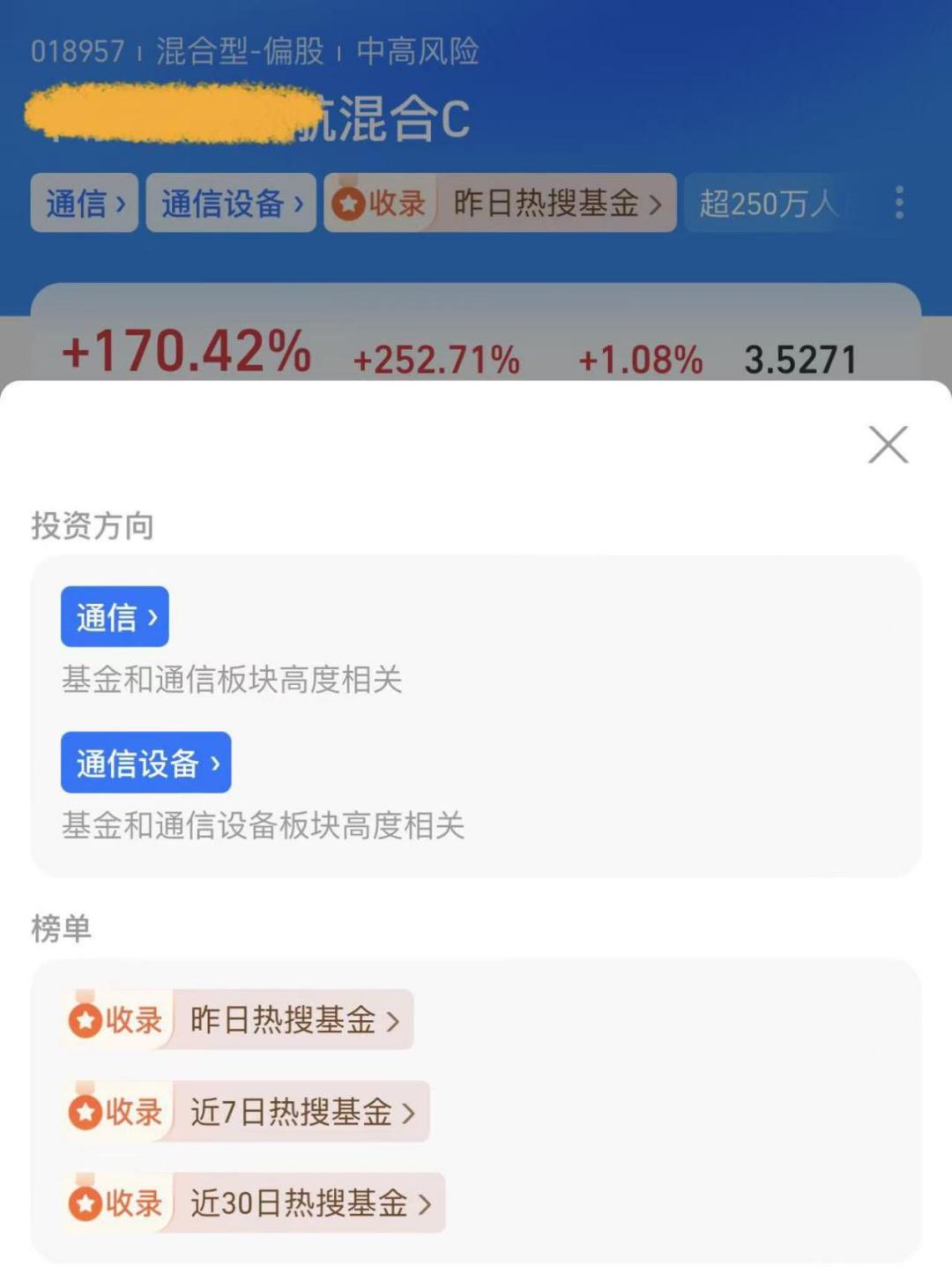
【导读】互联网基金销售巨头放大招,基金打上"标签"更透明更智能 为解决基民选基难的问题,互联网基金销售巨头再放大招。 据中国基金报记者了解,最近一年,蚂蚁基金在App上强化基金标签体系,根据不同基金持仓及投资风格,分别贴上"均衡""成长""科技""低波"等标签; 更是穿透到具体行业,打出"通信""制造行业""5G""人工智能"等标签。 业内人士认为,传统的基金分类往往侧重于管理人视角,区分为股票型、混合型、债券型基金,或者单纯按持仓行业命名,缺乏从投资者资金用途和持有 体验出发的分类。标签体系可以降低认知门槛,解决"不知道买什么"和"不知道买了什么"的问题,提升投资者体验,同时促进基金产品向更透明化发展。 蚂蚁基金推出基金标签体系 伴随着公募基金规模突破36万亿元大关,基金产品数量突破1.3万只,普通投资者面对上万只基金时往往感到"选择困难"和"看不懂"。仅凭代码或名称难 以判断一只基金到底投什么、风险有多大。如何帮助基民更便捷地选择到合适的基金,成为基金销售机构致力解决的用户痛点。 据中国基金报记者观察,最近一年,蚂蚁基金在App上强化基金标签体系,根据不同基金持仓及投资风格,多只主动权益基金分别贴上"均衡 ...
蚂蚁基金,大动作!
中国基金报· 2025-12-14 11:07
【导读】互联网基金销售巨头放大招,基金打上"标签"更透明更智能 中国基金报记者 方丽 陆慧婧 为解决基民选基难的问题,互联网基金销售巨头再放大招。 据中国基金报记者了解,最近一年,蚂蚁基金在App上强化基金标签体系,根据不同基金持仓及投资风格,分别贴上"均衡""成长""科 技""低波"等标签;更是穿透到具体行业,打出"通信""制造行业""5G""人工智能"等标签。 业内人士认为,传统的基金分类往往侧重于管理人视角,区分为股票型、混合型、债券型基金,或者单纯按持仓行业命名,缺乏从投资者 资金用途和持有体验出发的分类。标签体系可以降低认知门槛,解决"不知道买什么"和"不知道买了什么"的问题,提升投资者体验,同时 促进基金产品向更透明化发展。 蚂蚁基金推出基金标签体系 伴随着公募基金规模突破36万亿元大关,基金产品数量突破1.3万只,普通投资者面对上万只基金时往往感到"选择困难"和"看不懂"。仅凭 代码或名称难以判断一只基金到底投什么、风险有多大。如何帮助基民更便捷地选择到合适的基金,成为基金销售机构致力解决的用户痛 点。 据中国基金报记者观察,最近一年,蚂蚁基金在App上强化基金标签体系,根据不同基金持仓及投资风 ...

严管基金销售!“正收益” 宣传、直播打赏均被叫停
Sou Hu Cai Jing· 2025-12-13 04:38
Core Viewpoint - The China Securities Investment Fund Industry Association has drafted the "Regulations on the Sales Behavior of Publicly Raised Securities Investment Funds" to standardize fund sales practices and protect investors' rights, seeking industry feedback on the proposal [2][3]. Group 1: Fund Sales Behavior Regulations - The draft outlines clear requirements for general promotional activities, live streaming promotions, disclosure of sales information and fees, and performance evaluation of fund sales [2]. - Violations of these regulations by fund managers or sales institutions will lead to self-regulatory or disciplinary actions, and serious violations will be referred to the China Securities Regulatory Commission for legal processing [2]. Group 2: Performance Display Standards - The draft sets strict standards for fund performance display, requiring objective and comprehensive presentation of performance while prominently disclosing risks [3]. - Fund performance must be displayed for periods exceeding six months, and annualized returns for periods under one year are prohibited [3]. - Performance rankings must use publicly available data from fund rating agencies for periods of three years or more, with full disclosure of the agency's name and fund type [3]. Group 3: Communication Restrictions - The use of terms like "positive returns" and "positive return probability" is prohibited, along with exaggerated language and promotion of fund size and growth [4]. - Fund manager promotions must focus on the research team and platform strength rather than individual accolades [4]. Group 4: Live Streaming Marketing Controls - The draft imposes comprehensive compliance requirements for live streaming marketing, including personnel qualifications and content management [5]. - Only qualified personnel can promote funds in live streams, and the use of tipping or reward functions is banned [5]. - Detailed compliance management processes are required for live streaming, including script reviews and post-event compliance records [5]. Group 5: Fee Transparency - The draft mandates clear disclosure of all fees associated with fund purchases, ensuring investors have adequate time to review fund product summaries [7]. - Different share classes must have their fees disclosed, and sales service fees must be clearly defined and explained [7]. Group 6: Performance Evaluation Mechanism Reform - The draft proposes a fundamental overhaul of the performance evaluation mechanism for sales institutions, emphasizing long-term investor outcomes over short-term sales metrics [8]. - Performance evaluation indicators must include both sales activity and investor profit/loss situations, with a minimum evaluation period of one year for sales and three years for investor outcomes [8]. Group 7: Accountability Mechanisms - The draft establishes accountability mechanisms to address inducements for short-term trading behaviors, requiring sales institutions to avoid misleading practices [9]. - New requirements prohibit the display of performance rankings for periods under three years and restrict the promotion of fund size and sales volume [9]. Group 8: Integrity and Compliance - The draft includes strict regulations on integrity in operations, requiring fund managers and sales institutions to establish clear anti-corruption measures [10]. - Financial audits of marketing expenses must be conducted to ensure compliance, and any form of hidden payments or benefits is strictly prohibited [10].

新国标电动车销售遇冷,AI缔造者登上《时代》封面 | 财经日日评
吴晓波频道· 2025-12-13 00:29
Group 1: AI Regulation in the US - The US federal government has established a unified regulatory framework for AI, limiting states' powers to regulate AI and preventing the enforcement of existing state laws that may harm the US's global AI leadership [2][3] - The executive order aims to reduce compliance costs and time for tech companies, allowing them to focus more on research and commercialization [2][3] Group 2: Electric Bicycle Market - Sales of new standard electric bicycles have been sluggish, with some stores reporting no sales in a week, compared to previous sales of six to seven units per day [4] - The new standards have increased costs and prices, making it difficult for certain user groups, such as delivery workers and parents, to meet their needs [4][5] Group 3: OpenAI's GPT-5.2 Release - OpenAI has launched the GPT-5.2 series, which includes three versions optimized for professional tasks, achieving record benchmarks in various tests [6][7] - The GPT-5.2 Thinking model has significantly reduced error rates in visual tasks and is claimed to be the best visual model globally [6] Group 4: Broadcom's Financial Performance - Broadcom reported a 28% year-over-year revenue increase in Q4 2025, reaching $18.02 billion, with net profit up 39% to $9.71 billion, driven by a 74% increase in AI chip sales [8] - The company has a backlog of $73 billion in AI product orders, indicating strong demand despite some investor disappointment [8][9] Group 5: Lithium Market Outlook - Analysts predict that by 2026, lithium demand from energy storage systems will surpass that from electric vehicles, potentially leading to a supply shortage [12][13] - The lithium market has faced oversupply issues in recent years, but the maturation of the electric vehicle industry may boost demand for lithium in storage applications [12] Group 6: Fund Sales Regulation in China - The China Securities Investment Fund Industry Association is drafting new regulations to include investor profit and loss in fund sales performance assessments [14] - The regulations aim to enhance transparency and align the interests of fund sales personnel with those of investors, promoting better product selection based on risk preferences [14] Group 7: Stock Market Performance - The stock market experienced a rebound, with major indices closing in the green, driven by strong performance in sectors like commercial aerospace and semiconductor equipment [15][16] - Market sentiment remains cautious as the year-end approaches, with limited speculative activity and a focus on policy developments [16]




基金销售新规划定多重红线
第一财经· 2025-12-12 14:08
Core Viewpoint - A regulatory storm aimed at reshaping the fund sales ecosystem is underway, with a focus on protecting investor rights and addressing long-standing issues in the industry, such as prioritizing sales over service [3][4]. Summary by Sections Regulatory Framework - The newly released draft regulation, titled "Norms for Publicly Raised Securities Investment Fund Sales Behavior," outlines multiple core dimensions including promotion, live sales, fee disclosure, performance assessment, and integrity in operations [3][4]. Promotion and Advertising Standards - The regulation prohibits the annualized display of performance for funds with a duration of less than one year and mandates that performance rankings must be based on publicly available data from fund evaluation agencies for periods exceeding three years [7][8]. - Strict guidelines are set for promotional language to avoid misleading investors, banning terms like "positive return" and emphasizing the importance of the research team over individual fund managers [7][8]. Fee Disclosure - The regulation enhances the transparency of fee disclosures, requiring comprehensive information on all fees associated with fund purchases, including subscription fees, redemption fees, and maintenance fees [8][9]. - Fund managers must ensure that investors can access and understand the core content of fund product information before making purchases [8]. Live Sales Regulations - Fund live sales are now subject to strict regulations, requiring sales personnel to have appropriate qualifications and banning unqualified platforms from participating in transactions [10][11]. - The regulation mandates that live sales must undergo compliance checks, including script reviews and real-time monitoring during broadcasts [11]. Performance Assessment - The performance assessment for fund sales will now focus on two main dimensions: sales activity and investor profitability, with an emphasis on long-term investor returns [12]. - The regulation prohibits the use of sales revenue and scale as primary assessment metrics, aiming to shift the industry focus from short-term marketing to long-term service [12]. Integrity and Compliance - A dedicated chapter on "Integrity in Operations" has been established, requiring fund managers and sales institutions to implement effective risk prevention and accountability mechanisms [13][14]. - Financial practices related to sales must be transparent and accurately recorded to prevent irregularities such as false expense reporting [14].