
智慧农业

Search documents
12月24日《新闻联播》主要内容
Xin Lang Cai Jing· 2025-12-24 12:23
Group 1 - The article emphasizes the acceleration of building a modern transportation and logistics system to support the new development pattern in China [1] - The "Encouragement of Foreign Investment Industry Catalog (2025 Edition)" was released today, indicating a focus on attracting foreign investment [8] - The National Grid's fixed asset investment is projected to exceed 650 billion yuan by 2025, highlighting significant infrastructure investment [10] Group 2 - The article mentions the positive progress in soil and water conservation during the "14th Five-Year Plan" period, reflecting environmental sustainability efforts [6] - The construction of smart agriculture in China is accelerating, indicating advancements in agricultural technology [7] - The "Special Governance Action Plan for the Quality and Safety of Industrial Products Sold Online (2025-2027)" was published, aiming to enhance product safety standards [10]
我国智慧农业建设全面提速
Yang Shi Wang· 2025-12-24 12:20
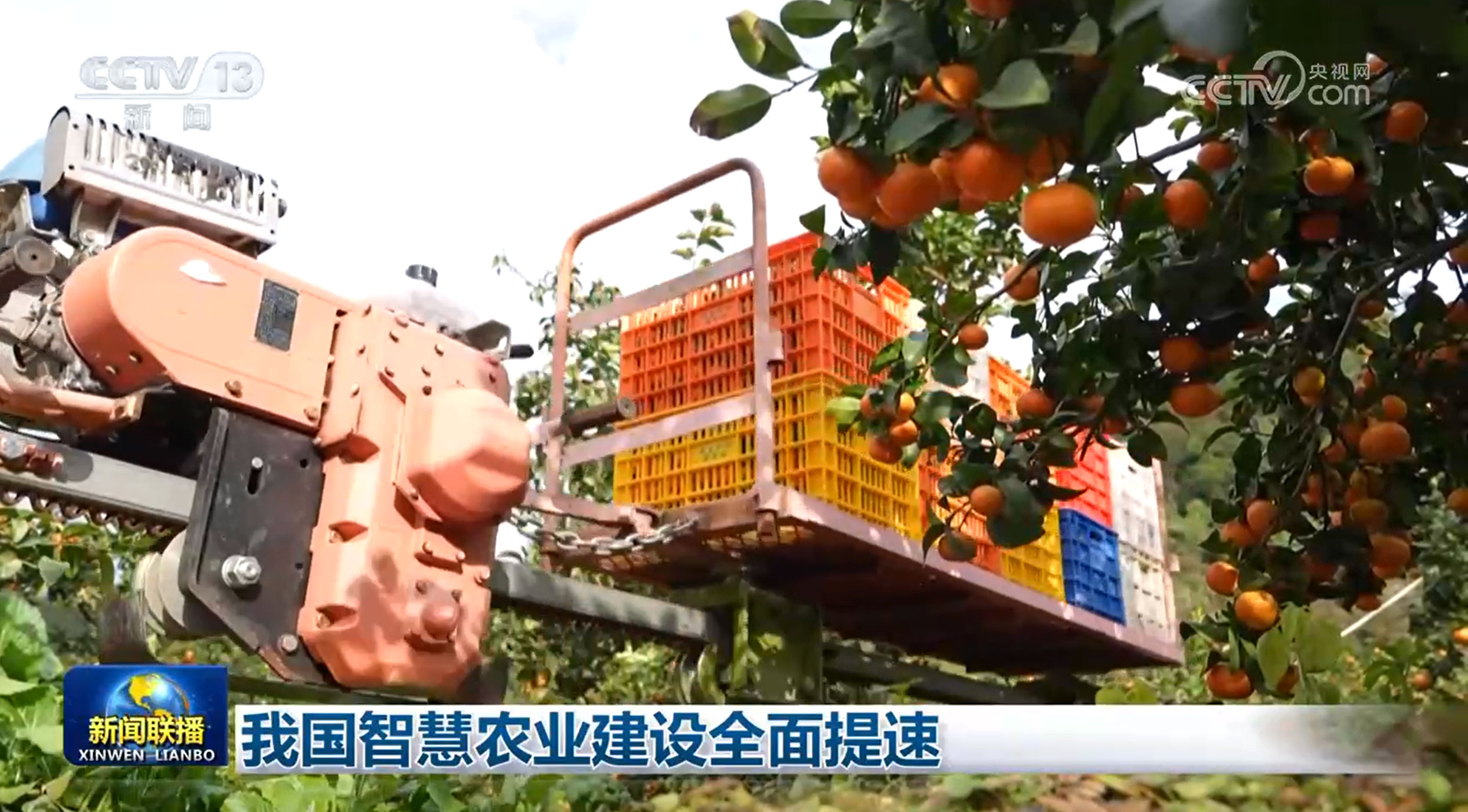
Group 1 - The core viewpoint of the articles highlights the rapid advancement of smart agriculture in China, showcasing its strong momentum and the new landscape of modern agricultural development [1] Group 2 - In Fujian Shunchang, 100,000 acres of citrus have been harvested, with rail transport vehicles and heavy-duty drones replacing traditional methods, significantly improving efficiency [2] - In Inner Mongolia's Dongwuzhumuqin Banner, herders are using smart collars for cattle, allowing real-time monitoring of activity levels and health status via mobile phones [2] - In Jiangsu Pukou, smart aquaculture has enabled remote monitoring and precise feeding of shrimp, with expected production increases of around 20% compared to the same period last year, alongside noticeable quality improvements [2] Group 3 - During the 14th Five-Year Plan period, China is implementing smart agriculture actions, with continuous improvements in innovation capabilities [4] - Breakthroughs have been made in 104 key technologies, including smart monitoring and robotic systems for field crops, and 62 types of intelligent equipment [4] - A total of 116 national smart agriculture innovation application projects have been established, with over 30 key technologies promoted and a technology implementation rate exceeding 95% [4] Group 4 - The application scenarios for smart agriculture are expanding across the entire chain, with 16 typical case studies released covering breeding, cultivation, processing, and sales [4] - A smart empowerment plan for farms and fisheries has been initiated, aiming to train over 1,500 leaders of large-scale entities within three years to develop smart agricultural practices [4] Group 5 - As China's agricultural digital transformation accelerates, grain production is moving towards precision and intelligence, while facility agriculture is beginning to achieve digital cultivation [5] - The entire agricultural industry chain is rapidly transitioning to digital and intelligent modifications, injecting strong momentum into agricultural modernization [5]


托普云农:本次减持计划已实施完成,股东君享1号资管计划减持公司股份约197万股
Mei Ri Jing Ji Xin Wen· 2025-12-24 09:19
每经头条(nbdtoutiao)——左手"欠款"右手"豪购"!杨陵江收购"国内酒庄第一股",1919是否重启上 市?"吹太多牛都实现了,但千亿还没实现,我很着急" (记者 曾健辉) 每经AI快讯,托普云农(SZ 301556,收盘价:99.3元)12月24日晚间发布公告称,公司于近日收到君 享 1 号资管计划管理人出具的《关于股份减持计划实施完成的告知函》。截至本公告披露日,本次减持 计划已实施完成,公司股东君享1号资管计划减持公司股份约197万股,减持股份占公司总股份为 2.3%。 2024年1至12月份,托普云农的营业收入构成为:智慧农业行业占比100.0%。 截至发稿,托普云农市值为85亿元。 ...
郭珍:向新而行激活智慧农业
Jing Ji Ri Bao· 2025-12-24 00:10
Core Insights - The development of smart agriculture in China is rapidly advancing, leveraging technologies such as AI, IoT, big data, and robotics to enhance productivity and resource utilization in agriculture [1][2] Group 1: Technological Advancements - Smart agriculture utilizes advanced technologies for information perception, intelligent decision-making, and precise operations, significantly improving land output and labor productivity [1] - The integration of sensors, data processing, and remote sensing technologies has enabled the collection of critical data on environmental conditions, pest monitoring, crop growth, and yield [1] - Intelligent decision-making is supported by agricultural knowledge graphs and core algorithms, generating precise prescriptions for environmental control and pest management [1] Group 2: Industry Advantages and Challenges - China possesses unique advantages in smart agriculture, with state-owned enterprises driving innovation and providing significant application scenarios for technology [2] - New infrastructure development in rural areas is reducing the costs associated with deploying smart agriculture solutions, although challenges such as data barriers and limited application scope remain [2] Group 3: Policy and Standardization - Establishing a mechanism for linking technological innovation outcomes with standardization is crucial for addressing issues like data barriers and system integration in smart agriculture [3] - The development and implementation of national and industry standards for smart agriculture are essential to enhance applicability and innovation, fostering a virtuous cycle of technology innovation and industry application [3] Group 4: Implementation Strategies - A comprehensive approach involving pilot demonstrations and application promotion is recommended to enhance the resilience of smart agriculture [3] - Setting up leading areas for smart agriculture in regions with better foundational conditions can facilitate the application of smart planting, livestock, and aquaculture solutions [3]
在龙江,金融如何托起农业现代化?
Jin Rong Shi Bao· 2025-12-23 03:23
Group 1: Agricultural Development in Heilongjiang - Heilongjiang Province is a key national grain base and a pioneer in agricultural modernization, leading the country in total grain output and transfer volume [1] - The province has achieved a comprehensive mechanization rate of over 99% for crop farming, with a contribution rate of agricultural technology progress at 70.8% [1] - The province is focusing on value-added transformation in agriculture, emphasizing the integration of technology and green practices [1] Group 2: Fuernongyi Company - Fuernongyi is a leading seed company in China, specializing in research, production, processing, and sales of various crops, and is the second-largest supplier of soybean seeds in the country [2] - The company has established strategic partnerships with major research institutions to enhance its breeding capabilities and accelerate the commercialization of new varieties [3] - Fuernongyi has invested over 200 million yuan in research, dedicating over 20 million yuan annually for over a decade to long-term R&D efforts [3][4] Group 3: Financial Support for Agricultural Enterprises - The Agricultural Development Bank has provided significant credit support to Fuernongyi, with cumulative loans reaching 428 million yuan since 2006 [4][5] - The bank's support has enabled Fuernongyi to maintain long-term R&D investments despite the seasonal nature of its income [4][5] - Financial services have improved the cash flow for farmers, allowing them to purchase seeds with cash rather than on credit, benefiting Fuernongyi's financial stability [5] Group 4: Huida Technology Company - Huida Technology has developed a digital solution for agricultural operations, enhancing the efficiency of subsidy distribution for straw return [6][7] - The company has expanded its product line to include smart agricultural machinery, with projected revenues of 600 million yuan by 2025 [7] - Huida Technology has faced challenges in capital accumulation due to the low added value of agriculture, prompting a shift towards controlling production costs and seeking external funding [8][9] Group 5: Jiamusi National Agricultural High-tech Zone - The Jiamusi National Agricultural High-tech Zone aims to enhance the value of agricultural products through technological innovation and financial support [10][11] - A long-term loan of 127 million yuan has been allocated to support the development of the agricultural high-tech zone [11] - The zone is focusing on high-value applications for agricultural by-products, such as extracting anthocyanins from black rice husks [12] Group 6: Longjiang Fufeng Biotechnology Company - Longjiang Fufeng is engaged in corn deep processing, producing amino acids and crystalline sugar while adopting a circular economy model [13][14] - The company has received 3.9 billion yuan in short-term loans from the Agricultural Bank to balance its cash flow and support sustainable development initiatives [14][15] - Despite external market pressures, the bank has continued to support Longjiang Fufeng's operations and transformation efforts [15]

从油气生产、数字消费、智慧农业等多领域成就 感受中国经济活力
Yang Shi Xin Wen Ke Hu Duan· 2025-12-21 23:05
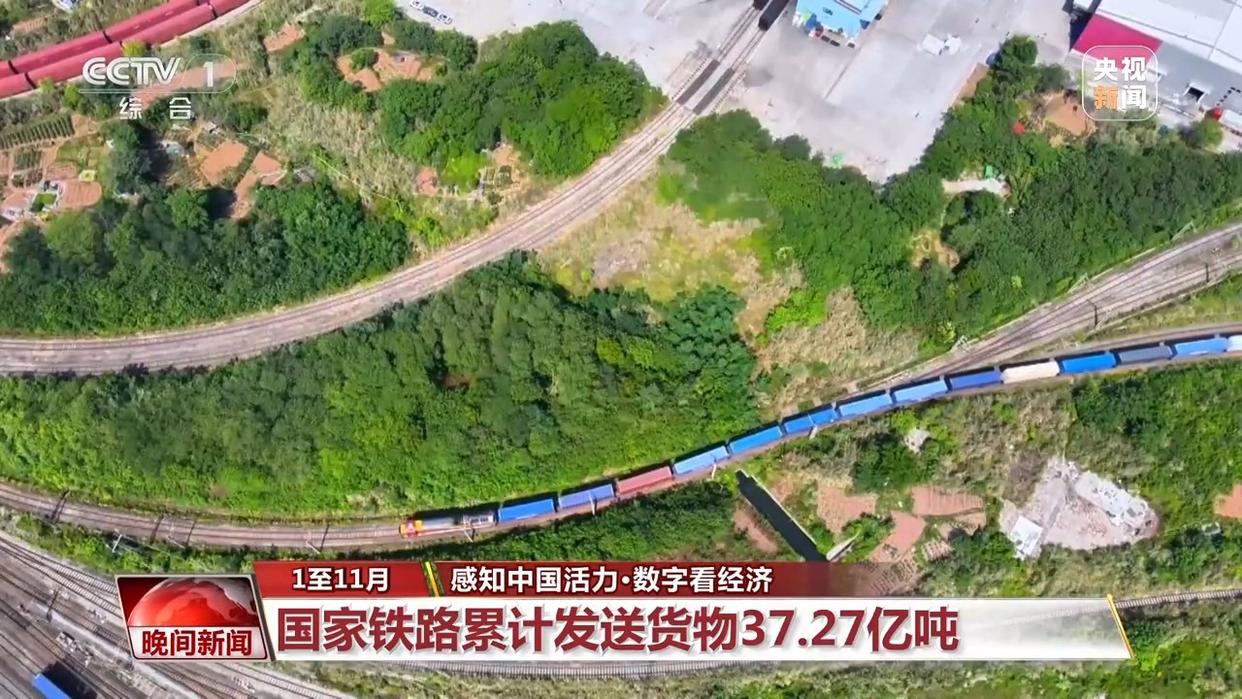
Economic Achievements - In the first 11 months, the national railway transported a total of 3.727 billion tons of goods, representing a year-on-year increase of 2.7% [3] - The Yangtze River Economic Belt's foreign trade import and export reached 19.12 trillion yuan, a historical high, with a year-on-year growth of 6.3% [5] - China's hydropower generation capacity reached 444 million kilowatts, maintaining the global lead for 22 consecutive years [7] Digital Consumption - In the first half of the year, China's digital consumption totaled 9.37 trillion yuan, with the user base exceeding 958 million people, indicating that digital consumption is becoming a significant driving force [10] Oil and Gas Production - The Bohai Oilfield is projected to exceed 40 million tons of oil and gas equivalent production in 2025, marking a historical high, and has contributed over 600 million tons of crude oil to date [12] - The domestic crude oil production is expected to reach 215 million tons by 2025, with marine crude oil production anticipated to exceed 6.8 million tons, contributing to 80% of the national crude oil increase [12] Smart Agriculture - Smart agriculture is accelerating in China, enhancing production efficiency through innovative technologies, such as smart collars for livestock and remote monitoring for aquaculture [14][16] - In Suide County, the introduction of intelligent sorting lines for apples has significantly improved sorting accuracy and production value [18][19]
视频丨从油气生产、数字消费、智慧农业等多领域成就 感受中国经济活力
Yang Shi Xin Wen· 2025-12-21 18:53
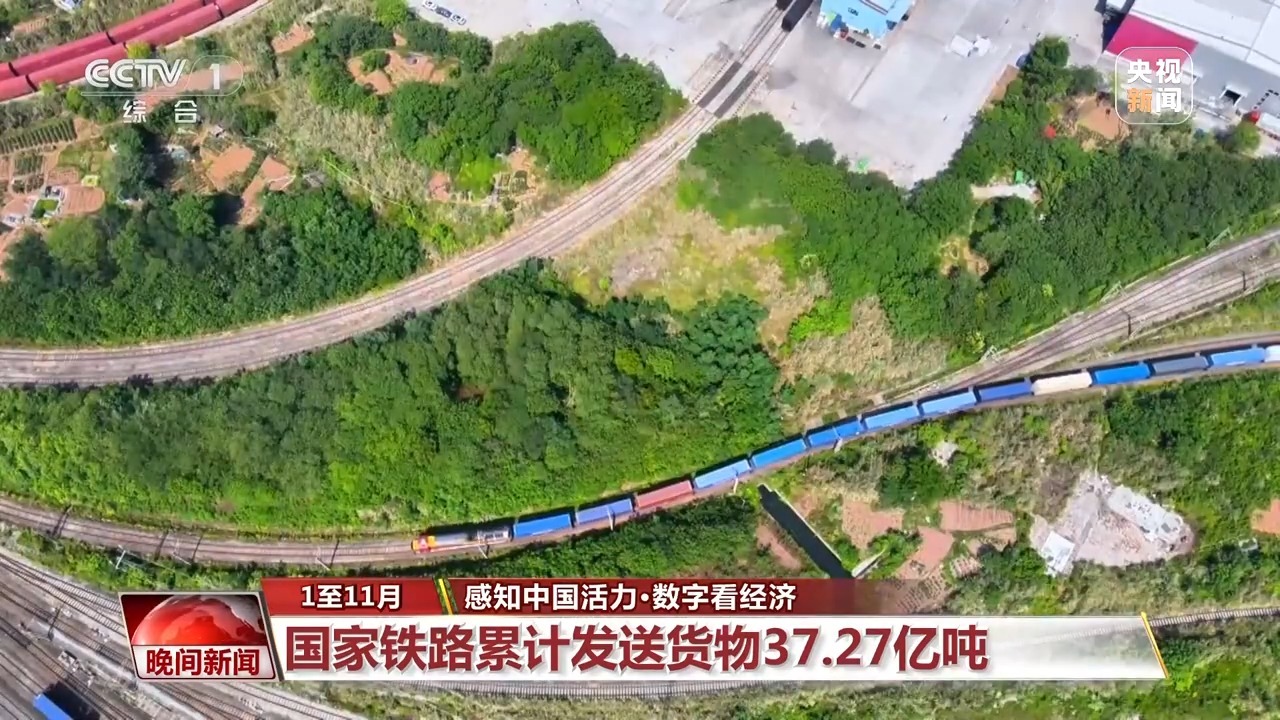
Economic Achievements - In the first 11 months, the national railway transported a total of 3.727 billion tons of goods, representing a year-on-year increase of 2.7% [3] - The Yangtze River Economic Belt's foreign trade import and export reached 19.12 trillion yuan, a historical high, with a year-on-year growth of 6.3%, accounting for 46.4% of the national total [5] - China's hydropower generation reached 1.13 trillion kWh in the first ten months, with a 1.6% year-on-year increase, maintaining the world's largest hydropower installed capacity at 444 million kW for 22 consecutive years [7] Digital Consumption - In the first half of 2025, China's digital consumption totaled 9.37 trillion yuan, with the user base exceeding 958 million, indicating that digital consumption is becoming a significant driving force for the economy [9] Oil and Gas Production - The Bohai Oilfield is projected to exceed 40 million tons of oil and gas equivalent production in 2025, marking a historical high, and has contributed over 600 million tons of crude oil to date [9][11] - The Bohai Oilfield is the largest offshore oilfield in China, with over 200 operational oil and gas production facilities and more than 60 active oil and gas fields [9] Smart Agriculture - Smart agriculture in China has accelerated this year, enhancing production efficiency through innovative technologies, such as smart collars for cattle and remote monitoring in aquaculture, leading to significant yield increases [12][15] - In Shaanxi Province, the introduction of intelligent sorting lines for apples has improved sorting accuracy to over 98%, significantly increasing the value of the products [12][15]
潍柴雷沃智慧农业科技股份有限公司(H0240) - 整体协调人公告-委任
2025-12-21 16:00
香港聯合交易所有限公司及證券及期貨事務監察委員會對本公告的內容概不負責,對其準確性 或完整性亦不發表任何聲明,並明確表示概不就因本公告全部或任何部分內容而產生或因依賴 該等內容而引致的任何損失承擔任何責任。 1 Weichai Lovol Intelligent Agricultural Technology Co., Ltd. 濰柴雷沃智慧農業科技股份有限公司 (a) 在聯交所網站登載本公告並不引起本公司、其獨家保薦人、獨家保薦人兼整 體協調人、整體協調人、顧問或包銷團成員在香港或任何其他司法權區必須 進行發售或配售活動的責任。本公司最終會否進行發售或配售仍屬未知之 數; (b) 本公告所涉及的上市申請並未獲批准,聯交所及證監會或會接納、發回或拒 絕有關的公開發售及╱或上市申請; (c) 本公告不應被視為誘使認購或購買任何證券,亦不擬構成該等勸誘; (d) 本公司或本公司的任何聯屬公司、其顧問或包銷團成員概無於任何司法權區 透過刊發本公告而發售任何證券或招攬認購或購買任何證券的要約; (e) 本公告(及其所載資料)僅供參考,並不構成或組成在美國(包括其領土及屬 地、美國任何州份及哥倫比亞特區)或進行有關要約 ...
精耕“智”作、数字种养、数转智改 透过农业新图景看智慧农业动能强劲“加速跑”
Yang Shi Wang· 2025-12-21 02:36
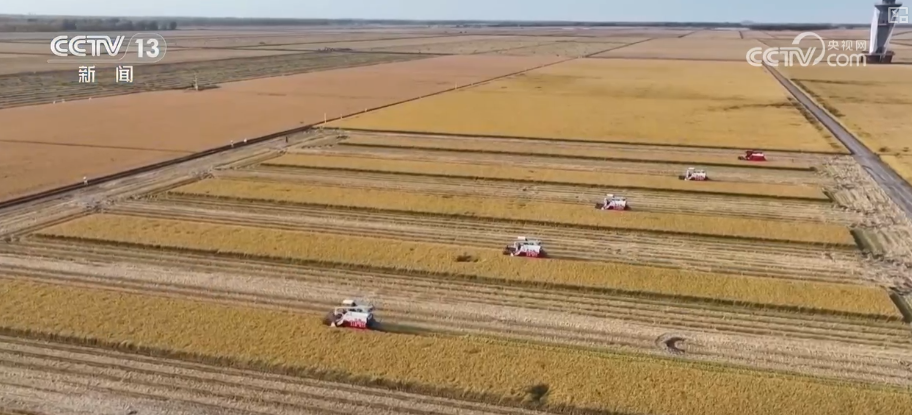
Core Viewpoint - During the "14th Five-Year Plan" period, China's smart agriculture construction is accelerating, enhancing innovation capabilities and expanding application scenarios across the entire chain, thereby reshaping the agricultural development landscape. Group 1: Innovation and Technology Development - The establishment of 34 national smart agriculture innovation centers and sub-centers, along with 30 key laboratories related to agricultural information technology by the Ministry of Agriculture and Rural Affairs [3] - Breakthroughs in 104 key technologies, including intelligent monitoring of agricultural conditions and 62 complete sets of intelligent equipment such as field crop phenotype robots [6] - Continuous improvement in innovation capabilities during the implementation of smart agriculture actions [4] Group 2: Application and Implementation - Construction of 116 national smart agriculture innovation application projects based on regional and varietal differences, with over 30 promoted smart agriculture technologies achieving a technology implementation rate of over 95% [8] - Expansion of smart agriculture application scenarios through the "Artificial Intelligence +" initiative, with 16 typical case studies covering breeding, cultivation, processing, and sales [12] Group 3: Training and Future Plans - Launch of the smart empowerment plan for farms, aiming to train over 1,500 leaders of large-scale entities within three years to help create a number of smart farms [14] - Accelerated digital transformation in agriculture, moving towards precision farming and initial realization of "digital cultivation" in facility agriculture, injecting strong momentum into agricultural modernization [18]
“十四五”期间我国智慧农业建设按下“加速键”
Yang Shi Xin Wen· 2025-12-21 01:21
Core Viewpoint - During the "14th Five-Year Plan" period, China is accelerating the development of smart agriculture, enhancing innovation capabilities and expanding application scenarios across the agricultural sector [1] Group 1: Innovation and Development - China is implementing smart agriculture actions with a focus on continuous improvement in innovation capabilities [1] - The establishment of 34 national smart agriculture innovation centers and sub-centers, along with 30 key laboratories related to agricultural information technology by the Ministry of Agriculture and Rural Affairs [1] - Breakthroughs have been achieved in 104 key technologies, including intelligent monitoring of agricultural conditions and 62 types of complete intelligent equipment such as crop phenotype robots [1] Group 2: Application Scenarios - The application scenarios for smart agriculture are being expanded across the entire chain, promoting the "Artificial Intelligence +" initiative in the agricultural sector [1] - A total of 16 typical case scenarios have been published, covering various stages including breeding, cultivation, processing, and sales [1] - The establishment of 116 national smart agriculture innovation application projects by region and variety, with over 30 recommended smart agriculture technologies achieving a technology implementation rate of over 95% [1]