
智慧农业

Search documents
油价大涨-农业板块如何投资
2026-03-10 10:17
Summary of Key Points from the Conference Call Industry Overview - The conference call focuses on the agricultural sector, particularly the impact of rising oil prices on grain prices and the investment opportunities within the planting and breeding chains [1][3][4]. Core Insights and Arguments Grain Price Dynamics - Grain prices are entering a phase of improvement driven by fundamental factors and macroeconomic support, with corn stock-to-use ratios at a 10-year low and soybeans at the 53rd percentile [1]. - The planting chain is transitioning from a bottom phase to an upward trajectory, with corn prices expected to rise by 1.9% year-on-year in 2026, which will restore profitability for large growers and accelerate seed inventory reduction [1][7]. - The correlation between oil prices and grain prices is significant, with a historical correlation coefficient of 0.86, indicating that rising oil prices will support grain prices through increased demand for biofuels and higher planting costs [4][5]. Breeding Chain Insights - The pig farming sector is currently in a cyclical trading window, with pig prices at 10.2 CNY/kg, the lowest since 2022, leading to an average loss of approximately 240 CNY per head [1][12]. - The valuation logic for leading pig farming companies is shifting from cyclical to value-based, with increased free cash flow and dividend willingness, alongside opportunities for overseas expansion [1][12][15]. Investment Opportunities - Two main investment lines are identified: the planting chain, benefiting from short-term themes, and the breeding chain, particularly leading pig farming companies, which present value and trend-based opportunities [3]. - Key companies to watch in the planting chain include seed leaders like Longping High-Tech and Denghai Seeds, as well as planting leaders like Beidahuang and Sukang Agricultural Development [11][18]. Additional Important Insights Bio-Breeding and Smart Agriculture - The penetration rate of bio-breeding is expected to accelerate in 2026, with genetically modified varieties showing yield increases of 5.6% to 11.6% and over 90% effectiveness in pest control [1][8]. - Smart agriculture, powered by AI and big data, is positioned to enhance the planting chain, with companies like Top Cloud Agriculture emerging as key players in this space [2][10]. Cost Pressures and Market Conditions - Rising oil prices are expected to increase feed costs, which constitute 60% to 70% of pig farming costs, thereby amplifying industry cost pressures [11]. - The current market conditions indicate a potential for price recovery in grain, supported by macroeconomic factors such as anticipated interest rate cuts [6][5]. Policy Environment and Future Outlook - The 2026 policy environment for pig farming emphasizes capacity control, which may accelerate the pace of capacity clearance in the industry [12][14]. - The investment framework suggests a dual approach of cyclical thinking for entry points and value thinking for stock selection, with a focus on cash flow and dividend potential in leading companies [13][16]. Conclusion - The agricultural sector is poised for a recovery phase, driven by improving grain prices and strategic investments in both planting and breeding chains. The interplay of macroeconomic factors, policy changes, and technological advancements in agriculture presents a landscape ripe for investment opportunities.
趋势研判!2026年中国智慧农业行业发展历程、政策、市场规模、市场结构及未来趋势:智慧农业提升农业生产效率,为乡村振兴注入强劲动力[图]
Chan Ye Xin Xi Wang· 2026-02-28 01:21
Core Insights - Smart agriculture is a significant advanced stage in the development of agricultural informationization and modernization, utilizing cutting-edge technologies like satellite positioning systems and intelligent devices to enhance productivity and resource efficiency [1][5] - The Chinese smart agriculture market is experiencing rapid growth, with the market size projected to increase from 38.47 billion yuan in 2017 to 120 billion yuan by 2025, reflecting a compound annual growth rate (CAGR) of 15.28% [1][8] - Smart agriculture is a crucial support for rural revitalization and an inevitable trend in agricultural modernization, with future applications expected to be broader and more mature as technology continues to evolve [1][8] Smart Agriculture Industry Overview - Smart agriculture integrates modern information technologies such as the Internet, IoT, big data, and AI to achieve comprehensive information perception, quantitative decision-making, intelligent control, and personalized services in agricultural production [2][5] - Key components of smart agriculture include smart planting, smart livestock, smart aquaculture, intelligent farming machinery, and smart parks [2] Smart Agriculture Classification - Smart agriculture can be categorized into various segments, including smart planting, smart livestock, smart aquaculture, and intelligent agricultural machinery [3] Benefits of Smart Agriculture - Smart agriculture improves ecological environments by ensuring that agricultural practices do not harm soil and water quality, while also enhancing production efficiency through real-time monitoring and data analysis [4][5] - It transforms the mindset of agricultural producers and consumers, enabling remote learning and access to agricultural knowledge and market information, thus changing traditional reliance on experience [5] Industry Development History - The development of smart agriculture in China can be divided into five stages, from traditional practices before 2000 to the current focus on ecological sustainability and resource optimization [6] Industry Policies - The Chinese government has implemented various policies to promote smart agriculture, recognizing it as a key component of digital rural construction and rural revitalization strategies [6] - The "National Smart Agriculture Action Plan (2024-2028)" aims to enhance public service capabilities and explore intelligent solutions for major crops by 2026 [6] Industry Value Chain - The smart agriculture value chain consists of upstream raw materials and equipment, midstream agricultural production processes, and downstream agricultural product processing and distribution [6][7] Current Market Size and Structure - The smart agriculture market is primarily driven by digital platform services and smart planting, accounting for 36% and 31% of the market, respectively [8] - The agricultural product circulation market in China is projected to reach 16.87 trillion yuan in 2024, with a 3% year-on-year growth [7] Industry Trends - The future of smart agriculture will focus on precision management, automation, and environmental sustainability, leveraging advanced technologies to enhance productivity and reduce resource waste [11][12][14] - Automation will significantly improve efficiency across the agricultural production chain, from planting to harvesting, enabling continuous production and higher land productivity [12][13]


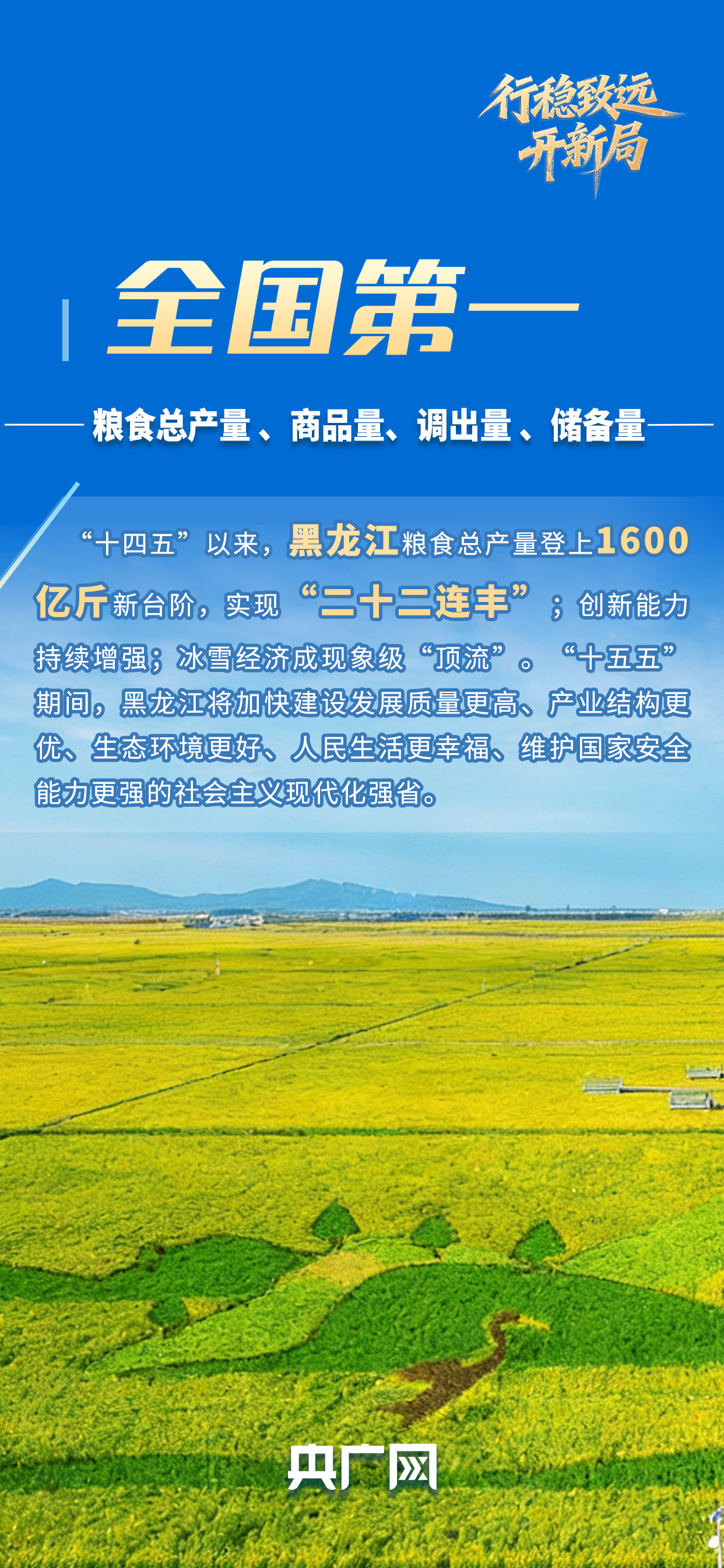
行稳致远开新局|从冰天雪地到创新高地,“黑”土地如何焕新发力?
Yang Guang Wang· 2026-02-27 06:23
Group 1: Ice and Snow Industry Development - The 27th Harbin Ice and Snow World concluded successfully, showcasing the "Ice and Snow Economy" concept, which emphasizes the transformation of cold resources into economic growth [4][6] - Harbin, as China's first "Double Winter City," is leveraging its ice and snow resources to drive high-quality development, creating a modern industrial system that integrates traditional and emerging industries [7][8] - The ice and snow tourism sector in Heilongjiang province saw a significant increase, with 135.08 million domestic and international visitors in the 2024-2025 season, marking an 18.5% year-on-year growth, and a 30.7% increase in visitor spending [11] Group 2: Technological Advancements in Agriculture - Heilongjiang's agricultural sector is experiencing a technological transformation, with precision farming techniques leading to increased crop yields and efficiency [15][16] - The province achieved a record grain production of 164.006 billion jin in 2025, marking the 22nd consecutive year of growth, with a net increase of 13.19 billion jin compared to 2020 [17] - The implementation of smart agriculture and advanced machinery has resulted in over 99% mechanization in crop harvesting, significantly enhancing productivity [17] Group 3: New Quality Productive Forces - Heilongjiang is focusing on developing strategic emerging industries such as aerospace, electronic information, and high-end equipment, aiming to foster new quality productive forces [21][22] - The province has seen a substantial increase in the number of national key laboratories and high-tech enterprises, indicating a robust innovation ecosystem [22] - The successful application of new technologies in shale oil extraction has improved recovery rates by 5-8%, supporting the growth of the oil industry in Daqing [22]
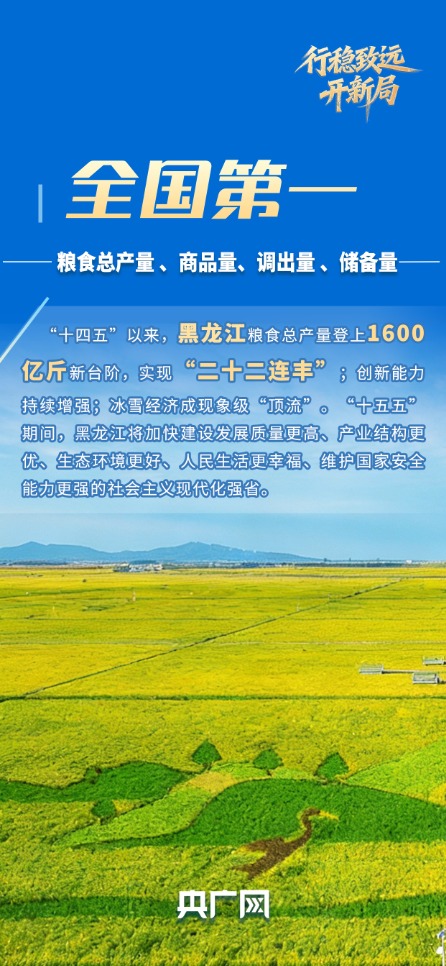
行稳致远开新局丨从冰天雪地到创新高地,“黑”土地如何焕新发力?
Yang Guang Wang· 2026-02-27 02:58
Group 1: Economic Development and Opportunities - The 27th Harbin Ice and Snow World concluded successfully, showcasing the "Ice and Snow Economy" as a significant driver for local tourism and economic growth [4][8] - Heilongjiang province is transforming its "cold resources" into "hot energy," leveraging its ice and snow industry to boost high-quality development and create a modern industrial system [5][10] - The province's ice and snow tourism saw a total of 135.08 million domestic and international visitors in the 2024-2025 season, marking an 18.5% increase year-on-year, with visitor spending rising by 30.7% [7] Group 2: Technological Advancements in Agriculture - Heilongjiang's agricultural sector is experiencing a technological transformation, with smart agriculture initiatives leading to increased efficiency and productivity [12][16] - The province achieved a total grain production of 164.006 billion jin in 2025, marking a continuous increase and contributing significantly to national grain supply [17] - The implementation of precision farming techniques and smart irrigation systems is enhancing crop yields and resource management [13][16] Group 3: Innovation and New Industries - Heilongjiang is focusing on developing strategic emerging industries such as aerospace, electronic information, and high-end equipment, aiming to foster new quality productivity [21][22] - The province has seen a significant increase in the number of national key laboratories and high-tech enterprises, indicating a robust innovation ecosystem [23] - The establishment of innovation and entrepreneurship ecosystems around universities is facilitating the transformation of scientific research into economic benefits [21][23]
“用心倾听民声,用实际行动解决难题”
Xin Lang Cai Jing· 2026-02-23 21:43
Core Viewpoint - Qiqihar City is leveraging its rich industrial heritage and natural resources to foster the growth of the private economy, with initiatives aimed at enhancing local business environments and promoting high-quality development [1][2]. Group 1: Economic Development Initiatives - Qiqihar is known for its diverse industries, including equipment manufacturing, green food processing, and smart agriculture, contributing to a vibrant local economy [1]. - The city is actively promoting the private economy through innovative measures and strong responsibility from local government bodies [1][4]. - The "Love Qiqihar" campaign aims to enhance the city's image and connect entrepreneurs with local development, fostering a sense of community and belonging among business leaders [2][3]. Group 2: Communication and Collaboration - Qiqihar's government is establishing a "Government-Enterprise Reception Hall" to facilitate communication between businesses and government, ensuring that policies are responsive to the needs of enterprises [4][5]. - A comprehensive feedback mechanism has been implemented to address the challenges faced by private enterprises, ensuring that their concerns are heard and acted upon [4][5]. Group 3: Entrepreneurial Education and Empowerment - The "He Xiong Plan" is designed to nurture the next generation of private entrepreneurs, focusing on education and skills development to ensure sustainable business practices [7][8]. - Collaborations with educational institutions aim to provide high-quality training and resources for local entrepreneurs, enhancing their strategic and operational capabilities [7][8]. Group 4: Networking and Investment - Qiqihar is expanding its business network by establishing regional chambers of commerce in various provinces, enhancing its outreach and investment potential [9]. - The city has successfully attracted multiple projects with a total investment exceeding 460 million yuan, demonstrating its effectiveness in converting local sentiments into tangible investments [9][10]. Group 5: Brand Building and Community Engagement - Continuous hosting of events like "Discussing Hometown Feelings, Seeking Development" fosters dialogue between local and expatriate entrepreneurs, enhancing their connection to the city [10]. - The local government is committed to learning from advanced regions to improve its support for businesses, aiming to create a robust environment for economic growth [10].
新春走基层丨年年添新景 越过越红火——河北省石家庄市塔元庄村振兴路上阔步前行
Xin Lang Cai Jing· 2026-02-17 04:55
Core Insights - The article highlights the development and modernization of Ta Yuanzhuang Village in Shijiazhuang, Hebei Province, showcasing its efforts in rural revitalization and community welfare [2][3] Group 1: Community Welfare - The village distributes essential food items such as tofu, meat, vegetables, and noodles to residents before the Spring Festival, enhancing community spirit and reducing individual expenses [2] - The collective income of the village is projected to reach 33 million yuan by 2025, with an average annual income of 35,000 yuan per resident [2] Group 2: Technological Advancements - The village features a smart farm that utilizes high-tech planting methods, including "5G + Internet" and IoT technologies, to monitor environmental conditions and improve crop quality [3] - The smart farm has become a popular tourist destination, attracting visitors who appreciate the clean and educational environment for children [3] Group 3: Elderly Care and Health Services - The Fu Tianxia Elderly Care Center offers various activities and advanced health screening technologies, catering to the diverse needs of the elderly [3] - The center aims to innovate in the health and elderly care industry, providing services not only to local residents but also to those from urban areas, positioning itself as a high-quality retirement destination in the Beijing-Tianjin-Hebei region [3]

2026年新股择股路径(一)-AI应用:AI应用春潮涌动,产业链次新股大盘点
Huajin Securities· 2026-02-15 05:24
Investment Rating - The report does not explicitly provide an investment rating for the companies discussed. Core Insights - AI technology is reshaping various industries, with significant advancements in AI models and applications, particularly following the launch of OpenAI's ChatGPT-3.5 in November 2022, which marked the beginning of a new era in artificial intelligence [2][15] - Several newly listed companies in the A-share market have integrated AI technology into their operations, seizing opportunities in the AI development strategy across various sectors, including agriculture, office, retail, medical, energy, and consumer fields [2] Summary by Sections AI Applications Surge - AI models are rapidly evolving, with diverse applications emerging across different sectors, driven by advancements from companies like OpenAI, Google, and others [15] - The commercial success of AI applications is evident in products like AI smart glasses, AI toys, and intelligent driving systems, which are gaining popularity and transforming consumer experiences [15][18][19][30] Representative New Stocks in AI - **Top Cloud Agriculture**: A leading company in smart agriculture, developing pest recognition algorithms and smart agricultural products like AR glasses and robotic dogs for field inspections [58][64] - **Hehe Information**: Focused on AI in office applications, offering products like TextIn and Qixin Huiyan that leverage AI for document processing and data analysis [72][74] - **Hanshu Technology**: A provider of digital solutions for retail, including smart shopping carts and AI cameras, enhancing the shopping experience through technology [89][91] - **Chao Yan Co., Ltd.**: Engaged in AI medical diagnostics, offering innovative products for breast cancer screening and ultrasound imaging systems for minimally invasive surgeries [99][108] - **Southern Network Digital**: Concentrating on digital solutions for energy, developing core products like the "Electric Hong" IoT operating system [2] - **Ying Shi Innovation**: Focused on consumer applications, creating AI algorithms for content creation in products like panoramic action cameras [2] Industry Trends - AI technology is deeply embedded in various sectors, including e-commerce, finance, government, energy, and education, demonstrating its commercial viability and transformative potential [44][53] - The AI toy market is projected to exceed 100 billion yuan by 2030, with a compound annual growth rate (CAGR) of over 50% [20] - The report highlights the increasing integration of AI in daily life, enhancing efficiency in personal and work scenarios, such as energy management and document processing [38][43]
农行新质行走进浙江,看金融赋能硬科技与“未来农场”
新浪财经· 2026-02-13 11:22
Group 1 - The core viewpoint of the article emphasizes the deep resonance between finance and technology, showcasing how Agricultural Bank of China (ABC) supports innovation through patient capital and financial services [2] - The article highlights the case of Cheng Tian Technology, where exoskeleton robots are developed with long R&D cycles, and ABC provides credit loans and equity investments to meet short-term funding needs and support innovation [2] - The article discusses the role of ABC in facilitating the globalization of smart agriculture, exemplified by the cross-border financial services that enable the export of strawberries grown in plant factories [2] Group 2 - The series of programs document three stories of financial and industrial collaboration, illustrating ABC's commitment to implementing its strategic initiatives in smart manufacturing, green energy, and digital tourism [2] - The narrative positions finance not merely as a tool but as a partner in advancing new productive forces, emphasizing the ongoing story of financial empowerment in the real economy [2]


坚定信心谋发展 铆足干劲再出发
Xin Lang Cai Jing· 2026-02-08 23:41
Group 1 - The government work report summarizes significant achievements of Nanning during the 14th Five-Year Plan and outlines goals for 2025, emphasizing economic growth and industrial development [1] - Nanning aims to build a modern industrial system, enhance innovation-driven development, and promote digital and intelligent economies by 2025 [1] - The report is characterized by clear themes, detailed content, and specific actionable measures, reflecting a high-quality approach to governance [1] Group 2 - Representatives at the Nanning People's Congress discussed strengthening industrial foundations, integrating technological and industrial innovation, and enhancing the China-ASEAN community [2] - The report provides a rational and objective analysis of challenges faced during the 14th Five-Year Plan, offering a basis for future decision-making [2] - The focus on high-quality development is evident, with significant achievements in industrial capacity and urban resilience highlighted [3]
中央一号文件释放重要信号:实施常态化精准帮扶 因地制宜发展农业新质生产力
Jin Rong Shi Bao· 2026-02-06 01:04
Core Viewpoint - The "Opinions" issued by the Central Committee and the State Council emphasize the importance of stabilizing grain and oil production, promoting agricultural modernization, and implementing regular precise assistance to ensure rural revitalization and farmers' income growth [1][2][3]. Group 1: Agricultural Production Capacity and Quality - The "Opinions" aim to stabilize grain production at around 1.4 trillion jin, emphasizing the integration of production capacity, ecological sustainability, and income growth [2]. - The focus is on optimizing agricultural production structure and enhancing grain quality, with projects to improve grain circulation efficiency [2]. - The agricultural development strategy includes increasing the area of high-standard farmland to 75.68 million mu by 2025 and achieving a mechanization rate of 76.7% for crop farming [5][6]. Group 2: Regular Precise Assistance - By the end of 2025, over 7 million monitoring objects will be identified for assistance, with a focus on preventing poverty and promoting stable employment for over 32 million former poverty-stricken laborers [3][4]. - The transition to regular precise assistance marks a shift from temporary measures to a sustainable system that integrates financial and resource policies into rural revitalization [3][4]. Group 3: Farmers' Income Growth - The "Opinions" highlight the goal of increasing farmers' disposable income to 24,456 yuan by 2025, reflecting a 6% real growth compared to the previous year [7]. - Measures to promote income growth include enhancing the quality and efficiency of rural industries and supporting employment stability for migrant workers [8]. - The strategy includes expanding rural consumption through new business models and improving service levels, which is expected to stimulate significant consumer spending [8].