智能影像设备

Search documents
影石创新全景相机2025年全球市占率超85%,连续8年全球第一
Zheng Quan Shi Bao Wang· 2025-10-31 11:49
Core Insights - The global and Chinese handheld smart imaging device market is expected to undergo significant changes by 2025, with Yingshi Innovation (Insta360) maintaining a leading position in the panoramic camera sector, holding over 85% of the global market share in the first three quarters of 2025 [1][5]. Market Positioning - Yingshi Innovation has achieved a global market share of 75% and over 60% in the domestic market as of Q3 2023, solidifying its leading position [1][5]. - DJI entered the panoramic camera market in July 2023 and quickly captured approximately 17.1% of the global market share and 37.1% of the domestic market through aggressive pricing strategies [1][5]. Competitive Landscape - The competitive landscape in the action camera segment is intensifying, with Yingshi holding a global share of 38.6% and DJI at 34.6% as of Q3 2023, while GoPro's share has decreased to 15.7% [5][11]. - Yingshi's revenue for Q3 2023 grew by 92.64% year-on-year, with a cumulative revenue of 6.611 billion yuan for the first three quarters, reflecting a year-on-year growth of 67.18% [11]. Market Growth Potential - The global handheld smart imaging device market is projected to reach a size of 79.93 billion yuan by 2030, with a compound annual growth rate (CAGR) of 15.9% from 2020 to 2030 [11][12]. - The entry of new players like DJI is expected to stimulate market expansion, as evidenced by significant increases in app downloads and active user numbers for both Yingshi and DJI in major global markets [11][12]. Strategic Advantages - Yingshi has built a strong competitive moat through six generations of product iterations, focusing on panoramic stitching algorithms, software ecosystems, and user communities, making it difficult for new entrants to disrupt its leading position [12].


影石创新2025Q3财报:营收增长93%,双11表现突出
Guan Cha Zhe Wang· 2025-10-30 05:45
Financial Performance - The company reported a revenue of 2.94 billion yuan for Q3 2025, representing a year-on-year growth of 92.64% [1] - Cumulative revenue for the first three quarters reached 6.611 billion yuan, with a year-on-year increase of 67.18% [1] - The net profit for Q3 was 272 million yuan, showing a decline of 15.9% year-on-year, primarily due to strategic R&D investments [5] Market Performance - The company achieved significant sales during the Double Eleven shopping festival, driven by product innovation and enhanced user experience in core categories like action cameras and panoramic cameras [1] - The opening of the first flagship store in Hong Kong on October 25 attracted considerable attention [1] - A new panoramic camera, X4 Air, is set to be launched on October 28, along with promotional activities expected to boost sales [1] Research and Development - R&D investment exceeded 1 billion yuan in the first three quarters of 2025, with Q3 investment at 524 million yuan, marking a year-on-year increase of 164.81% [5] - Investments focus on cutting-edge areas such as panoramic imaging technology, AI algorithms, and custom chips, reflecting a long-term strategic vision despite short-term profit impacts [5] Product Innovation - The company expanded its product line with new releases including the Ace Pro 2 "Glacier White" limited edition, Flow 2 smartphone gimbal, and panoramic camera GO Ultra [7] - An AI omnidirectional microphone, Wave, targeting enterprise clients has also been launched, enhancing the company's audio segment [7] - The company is nearing the public testing phase for the world's first panoramic drone, "Yingling Antigravity," expected to begin trial sales in Q4 2025 [7] Industry Position - The global smart imaging device market is highly concentrated, with a CR3 of 78.9% in 2024 [10] - The company's market share increased from 28.4% in 2023 to 35.6% in 2024, indicating a continuous expansion of its leading position in the industry [10]

影石创新10月29日获融资买入1.30亿元,融资余额8.41亿元
Xin Lang Cai Jing· 2025-10-30 01:45
Core Insights - On October 29, YingShi Innovation's stock rose by 4.19%, with a trading volume of 9.65 billion yuan [1] - The company recorded a net financing purchase of 5.5 million yuan on the same day, with a total financing balance of 841 million yuan, representing 9.16% of its market capitalization [2] Financing and Trading Data - On October 29, YingShi Innovation had a financing purchase of 130 million yuan, while the financing balance stood at 841 million yuan [2] - The company had no short selling activity on the same day, with a short selling balance of 0 yuan [2] Company Overview - YingShi Innovation, established on July 9, 2015, is located in Shenzhen, Guangdong Province, and specializes in the research, production, and sales of smart imaging devices, including panoramic and action cameras [2] - The company's revenue composition includes 86.06% from consumer-grade smart imaging devices, 12.63% from accessories and other products, 1.01% from other sources, and 0.30% from professional-grade smart imaging devices [2] Financial Performance - For the period from January to September 2025, YingShi Innovation achieved a revenue of 6.611 billion yuan, reflecting a year-on-year growth of 67.18%, while the net profit attributable to shareholders was 792 million yuan, a decrease of 5.95% year-on-year [2] Shareholder Information - As of September 30, 2025, the number of shareholders for YingShi Innovation increased by 36.16% to 23,100, with an average of 1,318 circulating shares per shareholder, down by 26.56% [2] - New institutional shareholders include Bosera Science and Technology Innovation Mixed Fund, holding 262,600 shares, and other funds entering the top ten circulating shareholders list [3]
影石创新三季度营收猛增92.64% 拓展无人机市场研发费突破10亿
Chang Jiang Shang Bao· 2025-10-28 23:48
Core Insights - The company,影石创新, reported significant revenue growth driven by the rising demand for miniaturized and personalized imaging devices, particularly in the panoramic and action camera segments [1][2]. Financial Performance - For the first three quarters of 2025, the company achieved a revenue of 66.11 billion, representing a year-on-year increase of 67.18%, while net profit was 7.92 billion, a decrease of 5.95% [1][3]. - In Q3 2025, the company recorded a revenue of 29.4 billion, a substantial year-on-year growth of 92.64%, but net profit fell to 2.72 billion, down 15.9% compared to the previous year [3][4]. - R&D expenses for the first three quarters of 2025 exceeded 10 billion, marking a 127.02% increase year-on-year and accounting for 16.42% of total revenue [1][4]. Market Position - The brand "Insta360" holds a 67.2% market share in the global panoramic camera market, ranking first, and is the second in the action camera market [2][3]. - The company has established a sales network covering over 10,000 retail stores worldwide, solidifying its position as a dual leader in both panoramic and action camera markets [1]. R&D and Future Plans - The company is focusing on AI imaging computation, optical systems, and hardware algorithm integration to enhance its core competitiveness [5]. - Plans are underway to launch two drone brands, including a proprietary brand and a collaborative brand named影翎Antigravity, with initial sales expected in Q4 2025 [5]. Stock Performance - The company's stock price has seen significant appreciation since its IPO, with a current price of 288.8 per share, reflecting a 510.96% increase from the IPO price of 47.27 [3].
“撒钱”后又发黄金,全景相机龙头影石创新净利骤降16%
Guan Cha Zhe Wang· 2025-10-28 10:28
Core Insights - The company reported a significant revenue growth of 92.64% year-on-year for Q3 2025, reaching 2.94 billion yuan, while the net profit attributable to shareholders decreased by 15.90% to 272 million yuan [1][2][3] Financial Performance - Revenue for Q3 2025 was 2,940,277,480.22 yuan, marking a 92.64% increase compared to the same period last year [2] - Total profit for the period was 267,651,828.45 yuan, down 22.10% year-on-year [2] - Net profit attributable to shareholders was 271,933,120.07 yuan, a decrease of 15.90% [2] - The company reported a total revenue of 6.61 billion yuan for the first three quarters of 2025, a 67.18% increase year-on-year, with a net profit of 792 million yuan, down 5.95% [3] - R&D expenses for Q3 2025 reached 523,700,532.63 yuan, a substantial increase of 164.81% year-on-year, accounting for 17.81% of revenue [2][3] Strategic Initiatives - The company plans to launch two drone brands, including its own and a co-developed brand called "影翎 Antigravity" [3] - The public testing phase for the Antigravity drone is nearing completion, with potential market trials expected in Q4 2025 [4] Employee Engagement and Recognition - The company awarded 5.0866 million shares of restricted stock to three key employees at a price of 148.92 yuan per share [4][5] - The company has a history of unique employee rewards, including the distribution of gold keycaps to celebrate Programmer's Day, emphasizing the value of its R&D personnel [9][10] Market Position and Brand Image - The company has acknowledged its role in the price reduction of DJI products and offered compensation to affected customers [10] - Founded in 2015, the company has established itself as a leading provider of smart imaging devices, focusing on panoramic technology [10]

这家深圳公司,前三季度研发投入已超去年净利润
2 1 Shi Ji Jing Ji Bao Dao· 2025-10-28 08:41
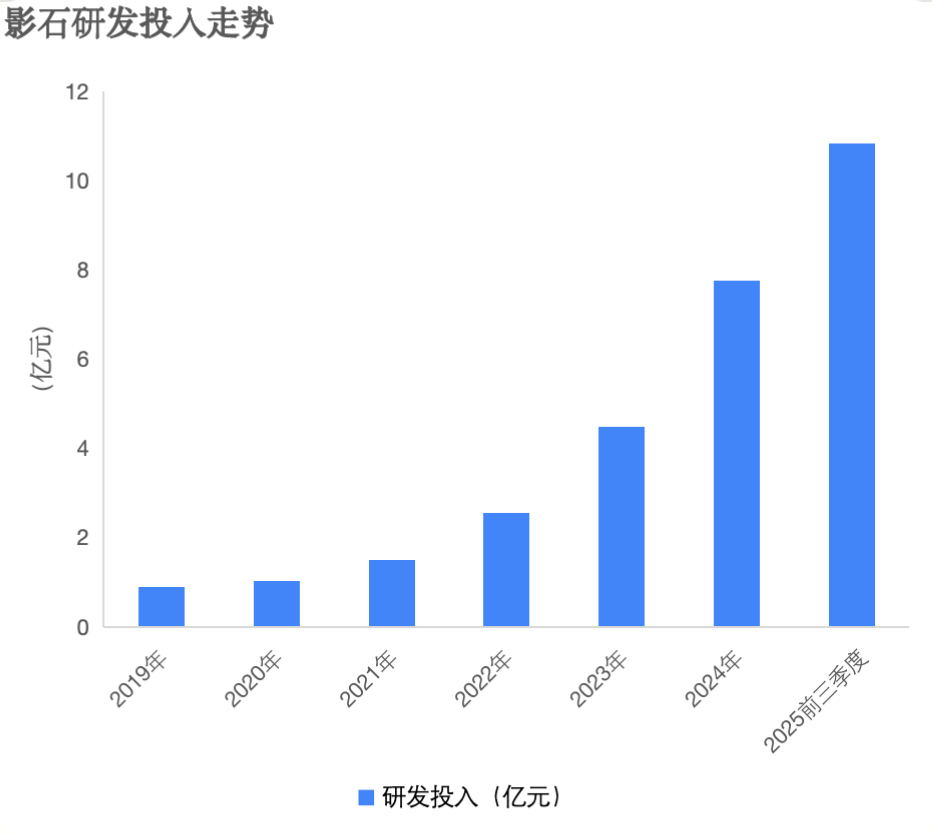
Core Insights - The company reported a significant revenue increase of 92.64% year-on-year for Q3 2025, reaching 2.94 billion yuan, while net profit decreased by 15.90% to 272 million yuan [1] - For the first three quarters of 2025, total revenue was 6.61 billion yuan, up 67.18%, with net profit at 792 million yuan, down 5.95% [1] - The decline in net profit is attributed to increased R&D expenses due to market expansion, new product launches, and higher salaries for R&D personnel [1][4] Revenue and Profit Analysis - The company's revenue growth is driven by market expansion and product innovation, despite a decrease in net profit [1][4] - R&D expenses have significantly increased, with Q3 2025 R&D investment reaching 524 million yuan, a 164.81% increase year-on-year, accounting for 17.81% of revenue [1] - Cumulatively, R&D investment for the first three quarters exceeded 1 billion yuan, surpassing the previous year's net profit [1] Market Position and Competition - The company is experiencing rapid growth, increasing its market share from 28.4% in 2023 to 35.6% in 2024, making it one of the fastest-growing leaders in the smart imaging device industry [5] - In comparison, the competitor DJI reported revenues of 80 billion yuan in 2024, significantly overshadowing the company's figures [5] - The competitive landscape is intensifying, with DJI launching products that directly compete with the company's offerings at lower prices [5][6] Product Development and Innovation - The company is focused on innovation over price competition, as indicated by the founder's statement on social media [6] - The upcoming launch of the Antigravity drone is anticipated for Q4 2025, following successful public testing [1][6] - The company plans to release a new panoramic camera model, X4 Air, on October 28 [6] Supply Chain and Production Challenges - The company follows a "self-research + outsourcing" production model, relying on international suppliers for critical components like chips [7] - Increased outsourcing costs and rising raw material prices have impacted production expenses, necessitating a stronger supply chain resilience [7] - The company is investing in custom chip development and other strategic projects to mitigate supply chain risks [7]
双11全面霸榜!影石Q3营收猛增93%, 研发投入翻倍加码定制芯片
Bei Jing Shang Bao· 2025-10-28 06:42
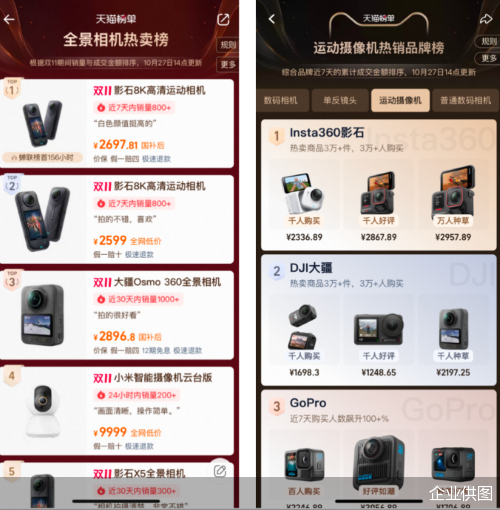
Core Viewpoint - The company, Yingshi Innovation, reported significant revenue growth in Q3 2025, driven by market expansion and positive reception of new products [1][2]. Group 1: Financial Performance - In Q3 2025, the company achieved a revenue of 2.94 billion yuan, marking a substantial year-on-year increase of 92.64% [1]. - Cumulatively, the revenue for the first three quarters reached 6.61 billion yuan, reflecting a year-on-year growth of 67.18% [1]. - The net profit attributable to shareholders for Q3 was 272 million yuan, a decrease of 15.9% year-on-year, primarily due to high R&D investments [2]. Group 2: Research and Development - The total R&D expenditure for the first three quarters exceeded 1 billion yuan, with Q3 R&D spending at 524 million yuan, up 164.81% year-on-year [2]. - R&D expenses accounted for 17.81% of revenue, indicating a sustained high level of investment [2]. - The company is focusing on core areas such as panoramic imaging technology and AI algorithms, while also increasing investment in custom chip projects [2]. Group 3: Product Development and Market Strategy - The product matrix has expanded to meet diverse consumer and enterprise needs, including the launch of new cameras and audio solutions [4][5]. - The company plans to enter the drone market with two new brands, including a panoramic drone that has been recognized by Time magazine as one of the best inventions of 2025 [5]. - The opening of the first flagship store in Hong Kong and strong sales performance during the Tmall Double Eleven event highlight the brand's market appeal [1][4]. Group 4: Market Position and Industry Trends - The global smart imaging device industry has a high concentration, with the top three companies holding a market share of 78.9% [7]. - Yingshi's market share increased from 28.4% in 2023 to 35.6% in 2024, positioning it as one of the fastest-growing leading companies in the sector [7]. - The company is leveraging its market position and R&D capabilities to push smart imaging technology into broader consumer markets [9].
影石创新股价跌5%,安信基金旗下1只基金重仓,持有2799股浮亏损失4.24万元
Xin Lang Cai Jing· 2025-10-28 05:43
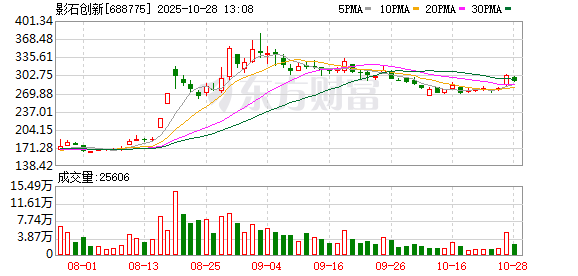
Group 1 - The core point of the news is that YingShi Innovation's stock has dropped by 5%, with a current price of 287.68 CNY per share and a total market capitalization of 115.36 billion CNY [1] - YingShi Innovation specializes in the research, production, and sales of smart imaging devices, including panoramic and action cameras, with 86.06% of its revenue coming from consumer-grade smart imaging devices [1] - The company was established on July 9, 2015, and went public on June 11, 2025 [1] Group 2 - Anxin Fund has a significant holding in YingShi Innovation, with its fund "Anxin SSE Sci-Tech Innovation Index Enhanced Initiation A" (023908) holding 2,799 shares, representing 0.67% of the fund's net value [2] - The fund has experienced a floating loss of approximately 42,400 CNY today [2] - The fund was established on May 13, 2025, and has achieved a return of 40.46% since inception [2] Group 3 - The fund managers of Anxin SSE Sci-Tech Innovation Index Enhanced Initiation A are Shi Rongsheng and Zhu Zhouyang, with Shi having a tenure of 5 years and 291 days and Zhu having a tenure of 3 years and 303 days [3] - Shi's fund has a total asset size of 2.26 billion CNY, with the best return during his tenure being 41.72% and the worst being -8.11% [3] - Zhu's fund has a total asset size of 166 million CNY, with the best return during his tenure being 42.17% and the worst being 5.55% [3]
影石创新发布三季报:收入高速增长 净利润小幅下滑
Nan Fang Du Shi Bao· 2025-10-28 05:08
Core Insights - The company reported a significant revenue growth of 67.18% year-on-year for the first three quarters of 2025, reaching 6.611 billion yuan, while net profit decreased by 5.95% to 792 million yuan [2][3] - The third quarter alone saw a remarkable revenue increase of 92.64% year-on-year, amounting to 2.940 billion yuan, continuing the growth momentum from the first half of the year [2][3] - High R&D expenditures, which reached 524 million yuan in Q3 (up 164.81% year-on-year), have pressured profit margins, with R&D costs constituting 17.81% of revenue [2][3] Financial Performance - The company maintained a strong growth trajectory with Q3 revenue of 2.940 billion yuan, a 92.64% increase, and cumulative revenue of 6.611 billion yuan for the first three quarters, reflecting a 67.18% growth [3] - Net profit for Q3 was 272 million yuan, down 15.9% year-on-year, while total profit decreased by 22.1% to 268 million yuan [3] - R&D spending exceeded 1.085 billion yuan for the first three quarters, marking a 127.02% increase and accounting for 16.42% of total revenue [3] Product Development - The company expanded its product offerings, launching several new consumer and enterprise products, including limited editions and AI-enabled devices, which supported sales growth [4] - The operating cash flow for the first three quarters was 930 million yuan, indicating strong operational quality [4] - Total assets reached 9.2 billion yuan, an increase of 83.24% year-on-year, while equity attributable to shareholders grew by 79.95% to 5.724 billion yuan [4] New Business Ventures - The company is advancing its drone business, with the "影翎Antigravity" drone expected to enter trial sales in Q4 2025, highlighting its potential as a new growth area [6] - The brand's global expansion is evident with the opening of its first flagship store in Hong Kong and strong sales performance during promotional events [6] - Collaborations with major tech companies like Apple and Huawei are enhancing the brand's ecosystem and market presence [6] Industry Competition - The global smart imaging device market is becoming increasingly competitive, with the top three manufacturers holding a market concentration of 78.9% [7] - The company's market share increased from 28.4% in 2023 to 35.6% in 2024, positioning it as one of the fastest-growing brands [7] - Despite rapid expansion, the company faces challenges such as declining profit margins and shorter product iteration cycles, necessitating a focus on maintaining growth while improving profitability [7]
影石创新发布三季报:收入高速增长,净利润小幅下滑
Nan Fang Du Shi Bao· 2025-10-28 05:07
Core Insights - The company reported a significant revenue growth of 67.18% year-on-year for the first three quarters of 2025, reaching 6.611 billion yuan, while net profit decreased by 5.95% to 792 million yuan [1][4] - The third quarter alone saw a remarkable revenue increase of 92.64% year-on-year, amounting to 2.940 billion yuan, continuing the growth momentum from the first half of the year [1][4] Financial Performance - The company's net profit for the third quarter was 272 million yuan, a decline of 15.9% year-on-year, while total profit dropped by 22.1% to 268 million yuan [4] - Research and development (R&D) expenses surged to 524 million yuan in the third quarter, a 164.81% increase, constituting 17.81% of revenue, indicating a high level of investment in innovation [3][4] - Cumulatively, R&D spending exceeded 1.085 billion yuan in the first three quarters, up 127.02%, representing 16.42% of total revenue [4] Product Development and Market Expansion - The company is expanding its product matrix with new consumer and enterprise products, including limited editions and AI-enabled devices, which support sales growth but also increase operational costs [5] - The company is actively developing two drone brands, with one, the "影翎Antigravity," expected to enter trial sales in the fourth quarter of 2025, highlighting a new growth direction in panoramic imaging [6] Brand and Market Positioning - The company opened its first flagship store in Hong Kong, indicating strong brand appeal, and achieved top sales rankings in the Tmall "Double Eleven" event for both action and panoramic cameras [8] - Collaborations with major tech companies like Apple and Huawei are enhancing the company's ecosystem and brand influence, while competition in the smart imaging device market is intensifying [8][9] - The company's global market share increased from 28.4% in 2023 to 35.6% in 2024, making it one of the fastest-growing brands despite facing pressures on profit margins and product iteration cycles [8][9] Strategic Outlook - The company aims to maintain high R&D investment and diversified business strategies, focusing on "AI + imaging" and "spatial imaging" to drive future growth while balancing profitability [9]