
水利工程建设

Search documents
写在引汉济渭二期工程北干线全线贯通之际
Xin Lang Cai Jing· 2025-12-20 00:32
Core Viewpoint - The completion of the northern line of the Yinhang-Jiwei Phase II project marks a significant milestone in addressing water scarcity in the Weibei region, with the promise of providing Han River water to the local population by 2026 [2][6][7]. Group 1: Project Overview - The Yinhang-Jiwei Phase II project consists of a northern line and a southern line, with the northern line spanning 89.54 kilometers from Huangchigou water distribution hub to the Fenhe New City [4][6]. - The project aims to supply nearly 100 million cubic meters of water annually to the main urban area of Xianyang, benefiting approximately 2 million residents [6][7]. Group 2: Water Resource Challenges - Xianyang faces severe water shortages, with an average per capita water resource of 182 cubic meters, only 10% of the national average and 17% of the provincial average [6]. - The city currently relies heavily on a single water source, the Shitou River Reservoir, which poses risks during droughts and water safety incidents [7]. Group 3: Engineering Challenges and Innovations - The construction of the northern line faced significant technical challenges, including the need to tunnel through soft soil conditions and the requirement to safely cross major transportation routes [10][14]. - Innovative construction techniques, such as the combination of shield tunneling and conventional excavation, were employed to overcome these challenges, ensuring the safety of surface structures [12][14]. Group 4: Environmental and Economic Impact - The project emphasizes ecological sustainability, with measures in place to minimize environmental disruption and promote water conservation [18]. - The introduction of Han River water is expected to stabilize water quality for local industries, potentially reducing production costs significantly for companies reliant on water resources [17][18].

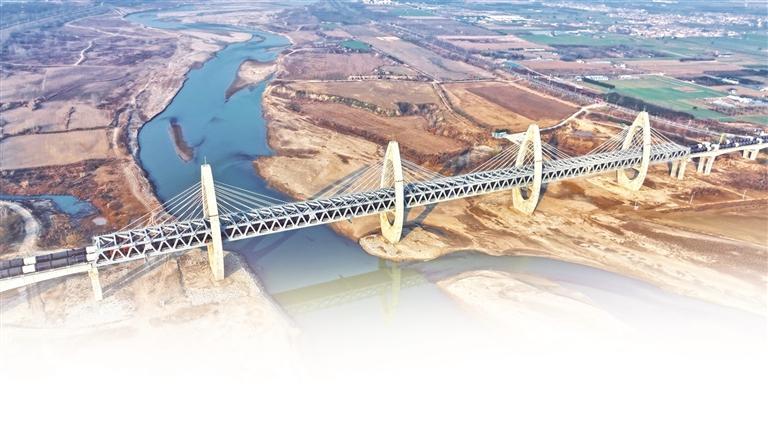
现代水网织锦绣——山东“十四五”水利高质量发展纪实
Zhong Guo Jing Ji Wang· 2025-12-19 13:16
Core Viewpoint - Shandong Province has achieved significant advancements in water resource management and investment, showcasing its commitment to water conservation and public welfare through various accolades and substantial financial investments in water infrastructure [1][2][11]. Investment Growth - Water investment in Shandong has seen a remarkable increase from 200 billion to 320 billion, with projections for the "14th Five-Year Plan" period to exceed 320 billion, marking a 1.6 times growth [2]. - In the past five years, annual water investment has steadily risen from 40.5 billion to an expected 80 billion by 2025, indicating a robust upward trend [2]. Infrastructure Development - The provincial government has implemented comprehensive planning frameworks, including the "Shandong Modern Water Network Construction Plan" and the "National Provincial Water Network Pilot Zone Construction Plan (2023-2025)" [4]. - Major water infrastructure projects, such as the successful completion of the Laolan Reservoir and the initiation of several other large-scale reservoirs, are expected to enhance water supply capacity by 1 billion cubic meters [4]. Management Innovations - Shandong has established a provincial water network operation scheduling center, promoting unified management of key water resources across the province [5]. - By the end of the "14th Five-Year Plan," the provincial water network will cover over 7,100 kilometers, with a water supply capacity reaching 12.5 billion cubic meters [5]. Ecological Improvements - The implementation of the river and lake chief system has evolved through three phases, enhancing ecological governance and community engagement in water management [6]. - Since 2017, Shandong has upgraded its river and lake management approach, focusing on ecological, economic, and social benefits, with 65 pilot projects initiated to enhance river and lake ecosystems [6][9]. Soil and Water Conservation - Shandong has made significant strides in soil and water conservation, with an additional 6,240 square kilometers of soil erosion control area established, achieving a soil conservation rate of 86.77%, surpassing the national average by 13.94 percentage points [8]. Rural Water Supply - Investment in rural water supply has surged from 20 billion during the "13th Five-Year Plan" to 54.85 billion in the "14th Five-Year Plan," reflecting a strong commitment to improving water access for rural populations [11]. - The province has achieved nearly universal access to rural water supply, with 100% county-level management and 97% large-scale water supply rates, significantly exceeding national averages [11].
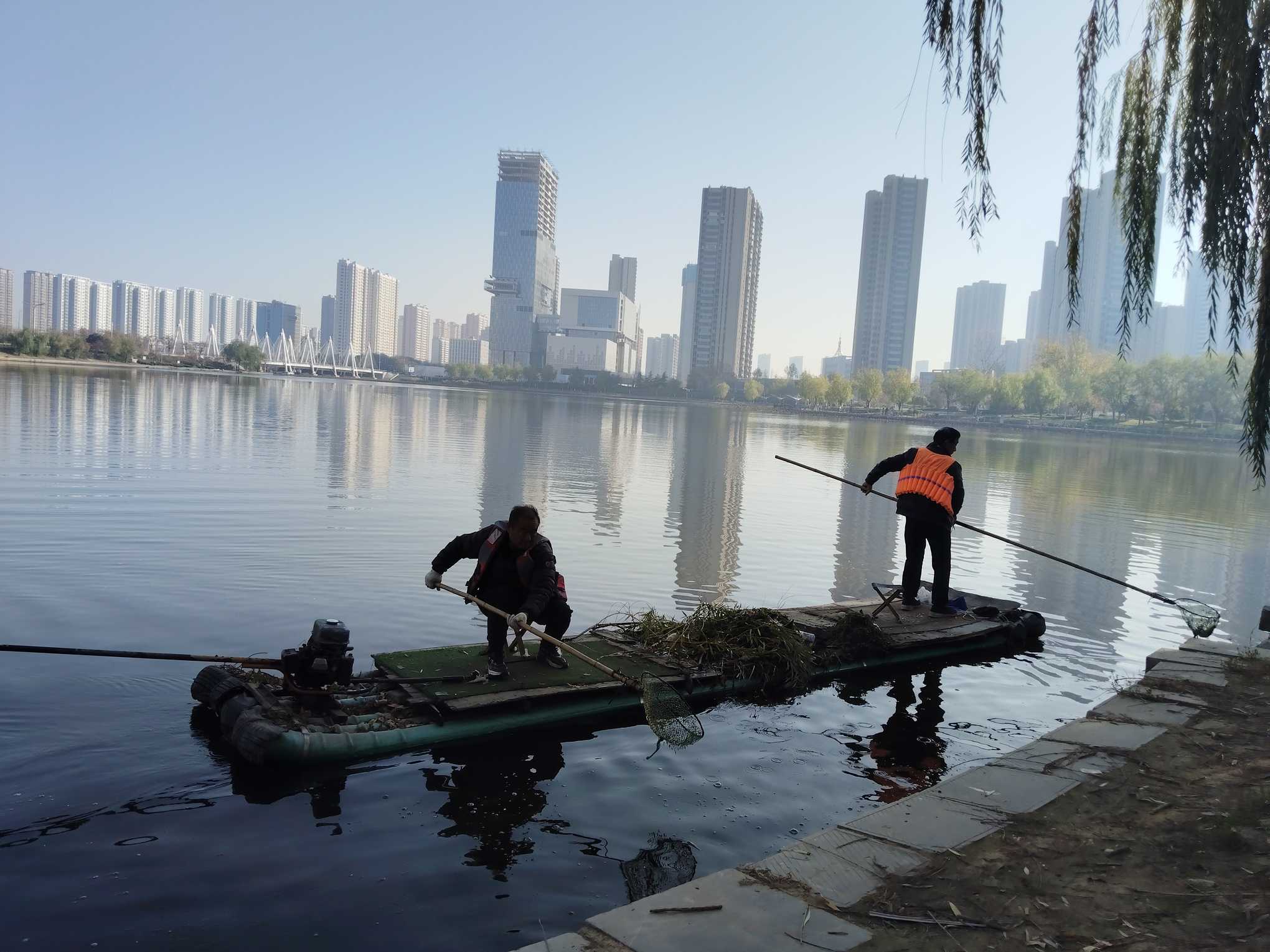
2025年新疆水利投资已逾400亿元 水网体系加速成型
Zhong Guo Jing Ji Wang· 2025-12-19 07:32
Group 1 - The core viewpoint of the news is that Xinjiang's water conservancy projects are progressing significantly, with investments exceeding the planned targets and major projects achieving key milestones [1][2][3] Group 2 - As of mid-December, Xinjiang has invested 400.03 billion yuan in water conservancy, surpassing the annual target of 386 billion yuan for 2025, indicating a rapid formation of the water network system [1] - Since the start of the 14th Five-Year Plan, Xinjiang's fixed asset investment in water conservancy has reached a historical high of 1580 billion yuan, with an annual growth rate exceeding 16% over the past three years, which is 1.2 times the total investment during the 13th Five-Year Plan [1] - Major water conservancy projects have made significant progress, including the completion of the world's highest concrete panel gravel dam, the Dashi Gorge Water Conservancy Hub, and the commissioning of the first unit of the Kurgan Water Conservancy Hub [1] - The Kapsulang River Water Conservancy Hub project in Baicheng is advancing steadily, enhancing flood control standards and providing 0.86 billion kilowatt-hours of clean energy annually, which will support regional energy structure optimization [2] - A total of 120.08 billion yuan has been invested in the renovation of 263 large and medium-sized irrigation areas, achieving an effective utilization coefficient of 0.583 for agricultural irrigation water, placing Xinjiang in the upper-middle tier nationally for agricultural water conservation [2] - By 2025, Xinjiang aims to improve irrigation over 1.82 million acres, supporting over half of wheat yields to exceed 500 kg per acre and over 30% of corn to achieve yields over 1000 kg per acre [2] - Xinjiang is implementing a comprehensive approach to water conservation and storage, with 559.7 billion cubic meters of water supplied and 7.8 million acres irrigated by mid-December 2025 [2] - The next steps for Xinjiang include focusing on water storage, water regulation, and water conservation, with plans to enhance water resource management and support the construction of a beautiful Xinjiang [3]
新疆若羌县瓦石峡水库全力冲刺建设目标
Zhong Guo Jing Ji Wang· 2025-12-18 07:02
据若羌县瓦石峡水库工程监理部副总监马龙介绍,"当前工作重点是完成泄洪冲沙洞与灌溉放水洞闸井 收尾工作,同步推进泄洪冲沙洞龙抬头段衬砌与灌溉放水洞衬砌和压力钢管安装施工,同时攻克坝基西 域砾岩帷幕灌浆透水率技术难点,为实现2026年3月初大坝填筑及12月底下闸蓄水目标奠定基础。" 针对若羌冬季低温干燥的气候,施工方采取多项保温措施保障质量。在灌溉放水洞衬砌中,采用暖风机 与洞口封闭相结合的方式保温;露天混凝土浇筑与坝基灌浆作业则搭设保温棚进行。混凝土施工中,通 过预热骨料、控制出机口温度的方式确保浇筑质量。"特别是闸井最后一仓混凝土,我们将加强保温养 护,实时监测温度,严防冻害发生。"若羌县瓦石峡水库工程中国水电十五局项目部生产经理霍光耀 说。 今年3月底,若羌县瓦石峡水库工程成功实现导(截)流验收;5月底,围堰施工达到10年一遇洪水度汛 标准。此外,临时道路、供电系统、砂石拌和系统、混凝土及沥青拌合站、营区等临建设施均已建成投 用。 寒冬时节,在新疆若羌县瓦石峡水库工程施工现场,伴随着大型机械的轰鸣声,建设者干劲十足,一派 热火朝天的繁忙景象。该工程自2024年3月开工以来稳步推进,目前工程整体已基本成形,主 ...
明年山西重点水利项目将谋划“八大板块”
Zheng Quan Shi Bao Wang· 2025-12-14 02:51
Core Viewpoint - The Shanxi Provincial Water Resources Department has issued a plan for key water conservancy projects for 2026, focusing on aligning with national strategies and provincial development needs, while establishing a project hierarchy for immediate, medium, and long-term implementation [1] Group 1: Project Categories - Flood Control and Disaster Reduction Projects: Aiming to enhance flood prevention capabilities, the plan includes the development of flood control reservoirs, small river management, and mountain flood prevention projects, with a focus on initiating several projects by 2026 [1] - Water Resource Allocation Projects: The plan emphasizes modern water network construction, promoting high-maturity small reservoir projects at the municipal and county levels, and optimizing unstarted county water network projects to ensure effective connectivity [1] - Irrigation Area Construction and Renovation Projects: Targeting the addition and restoration of 3 million acres of irrigated land, the plan includes the construction of five major irrigation bases and two irrigation areas, focusing on efficient water-saving projects [1] Group 2: Additional Initiatives - Rural Water Supply Projects: The plan promotes integrated urban and rural water supply systems, prioritizing standardized water supply projects at the county level and encouraging the construction of small-scale water supply projects [1] - Water Ecological Protection and Restoration Projects: Focused on the protection and management of key rivers, lakes, and springs, the plan includes projects for ecological restoration and improving water environments [1] - Soil and Water Loss Control Projects: Aiming to enhance soil conservation rates, the plan includes comprehensive management projects at the county level, focusing on ecological clean small watersheds and slope farmland management [1] Group 3: Technological and Infrastructure Development - Digital Twin Water Conservancy Projects: The plan aims to accelerate the digital and intelligent upgrade of water conservancy projects, enhancing the smart level of reservoirs, embankments, irrigation areas, and rural water supply [1] - Hydrological Infrastructure Construction Projects: The plan seeks to improve monitoring and forecasting capabilities through the establishment of hydrological monitoring stations and emergency monitoring systems [1]
海南省水利电力集团有限公司琼西北供水工程建管部水利专业经理:助力构建琼西北水资源配置体系
Hai Nan Ri Bao· 2025-12-14 01:33
Group 1 - The Qiong Northwest Water Supply Project is a key national water network project under the "14th Five-Year Plan" and one of the 150 major water conservancy projects identified by the State Council, aimed at constructing a water resource allocation system in Qiong Northwest to address agricultural irrigation and urban-rural water supply issues, benefiting a population of 630,000 in Danzhou City and Baisha Li Autonomous County upon completion [2][2][2] - The construction of the Longling Tunnel, a critical node in the project with a total length of 3,532 meters, faced significant geological challenges, including water inflow and unstable rock formations, which were effectively managed through a layered excavation method to ensure stability and enhance safety and efficiency [2][2][2] - The project aims for the completion of the main works by 2025, maintaining high standards and strict requirements while promoting accelerated construction efforts to contribute to water security in Hainan Free Trade Port [2][2][2]
贵州实施省级科技重大专项 攻关岩溶地区长距离输水隧洞建设难题
Zhong Guo Jing Ji Wang· 2025-12-12 08:23
贵阳市红枫湖至花溪水库连通工程由中铁一局等单位承建,输水线路总长约19.98公里,隧洞断面外直 径4.07米,内直径3.1米,是贵州省首次采用盾构法施工的水利工程,建成后年输水量可达2.18亿立方 米,将显著提升贵阳南部及东部供水安全保障能力。 贵州是世界上岩溶地貌发育最典型的几个地区之一,岩溶出露面积占全省总面积的61.9%。贵州省水利 厅相关负责人表示,岩溶地区长距离输水隧洞高效绿色建造与智能运维关键技术研究科技重大专项的实 施,有利于进一步巩固贵州在岩溶地区水利工程技术研究的领先地位,为破解"工程性缺水"难题、保障 区域水安全注入强劲科技动力。 据了解,该项科技重大专项以贵阳市红枫湖至花溪水库连通工程为依托,针对岩溶地区长距离输水隧洞 建设中面临的复杂地质勘察、高效绿色施工、智能运维管理三大核心问题展开攻关。 贵州12月10日正式启动省级科技重大专项——岩溶地区长距离输水隧洞高效绿色建造与智能运维关键技 术研究。该科技重大专项聚焦岩溶地质世界性难题,力争为水利工程领域提供技术突破与创新方案。 ...
水网密织,将惠泽皖北超三千万群众(迈向“十五五”的发展图景)
Ren Min Ri Bao· 2025-12-11 22:11
Core Viewpoint - The construction of the Yangtze River to Huai River water diversion project is crucial for enhancing water resource management, flood disaster prevention, and urban-rural water supply security in Anhui Province, with significant benefits expected for over 30 million residents in the northern Anhui region [3][4][5]. Group 1: Project Overview - The first phase of the Yangtze River to Huai River project was completed by the end of 2022, enabling water resource allocation across river basins [4]. - The second phase of the project is underway, focusing on urban and rural water supply and irrigation support, with a goal to connect over 30 million people to the new water supply [4][5]. - The project includes the construction of water plants, pipelines, and pressure stations to ensure stable water supply, particularly in areas previously reliant on groundwater [3][6]. Group 2: Economic and Social Impact - The project is expected to improve water quality significantly, as residents report better drinking water since the introduction of the new supply [5]. - By the end of 2025, the second phase is projected to have completed investments totaling 11.457 billion yuan, with water source replacement tasks in 28 counties expected to be finished [6]. - The project aims to enhance regional economic and social development by ensuring water security, with plans for further infrastructure improvements by 2028 [6][7]. Group 3: Construction and Management Strategies - Innovative construction techniques were employed to overcome challenges, such as using heating methods to protect concrete during cold weather [6]. - The project emphasizes a coordinated approach to water resource management, integrating large-scale infrastructure with local supply systems to ensure effective distribution [7]. - The government is encouraged to balance its role in water management with market mechanisms to foster private investment in water infrastructure [7][8].
引江济淮二期工程压茬推进 水网密织,将惠泽皖北超三千万群众(迈向“十五五”的发展图景)
Ren Min Ri Bao· 2025-12-11 21:59
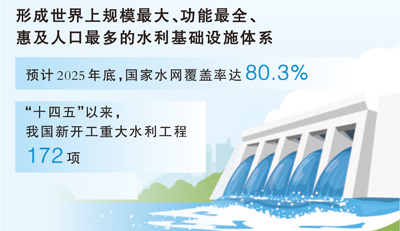
Core Viewpoint - The construction of the modern water network is accelerating, enhancing flood disaster defense, water resource allocation, and urban-rural water supply security [1] Group 1: Project Overview - The first phase of the Yangtze River to Huai River diversion project was completed by the end of 2022, enabling cross-basin water resource allocation [3] - The second phase of the project is under construction, focusing on urban and rural water supply and irrigation support, benefiting over 30 million people in 28 counties in northern Anhui [3][4] - The project aims to replace reliance on groundwater with surface water, addressing ecological safety and drinking water security issues in northern Anhui, where per capita water resources are only 1/4 of the national average [2][4] Group 2: Project Progress and Impact - As of October 2023, the second phase of the project has seen significant progress, with 12 surface water plants built and 286 kilometers of new water pipelines constructed in Bozhou City [4][5] - The total investment in the second phase is projected to reach 11.457 billion yuan by October 2025, with water source replacement tasks for 28 counties expected to be completed by the end of this year [5] - The project is set to enhance water supply infrastructure, including the construction of 38 new or renovated pumping stations and 188.3 kilometers of water pipelines by 2028 [5] Group 3: Broader Water Network Development - The national water network is expected to achieve an 80.3% coverage rate by the end of this year, with ongoing efforts to integrate large-scale and small-scale water management [7] - The government is encouraged to balance its role in water management while leveraging market mechanisms to involve social capital in water infrastructure development [7][8] - Continuous optimization of water investment structures is necessary to ensure effective water distribution to households and agricultural areas [8]
双堠水库主体工程建设进入最后冲刺,完工后将惠及临沂240万人
Qi Lu Wan Bao· 2025-12-11 06:51
齐鲁晚报·齐鲁壹点 李其峰 12月10日,记者从临沂市新闻办公室新闻发布会了解到,双堠水库工程今年年底前计划完成80%的总形 象进度,明年完成全部建设任务。水库建成后将成为临沂防洪体系的重要支柱,为城乡供水、农业灌溉 和生态改善提供坚实保障,直接惠及蒙河、沂河沿岸约240万群众和200多万亩耕地。 据介绍,为确保工程高质量如期完成,建设方在质量管控上建立了覆盖全过程的追溯体系,关键工序均 有影像记录;进度管理采用三级计划倒排工期,并设置风险预警;安全管理则依托智慧监测平台与标准 化建设,筑牢防线。工程还创新引入数字孪生技术,实现对水库建设的全周期智慧化管理。 据了解,作为省委省政府确定的重大水利工程建设项目,双堠水库工程建成后将发挥多重综合效益。在 防洪方面,它能有效调蓄蒙河洪水,缓解沂河干流及临沂市区的防洪压力;在供水方面,水库每天可为 市辖区提供9.1万立方米的生活及工业用水,同时灌溉近3万亩农田。此外,通过生态补水,水库还将持 续改善下游河道水生态环境,助力流域生态复苏。 ...