Optics

Search documents
Lumentum (LITE) Hits New 52-Week High on Bullish Rating, Improved Q1 Earnings
Yahoo Finance· 2025-11-06 10:42
Core Insights - Lumentum Holdings Inc. (NASDAQ:LITE) has reached a new 52-week high, driven by bullish analyst coverage and improved earnings performance in Q1 FY2026 [1][2] - The stock price increased by 23.57% to $232.75, with an intra-day high of $240.71 [1] - Wolfe Research raised its price target for Lumentum to $240 from $150, maintaining an "outperform" rating, citing benefits from the AI industry's growth [2] Financial Performance - Lumentum reported a net income of $4.2 million in Q1 FY2026, a significant turnaround from a net loss of $82.4 million in the same quarter last year [3] - Net revenues surged by 58.4% year-on-year, reaching $533.8 million compared to $336.9 million [3] Market Outlook - The company anticipates over 20% sequential revenue growth, even before contributions from new growth engines like optical circuit switches and co-packaged optics [5] - The CEO highlighted strong momentum in data center markets and expressed confidence in supporting the rapid expansion of AI compute with their optical portfolio [4][5]

erent (COHR) - 2026 Q1 - Earnings Call Presentation
2025-11-05 22:00
Q1 FY2026 Performance Highlights - Revenue reached $1.58 billion in Q1 FY26, a 17% increase compared to $1.35 billion in Q1 FY25 [6] - Gross margin was 38.7% in Q1 FY26, a 200 basis point increase from 36.7% in Q1 FY25 [6] - Earnings per share (EPS) was $1.16 in Q1 FY26, a 73% increase compared to $0.67 in Q1 FY25 [6] Revenue Segmentation - Datacenter & Communications accounted for 69% of the revenue in Q1 FY26 [6, 10] - Industrial segment accounted for 31% of the revenue in Q1 FY26 [6, 10] - Datacenter and Communications revenue was $1.09 billion in Q1 FY26 [9] - Industrial revenue was $491 million in Q1 FY26 [9] Q2 FY2026 Outlook - Revenue is projected to be between $1.56 billion and $1.70 billion [14] - Non-GAAP gross margin is expected to be between 38% and 40% [14] - Non-GAAP operating expenses are projected to be between $300 million and $320 million [14] - Non-GAAP EPS is expected to be between $1.10 and $1.30 [14]

Lumentum(LITE) - 2026 Q1 - Earnings Call Transcript
2025-11-04 23:02
Financial Data and Key Metrics Changes - In Q1, revenues surged more than 58% year-over-year, reaching $533 million, the highest revenue in a single quarter in the company's history [6][17] - Non-GAAP gross margin improved to 39.4%, up 160 basis points sequentially and 660 basis points year-on-year [17] - Non-GAAP operating margin was 18.7%, up 370 basis points sequentially and 1,570 basis points year-on-year [17] - Cash and short-term investments increased by $245 million to $1.12 billion [19] Business Line Data and Key Metrics Changes - Components revenue was $379 million, up 18% sequentially and 64% year-over-year, driven by strong demand in data centers [10][19] - Systems revenue was $155 million, down 4% sequentially but up 47% year-over-year, with cloud transceiver revenue remaining flat [13][19] - The company initiated CW laser deliveries for 800-gig transceiver manufacturers, marking a significant milestone [11] Market Data and Key Metrics Changes - Over 60% of total revenue now comes from cloud and AI infrastructure, indicating a shift in market demand [7] - Strong growth in data center interconnect components, with shipments of narrow linewidth laser assemblies for DCI transmission growing over 70% year-over-year [12] Company Strategy and Development Direction - The company has reorganized to report financials as a single reportable segment, allowing for quicker responses to market changes [9] - Future growth is driven by cloud transceivers, optical circuit switches, and co-packaged optics, with expectations to surpass $600 million in quarterly revenue earlier than previously targeted [8][15] - The company aims to leverage its strong market position in optics for scaling AI compute and is entering a period of sustained expansion [15] Management's Comments on Operating Environment and Future Outlook - Management expressed confidence in sustained growth driven by the accelerating adoption of AI and optical technologies [15] - The demand-supply imbalance for EML products has increased, with demand outstripping supply by 25%-30% [77] - The company is focused on long-term agreements with key customers to ensure sustainable business growth [56] Other Important Information - The company expects to see significant increases in shipment volumes in the second half of calendar 2026 as adoption accelerates [12] - The guidance for Q2 anticipates net revenue in the range of $630-$670 million, with a midpoint representing a new all-time quarterly revenue record [20][21] Q&A Session Summary Question: Can you discuss the confidence in sustaining growth in transceivers? - Management highlighted improved execution and participation in early customer ramps, expecting to ship 1.6T transceivers by mid-next year, contributing to a layering effect in revenue [27][28] Question: What does the 40% increase in capacity for data comm chips mean for revenue? - The increase in capacity is expected to enhance output and shift the product mix towards higher-margin 200G EMLs, contributing positively to revenue [30][31] Question: How is the continuous wave laser output being targeted? - The CW laser is being positioned for internal transceivers, with expectations for full production by mid-2026 [37] Question: What is the competitive environment for narrow linewidth lasers? - The company holds a strong market share in narrow linewidth lasers, with challenges in ramping capacity but a solid competitive position [40][41] Question: How is the supply-demand balance for EML products changing? - The demand-supply mismatch has worsened, with a 25%-30% shortfall relative to customer demand, despite increased supply [77][78] Question: What are the key milestones for the OCS business? - The hardware is generally qualified, with ongoing work on software qualification expected to be completed by mid-2026 [92]
Lumentum(LITE) - 2026 Q1 - Earnings Call Transcript
2025-11-04 23:02
Financial Data and Key Metrics Changes - In Q1, revenues surged more than 58% year-over-year, reaching $533 million, the highest revenue in a single quarter in the company's history [6][17] - Non-GAAP gross margin improved to 39.4%, up 660 basis points year-on-year, while non-GAAP operating margin increased to 18.7%, up 1,570 basis points year-on-year [17][18] - Non-GAAP net income was $86.4 million, with non-GAAP EPS at $1.10, reflecting strong operational performance [17][18] Business Line Data and Key Metrics Changes - Components revenue was $379 million, up 64% year-over-year, driven by strong demand in data centers [10][19] - Systems revenue was $155 million, up 47% year-over-year but down 4% sequentially, with cloud transceiver revenue remaining flat as manufacturing capabilities were increased [13][19] - The company initiated CW laser deliveries for 800-gig transceiver manufacturers, marking a significant milestone in its product roadmap [11] Market Data and Key Metrics Changes - Over 60% of total revenue now comes from cloud and AI infrastructure, indicating a strong alignment with market trends [7] - Shipments of narrow linewidth laser assemblies for data center interconnect grew over 70% year-over-year, demonstrating robust market demand [12] - The demand-supply imbalance for EML products has increased, with a shortfall of 25%-30% relative to total customer demand [77][78] Company Strategy and Development Direction - The company has reorganized to report financials as a single segment, allowing for quicker responses to market changes and better resource allocation [9] - Future growth drivers identified include cloud transceivers, optical circuit switches, and co-packaged optics, with expectations for sustained growth in cloud transceivers [8][15] - The company aims to leverage its strong market position to drive long-term shareholder value through expanded manufacturing capacity and new product ramps [15][21] Management's Comments on Operating Environment and Future Outlook - Management expressed confidence in sustaining growth due to improved execution and customer ramp participation, particularly in transceivers [27] - The company anticipates a revenue midpoint of approximately $650 million for Q2, surpassing previous targets [8][20] - Management highlighted the importance of software qualification for new products, particularly in the optical circuit switch market, as a key milestone for future revenue [92] Other Important Information - The company expects to see a significant increase in shipment volumes in the second half of calendar 2026 as adoption accelerates [12] - Cash and short-term investments increased by $245 million to $1.12 billion, benefiting from a convertible notes transaction [19] Q&A Session Summary Question: Can you discuss the confidence in sustaining growth in transceivers? - Management highlighted improved execution and participation in early customer ramps as key factors driving confidence in growth [27] Question: What does the 40% increase in capacity for data comm chips mean for revenue? - The increase in capacity is expected to layer on top of existing growth, with a shift towards 200 gig lasers contributing to revenue increases [31] Question: How do you view the continuous wave laser output market opportunity? - The company is targeting CW lasers for internal transceivers, with expectations for full production by mid-2026 [37] Question: What is the competitive environment for narrow linewidth lasers? - The company holds a strong market share in this area, with challenges in ramping laser capacity being a key focus [40][41] Question: How should we think about the split between components and systems for indium phosphide capacity? - The majority of output will be sold into the external market, with a small portion allocated for internal consumption [45] Question: How has the supply-demand imbalance for EML changed? - The demand-supply imbalance has increased to 25%-30%, indicating a significant shortfall relative to customer demand [77][78] Question: What is the approach to pricing given the supply-demand imbalance? - The company is using the demand-supply imbalance to impact pricing, with targeted price increases expected [80]
Lumentum(LITE) - 2026 Q1 - Earnings Call Transcript
2025-11-04 23:00
Financial Data and Key Metrics Changes - In Q1, revenues surged more than 58% year-over-year, reaching $533 million, the highest revenue in a single quarter in the company's history [5][15] - Non-GAAP gross margin for Q1 was 39.4%, up 160 basis points sequentially and 660 basis points year-over-year [15] - Non-GAAP operating margin was 18.7%, up 370 basis points sequentially and 1,570 basis points year-over-year [15] - Cash and short-term investments increased by $245 million to $1.12 billion during Q1 [17] Business Line Data and Key Metrics Changes - Components revenue was $379 million, up over 18% sequentially and 64% year-over-year, driven by strong demand in data centers [8][17] - Systems revenue was $155 million, down 4% sequentially but up 47% year-over-year, with cloud transceiver revenue remaining flat [11][17] - The company initiated CW laser deliveries for 800-gig transceiver manufacturers, marking a significant milestone [9] Market Data and Key Metrics Changes - Over 60% of total revenue now comes from cloud and AI infrastructure, driven by hyperscale customers [5] - Shipments of narrow linewidth laser assemblies for data center interconnect grew over 70% year-over-year [10] - The company expects significant increases in shipment volumes in the second half of calendar 2026 as adoption accelerates [10] Company Strategy and Development Direction - The company has reorganized to report financials as a single reportable segment, allowing for quicker responses to market changes [7] - Three major drivers of future growth have been identified: cloud transceivers, optical circuit switches, and co-packaged optics [6] - The company aims to leverage its leadership in optics for scaling AI compute and anticipates sustained growth in cloud applications [13] Management's Comments on Operating Environment and Future Outlook - Management expressed confidence in surpassing $600 million in quarterly revenue by June 2026, with a Q2 outlook of approximately $650 million [6] - The company highlighted a broad-based improvement in demand across all segments, with transceivers expected to contribute significantly to revenue growth [65] - Management noted that the demand-supply imbalance has increased, with a shortfall of 25%-30% relative to total customer demand [70][71] Other Important Information - The company expects to see revenue layering benefits from new 800-gig and 1.6T products ramping in future quarters [12] - The company is focused on expanding manufacturing capacity to support cloud and AI customers, with $76 million invested in CapEx during Q1 [17] Q&A Session Summary Question: Can you discuss the confidence in sustaining growth in transceivers? - Management highlighted improved execution and participation in early customer ramps, expecting to ship 1.6T transceivers by mid-next year [25] Question: What does the 40% increase in capacity for data comm chips mean for revenue? - Management indicated that the increase would lead to higher output and a shift towards 200 gig lasers, contributing to revenue growth [27][28] Question: How is the continuous wave laser output being targeted? - The company is shipping CW lasers to other customers and plans to use them in its own transceivers by mid-2026 [34] Question: What is the competitive environment for narrow linewidth lasers? - Management noted strong market share and limited competition, with a focus on ramping laser capacity [36][37] Question: How is the supply-demand imbalance for EML characterized? - The demand-supply mismatch has increased, with a shortfall of 25%-30% relative to customer demand [70][71] Question: What milestones are expected for the OCS business? - Management expects to ramp to $100 million quarterly by December 2026, with hardware generally qualified and ongoing software development [82]
水晶光电(002273)季报点评:三季报业绩行稳致远 AR光波导厚积薄发
Xin Lang Cai Jing· 2025-10-28 08:25
Core Insights - The company reported stable revenue growth in Q3 2025, achieving revenue of 5.123 billion yuan, a year-over-year increase of 8.78%, and a net profit of 983 million yuan, up 14.13% year-over-year [1] - The gross margin was 31.74%, reflecting a slight increase of 0.17 percentage points year-over-year, while the net profit margin reached 19.29%, up 0.62 percentage points year-over-year [1] - The company is expanding its product offerings and optimizing its industrial structure, with significant growth in the consumer electronics sector driven by collaboration with major clients [1][2] Revenue and Profitability - For Q3 2025, the company achieved revenue of 2.103 billion yuan, a year-over-year increase of 2.33% and a quarter-over-quarter increase of 36.71% [1] - The net profit for Q3 2025 was 483 million yuan, reflecting a year-over-year increase of 10.98% and a quarter-over-quarter increase of 72.48% [1] Product Development and Market Expansion - The company is advancing its optical components business by collaborating with North American and Korean clients, with a focus on optimizing product structure [1][2] - In the film optical panel segment, the company has successfully expanded into non-mobile phone markets, achieving full coverage of terminal categories and increasing overseas revenue [2] - The semiconductor optics segment is seeing growth in narrowband applications, with significant increases in 3D module business performance [2] New Growth Areas - The automotive optics sector is experiencing new growth, particularly with the AR-HUD technology gaining traction in domestic new energy vehicles [2][3] - The company has made key breakthroughs in reflection waveguide and diffraction waveguide technologies, positioning itself at the forefront of the AR glasses market [3] Research and Development - R&D expenses reached 104 million yuan in Q3 2025, a year-over-year increase of 26.83% [3] - The company is focusing on developing innovative optical products in collaboration with industry leaders, particularly in the AR/VR space [3] Financial Forecast - The company is projected to achieve revenues of 7.6 billion yuan, 9 billion yuan, and 10.4 billion yuan in 2025, 2026, and 2027 respectively, with year-over-year growth rates of 21%, 19%, and 15% [4] - Expected net profits for the same years are 1.27 billion yuan, 1.57 billion yuan, and 1.83 billion yuan, with growth rates of 23%, 24%, and 16% respectively [4] - The current stock price corresponds to P/E ratios of 28, 22, and 19 for 2025, 2026, and 2027 [4]


共封装光学(CPO)概念下跌1.32% 主力资金净流出88股
Zheng Quan Shi Bao Wang· 2025-10-23 09:52
Core Points - The Co-Packaged Optics (CPO) sector experienced a decline of 1.32%, ranking among the top losers in the market, with notable declines from companies such as Dongtian Micro, Weier High, and Changfei Fiber [1][2] - Despite the overall decline in the CPO sector, 35 stocks within the sector saw price increases, with Yitian Co., Demingli, and Hezhuan Intelligent leading the gains at 8.23%, 4.10%, and 3.77% respectively [1][6] Market Performance - The CPO sector had a net outflow of 3.425 billion yuan, with 88 stocks experiencing net outflows, and 15 stocks seeing outflows exceeding 100 million yuan [2] - The stock with the highest net outflow was Xinyi Sheng, with a net outflow of 643.395 million yuan, followed by Industrial Fulian, Tianfu Communication, and Dongshan Precision with outflows of 578.511 million yuan, 476.392 million yuan, and 384.101 million yuan respectively [2][3] Notable Stocks - The top gainers in the CPO sector included Shenghong Technology, Demingli, and Zhongji Xuchuang, with net inflows of 645.124 million yuan, 562.867 million yuan, and 154.450 million yuan respectively [6] - Conversely, significant losers included Weier High, which saw a decline of 12.67%, and Dongtian Micro, which dropped by 12.94% [6][4]



POET Technologies Receives $5 Million Production Order for 800G Optical Engines
Globenewswire· 2025-10-22 11:29
Core Insights - POET Technologies Inc. has received a production order exceeding US$5 million for its POET Infinity™ optical engines, intended for AI data servers [1][2][3] - The order signifies the commercial viability and scalability of POET's technology, which is designed to support AI connectivity and meet the demands of hyperscale data centers [2][5] - The optical engines are scheduled for delivery in the second half of 2026, with specific configurations including 400G transmit and 800G receive engines [3][4] Company Overview - POET Technologies specializes in high-speed optical modules, optical engines, and light source products for the AI systems market and hyperscale data centers [6] - The company's technology is based on the POET Optical Interposer™, which integrates electronic and photonic devices into a single chip, offering lower costs, reduced power consumption, and smaller sizes compared to traditional products [6] - POET's products are scalable for high production volumes and address challenges in various applications, including AI clusters, 5G networks, and autonomous vehicle systems [6] Market Outlook - The market for optical transceivers and related products is projected to double from US$5 billion in 2024 to US$10 billion by 2026, driven by the growth of AI clusters [5]



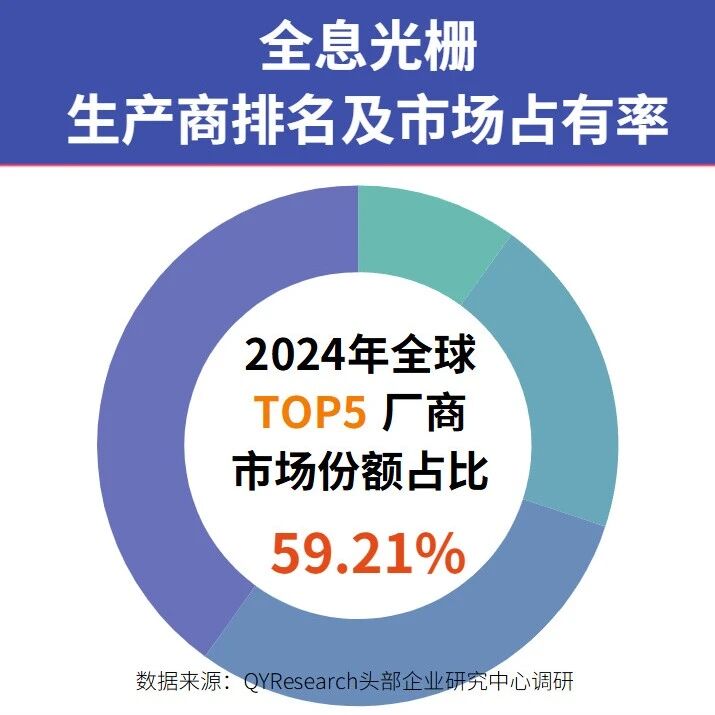
全息光栅行业洞察:2024年TOP5 企业占据全球59.21%的市场份额
QYResearch· 2025-10-14 02:16
Core Viewpoint - The holographic grating market is an emerging segment in advanced optics, driven by the increasing demand for high-precision optical components in fields such as spectroscopy, laser systems, telecommunications, and optical storage. The advantages of holographic gratings over traditional mechanical techniques include lower diffraction light scattering, higher diffraction efficiency, and more precise wavelength control, although high production costs and complex manufacturing processes remain challenges [3][4]. Market Overview - The holographic grating market is characterized by steady growth, with expanding applications in high-precision optics and continuous innovation in manufacturing technologies. Leading manufacturers are investing in advanced lithography, nanofabrication, and coating technologies to enhance diffraction efficiency and spectral resolution [4]. - North America and Europe maintain market leadership due to established research infrastructures, while the Asia-Pacific region is rapidly emerging as the fastest-growing market, driven by advancements in photonic technology and electronic manufacturing [4]. Future Trends - Integration with photonic devices is expected to increase, supporting applications in telecommunications, quantum computing, and next-generation data transmission [5]. - Advances in nanofabrication technologies will enable the production of higher precision and more flexible holographic gratings, lowering barriers for broader commercial applications [5]. - The Asia-Pacific market is projected to grow rapidly due to industrialization and increased investment in photonics technology [5]. SWOT Analysis - **Strengths**: Holographic gratings exhibit high precision and efficiency compared to ruled gratings, with broad applications in spectroscopy, laser tuning, and communication [6]. - **Weaknesses**: High production costs and low market awareness compared to traditional optical components limit widespread adoption [7]. - **Opportunities**: The growth of photonics and quantum technologies, along with expanding applications in medical and environmental monitoring, present significant opportunities [7]. - **Threats**: Competition from alternative technologies and supply chain risks related to specialized substrates and coatings could impact market share [7]. Market Size and Projections - According to QYResearch, the global holographic grating market is expected to reach USD 298.40 million by 2031, with a compound annual growth rate (CAGR) of 4.20% over the next few years [10]. - The leading manufacturers in the global holographic grating market include HORIBA, Newport Corporation, and Zeiss, with the top five companies holding approximately 59.21% of the market share [12]. Product Type and Application Segmentation - Currently, concave holographic gratings dominate the market, accounting for about 64.77% of the share, while laser applications represent the largest downstream market, comprising approximately 47.12% of the demand [15][16]. - Holographic gratings are essential components in laser systems, astronomical spectrometers, and optical communication systems, enhancing performance and reliability [16][17].
亲述:从滨松仪器工程师到事业部长的“打怪升级秘籍”
仪器信息网· 2025-10-10 03:58
Core Insights - The article highlights the journey and insights of Hamamatsu Photonics, a leader in the optical technology sector, emphasizing its commitment to innovation and customer-centric solutions [2][3][10]. Group 1: Company Background and Leadership - Hamamatsu Photonics, established in 1953, has become a global giant in photonics technology, contributing significantly to various advanced fields such as gravitational wave detection and semiconductor testing [2]. - The interview with Kazuo Ueno, the head of the Electron Tube Division, reveals his 35-year career at Hamamatsu and his vision for the company's future in the optical technology landscape [3][4]. Group 2: Innovation and Product Development - The company maintains a strong culture of innovation, driven by a philosophy of "let's try it first," which encourages employees to embrace challenges and learn from failures [10]. - A notable innovation is the "stealth dicing" technology, which allows for precise wafer cutting without generating waste, showcasing Hamamatsu's commitment to developing environmentally friendly solutions [11][14]. Group 3: Customer-Centric Approach - Hamamatsu has shifted from a technology-driven to a demand-driven approach, with 80% of its sales now coming from customized products tailored to specific customer needs [12]. - The company emphasizes the importance of understanding customer requirements and adapting products accordingly, as demonstrated by a successful modification of a light source module to meet a client's needs [12][18]. Group 4: Market Strategy and Growth - The Chinese market is viewed as a critical growth engine for Hamamatsu, with a projected annual growth target of 5%-8% for the Electron Tube Division in China by 2025 [21]. - The company aims to enhance local production capabilities to improve responsiveness to customer demands, positioning its Beijing facility as a rapid response center rather than a low-cost production base [20][21]. Group 5: Future Outlook and Technological Trends - Hamamatsu plans to extend its product lines while fostering a culture of innovation that encourages employees to explore cross-disciplinary applications [23][25]. - The company recognizes the growing importance of semiconductor technology while valuing the unique advantages of traditional PMT technology, aiming for a balanced coexistence of both [26].