光收发器

Search documents
光芯片封装,大有可为
半导体行业观察· 2026-03-18 00:50
Core Insights - The photon packaging market is entering a high-growth phase driven by two main factors: the demand for faster and more efficient data interconnects fueled by artificial intelligence and the rise of next-generation display technologies [8] - Co-packaged optical devices (CPO) are emerging as a significant opportunity rather than a replacement for traditional optical transceivers, which have dominated the market [8][11] - The photon packaging market is expected to grow at a remarkable compound annual growth rate (CAGR) of 21.5% from 2025 to 2031, reaching a market size of $14.4 billion by 2031 [8] Market Dynamics - The core of photon packaging lies in module-level assembly, integrating various components to form a complete optical engine, with optical transceivers currently holding the largest market share [2] - The transition from hybrid integration to heterogeneous integration is underway, with a deeper transformation driven by CPO, which stacks photonic integrated circuits (PIC) with electronic integrated circuits (EIC) [2][14] - Advanced semiconductor foundries like TSMC and ASE are positioned as key players in this transition, with standardization being crucial for large-scale deployment [3][11] Technical Challenges - Several architectural questions remain unresolved, such as whether to adopt PIC-on-EIC or EIC-on-PIC configurations, and which coupling strategies will dominate [3] - The industry has reached a consensus on the need for detachable connections for maintenance, but unified standards are still lacking among manufacturers [4][14] - The coupling of optical fibers to chips presents significant challenges, particularly in maintaining low fiber loss levels for quantum computing applications [5][14] Application Areas - Beyond data communication and telecommunications, photon packaging is increasingly important in other fields such as augmented reality (AR) and quantum technology, driven by the demand for smaller form factors [4][14] - In the AR sector, competition between liquid crystal semiconductor (LCoS) and microLED technologies is shaping the development roadmap, with significant implications for packaging requirements [5][14] - The quantum computing landscape remains full of possibilities, with advanced photon packaging technology being critical for scaling quantum bit architectures [5] Future Outlook - The photon packaging market is expected to be primarily driven by optical transceivers in data communication and telecommunications until 2025, with increasing demand for efficient interconnects in AI infrastructure accelerating the adoption of CPO [6][8] - The value share created by packaging will vary by application, influenced by technology maturity, production scale, and assembly complexity [6] - By 2031, augmented reality is projected to become a significant market pillar, with strong growth anticipated around 2026-2027, particularly for microLED technologies [6][8]



光芯片的机遇
半导体行业观察· 2026-03-02 01:41
Core Insights - The report by Morgan Stanley highlights that the optical communication market is entering a second phase driven by artificial intelligence, with a projected market size of approximately $30 billion by 2025 and over $65 billion by 2028, reflecting a compound annual growth rate of about 30% [2] - An additional $23 billion in opportunities related to new optical communication technologies could expand the long-term market size to around $90 billion [2] Market Size and Structural Demand Drivers - The demand for optical fiber is shifting from traditional telecom and enterprise cycles to cloud-based AI data centers, which require higher bandwidth and faster upgrade cycles [5] - The share of cloud data centers in the overall optical fiber market is expected to grow from 28% in 2021 to 63% by 2025, reaching 78% by 2030 [5] - The report identifies two structural drivers: the limitations of power and the need for high-density deployments, which will catalyze the construction of distributed data centers [6] Market Segmentation and Growth Opportunities - By 2028, the optical transceiver market is expected to reach approximately $50.3 billion, making it the largest sub-market within optical communications [10] - The report predicts about $23 billion in new optical module market opportunities, segmented into five categories, with significant contributions from copper-to-fiber transitions and co-packaged optics [10][11] Technology Transition: Copper to Fiber - The transition from copper to fiber is characterized by short-distance connections, with copper historically dominating due to lower costs and higher reliability [12] - The report notes that the performance of copper is limited by signal integrity at high speeds, necessitating a shift to fiber [12] - The cost of fiber installation is at least double that of copper, highlighting the economic challenges of this transition [13] Co-Packaged Optics (CPO) and Optical I/O - CPO is seen as a key driver in the transition from copper to fiber, addressing bottlenecks in packaging technology [15] - The adoption of CPO faces resistance due to reliability concerns, manufacturing costs, and the need for a standardized ecosystem [16] Optical Circuit Switching (OCS) - OCS aims to reduce latency and power consumption by keeping traffic in the optical domain, with a projected market size growth from $19.8 million in 2024 to $5.7 billion by 2028 [20] - The economic sustainability of OCS depends on competition from advancements in packet switching technology and the predictability of traffic patterns [21] Data Center Interconnect (DCI) and ZR Optical Modules - DCI demand is driven by power limitations, with a shift towards pluggable optical modules due to cost and power advantages [27] - The report emphasizes that pluggable optical modules represent about 20% of system costs, with average selling prices ranging from $2,000 to $3,000 [27][28] Out-of-Band Management (OOBM) - OOBM is identified as a significant cost, potentially accounting for 2-5% of the Ethernet switch market, with a projected market opportunity of $3-4 billion by 2028 [25] - The report highlights the collaboration between Ciena and Meta on a PON-based redesign that reduces active network components and lowers power consumption [25]

这些英伟达的“靠山”,赚翻了
半导体芯闻· 2026-02-12 10:37
Group 1 - Nvidia is a leading player in the AI wave, dominating the market with its GPU architecture and CUDA ecosystem, which are crucial for AI training and inference [1] - The rise of Nvidia is not an isolated event; it is part of a complex ecosystem involving wafer manufacturing, advanced packaging, storage bandwidth, network interconnects, power and cooling, materials, and equipment [1] - The AI infrastructure competition has shifted from a focus on computing power to overcoming connectivity bottlenecks, highlighting the importance of interconnect technologies [8] Group 2 - Credo, a lesser-known company, has seen its stock price surge due to its active electrical cables (AEC) that are essential for connecting GPUs in large AI data centers [2][4] - Credo holds an 88% market share in the AEC market, with revenues expected to double again by 2026, reaching nearly $1 billion [4] - The demand for optical fibers is increasing as they offer superior speed and energy efficiency compared to copper cables, with Corning emerging as a key player in this market [5][7] Group 3 - Lumentum is transitioning from a telecom supplier to a core enabler for AI data centers, with significant revenue growth driven by strong demand for optical devices [11][13] - Coherent is also innovating in the optical transceiver space, with a focus on high-speed devices that are essential for AI and machine learning applications [15] - SiTime specializes in precision clocks that are critical for synchronizing AI servers and networks, experiencing substantial revenue growth due to increased demand from data center clients [19][21] Group 4 - The supply chain supporting Nvidia's empire is both powerful and fragile, characterized by high technical barriers and single-point dependencies [27][28] - Companies like Corning, SiTime, and Nittobo are crucial for the reliability of AI systems, with their products being essential for maintaining system performance under extreme conditions [26][25] - The future of these companies is uncertain, as they face potential demand fluctuations and the risk of supply chain disruptions [27][28]

偷偷挣钱的芯片巨头
3 6 Ke· 2026-02-12 01:40
Core Insights - Nvidia stands out as a leading player in the AI wave, dominating the market with its GPU architecture and CUDA ecosystem, which are central to AI training and inference [1] - The rise of Nvidia is not an isolated event; it reflects a broader evolution in the AI infrastructure ecosystem, involving multiple components such as wafer manufacturing, advanced packaging, and network interconnects [1][8] - The competition in AI infrastructure has shifted from pure computational power to the ability to connect and manage vast numbers of GPUs effectively [8] Group 1: Nvidia's Market Position - Nvidia's data center revenue has reached new highs, with its latest GPU products being in high demand even before full release [1] - The company is perceived as defining AI infrastructure almost single-handedly, raising questions about the sustainability of relying on a single entity for foundational computing power [1] Group 2: The Role of Credo - Credo, a lesser-known semiconductor company, has seen its stock price surge by 245% in 2024 and is expected to double again in 2025, driven by the demand for active electrical cables (AEC) in AI data centers [2][4] - Credo holds an 88% market share in the AEC market, with analysts projecting its revenue to approach $1 billion by 2026 [4] Group 3: The Shift to Fiber Optics - Corning, a major player in fiber optics, is experiencing a resurgence as AI data centers increasingly require high-speed, reliable connections, with a significant contract from Meta for $6 billion [5][9] - The efficiency of fiber optics over copper cables is highlighted, with Corning's technology expected to dominate the internal networks of data centers [5][9] Group 4: Lumentum's Transformation - Lumentum is transitioning from a telecom-focused company to a key enabler for AI data centers, with a 58% year-over-year revenue increase [9][10] - The company is betting on three AI growth engines: optical circuit switches, co-packaged optics (CPO), and cloud transceivers [9][10] Group 5: SiTime's Importance - SiTime specializes in MEMS clock devices, crucial for maintaining synchronization in AI servers, with a 45% revenue growth in its communication and data center business [17][21] - The company’s technology is essential for ensuring the performance and efficiency of AI systems, especially as data center demands increase [21][22] Group 6: Supply Chain Vulnerabilities - The supply chain supporting Nvidia's empire is both powerful and fragile, with dependencies on specific technologies and materials that are difficult to replicate [23] - Companies like Nittobo, which supplies T-glass, face challenges in scaling production to meet the surging demand from AI companies [20][23] Group 7: The Future of AI Infrastructure - The AI infrastructure landscape is evolving, with a focus on connectivity and the ability to manage large-scale GPU deployments becoming as critical as computational power itself [8][24] - The sustainability of this supply chain and its ability to meet exponential growth in computational demand will be crucial for the future of AI [25]

偷偷挣钱的芯片巨头
半导体行业观察· 2026-02-12 00:56
Core Insights - Nvidia stands out as a leading player in the current AI wave, primarily due to its GPU architecture and CUDA ecosystem, which have positioned it at the center of the computing power competition [2] - The rise of Nvidia is not an isolated event; it is part of a broader evolution involving various components such as wafer manufacturing, advanced packaging, storage bandwidth, and network interconnects [2] - The AI infrastructure competition has shifted from a focus on computing power to addressing connectivity bottlenecks, highlighting the importance of interconnect technologies [10] Group 1: Nvidia and AI Infrastructure - Nvidia's data center revenue has reached new highs, with its latest GPU products being in high demand even before full release [2] - The AI computing power explosion is not solely dependent on GPUs but requires a complex ecosystem of interconnected technologies [2] - The emergence of companies like Credo, which specializes in active electrical cables, illustrates the hidden champions supporting Nvidia's growth [3][4] Group 2: Connectivity Technologies - Credo's active electrical cables have gained significant market share, with an estimated 88% of the active cable market, and are projected to double its revenue to nearly $1 billion by 2026 [6] - Corning's optical fibers are becoming the preferred choice for data center networks due to their superior speed and energy efficiency compared to copper cables [7][9] - The coexistence of copper and fiber technologies in AI data centers reflects a unique symbiotic relationship driven by the specific demands of AI workloads [9] Group 3: Optical Communication and Components - Lumentum is transitioning from a telecommunications provider to a core enabler for AI data centers, with significant revenue growth driven by data center demands [12][13] - Coherent is also innovating in optical transceivers, with a focus on high-speed communication driven by AI and machine learning [16] - The demand for optical components is expected to surge as AI workloads increase, but companies must be cautious of potential demand fluctuations once connectivity bottlenecks are resolved [19] Group 4: Precision Timing and Materials - SiTime specializes in MEMS-based timing devices, which are crucial for maintaining synchronization in AI data centers, showing significant revenue growth [20][23] - T-glass, a critical material for advanced chip packaging, is in high demand but faces supply constraints, highlighting the vulnerabilities in the supply chain [24][26] - The importance of precision timing and reliable materials underscores the foundational elements that support AI infrastructure, often overlooked in discussions about advanced technologies [27][28] Group 5: Supply Chain Dynamics - The supply chain supporting Nvidia's empire is characterized by both strength in technological barriers and vulnerability due to single-source dependencies [30] - Companies like Corning and SiTime have shown resilience and adaptability, indicating a long-term commitment to technological advancement despite market uncertainties [30][31] - The future of AI infrastructure will depend on the ability of these suppliers to meet the exponential growth in computing power demand while managing risks associated with supply chain dependencies [31]
盘后飙升15%!“光互联巨头”Credo Q3营收指引碾压预期,预计全财年增长超200%
美股IPO· 2026-02-10 01:05
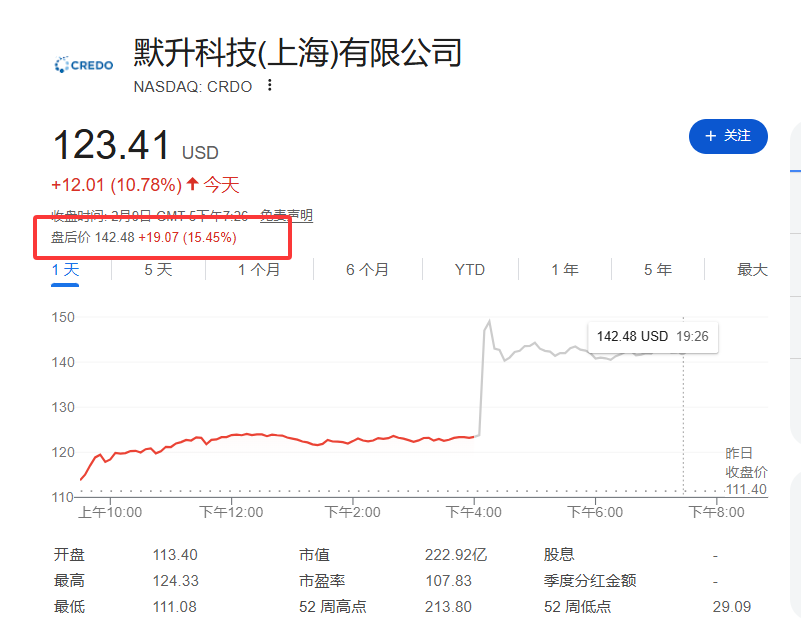
Core Viewpoint - Credo has significantly raised its revenue guidance for Q3 of FY2026, expecting revenue between $404 million and $408 million, far exceeding market expectations of $341 million, driven by surging demand for AI data center products [1][4][5] Group 1: Financial Performance - The company anticipates a year-over-year revenue growth of over 200% for the current fiscal year, indicating a strong expansion phase [5] - The Q3 revenue forecast represents a 19% increase from the previous guidance midpoint of $340 million and is 22% higher than the previous lower guidance of $335 million [12] - Following the announcement, Credo's stock price surged by 15% in after-hours trading, reflecting strong market confidence [6][8] Group 2: Market Demand and Product Offering - The explosive growth in Credo's performance is attributed to the urgent demand for high-speed, energy-efficient connectivity products driven by AI data centers [15] - Credo specializes in providing innovative connectivity solutions with speeds up to 1.6T, including AEC (Active Electrical Cable) technology, which is crucial for high-speed data transmission in AI server networks [16][17] - Major clients include tech giants like Amazon, Microsoft, and xAI, indicating strong market validation for Credo's products [17] Group 3: Analyst Sentiment - Wall Street analysts maintain a positive outlook on Credo, with Needham reiterating a "buy" rating and setting a target price of $220, citing the increasing adoption of AEC technology [18] - Rosenblatt Securities adopts a more cautious stance, assigning a "neutral" rating with a target price of $170, highlighting potential valuation risks [19]

盘后飙升15%!“光互联巨头”Credo Q3营收指引碾压预期,预计全财年增长超200%
Hua Er Jie Jian Wen· 2026-02-10 00:58
Core Viewpoint - Credo has significantly raised its revenue guidance due to explosive demand for AI infrastructure, with expected revenues far exceeding Wall Street's most optimistic estimates, leading to a surge in stock price after hours [1][3]. Financial Performance - For Q3 of FY2026 (ending January 31, 2026), Credo expects revenues between $404 million and $408 million, which is substantially higher than the previous guidance of $335 million to $345 million and well above the consensus estimate of $341.2 million [1][5]. - The midpoint of the new revenue guidance represents a 19% increase compared to the previous midpoint [5]. - The company anticipates a mid-single-digit sequential growth in Q4, projecting over 200% year-over-year growth for FY2026 [1][9]. Market Position and Demand - Credo's growth is driven by the urgent demand for high-speed, energy-efficient connectivity products in AI data centers, particularly through its innovative AEC (Active Electrical Cable) technology [9][10]. - The company holds a leading position in the AEC market, which is crucial for high-speed data transmission within AI data centers [9]. Clientele and Industry Trends - Major clients include tech giants like Amazon, Microsoft, and xAI, reflecting strong demand for Credo's products due to their significant investments in AI infrastructure [10]. - The market is optimistic about the AI-driven growth potential, with analysts noting Credo's high gross margin of nearly 67% and return on assets exceeding 20% [11]. Analyst Ratings - Needham maintains a "Buy" rating on Credo, listing it as a "Top Pick" for 2026 with a target price of $220, citing the increasing adoption of AEC technology and new product launches as key growth drivers [11]. - Conversely, Rosenblatt Securities adopts a more cautious stance with a "Neutral" rating and a target price of $170, highlighting valuation risks [11].
开盘8分钟,20%涨停!重磅利好,持续发酵!
Xin Lang Cai Jing· 2026-02-03 02:52
Group 1: CPO Market Growth - The CPO concept stocks experienced significant gains, with Tianfu Communication rising over 10% and ZhiShang Technology hitting a 20% limit up shortly after opening on February 3 [1][6] - According to Light Counting's report, the CPO market is expected to grow rapidly, reaching a market size of $16.5 billion by 2025 and $26 billion by 2026, with an annual growth rate of 60% [7] - Major cloud companies like Meta and Oracle plan to double their capital expenditures by 2026, supporting the CPO market despite easing supply chain shortages [7] Group 2: Sales and Adoption of Optical Devices - Sales of optical devices for the top five cloud companies are projected to account for 3.1% of their capital expenditures in 2026, up from 2.7% in 2025, and expected to rise to 4.1% by 2031 [2] - The adoption of CPO technology in Scale-up connections is anticipated to exceed forecasts, driving stronger market growth from 2028 to 2031 [2] Group 3: NVIDIA's CPO Initiatives - NVIDIA is expected to ship 10,000 CPO switches, with the Spectrum5 model leading the initial volume, and small-scale shipments of Spectrum6 and Quantum CPO switches anticipated starting in Q2 [3][9] - NVIDIA hosted a webinar on February 3, 2026, focusing on CPO switches for AI factories, emphasizing the need for infrastructure to support large-scale AI workloads [8] Group 4: Market Stability and Trends - Analysts suggest that the market may be stabilizing, although external liquidity issues and geopolitical uncertainties remain [10][11] - Recent data indicates a decrease in trading volume and financing balances in the A-share market, suggesting a trend towards market consolidation as the holiday approaches [11][12]


开盘8分钟,20%涨停!重磅利好,持续发酵!
券商中国· 2026-02-03 02:49
Core Viewpoint - The CPO (Co-Packaged Optics) sector is experiencing significant growth, driven by advancements in AI and cloud computing, with expectations for substantial market expansion in the coming years [3][5]. Group 1: CPO Market Growth - The CPO market is projected to reach $16.5 billion by 2025 and surge to $26 billion by 2026, reflecting a staggering annual growth rate of 60% [3]. - Major cloud companies like Meta and Oracle are expected to double their capital expenditures by 2026, which will support the optical device market [3]. - Sales of optical devices to the top five cloud companies are anticipated to increase from 2.7% of their capital expenditures in 2025 to 3.1% in 2026, and further to 4.1% by 2031 [3]. Group 2: CPO Technology Advancements - NVIDIA is set to release 10,000 units of its CPO switches, with the Spectrum5 model leading the initial rollout, and Spectrum6 and Quantum models expected to follow in Q2 [5]. - The adoption of CPO technology is projected to significantly reduce total cost of ownership (TCO) and power consumption, with potential reductions of 84% in transceiver power and 23% in total network power for specific configurations [5]. Group 3: Market Stability and Trends - The overall market is showing signs of stabilization, with recent trends indicating a potential recovery in liquidity, although geopolitical factors remain a concern [7][8]. - The A-share market is experiencing fluctuations, with financing levels still relatively high, suggesting that volatility may continue as the market approaches the upcoming holiday period [8].

Lumentum Holdings Inc. (NASDAQ:LITE) Earnings Preview: A Look into the Future
Financial Modeling Prep· 2026-02-02 12:00
Core Insights - Lumentum Holdings Inc. is set to release its quarterly earnings on February 3, 2026, with analysts expecting an EPS of $1.40 and revenue of approximately $646.7 million [1][6] - The company is experiencing significant growth driven by increased demand for AI and cloud technologies, projecting revenues between $630 million and $670 million and non-GAAP EPS ranging from $1.30 to $1.50 [2][6] - Over 60% of Lumentum's revenue comes from AI and cloud demand, primarily from hyperscaler customers, with a Zacks Consensus Estimate for revenues at $652.4 million, reflecting a 62.2% increase from the previous year [3] Revenue and Growth Projections - Lumentum's optics business is thriving due to the adoption of AI technologies, with expectations to surpass its revenue guidance of $650 million sooner than anticipated [4] - The company's components for cloud and data center applications are crucial for data center operations, contributing to half of the expected growth in the second quarter [3][4] Market Impact - The upcoming earnings report could significantly impact Lumentum's stock price, with potential for a rise if expectations are exceeded, or a decline if results fall short [5]