Workflow
金融科技
icon
Search documents
快问快答:10大核心问题拆解加拿大上市要点!
Sou Hu Cai Jing· 2025-11-24 01:31
Group 1 - The article emphasizes that Canada is an attractive option for Chinese companies seeking overseas financing, especially given the increasing competition in the US capital markets [2] - It outlines ten core questions regarding the Canadian capital market to provide clear guidance for companies looking to go public [2] Group 2 - The main stock exchanges in Canada include the Toronto Stock Exchange (TSX), which has a main board for larger, mature companies and a venture board (TSXV) for smaller, growth-oriented firms [4] - The Canadian Securities Exchange (CSE) also offers listing services for small and micro enterprises, creating a multi-tiered capital market system [4] Group 3 - Advantages of financing in Canada include a stable financial services system, access to North American capital integration, and increased fundraising opportunities in the US [5] - The TSX offers two main listing methods: Initial Public Offerings (IPOs) and Capital Pool Company (CPC) listings [6] Group 4 - The CPC model is suitable for shell companies that only hold cash and seek to go public quickly while looking for acquisition targets [7] - Domestic companies can utilize various fundraising methods after listing in Canada, including IPOs, stock issuance, bond issuance, and stock pledges [8] Group 5 - Compared to the US capital markets, the time and cost of listing in Canada are more advantageous, with Canadian listings taking about six months and costing approximately 50% of Nasdaq fees [9] Group 6 - Companies listed in Canada can transfer to the US market using the Multi-Jurisdictional Disclosure System (MJDS), which allows for a quick transfer process within 90 days [10] Group 7 - Industries such as mining and energy have significant advantages in the Canadian capital market, with the TSX being a major global mining capital market [11] - Other sectors like fintech, environmental technology, and biomedicine can achieve high valuations, and even industries like cannabis are permitted to list [11] Group 8 - Domestic mining companies need to prepare various qualifications and financial requirements before listing on the TSX, and it is advisable to collaborate with experienced firms like Huayi Capital for guidance [12] Group 9 - Huayi Capital offers tailored listing advisory services for companies looking to enter the Canadian market, leveraging local resources and expertise to create efficient and cost-effective listing strategies [13]
浙江企业“研发之王”:一年投入267亿元,领先蚂蚁集团、网易
Sou Hu Cai Jing· 2025-11-23 18:52
Core Insights - The annual list of top 100 enterprises in Zhejiang serves as an important indicator of the development of local companies, with total revenue exceeding 10 trillion yuan for three consecutive years, and 33 companies reporting revenues over 100 billion yuan, an increase of 2 from the previous year [1] - The growth of Zhejiang enterprises is driven by continuous investment in technological innovation, with 89 companies holding a total of 178,180 patents, marking an increase of 17,811 patents (11.11%) from the previous year [1] Group 1: Revenue and Rankings - Alibaba Group leads the list with a revenue of 996.35 billion yuan, followed by Rongsheng Holding Group at 658.60 billion yuan and Geely Holding Group at 574.83 billion yuan [12] - The top 10 companies by revenue include notable names such as Hikvision, NetEase, and Ant Group, with revenues ranging from approximately 924.96 million yuan to 996.35 billion yuan [12][13] Group 2: R&D Investment - Geely Holding Group ranks first in R&D investment with 266.65 billion yuan, a 16.3% increase from the previous year, and has committed over 100 billion yuan for R&D from 2021 to 2025 [9][10] - Ant Group follows with an R&D investment of 234.59 billion yuan, a 10.7% increase, and leads in patent holdings with 23,550 patents [7][10] - NetEase ranks third with an R&D investment of 175.25 billion yuan, reflecting a 6.3% year-on-year growth, and has focused on AI technology to enhance user experience in various sectors [5][10] - Hikvision, the largest security company globally, invested 118.64 billion yuan in R&D, maintaining a research expense ratio exceeding 10% for five consecutive years [3][10] Group 3: Technological Innovation - The manufacturing sector dominates patent holdings, with 65 companies owning 137,551 patents, while the service sector holds 37,859 patents [1] - Companies like Ant Group and NetEase are heavily investing in AI technologies, with Ant Group launching three AI assistants that have served over 130 million users [7] - Geely has been recognized for its innovation in hybrid power control technology, leading the industry in several patent metrics [9]
本周北证50缩量回调,建议关注优质稀缺标的
Soochow Securities· 2025-11-23 13:18
Market Performance - As of November 21, 2025, the North Exchange 50 Index fell by 9.04% compared to the previous week, while the Shanghai and Shenzhen 300 Index decreased by 3.77%[15] - The average market capitalization of North Exchange A-shares is 2.902 billion yuan, with a daily average trading volume of approximately 17.915 billion yuan, down 16.21% from the previous week[15] - The turnover rate for North Exchange A-shares is 4.31%, a decrease of 0.21 percentage points from the previous week, indicating better liquidity compared to other major markets[15] Industry Insights - The Ministry of Finance reported that the stamp duty revenue from securities transactions reached 162.9 billion yuan in the first ten months of 2025, a year-on-year increase of 88.1%[9] - Fixed asset investment in the automotive manufacturing industry grew by 17.5% year-on-year in the first ten months of 2025, reflecting strong production demand and a 19.3% increase in new energy vehicle production in October[10] Investment Recommendations - The report suggests focusing on high-quality, scarce leading stocks and sectors with high growth potential, particularly in robotics, commercial aerospace, low-altitude economy, energy storage, lithium battery materials, and solid-state batteries[25] - The price-to-earnings (PE) ratios for North Exchange A-shares, ChiNext, Shanghai Main Board, Shenzhen Main Board, and Sci-Tech Innovation Board are 68.20, 66.81, 13.57, 38.19, and 186.34 respectively, indicating significant valuation disparities across markets[25] Risk Factors - Policy risks may affect the sustainability of market trends, with potential delays in policy implementation leading to market volatility[26] - Liquidity risks persist, as the North Exchange's overall liquidity remains lower than that of the main boards, which could impact market sentiment during shifts[26] - External environmental fluctuations, including U.S. interest rate policies and geopolitical risks, may disrupt market sentiment and capital flows[26]
英伟达财报惊艳,美股却“调头向下”!如此“过山车”,交易员坦言:谁都没想到
美股IPO· 2025-11-23 08:50
Market Overview - Recent significant volatility in the US stock market, with the S&P 500 and Nasdaq indices experiencing consecutive declines, reflecting fragile market sentiment [1][3] - Concerns over economic slowdown, investment bubble risks, and profit-taking by investors have contributed to the most notable intraday fluctuations in months, with the S&P 500 dropping nearly 2% last week and a cumulative decline of 3.5% in November [3] Nvidia's Earnings and Market Reaction - Nvidia's earnings report, which was widely anticipated to boost market confidence, failed to sustain its positive impact, leading to a sharp decline in the S&P 500 index by over 2% within two hours after the report [5] - CEO Jensen Huang's comments regarding AI bubble discussions drew parallels to former Cisco CEO John Chambers' optimistic statements before the 2000 tech bubble burst, highlighting the potential for a similar market reaction [8] Impact on Popular Stocks and Cryptocurrencies - Popular stocks have suffered significant losses, with Robinhood's market value shrinking by 25% in the month, Coinbase Global's stock plummeting by 30%, and Palantir Technologies down approximately 23% [6] - The cryptocurrency market has also faced severe downturns, exacerbating overall market pressure due to the interconnectedness between cryptocurrencies and tech stocks [6] AI Investment Concerns - Despite strong profit growth from AI companies like Nvidia, there are increasing worries about whether capital expenditures can effectively translate into profits, with over $1.5 trillion in AI-related investments announced globally in recent months [7] Private Market and Cryptocurrency Interactions - The private market is gaining attention from stock market investors, with concerns arising from a major bankruptcy in the private credit sector, where companies previously financed at low rates now face high refinancing pressures [9] - The downturn in the cryptocurrency market has further dampened market sentiment, with significant sell-offs from companies heavily invested in cryptocurrencies, leading to a 37% drop in related trading strategies this month [9] Leverage and Market Dynamics - Current market volatility is closely linked to leveraged trading and year-end profit-taking, with broker-dealer financing balances reaching a historic high of $1.1 trillion by the end of October [11] - High leverage can amplify gains during market upswings but increases risks during downturns, creating a vicious cycle of selling to meet margin requirements [11][12] Behavioral Finance Factors - Investors are increasingly engaging in profit-taking, despite the S&P 500's 12% year-to-date gain, driven by concerns over potential profit reversals [12] - Collective behavior among hedge fund traders to secure year-end bonuses often leads to simultaneous selling during market weakness, further exacerbating downward pressure [12]
港人北上贷款、参保趋热,金融数据跨境流动机制如何铺路?
Di Yi Cai Jing· 2025-11-23 08:46
Core Insights - The dual financial demand of "southbound" and "northbound" is becoming evident, with a focus on breaking down barriers in credit data recognition between mainland China and Hong Kong [1][5][6] - The recently released "Action Plan" aims to establish a cross-border financial data flow mechanism and create over 20 financial application scenarios by the end of 2027 [2][4] Group 1: Action Plan and Implementation - The "Action Plan" emphasizes the importance of data element circulation and digital technology innovation to deepen financial technology collaboration between Shenzhen and Hong Kong [2][4] - As of now, the cross-border data verification platform has facilitated loans exceeding 700 million yuan and established the first data insurance zone in the country [2] - The plan includes measures to optimize the regulatory environment for cross-border financial technology innovation and explore digital transformation in regulation [2][3] Group 2: Trends in Cross-Border Financial Activities - There is a shift from short-term consumption to long-term residency for Hong Kong residents in mainland China, leading to increased demand for loans and social security [4][6] - The asset allocation of Hong Kong residents is expanding beyond local investments to include mainland loans for property purchases and other financial activities [4][6] - The trend of young Hong Kong residents moving north for employment or entrepreneurship is growing, particularly in emerging sectors like technology and finance [4][6] Group 3: Challenges and Solutions - The lack of mutual recognition of credit data between the two regions poses significant challenges for financial institutions in verifying the creditworthiness of clients [6][7] - The cross-border data verification platform is seen as a key solution to overcoming information barriers and facilitating smoother financial transactions [8][9] - The Hong Kong Monetary Authority is working on regularizing cross-border credit data sharing, which will support the development of market-based solutions [9][10] Group 4: Future Prospects - The verification platform is designed to be highly open, allowing for the integration of various data sources across different industries [11] - There are suggestions to establish a unified financial identity authentication platform for residents of Hong Kong and Macau, utilizing blockchain and privacy computing technologies [11]
长三角金融科技“嘉年华”启幕,探讨AI与金融深度融合路径
Guo Ji Jin Rong Bao· 2025-11-23 04:13
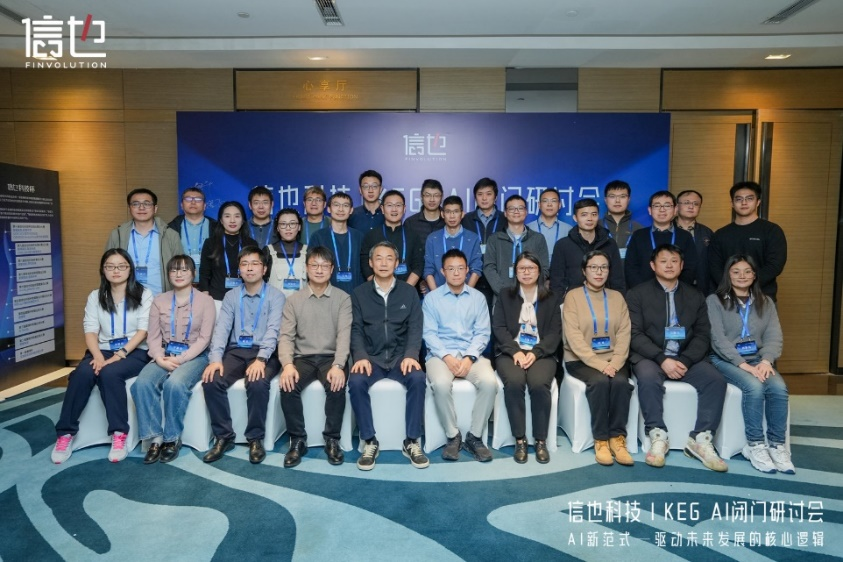
Group 1 - The forum aims to establish a new financial technology ecosystem in the Yangtze River Delta region, focusing on the integration of digital technology and financial services [1][3] - The theme of the forum is "AI FOR ALL," emphasizing the innovative applications of artificial intelligence in the financial sector [1][4] - The Shanghai Financial Industry Association is actively promoting the application and innovation of AI in finance through various initiatives, including the establishment of a financial technology committee [3][4] Group 2 - The East China Normal University is leveraging its multidisciplinary strengths to advance financial technology, including the establishment of a financial technology research institute and an AI finance academy [4] - The forum highlights the importance of digital financial transformation for financial institutions as part of the national strategy for building a strong financial country [4][5] - Common challenges in AI application within the industry include fragmented computing power ecosystems, high model training costs, data silos, and security issues [5] Group 3 - The current phase of AI development is characterized as the third wave, with advancements enabling AI to transition from cognitive understanding to task decision-making [5] - Future trends in AI agents include enhanced planning capabilities, the rise of social-type AI agents, the importance of localized deployment, and deeper industry customization [5]
深港全球金融科技中心令人期待
Jing Ji Ri Bao· 2025-11-22 21:59
Core Viewpoint - The Hong Kong and Shenzhen governments have jointly developed an action plan to establish a global fintech center by 2027, focusing on collaboration in various dimensions to enhance their financial technology ecosystems and solidify their positions in the global financial landscape [1][2]. Group 1: Action Plan Details - The action plan outlines six key areas of focus: attracting fintech entities, supporting original technology research, collaborative development of major projects, accelerating the creation of unique application scenarios, optimizing the regulatory environment, and fostering a supportive industry ecosystem [1]. - By the end of 2027, the plan aims to implement over 20 cross-border data verification platforms in the fintech sector between Hong Kong and Shenzhen [1]. Group 2: Current Fintech Landscape - Shenzhen has rapidly developed its fintech sector, becoming a pilot city for digital RMB with over 29.19 million digital wallets opened and nearly 2 million merchants covered [2]. - Hong Kong, as an international financial center, hosts over 1,200 fintech companies and has a strong digital banking presence, with 3.4 million customers and deposits totaling HKD 77 billion [2]. Group 3: Innovation and Collaboration - The plan emphasizes attracting fintech innovation entities by establishing research, testing, and service centers, creating a complete service chain for fintech [2]. - It encourages cross-border payment service setups in Shenzhen by Hong Kong payment institutions and the establishment of fintech subsidiaries in Hong Kong by qualified financial institutions [2]. Group 4: Strategic Platforms - The Qianhai and He Tao cooperation platforms are designated as key areas for innovation, supporting the establishment of fintech laboratories and cross-border research institutions [3]. - These platforms will explore data cross-border flow management measures, leveraging their experience in incubating fintech companies [3]. Group 5: Financial Inclusion Goals - The ultimate goal of the fintech innovation is to provide high-quality financial services, particularly benefiting small and private enterprises [3]. - The plan supports digital empowerment across the entire financing process, enhancing loan approvals and risk management to meet the urgent financing needs of small businesses [3].
本周美股惊魂,纳指创4月来最大三周跌幅,华尔街准备迎接更多动荡
Hua Er Jie Jian Wen· 2025-11-22 04:02
Market Overview - The S&P 500 index fell nearly 2% this week, with a cumulative decline of 3.5% since November, while the Nasdaq Composite, heavily weighted in tech stocks, dropped over 6% in November, marking its largest three-week decline since April [1] - Momentum stocks faced significant losses, with Robinhood's market value evaporating by about 25% this month, Coinbase's stock plummeting 30%, and Palantir down approximately 23% [2] - The Global X Artificial Intelligence and Technology ETF tracking AI stocks fell about 10% this month, while an ETF tracking the seven tech giants declined about 6.6% since the end of October [3] Nvidia's Earnings Impact - Nvidia's earnings report initially led to expectations of a market rally, but the stock experienced a sharp reversal, closing down nearly 3% at $180.98 after peaking at $196, marking a 7% intraday drop and the lowest close since October 22 [4] - Analysts noted that Nvidia's CEO Jensen Huang attempted to alleviate concerns about an AI bubble, drawing parallels to comments made by Cisco's CEO during the internet bubble [6] Private Credit and Cryptocurrency Concerns - The private credit market is gaining attention from stock market investors, with concerns arising from the sudden collapse of First Brands, highlighting issues in the loose credit environment [8] - Bitcoin's price fell to $80,553, down over 30% from its October high of $126,000, raising questions about the broader impact of the cryptocurrency market on the stock market [10][11] Market Volatility Factors - Market volatility has been attributed to high leverage and year-end profit-taking, with brokerage account financing reaching a historical high of $1.1 trillion by the end of October [12] - Despite the volatility, some market participants remain calm, with the S&P 500 index still up 12% for the year, and many investors are observing rather than acting [14]
第十九届深圳国际金融博览会圆满闭幕 参展机构、人次实现双增长
Core Insights - The 19th Shenzhen International Financial Expo showcased significant growth, attracting 47,400 attendees from 25 countries, marking a 58% increase in visitor numbers compared to the previous year [1] - The expo featured over 50 thematic events and announced 18 new industry policies and product results, with a total of 33 financing project roadshows, achieving an intended financing amount of 1.055 billion yuan [1][6] Industry Participation - A total of 288 institutions participated in the expo, representing a diverse range of sectors including banking, insurance, securities, private equity, and fintech, reflecting an 80% year-on-year increase [3] - Major financial institutions such as China Bank, Agricultural Bank, and HSBC showcased their latest products and services, highlighting the expo's growing influence in the financial sector [3] Financial Technology Highlights - Over 30 fintech companies, including WeBank and Kingdee Technology, presented cutting-edge technologies and innovations, with Huawei collaborating with 12 partners to demonstrate advanced financial ICT infrastructure [4] - The introduction of a "Government Guidance Fund Special Exhibition Area" aimed to create new pathways for industry-finance integration [4] Policy and Innovation - The expo's theme, "New Heights in Industrial Finance, Empowering the Future with Science and Technology," emphasized Shenzhen's commitment to high-quality industrial financial development [5] - Key policy announcements included the Shenzhen Financial Management Bureau's action plan for building a global fintech center and various initiatives in cross-border finance and green bonds [5] Investment and Financing Activities - The integration of various industry funds and associations facilitated 33 financing project roadshows, resulting in an intended financing amount of 1.055 billion yuan, showcasing Shenzhen's approach to industry-finance synergy [6] - The expo served as a platform for deepening the integration of finance with the real economy, promoting international cooperation and showcasing financial development achievements [6]
汉王科技“人工智能+”方案入选“十四五”金融创新优秀案例,树立金融风控新标杆
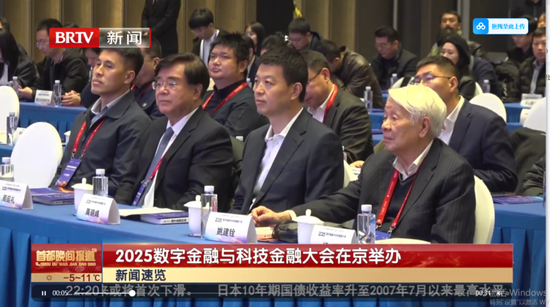
Core Insights - The 2025 Greater Bay Area Technology and Financial Innovation Development Conference highlighted the integration of technology and finance, with Hanwang Technology's AI risk management solution recognized as an exemplary case in financial innovation during the 14th Five-Year Plan [1][5] Group 1: Industry Challenges - The financial industry faces inherent risks, particularly in agency finance, where extensive networks complicate risk management [3] - Traditional human-centric risk prevention methods are insufficient for comprehensive coverage, leading to persistent regulatory challenges [3] Group 2: Technological Innovations - Hanwang Technology introduced a specialized computer vision model tailored for banking, integrating business data and video monitoring for enhanced operational oversight [5] - The solution can automatically complete over 98% of supervisory tasks, achieving 100% regulatory coverage and significantly improving risk control efficiency [5][6] Group 3: Value Creation - The AI-driven solution reduces manual monitoring workload, enhances monitoring efficiency, and captures anomalies in real-time, thereby increasing operational safety [6] - Implementation at a postal savings bank branch resulted in a 100% review rate of controlled transactions and a 70% reduction in operational costs, transforming compliance management from a cost center to a value center [6] Group 4: Future Outlook - Hanwang Technology aims to drive an industrial revolution through AI by focusing on scenario-driven applications, continuing to innovate in the integration of intelligent technology with business operations [7]