
手机制造

Search documents
看到中美关税大战,印度高呼“又一次千载难逢的机遇”
Hu Xiu· 2025-04-27 05:56
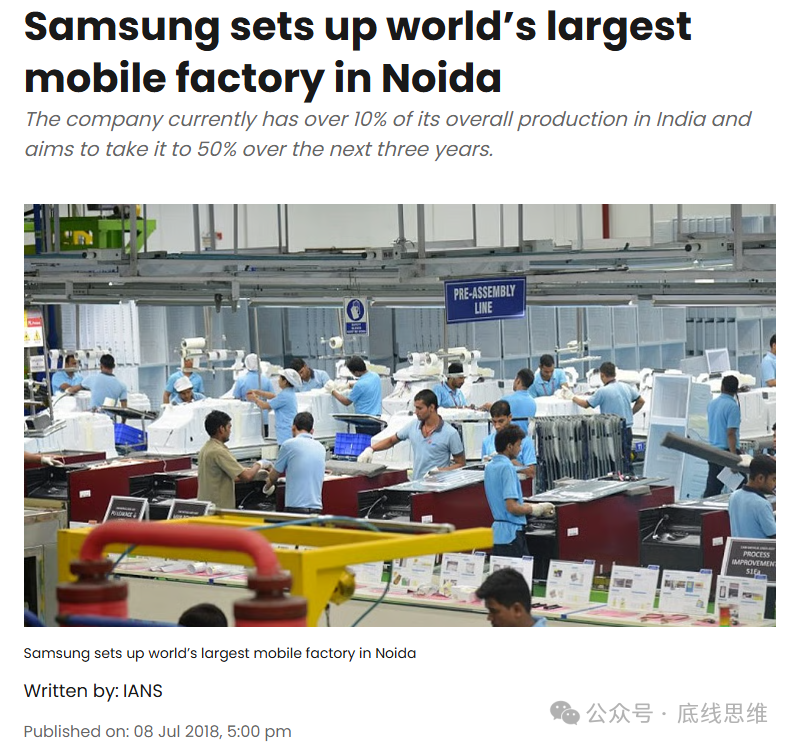
Group 1: Defense Cooperation - The U.S. aims to sell high-priced military equipment to India to enhance its military capabilities and counterbalance China, while also attempting to limit India's military cooperation with Russia [2][4] - The defense cooperation is part of a broader negotiation involving multiple sectors, including energy and trade [1][4] Group 2: Energy Cooperation - The U.S. is primarily selling oil, natural gas, and nuclear equipment to India at high prices [3][4] Group 3: Trade Negotiations - Preliminary agreements have been reached in trade negotiations, with a roadmap established, although specific details are still lacking [4][6] - The U.S. has pressured India to lower tariffs on American agricultural products, which poses challenges for the Modi government due to the sensitivity of Indian farmers [6][7] Group 4: Strategic Technology Cooperation - Discussions on strategic technology cooperation include areas such as chip production and critical mineral resources, with the U.S. looking to assist India in producing rare earth minerals [4][8] Group 5: Economic Strategy - India's strategy over the past decade has been to leverage global chaos to achieve economic growth, aiming to establish bilateral free trade agreements with developed economies [8][9] - Despite improvements in Sino-Indian relations, India's ambition to surpass China remains unchanged, viewing China as a stepping stone for its economic rise [9][10] Group 6: Manufacturing Sector - India's manufacturing sector has seen "pointed breakthroughs" in specific industries like smartphones and pharmaceuticals, but overall, its contribution to GDP has declined from about 17% to approximately 14% [13][16] - The decline in manufacturing's GDP share is attributed to significant investment in the service sector, which maintains a 60% share of GDP [16] Group 7: Chinese Investment in India - Indian media expresses a strong anti-China sentiment, viewing the current geopolitical climate as an opportunity to attract Chinese investment while imposing stricter conditions on Chinese companies [18][19] - Chinese companies are reportedly lowering their investment standards in India due to the challenging environment, with some willing to sell a majority stake in their Indian operations [18][19] Group 8: Risk Management for Chinese Companies - Chinese companies are advised to adopt a short-term, flexible business model in India, focusing on quick transactions rather than long-term investments due to the complex legal environment [20][22]

不吹不黑,客观地聊聊印度经济
Hu Xiu· 2025-03-25 14:01
Group 1 - India's stock market is the fourth largest globally, with a market capitalization that is essential for global investment allocation [1] - Since 2000, India's stock market has increased 15 times, with an annualized return of 11.5%, showing strong growth characteristics similar to the US Nasdaq [2] - The valuation of India's stock market is high, with the Buffett Indicator showing a market capitalization to GDP ratio of around 100%, second only to the US [3] Group 2 - India's economy has transitioned directly to a service-oriented model, with the service sector contributing 55% to GDP, growing at over 8% annually, outpacing global service sector growth [8] - Unlike China, where manufacturing constitutes 27%-30% of GDP, India's manufacturing sector remains weak, contributing only 14%-17% to GDP [9][10] - The service sector in India is primarily driven by IT, software outsourcing, and financial services, which are closely integrated with the global economy [11] Group 3 - The "Make in India" initiative aimed to increase manufacturing's share of GDP to 25%, but from 2014 to 2022, manufacturing's contribution actually decreased from 15% to 13.4% [30] - India's low labor participation rate, particularly among women (27.2%), significantly impacts the availability of labor for manufacturing [36] - Cultural factors, such as the caste system and low skill levels, hinder the development of the manufacturing sector [39] Group 4 - India's management talent is strong due to its service sector, but this has led to a mismatch with manufacturing needs, resulting in a lack of innovation and competitiveness in manufacturing [44][47] - The global supply chain restructuring post-COVID-19 has provided opportunities for India's manufacturing sector, with a PMI around 55, indicating stable growth [50] - India's large middle-class consumer market and population potential are crucial for the future of its manufacturing sector [51]