新能源

Search documents
视频丨首款、首个、首次!本周,我国多领域解锁新成就
Huan Qiu Wang Zi Xun· 2026-02-07 00:18
Group 1 - The first global hybrid unmanned transport aircraft, the Rainbow YH-1000S, successfully completed its maiden flight in Chongqing Liangping on February 1, marking a significant breakthrough in key technologies [1][3] - The YH-1000S is designed for various applications including international logistics, emergency rescue, weather modification, ocean monitoring, and maritime supervision [3] - The first domestically developed electric vertical take-off and landing aircraft successfully completed its maiden flight on February 6 in Chongqing Yongchuan, achieving all performance validations [5][7] Group 2 - The "Xihe No. 2" solar exploration project has officially launched, aiming to deploy to the fifth Lagrange point (L5) between the Earth and the Sun, with a planned launch window between 2028 and 2029 [9][10] - The fifth Lagrange point is an ideal location for deep space observation due to its gravitational stability, allowing spacecraft to maintain a stable position with minimal fuel consumption [11] Group 3 - The world's first 20-megawatt offshore wind turbine successfully connected to the grid in Fujian, marking a new milestone in the development and manufacturing of large-capacity wind turbines [12][14] - This wind turbine features domestically developed blades with a lightweight design, reducing the weight per megawatt by over 20% compared to industry averages, enhancing wind capture and power generation efficiency [14] Group 4 - The first field test of a long-distance pipeline for carbon dioxide transportation was successfully completed in Puyang, Henan, representing a key advancement in the resource utilization of existing pipelines [16][18] - This success paves the way for the large-scale development of carbon capture, utilization, and storage (CCUS) technologies, supporting the transition to a greener energy industry [18] Group 5 - Chinese scientists have achieved a significant breakthrough in quantum communication by constructing the first truly scalable quantum network relay unit, enhancing secure communication capabilities over distances of up to 100 kilometers [20][22] - This advancement indicates that fiber-based quantum networks are moving from theoretical concepts to practical applications, further solidifying China's international leadership in this field [22] Group 6 - The accelerator-based medical isotope drug research platform has made progress, with the main accelerator device successfully installed, marking a crucial step towards the construction of the world's first alpha medical isotope mass production demonstration facility [23][25] - Once fully operational, this platform is expected to significantly enhance China's nuclear medicine diagnostic and therapeutic capabilities, injecting new momentum into the biopharmaceutical industry [25]


【西安】规上工业总产值首超万亿元
Shan Xi Ri Bao· 2026-02-06 23:27
Group 1 - The core viewpoint of the articles highlights that Xi'an's industrial output value is projected to exceed 1 trillion yuan for the first time in 2025, reaching 1.06 trillion yuan, with a year-on-year growth of 6.9% [1] - Xi'an is focusing on key industries through tailored strategies, including "one chain, one policy" for major industries and "one enterprise, one special team" for key companies, to support industrial growth [1] - The city is concentrating on ten key industrial chains, including aerospace, semiconductors, new materials, and biomedicine, and has developed a three-year action plan to address weaknesses in these chains [1] Group 2 - The six pillar industries in Xi'an, including automotive and electronic information, are expected to achieve an output value of 826.48 billion yuan, growing by 6.1%, which will account for 77.9% of the total industrial output [1] - The ten key industrial chains are projected to generate a manufacturing output value of 740.63 billion yuan, representing 69.8% of the industrial total, becoming the main engine for industrial growth [1] - The photovoltaic, intelligent connected new energy vehicles, and new materials chains are leading in growth rates, with increases of 56.1%, 14.9%, and 14.2% respectively, indicating significant enhancement in industrial competitiveness [1] Group 3 - Xi'an is promoting enterprise growth through layered cultivation, precise positioning in industrial chains, and integration of small and medium-sized enterprises, achieving over 65% coverage of "smart transformation and digital upgrade" among regulated enterprises [2] - By 2025, Xi'an plans to add 260 regulated industrial enterprises, cultivate 442 specialized and innovative enterprises, and establish 36 manufacturing champions, marking a record high in innovation vitality [2] - The city aims to accelerate the transformation of traditional industries towards high-end, intelligent, and green development, while fostering emerging industries such as biomedicine and new materials [2]
本市在全国率先支持非共识创新
Xin Lang Cai Jing· 2026-02-06 23:02
Core Viewpoint - The article discusses the successful implementation of non-consensus innovation projects in Beijing, highlighting a new hydrogen production technology developed by Tsinghua University that utilizes solar energy for hydrogen generation, which has achieved record production rates [1][2]. Group 1: Non-Consensus Innovation Projects - The Beijing Municipal Science and Technology Commission and Zhongguancun Management Committee have initiated support for non-consensus projects, which are characterized by a lack of industry consensus on their research direction [1][2]. - A total of 72 non-consensus projects have been funded, with 78% showing significant disruptive potential and 22% focusing on international gaps in research [4]. - The projects have led to the publication of 97 high-level research papers and the application for 20 related patents [4]. Group 2: Technological Advancements - The new hydrogen production method developed by Tsinghua University achieves a hydrogen production rate that is 7.3 times higher than the current world-leading thermal catalytic hydrogen production rate at 200 degrees Celsius [2]. - The project team is optimistic about validating the reactor's performance under actual sunlight conditions in Beijing [2]. Group 3: Youth Involvement and Innovation - Over 75% of the project leaders for the non-consensus projects are under 45 years old, indicating a strong involvement of young researchers in innovative scientific endeavors [3]. - The non-consensus project framework allows for a "failure tolerance" principle, encouraging researchers to explore high-risk, high-reward ideas [3]. Group 4: Unexpected Discoveries - Researchers have made unexpected advancements, such as discovering a new method for controlled drug release and developing a low-cost fuel cell catalyst from recycled lithium-ion battery materials that performs comparably to commercial precious metal catalysts [5]. - The success of these projects demonstrates the potential of non-consensus initiatives to foster original innovation and nurture young scientific talent [5].
证监会对亚辉龙涉嫌误导性陈述立案调查
Zheng Quan Ri Bao· 2026-02-06 22:49
Core Viewpoint - The China Securities Regulatory Commission (CSRC) has initiated an investigation into Shenzhen Yahui Long Biotechnology Co., Ltd. for allegedly misleading statements in their announcements regarding a strategic cooperation framework agreement with Shenzhen Brain Machine Star Chain Technology Co., Ltd. [1] Group 1: Company Actions and Announcements - On January 6, Yahui Long announced a strategic cooperation agreement with Brain Machine Star Chain, claiming collaboration in product development, market promotion, and equity investment, highlighting the latter's focus on artificial intelligence and various technology paths [1] - Following regulatory pressure, Yahui Long issued a supplementary announcement clarifying that Brain Machine Star Chain's current research products only involve non-invasive technology and that some products are still in early research or preclinical stages [1] Group 2: Regulatory Responses - On January 7, the Shanghai Stock Exchange issued a regulatory warning to Yahui Long and related responsible parties, emphasizing the need for accurate and complete information disclosure, especially regarding the hot market concept of "brain-machine interfaces" [2] - The announcement from Yahui Long contained inconsistent statements about the technology paths of Brain Machine Star Chain and failed to adequately address key investor concerns regarding cooperation feasibility and associated risks [2] Group 3: Industry Context - Multiple listed companies have faced regulatory warnings and investigations this year for allegedly misleading statements related to market trends, including Ningbo Rongbai New Energy Technology Co., Ltd. and Ningbo Tianpu Rubber Technology Co., Ltd., indicating a broader trend of scrutiny in the industry [3] - The regulatory environment is tightening as the exchanges have taken action against several companies for "hitching a ride" on market hotspots, highlighting the importance of accurate disclosures in maintaining market integrity [3]

南非商品将免税进中国,南非媒体:双方经济联系显著加深
Huan Qiu Shi Bao· 2026-02-06 22:49
【环球时报综合报道】2月6日,中国商务部部长王文涛与南非贸易、工业和竞争部部长帕克斯·陶在京 共同主持召开中南经贸联委会第九次会议,就深化中南多双边经贸合作等深入交换意见。 王文涛表示,中方愿同南方一道,继续挖掘双边贸易潜力,通过商签共同发展经济伙伴关系协定,确保 南非以符合世贸规则的方式享受100%税目产品输华零关税待遇,为全面提升中南经贸合作水平提供长 期、稳定、可预期的制度保障。中方愿积极响应南非"新投资倡议",拓展汽车、矿业、农业、新能源等 领域投资合作,共同打造稳定而富有韧性的产供链合作关系。希望南方为中国企业在南投资兴业提供更 多便利和支持。 南非独立在线新闻网站(IOL)6日报道称,这项具有里程碑意义的协定将使南非部分出口产品免税进 入中国市场,同时促进中国对南非的投资。IOL称,预计今年3月底前,双方将达成协定的"早期收 获"安排。南非《先驱报》6日称,这项协议标志着非洲工业化程度最高的经济体与其最大亚洲贸易伙伴 之间的经济联系显著加深。 美国商业内幕网站非洲版6日称,一个值得关注的背景是,南非与其第二大贸易伙伴——美国的关系恶 化。去年8月,美国对部分南非产品加征30%的关税,引发后者担忧。 ...
未来城市的奔赴 《天府文化》2月刊聚焦“青白江的世界想象”
Xin Lang Cai Jing· 2026-02-06 19:58
转自:成都日报锦观 在关于城市发展的流行话语中,传统与现代、本土与全球常被置于天平的两端。然而,当我们的目光投 向成都北部,青白江区以其生动实践提出了一个更具想象力的命题:不同的时空维度,是否可以在同一 片土地上共鸣、共生甚至相互滋养?成都传媒集团下属的《天府文化》杂志2026年2月刊,以封面策划 《青白江的世界想象》,带领读者深入这片神奇的土地,倾听一场由"千年城厢的心跳"与"世界坐标的 脉动"共同谱写的时空交响。 本期杂志拒绝浮光掠影式罗列,它引领读者沉浸于一场深度时空对话。在城厢古城,文庙的肃穆、书院 的琅琅书声、老宅飘出的咖啡香,共同证明文脉是一种"活着的传统",在当代生活中持续生长、焕新。 与此同时,仅仅数公里外,成都国际铁路港的激昂汽笛昼夜不息,中欧班列如同新世纪的"钢铁驼队", 将世界的物产与文化视野带入内陆,也让"青白江造"与"青白江创"驰骋于世界舞台。 杂志征订、购买方式: 线上渠道:杂志铺、时尚迅达图书专营店、国华卓越图书专营店、中国邮政官网 成都市区销售渠道:成都方所书店、布克书店、散花书屋、钟书阁 发行订阅热线电话:028-86624841 028-86763285 《天府文化》杂志简 ...
中国四地光伏利用率跌破90%
Di Yi Cai Jing· 2026-02-06 15:38
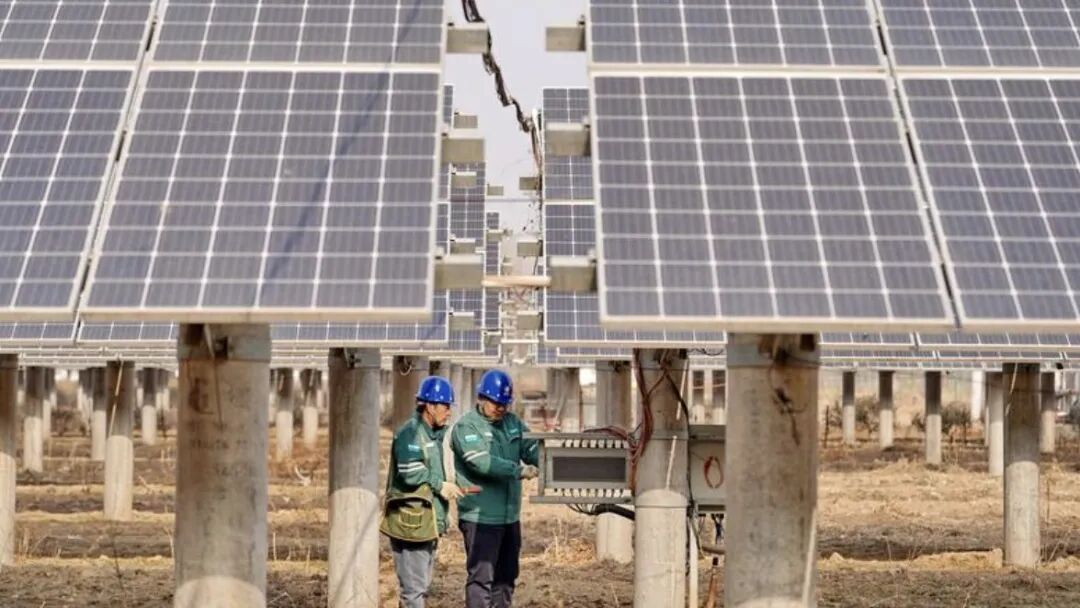
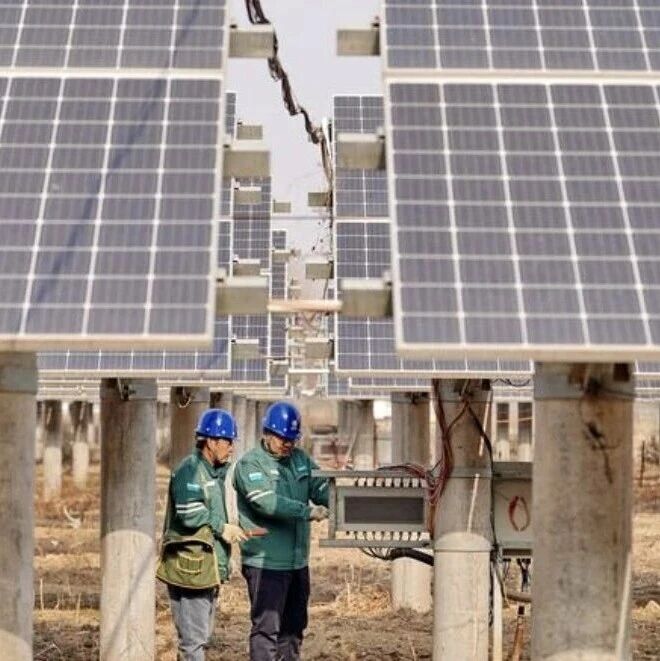
Core Insights - The overall utilization rate of wind and solar power in China remained above 94% in 2025, but for the first time during the "14th Five-Year Plan," it fell below 95% for the entire year, with wind utilization at 94.3% and solar utilization at 94.8% [2][3] - The provinces of Qinghai, Tibet, Xinjiang, and Gansu saw solar utilization rates drop below 90%, with Tibet having the lowest at 64.9%, while wind utilization in Tibet was also the lowest at 68.6% [2] - The rapid growth in installed capacity of wind and solar power is leading to increased pressure on the power system to absorb this energy, with significant seasonal and temporal variations in energy generation [3][4] Installed Capacity and Market Trends - In 2025, China's wind and solar power installations exceeded 430 million kilowatts, with total installed capacity surpassing 1.8 billion kilowatts, a 2.4-fold increase from the end of the "13th Five-Year Plan" [3] - The proportion of renewable energy in total installed capacity rose from 25.7% at the end of 2020 to 48.5% by the end of 2025 [3] - The China Photovoltaic Industry Association forecasts a year-on-year decline of 23.8% to 42.9% in new solar installations for 2026, attributed to challenges in energy absorption [4] Challenges and Recommendations - The phenomenon of "curtailment" of renewable energy is becoming more common, driven by the uneven distribution of energy generation and the homogeneity of power sources [3][5] - Experts suggest that addressing the challenges of energy absorption requires innovative approaches, including the development of new business models and integration of renewable energy into various applications [4] - The industry is advised to focus on market strategies, enhancing absorption capabilities, and diversifying market participation to improve competitiveness and ensure revenue stability [5]
中国四地光伏利用率跌破90%
第一财经· 2026-02-06 15:11
Core Insights - The article discusses the challenges and developments in China's renewable energy sector, particularly focusing on wind and solar power consumption and integration into the grid [2][3]. Group 1: Renewable Energy Utilization Rates - In 2025, the overall utilization rates for wind and solar power in China fell below 95% for the first time during the "14th Five-Year Plan," with wind power utilization at 94.3% and solar power at 94.8% [2]. - Specific provinces such as Qinghai, Tibet, Xinjiang, and Gansu saw solar power utilization rates drop below 90%, with Tibet having the lowest at 64.9% [2]. - Wind power utilization in Tibet was also the lowest at 68.6%, while other provinces maintained rates above 90% [2]. Group 2: Growth in Installed Capacity - During the "14th Five-Year Plan," China's annual new installed capacity for wind and solar power remained high, exceeding 430 million kilowatts in 2025, with total installed capacity surpassing 1.8 billion kilowatts, a 2.4 times increase from the end of the "13th Five-Year Plan" [3]. - The proportion of renewable energy in total installed capacity rose from 25.7% at the end of 2020 to 48.5% by the end of 2025 [3]. Group 3: Challenges in Energy Consumption - The rapid increase in renewable energy capacity has led to greater challenges in energy consumption due to the randomness and volatility of renewable energy generation [3]. - Seasonal and time-based patterns of energy waste are evident, with over 70% of energy wastage occurring during peak solar hours (10 AM to 5 PM) and two-thirds of wastage occurring in spring and autumn [3]. Group 4: Future Outlook and Policy Implications - The China Photovoltaic Industry Association predicts a year-on-year decline of 23.8%-42.9% in new solar installations for 2026, primarily due to consumption difficulties [4]. - Experts suggest that new policies and integration strategies will be necessary to address these challenges, with a shift from rapid expansion to high-quality, steady growth expected in the industry [4][5]. - The article emphasizes the need for innovative approaches to enhance renewable energy utilization, such as green electricity direct connections and zero-carbon parks, to improve overall project profitability [5].
工业机器人连续六年产量全国第一!广东晒“十四五”产业成绩
Nan Fang Du Shi Bao· 2026-02-06 14:32
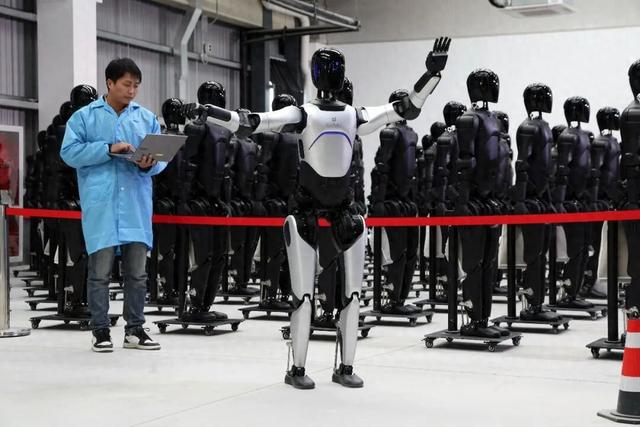
Core Insights - Guangdong has made significant progress in building a modern industrial system with international competitiveness during the "14th Five-Year Plan" period, focusing on the development of the real economy and manufacturing industry [1] Group 1: Manufacturing Industry - Guangdong's manufacturing sector has implemented five major actions to strengthen its industrial foundation, resulting in a more optimized manufacturing landscape and increased enterprise strength [2] - The province's industrial enterprises maintained the highest revenue in the country, averaging an increase of approximately 1 trillion yuan annually, with strategic emerging industries achieving a target annual growth rate of 10% [2][3] - By 2025, industrial investment is expected to account for 38.4% of fixed asset investment, the highest in nearly 19 years [2] Group 2: Low-altitude Economy - Guangdong's low-altitude economy has developed a complete industrial ecosystem, with over 15,000 enterprises in the sector and a projected production of over 6.9 million civilian drones by 2025 [4][5] - The province has established 73 general airports and over 3,500 low-altitude takeoff and landing points, leading the nation in infrastructure development [4] Group 3: Prefabricated Construction - The area of new prefabricated buildings in Guangdong is expected to reach 47.8 million square meters by 2025, with the proportion of new prefabricated buildings increasing from 19% to 39% [6] - The province is focusing on top-level design, technology research and development, and typical demonstrations to promote prefabricated construction as a new driving force in the construction industry [6] Group 4: Consumer Market - The "old-for-new" policy in Guangdong has driven a sales volume of 264.2 billion yuan in consumer goods, accounting for 10% of the national total, effectively promoting industrial upgrades [7] - In the automotive sector, 55% of old vehicles replaced were new energy vehicles, while 92% of replaced home appliances were of the highest energy efficiency [7] Group 5: New Energy Industry - The new energy industry cluster in Guangdong has surpassed 1 trillion yuan in revenue, becoming the province's ninth trillion-level industry cluster, with an installed capacity of 164 million kilowatts by 2025 [8][9] - The province has established a national-level innovation platform for new energy storage, enhancing its energy technology innovation capabilities [8] Group 6: Robotics Industry - Guangdong is a leading province in robot production, with industrial and service robot outputs expected to reach 336,300 units and 15.18 million units respectively by 2025, accounting for 43.5% and 81.7% of the national total [10] - The province's robotics industry benefits from a large scale, a healthy ecosystem, rapid iteration, diverse application scenarios, and effective international market expansion [10] Group 7: R&D and Agriculture - Guangdong's total R&D investment is projected to increase from 347.99 billion yuan in 2020 to 535 billion yuan by 2025, indicating a strong focus on technological advancement [11] - The total output value of agriculture, forestry, animal husbandry, and fishery in Guangdong is expected to reach 979.87 billion yuan by 2025, with agricultural exports ranking first in the country [11]

中国三大国际科创中心如何成为全球创新“关键极”?
Xin Lang Cai Jing· 2026-02-06 13:45
Core Insights - The article emphasizes the establishment of three major international technology innovation centers in China: Beijing (Jing-Jin-Ji), Shanghai (Yangtze River Delta), and the Guangdong-Hong Kong-Macau Greater Bay Area, which are seen as strategic choices to enhance China's global competitiveness and foster new productive forces [1][3]. Group 1: Regional Advantages - The Jing-Jin-Ji region, centered in Beijing, boasts the highest quality research resources in China, including top universities and research institutions, and is at the forefront of basic research in fields like artificial intelligence and quantum information [3][5]. - The Yangtze River Delta, leveraging Shanghai's resource aggregation capabilities, has formed a complete industrial system that competes with global leaders in integrated circuits and biomedicine, with Shanghai ranked 10th globally in the GIHI2025 index [5][6]. - The Guangdong-Hong Kong-Macau Greater Bay Area utilizes its unique "one country, two systems" advantage to lead in applications like 5G and new energy, achieving a global ranking of 2nd in innovation hubs [5][6]. Group 2: Global Innovation Dynamics - The article draws parallels with international innovation centers, highlighting that successful models like Silicon Valley and Boston are characterized by deep integration of top research institutions and enterprises, open markets for innovation factors, and a culture that tolerates failure [6][7]. - China's innovation cities are transitioning from "catching up" to "keeping pace" and even "leading" in certain areas, with 21 cities making it to the global top 100, second only to the United States [7][8]. Group 3: Future Development Strategies - To build globally influential innovation centers, China must focus on enhancing original innovation capabilities, improving talent attraction and development mechanisms, and deepening the integration of innovation and industrial chains [8][11]. - The article suggests constructing an open and collaborative innovation ecosystem to enhance global resource allocation capabilities, breaking down regional administrative barriers and fostering cooperation with top global innovation clusters [11].