
Banking

Search documents
中央金融委员会办公室 中央金融工作委员会发表署名文章
Xin Lang Cai Jing· 2026-02-06 11:14
Core Viewpoint - The speech by General Secretary Xi Jinping emphasizes the importance of high-quality financial development in China, outlining a strategic vision for building a financial power that aligns with China's unique characteristics and governance principles [2][3][4]. Group 1: Significance of Xi Jinping's Speech - The speech provides a comprehensive and systematic explanation of the direction, principles, and policies for financial work, enhancing the understanding of the essential laws and development paths of financial work under the leadership of the Communist Party [3][4]. - It highlights the necessity of adhering to the Party's centralized leadership in financial work, ensuring that financial development benefits the people and aligns with China's national conditions [3][4]. Group 2: Key Elements of Financial Development - The speech introduces the "Eight Persistences" which encapsulate the fundamental principles of China's financial development path, emphasizing the need for a people-centered approach and the importance of serving the real economy [9][10][30]. - It outlines the "Six Key Core Financial Elements" necessary for building a financial power, stressing that while China is a financial giant, it must transition from being large to strong [29][32]. Group 3: Building a Modern Financial System - The construction of a financial power is described as a complex system project involving six major pillars: financial regulation, markets, institutions, supervision, products and services, and infrastructure [11][32]. - A modern financial system must be adaptable, competitive, and inclusive, requiring a systematic approach to strengthen key areas and ensure balance among various components [11][32]. Group 4: Risk Prevention and Financial Stability - The speech underscores the critical importance of preventing systemic financial risks, which is essential for national security and sustainable development [12][33]. - It emphasizes the need for comprehensive financial regulation and proactive risk management to maintain stability and prevent crises [12][33]. Group 5: Financial Openness and Cultural Development - Expanding high-level financial openness is identified as a key characteristic of a financial power, with a focus on balancing openness with security [14][35]. - The cultivation of a distinctive financial culture that integrates traditional Chinese values with modern financial principles is deemed essential for guiding the industry and fostering ethical practices [15][36]. Group 6: Implementation and Reform - The speech calls for a commitment to implementing the principles outlined, focusing on risk prevention, regulatory strength, and promoting high-quality development [37][38]. - It advocates for reforms in the financial sector, including enhancing the central bank's role and improving the legal framework governing financial activities [40][41].


Software Stocks Selloff: What's Behind the Rout?
Youtube· 2026-02-06 11:02
Group 1 - The recent selloff in the market is attributed to concerns over the impact of new technologies on traditional sectors such as legal, medical, and financial services, similar to the disruption caused by the Internet [1][2] - There has been a decline in stock values since their peak in summer 2025, indicating a prolonged downturn in certain sectors [1] - The software industry has seen many deals made at peak valuations during and after the COVID pandemic, followed by a sharp rise in interest rates, leading to concerns about overvaluation [5][6] Group 2 - Private equity firms are facing unexpected challenges, with a significant amount of financing for deals being sourced from private credit, raising concerns about the sustainability of these investments [4][6][7] - The market is experiencing a lack of clarity regarding which companies will emerge as winners or losers, leading to indiscriminate selling [9][10] - There is a growing anxiety among investors about the quality of stocks, as many companies are perceived to lack competitive advantages or "moats" [8][9] Group 3 - The current market environment is characterized by a momentum unwind, with significant declines across various asset classes, including Bitcoin and gold, indicating a broader risk-off sentiment [17][19] - The strength of the US dollar is impacting other assets negatively, suggesting a correlation between dollar strength and asset weakness [19][20] - There are concerns about systemic risks in the financial sector, particularly related to leveraged investments and margin calls, especially among retail investors in the US [16][11]

Carrier Global Corporation: Softer Conditions Continue To Take Their Toll
Seeking Alpha· 2026-02-06 10:25
Core Insights - Carrier Global Corporation (CARR) has delivered over 20% returns in just two and a half months since the last coverage, indicating strong investor confidence and potential growth in the company [1]. Company Overview - The company operates in the logistics sector, which has seen significant interest and investment opportunities, particularly in the context of macroeconomic analysis [1]. - Carrier Global Corporation is part of a diversified portfolio that includes investments in various industries such as banking, telecommunications, and hotels [1]. Market Context - The logistics sector has been a focus for nearly two decades, with increasing investor engagement in stock markets as a means of portfolio diversification [1]. - The US market has been a point of interest for investors, with a notable increase in trading activities since 2020, reflecting a broader trend of diversification beyond local markets [1].

Cash-strapped Lebanon finds itself sitting on a gold mine, as precious metal prices surge
Yahoo Finance· 2026-02-06 08:03
Economic Context - Lebanon's economy is severely impacted, with ongoing inflation and state decay, and no reforms to combat corruption in sight [2] - The fiscal crisis that began in late 2019 led to the collapse of banks, erasing depositors' savings and pushing about half of the 6.5 million population into poverty [2] - The financial sector has suffered approximately $70 billion in losses, exacerbated by an additional $11 billion loss due to the 2024 war between Israel and Hezbollah [2] Gold Reserves - Lebanon possesses one of the largest gold reserves in the Middle East, with a total of 286 tons (approximately nine million ounces) [4] - The value of Lebanon's gold reserves once reached $50 billion, more than double the country's GDP [5] - The central bank in Beirut has not touched its gold reserves since a ban on sales was implemented in 1986 during the civil war [6] Government Considerations - The Lebanese government is contemplating using gold reserves to bail out banks and reimburse depositors affected by the currency crisis, which would violate a 1980s-era law [5] - Some banks are proposing to utilize the gold reserves as a means to partially bail out the banks, leveraging the country's only viable public asset [5] Market Dynamics - The price of gold recently peaked at an all-time high of $5,354 before falling below $5,000, influenced by geopolitical instability and U.S. interest rate policies [3] - Global central banks have been significant buyers of gold, while silver prices have also surged due to industrial demand [3]
RBI MPC Meet Highlights: Governor on repo rate, inflation, rupee and exports, key points explained
The Economic Times· 2026-02-06 02:25
Core Viewpoint - The Reserve Bank of India (RBI) is expected to maintain the repo rate unchanged due to rising bond yields, currency volatility, and global uncertainties, despite previous policy easing [1][11]. Economic Conditions - Several macroeconomic pressures are limiting the scope for fresh rate cuts, with government bond yields remaining firm in recent weeks [2][3]. - The effectiveness of Open Market Operations (OMOs) may be impacted by the type of securities selected, potentially slowing the transmission of monetary policy [3]. Trade Developments - The finalization of the EU-India and US-India trade deals has led to a significant reduction in tariffs on Indian goods from 50% to 18%, enhancing export competitiveness and trade prospects [5]. - This reduction in tariffs could support growth in manufacturing and goods exports in the coming months [6]. Global Risks - The global economic environment remains unstable, with the Geo-Economics Stress Index indicating that heightened uncertainty may lead to economic stress after a lag of three to four months [7]. - Recent recovery in metal prices could complicate the inflation outlook [7]. Currency Volatility - The Indian rupee has experienced volatility, fluctuating between 89 and 92 against the US dollar, and has weakened by 5.8% since early April due to US tariff hikes [8]. - The rupee gained over Re 1 following the India-US trade deal, providing some relief, but such fluctuations may make the RBI cautious about aggressive policy actions [8]. Inflation Outlook - New Consumer Price Index (CPI) weightings could raise overall inflation readings by 20-30 basis points, but high food inflation may result in lower figures during certain months [9]. - These mixed inflation signals complicate the policy direction, reinforcing a cautious approach [9].

Bitcoin plunges by $200bn in market rout
Yahoo Finance· 2026-02-05 21:50
Group 1: Technology Sector - Tech stocks in the US have experienced a decline for three consecutive days, driven by investor concerns regarding potential disruptions in the artificial intelligence (AI) market [1][4] - The launch of Anthropic's new AI chatbot, Claude Opus 4.6, has raised fears about its impact on traditional professional services, leading to a sell-off in software companies [3][10] - The tech-heavy Nasdaq index has fallen by approximately 4% over the past five trading sessions, with significant losses attributed to fears surrounding AI's influence on the market [4][12] Group 2: Semiconductor Industry - The semiconductor sector has faced additional pressure, with shares of major companies like AMD and Qualcomm dropping by nearly 3% and over 7% respectively, due to concerns about demand for microchips [2][12] - The overall decline in tech stocks has contributed to a broader sell-off in the semiconductor market, reflecting investor anxiety about future demand [2] Group 3: Cryptocurrency Market - Bitcoin has seen a dramatic decline, with a drop of $200 billion, marking its sharpest decline in dollar terms since its inception, now trading about 50% below its record high of $126,198 [5][6] - The cryptocurrency market has been adversely affected by the tech sell-off, with Bitcoin experiencing its steepest one-day collapse on record, falling below $64,000 for the first time since September 2024 [6][11] - Ether, the second-largest cryptocurrency, also suffered significant losses, shedding more than 10% during the same period [11] Group 4: Financial Services Sector - Shares in financial services firms such as FactSet Research Systems, Nasdaq, and S&P Global have declined following the announcement of Anthropic's new AI tool, which is expected to automate tasks traditionally performed by these companies [2][8][10] - The overall sentiment in the financial services sector has been negatively impacted by the tech sell-off and concerns regarding AI's potential to disrupt traditional business models [2][3]


US Economy is Crashing Every Market, And It’s Not a Crypto Problem
Yahoo Finance· 2026-02-05 19:13
Group 1 - Global markets experienced a sharp sell-off, affecting cryptocurrencies, equities, and traditional safe havens like gold and silver, indicating a broader liquidity shock rather than asset-specific weakness [1] - Bitcoin led the losses among risk assets, while gold and silver saw their steepest weekly declines in months, suggesting forced de-risking across portfolios [1][2] - The current market stress is characterized by a mechanical selling pattern due to leverage unwinding, where traders liquidate liquid assets first, including Bitcoin, gold, and silver [2] Group 2 - Confusion surrounding US monetary conditions has contributed to market turmoil, as the Federal Reserve halted quantitative tightening and began purchasing short-dated Treasury bills to stabilize bank reserves [3] - The Fed's actions are aimed at ensuring banks have sufficient cash for daily funding needs, but they do not lower borrowing costs or encourage risk-taking, leading to elevated long-term interest rates and restrictive financial conditions [4] - Recent US labor data has added pressure to the markets, with falling job openings, slowed hiring, increased layoffs, and a drop in consumer confidence to its lowest level since 2014, leaving markets in a state of uncertainty [5]
Trump would decide whether to investigate Fed pick Warsh over refusal to cut rates: Bessent
CNBC· 2026-02-05 18:06
Core Viewpoint - The potential for a criminal investigation into Kevin Warsh, President Trump's nominee for Federal Reserve chair, has been raised if he does not comply with the president's wishes regarding interest rate cuts [1][2]. Group 1 - Treasury Secretary Scott Bessent did not dismiss the possibility of a criminal investigation into Warsh if he refuses to cut interest rates [1]. - Senator Elizabeth Warren questioned Bessent about a joke made by Trump regarding the possibility of suing Warsh if he does not reduce rates as desired by the president [2]. - Typically, U.S. presidents allow the Federal Reserve to make independent interest rate decisions, maintaining a separation between the Fed and the White House [3].
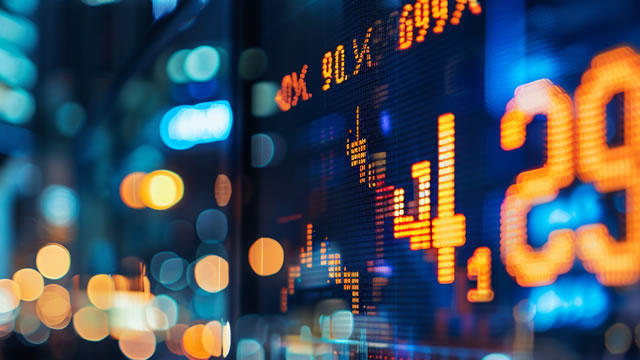
Thu: Main indices slide amid weakness in defense stocks
En.Globes.Co.Il· 2026-02-05 17:35
Market Overview - The main indices on the Tel Aviv Stock Exchange experienced significant declines, with the Tel Aviv 35 Index falling by 1.98% to 4,039.01 points, the Tel Aviv 125 Index down by 1.80% to 4,027.22 points, and the BlueTech Global Index decreasing by 2.73% to 677.70 points [1] - The TelBond 60 corporate bond index saw a slight decline of 0.05%, reaching 416.78 points [1] - Total turnover in equities was NIS 15.81 billion, while bond turnover was NIS 5.32 billion [1] Foreign Exchange Market - The shekel-US dollar exchange rate increased by 1%, setting at NIS 3.1170/$, while the shekel-euro rate rose by 0.84% to NIS 3.6774/€ [2] Company Performance - Teva led trading with a notable decline of 5.4% [3] - Tower Semiconductor fell by 1.34% despite an initial rise following a collaboration announcement with Nvidia [3] - Elbit Systems decreased by 3.81%, Bank Hapoalim fell by 2.07%, and Bank Leumi dropped by 2.22% [3] - The Tel Aviv Defense Index fell by 3.85%, indicating weakness in defense stocks [3] Notable Advancers - Real estate stocks showed positive performance, with Property & Building up by 4.92%, Mega Or increasing by 3.49%, and Kvutzat Acro rising by 3.02% [4] - Nice rose by 2.80%, while other companies like Aryt, Kenon Holdings, Formula, and Israel Corporation experienced declines ranging from 4.73% to 5.43% [4]


Can Warren Buffett's Stock Keep Up Its Amazing Record of Past Performance?
Yahoo Finance· 2026-02-05 17:23
It's hard to find a track record of performance that matches what Warren Buffett did at Berkshire Hathaway (NYSE: BRK.A) (NYSE: BRK.B). Taking a dying textile business and choosing it as the holding company for what is now a vast empire of all different kinds of enterprises might not have seemed like a likely recipe for success, but that didn't stop Buffett from turning Berkshire into a trillion-dollar market cap stock. The Voyager Portfolio has the stretch goal of coming even close to what Buffett achie ...