Workflow
港口
icon
Search documents
深圳:“海陆空铁”一体化的超级流量端口
Core Viewpoint - Shenzhen aims to establish itself as a global comprehensive transportation hub by 2030, enhancing its logistics capabilities and becoming a modern international metropolis [1][11]. Transportation Infrastructure Development - Shenzhen has made significant advancements in transportation, achieving over ten domestic firsts and industry-leading accomplishments, including 100% electrification of public transport and the establishment of the first smart connected vehicle regulations in China [3][12]. - The city has developed a robust transportation network, integrating air, sea, land, and rail systems into a seamless operational framework [9][12]. Airport Development - Shenzhen Airport is evolving into a major international air hub, with plans to enhance its capacity to handle 100 million passengers and 500,000 tons of cargo annually by expanding its facilities [4][12]. - The airport has achieved record passenger and cargo throughput, with 61.47 million passengers and 1.88 million tons of cargo in 2024, marking a year-on-year increase [12][13]. Port Development - Shenzhen Port is recognized as a leading container hub globally, with a total of 144 operational berths and a focus on smart and green port initiatives [5][12]. - The port's container throughput reached 33.39 million TEUs in 2024, maintaining its position among the top four globally and third domestically [13]. Rail and Road Network Expansion - The railway system in Shenzhen is expanding, with a projected capacity to handle 120 million passengers annually, supported by a comprehensive network of high-speed rail and urban transit [7][12]. - Future plans include the construction of three logistics hubs to enhance road connectivity and efficiency in resource utilization [9][11]. Global Connectivity - Shenzhen's transportation network connects to 55 international and regional passenger destinations and 43 cargo destinations, facilitating trade and travel [9][11]. - The city aims to improve its global connectivity, increasing the 12-hour travel reach to major cities from 40% to over 90% by 2035 [11]. Technological Innovations - Shenzhen is at the forefront of low-altitude economy development, with significant advancements in drone logistics and smart transportation regulations [14]. - The city has implemented the first national regulations for smart connected vehicles, promoting innovation in the automotive sector [3][14].
南京港涨2.09%,成交额6083.40万元,主力资金净流入613.88万元
Xin Lang Cai Jing· 2025-11-28 03:33
Core Viewpoint - Nanjing Port's stock price has shown significant fluctuations in 2023, with a year-to-date increase of 57.81% and recent trading activity indicating a mixed performance in the short term [1][2]. Group 1: Stock Performance - As of November 28, Nanjing Port's stock price rose by 2.09% to 10.25 CNY per share, with a total market capitalization of 5.001 billion CNY [1]. - The stock has experienced a net inflow of 6.1388 million CNY from major funds, with significant buying activity from large orders [1]. - Year-to-date, the stock has been on the leaderboard 10 times, with the most recent net buy of 63.7393 million CNY on October 14 [1]. Group 2: Company Overview - Nanjing Port Co., Ltd. was established on September 21, 2001, and listed on March 25, 2005, providing various logistics and port services [2]. - The company's main revenue sources include container handling and services (75.81%), chemical product handling (21.04%), and other services (3.03%) [2]. - As of November 10, the number of shareholders increased by 7.77% to 49,800, with an average of 9,761 circulating shares per shareholder [2]. Group 3: Financial Performance - For the period from January to September 2025, Nanjing Port reported a revenue of 772 million CNY, reflecting a year-on-year growth of 6.21%, and a net profit of 141 million CNY, up 13.25% [2]. - The company has distributed a total of 382 million CNY in dividends since its A-share listing, with 129 million CNY distributed over the past three years [3].
交运行业2026年度投资策略要点汇报
2025-11-28 01:42
Summary of Key Points from Conference Call Records Industry Overview - **Transportation Industry**: The report focuses on the transportation sector, particularly the aviation and shipping industries, with a positive outlook for 2026 [1][2][3]. Core Insights and Arguments Aviation Industry - **Optimistic Outlook**: The aviation sector is expected to perform well in 2026, with passenger load factors reaching historical highs (e.g., 87% for major airlines like China Southern and China Eastern, and over 90% for Spring Airlines) [3][4]. - **Profit Potential**: A 10% increase in ticket prices for airlines with revenues around 100 billion can lead to a profit increase of approximately 10 billion [1][3]. - **Supply Chain Constraints**: The global aircraft supply chain is anticipated to remain tight due to limited participants in the manufacturing market and challenges in scaling production [4]. - **Demand Drivers**: Increased consumer policies and travel demand are expected to significantly boost service consumption, particularly in cultural and tourism sectors [4]. Shipping Industry - **Market Segments to Watch**: Focus on cruise, bulk cargo, and container shipping markets, with cruise rates exceeding $100,000 per day, driven by oil production cycles and sanctions [5][6]. - **Capacity Constraints**: The shipping industry faces limited capacity growth due to low order backlogs since 2022, leading to a strong growth outlook [5][6]. - **Oil Tanker Market**: High percentage of aging vessels (20 years or older) necessitates increased scrapping, with every $10,000 rise in rates potentially adding over 1 billion in profits for companies like COSCO Shipping Energy [8]. - **Dry Bulk Market**: The Simandou iron ore project is expected to significantly increase transportation demand, with production projected to reach 20 million tons by 2026 and 80 million tons by 2028 [8]. Dividend Assets - **Return Expectations**: Dividend assets are projected to revert to mean returns around 10% in 2026, driven by 5% earnings growth and a 4-5% dividend yield [9][10]. - **Highway Sector Stability**: The highway sector is expected to maintain stable operations, with dividend yields projected between 4.5-5% for companies like Sichuan Chengyu and Shandong Highway, and potentially over 6% for Hong Kong-listed firms [10]. Port Sector - **Strategic Importance**: Ports are highlighted as strategic global assets, with companies like China Merchants Port showing upward momentum due to their current undervaluation [11]. Express Delivery Industry - **Market Adjustments**: The express delivery sector, particularly the Tongda system, is positioned for growth following adjustments and the "anti-involution" policy, which is expected to enhance industry quality and profitability [12]. Additional Important Insights - **Investment Recommendations**: Key companies to watch include major airlines (Air China, China Eastern, China Southern), and shipping firms like COSCO Shipping and China Merchants Energy, as well as express delivery leaders like YTO Express and ZTO Express [6][12]. - **Overall Investment Focus**: The report emphasizes the importance of sectors with upward performance potential, such as aviation, shipping, and express delivery, alongside dividend assets that are expected to recover in the economic recovery context [13].
散货码头成为多式联运枢纽港(新发展理念引领高质量发展·一线故事)
Ren Min Ri Bao· 2025-11-27 22:18
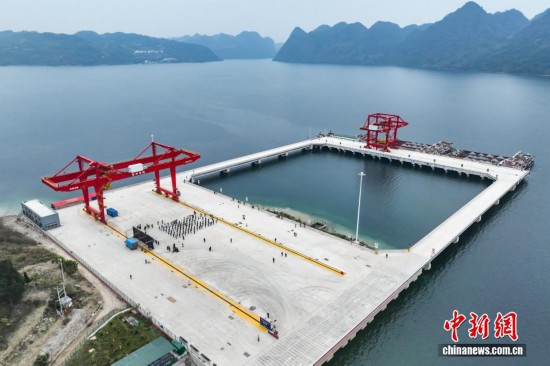
Core Viewpoint - The article highlights the development and significance of the Guoyuan Port in Chongqing as a key hub for multi-modal transportation, particularly in facilitating the export of vehicles and components, thereby contributing to the economic growth of the region and enhancing its connectivity with international markets [2][5][10]. Group 1: Development and Growth - Guoyuan Port has evolved from a bulk cargo terminal to China's largest inland multi-modal transport hub, connecting over 300 ports in more than 100 countries and regions, significantly boosting the open development of Chongqing and the western region [2][3]. - The port's development aligns with the "14th Five-Year Plan" which emphasizes a high-level opening-up system [2]. Group 2: Transportation and Logistics Innovations - The "Yucheng" vehicle export initiative has introduced a new smart supervision model for roll-on/roll-off transport, reducing logistics time by approximately 10 days and saving around 1500 yuan in costs per vehicle [4]. - The export of auto parts through Guoyuan Port has seen a 40% reduction in logistics costs compared to whole vehicle transport, with over 25,000 sets of auto parts shipped in the first three quarters of the year [5]. Group 3: Multi-Modal Transportation Efficiency - Guoyuan Port serves as a crucial hub in the Western Land-Sea New Corridor, facilitating efficient transport of goods from various regions, including a new stable container shipping route from Zhaotong to Guoyuan Port that saves 15 days in transit time [6][8]. - The port has established a rail-water transport network that connects multiple provinces, enhancing regional industrial collaboration [7]. Group 4: Smart Port Transformation - The implementation of smart port technologies has significantly increased operational efficiency, allowing one operator to manage multiple cranes, thus improving productivity and reducing labor needs [9][10]. - The port's smart transformation has led to a 15% increase in cargo turnover speed, resulting in over 100 million yuan in annual logistics cost savings for businesses [10].
冬日码头“绿”意浓
Qi Lu Wan Bao· 2025-11-27 22:09
Core Viewpoint - The article highlights the advancements in green and efficient operations at the Shandong Port Rizhao's fully automated container terminal, emphasizing the integration of technology and clean energy in port development [1][2] Group 1: Green Technology Implementation - Rizhao Port has introduced lightweight rail cranes that have reduced the overall weight by over 20% and decreased energy consumption by more than 15%, saving approximately 60,000 kWh annually, which is equivalent to a reduction of nearly 50 tons of carbon emissions [1] - The port is actively promoting green port construction by incorporating a large number of intelligent guided transport vehicles and updating electric handling equipment, thereby increasing the proportion of clean energy usage [1] Group 2: Smart Energy Management - The newly launched smart energy ecological management system at the port serves as a bridge connecting energy and production, enabling real-time monitoring and analysis of various energy data, which supports precise energy management and carbon emission accounting [1][2] - The system aims to enhance energy management towards a more refined approach, contributing to the port's low-carbon and high-quality development [2] Group 3: Renewable Energy Utilization - Rizhao Port has installed over 150,000 square meters of photovoltaic panels with a total installed capacity of 23.8 MW, utilizing abundant sunlight for clean energy generation [2] - The port area features smart battery exchange stations and charging piles to support green transportation and low-carbon travel, facilitating a comprehensive green extension [2]
广州港已开辟181条外贸班轮航线
Zhong Guo Xin Wen Wang· 2025-11-27 11:17
Core Insights - Guangzhou Port has established 181 foreign trade shipping routes, 73 shuttle barge routes, and 39 sea-rail intermodal trains, and has formed partnerships with 60 international friendly ports [1][2] Group 1: Port Overview - Guangzhou Port is recognized as an international hub seaport in the National Comprehensive Transportation Network Planning Outline and is the largest domestic container port and grain transshipment port in China [1] - The port includes both Guangzhou Sea Port and Guangzhou Inland River Port, with the latter being a significant regional hub for inland transportation in Guangdong Province [1] Group 2: Inland Port Development - The Guangzhou Inland Port is set to be divided into four areas: Panyu, Wanquansha, Wuhe, and Xintang, with a planned port shoreline of approximately 39 kilometers [1] - The development plan aims to enhance existing freight functions while adding water tourism passenger services, promoting deep integration of the port and city [1] Group 3: Future Development Goals - The future focus of Guangzhou Inland Port will be on agricultural and industrial raw materials, finished products, container transport, and will also develop roll-on/roll-off transport for vehicles and water tourism services [2] - The goal is to evolve into a comprehensive, modern, and eco-friendly port with capabilities in direct river-sea transport, logistics management, transshipment, and tourism services [2]
辽港股份:长投发公司、长港口公司逾期债务本金已偿还,剩余逾期有息债务余额为2.29亿元
Core Viewpoint - Liaoning Port Company has fully repaid the principal portion of overdue interest-bearing debts related to its entrusted companies, with a remaining balance of 229 million yuan, all of which are shareholder loan interests [1] Group 1 - The company is assisting in resolving overdue issues through loan replacement methods [1] - The situation is not expected to have a significant adverse impact on the company's operations or the repayment of principal and interest on existing bonds [1]
冬日码头“绿”意浓!山东港口日照港上演低碳“变形记”
Qi Lu Wan Bao· 2025-11-27 08:29
Core Insights - The article highlights the green transformation and high-quality development of Shandong Port's Rizhao Port, showcasing its innovative use of lightweight automated container handling equipment and smart energy management systems [1][2]. Group 1: Green Initiatives - Rizhao Port has introduced lightweight rail cranes that have reduced the overall weight by over 20% and decreased energy consumption by more than 15%, saving approximately 60,000 kWh annually, which is equivalent to a reduction of nearly 50 tons of carbon emissions [1]. - The port is actively promoting green port construction by increasing the use of electric equipment and shore power applications, thereby enhancing the proportion of clean energy in its operations [1]. Group 2: Technological Advancements - A new smart energy ecological management system has been implemented, which monitors and analyzes multiple energy data points in real-time, providing precise support for the port's green development [1][2]. - The port has installed over 150,000 square meters of photovoltaic panels with a total installed capacity of 23.8 MW, converting sunlight into clean energy to support its operations [2]. Group 3: Future Outlook - With the ongoing upgrades in both hardware and software, Rizhao Port is positioned to advance towards a more intelligent, green, and low-carbon operational model, reflecting its commitment to high-quality development [2].
山东港口日照港:冬日码头“绿”意浓!
Xin Lang Cai Jing· 2025-11-27 07:29
冬日清晨,走进山东港口日照港顺岸式全自动化集装箱码头,眼前是一派"绿"意盎然的景象:轻量化轨 道吊动作如行云流水,智能导引运输车往来穿梭,高效有序。这一切流畅运行的背后,是电力驱动与科 技赋能的强力支撑。绿色,正是这座港口高质量发展最靓丽的底色。 瞄准港口装备绿色化、高效化转型需求,日照港创新投用轻量化轨道吊。这些通过产学研合作模式诞生 的"瘦身"设备,凭借结构设计上的突破,实现了整机自重下降超过20%,综合能耗降低15%以上,每年 可节电约6万度,相当于减少碳排放近50吨。 在"双碳"目标引领下,日照港积极推进绿色港口建设,今年以来,通过引入大批量智能导引运输车,更 新电动堆高机、正面吊、皮卡车等机械,大力推广船舶岸电应用,持续提升清洁能源使用占比,推动运 输体系绿色升级。 硬件设施不断升级的同时,软件系统的智慧赋能同样关键。"新上线的集装箱智慧能源生态管理系统就 像连接能源与生产的'桥梁',也是高效用能的'智慧大脑'。"日照港集装箱分公司IT部经理马龙涛说道。 系统可实时监测分析水、电、油及岸电等多项数据,实现多维能耗分析、生产能效关联以及碳排放核算 等,为港口绿色发展提供精准支撑。 "通过系统数据分析能 ...
山东港口日照港:出真招、见实效!接卸效能“冲云霄”
Xin Lang Cai Jing· 2025-11-27 07:15
Core Viewpoint - The company is focusing on cost reduction and efficiency improvement through innovative operational processes and management strategies, which enhance service levels for clients and optimize resource utilization [3][6]. Group 1: Operational Innovations - The company has implemented the "1+8" management model, allowing frontline teams to make real-time decisions based on actual conditions, which optimizes operational processes and reduces costs [3]. - The introduction of the "no flat car weighing" method and "curved arm crane flat car" technology has significantly reduced the number of flat cars needed, leading to a 90% decrease in time spent and a 50% reduction in vehicle fuel consumption [5]. - The company has increased the proportion of direct loading and unloading operations, which has led to a 15.2% year-on-year improvement in single-ship unloading efficiency and a 17.1% increase in single-machine unloading efficiency from January to October [3][6]. Group 2: Technological Advancements - The use of drones for inspections and real-time monitoring has improved train inspection efficiency by 25%, significantly reducing the time trains spend in the port [6]. - Regular technical skill competitions are held every two months to enhance employee skills, resulting in a 2.6% increase in operational efficiency for the crane team due to improved personnel skills [6]. Group 3: Overall Impact - The company's approach integrates cost reduction with service enhancement, creating a win-win situation where client cargo handling is faster and operational costs are lower [6]. - The focus on efficiency improvement is transforming into tangible performance gains, reflecting a shift from merely tracking costs to evaluating overall operational efficiency [6].