
Banking

Search documents
X @CZ 🔶 BNB
CZ 🔶 BNB· 2026-01-31 17:18
RT Cointelegraph (@Cointelegraph)🇺🇲 NEW: Chicago's Metropolitan Capital Bank & Trust was this year's first bank to fail. https://t.co/Ugl0t7IbqE ...
Lynn Crump-Caine Elected Board Chair At Fortune 500 Firm Thrivent, Marking Major Leadership Milestone
Yahoo Finance· 2026-01-31 16:00
Core Insights - Lynn Crump-Caine has been elected as the board chair of Thrivent, making her the only Black woman currently in that position at a Fortune 500 company [1][3] - Thrivent reported revenues exceeding $12 billion and assets under management of over $200 billion, marking the highest metrics in the firm's 120-year history [2] Company Overview - Thrivent provides a range of services including insurance, banking, investment, and financial advice to over two million clients [2] - The firm has a long-standing history of over 120 years in the financial services industry [2] Leadership Transition - Crump-Caine will chair her first board meeting in February and succeeds N. Cornell Boggs III, who will remain on the board [3] - Crump-Caine has been a board member since 2016 and previously chaired the human resources and governance committee [4] Leadership Experience - Crump-Caine has extensive experience, including 30 years at McDonald's Corp, where she was executive vice president of worldwide operations [5] - She is also the founder of OutsideIn Consulting, which focuses on business management and leadership development [5] Board Representation - Crump-Caine's appointment is significant as only two other Black women are CEOs on the 2025 Fortune 500 list, highlighting the importance of diversity in corporate leadership [3][7] - Both Crump-Caine and Boggs emphasized the need for increased Black board representation and corporate engagement in this area [7]
SBI launches new initiative to assess, finance new age sectors
The Economic Times· 2026-01-31 11:47
electric mobility, The bank's centre called Chakra will serve as a knowledge-led platform to enable SBI has partnered with two dozen institutions including the World Bank, Japanese lenders MUFG and SMBC, all public sector banks, academic institutions and think tanks to finance the needs of these which are estimated to be about Rs 20 to Rs 22 lakh crore in the next five years."These are sectors which have huge manufacturing potential in India and also have unique risks while assessing these projects. We wo ...


Global Markets Navigate Geopolitical Tensions, Corporate Finance, and Tech Decoupling
Stock Market News· 2026-01-31 11:08
Market Movements and Crypto Correction - Cryptocurrency markets experienced a broad correction, with Bitcoin (BTC) dropping 1.64% to $82,950 and Ether (ETH) falling 2.33% to $2,643.20. Other notable declines included Cardano (ADA) at -4.65%, EOS (EOS) at -7.65%, and Dogecoin (DOGE) at -4.29%. Bitcoin's price fell from $90,000 earlier in the week to $81,000 before a slight recovery, resulting in it falling out of the top 10 most valuable assets globally [3][10] - Major global indices showed slight dips, with the DAX down 0.10% at 24,457, the DOW down 0.20% at 48,750, and the NASDAQ losing 0.43% to 25,408. In contrast, commodities saw gains, with Gold up 0.56% at 4,919, Silver rising 0.61% at 8,582, and US Oil increasing 0.66% at 6,598 [4][10] Corporate Finance and Infrastructure Development - In the European chemicals sector, KEM ONE SASU secured €30 million ($35.6 million) in new debt from existing lenders to navigate a market downturn. Additionally, a unit of chemicals giant INEOS announced it received €500 million ($593 million) in new equity and credit lines, enhancing its cash reserves ahead of an upcoming bond maturity [5][10] - Standard Chartered Bank's Ugandan unit committed approximately €641 million ($760 million) across three loan packages for key power, road, and water projects, indicating substantial investment in the region's infrastructure [6][10] Geopolitical Tensions and Energy Supply - Geopolitical tensions are escalating, highlighted by a new Israeli airstrike on Gaza City and Iran's army chief renewing warnings against Israel amid fears of a potential U.S. military attack [7][10] - In Eastern Europe, Ukraine's capital faced widespread power outages, halting its subway system due to low voltage across the region's power grid, underscoring the vulnerability of critical infrastructure. Meanwhile, oil output at Kazakhstan's Tengiz oilfield has resumed after a temporary halt [8][10] Tech Decoupling - France is pursuing a strategy of digital sovereignty, encouraging state workers to move away from U.S. videoconferencing platforms like Zoom and Microsoft Teams. This initiative is part of a broader European effort to reduce reliance on non-European technology and protect sensitive data [9][10] Automotive Industry - Toyota Motor Engineering and Manufacturing is recalling 161,268 U.S. vehicles due to a rearview camera issue that may not display, increasing the risk of a crash. The National Highway Traffic Safety Administration (NHTSA) reported that a software error could cause the rearview camera to freeze or show a blank screen when the vehicle is in reverse [11]

‘TERRIBLE': GOP senator reveals why he says Fed Reserve is broken
Youtube· 2026-01-31 03:15
Federal Reserve and Inflation - The potential appointment of Kevin Worsh as Fed chair is seen as promising, particularly due to his stance on controlling inflation and reducing excessive government spending [1][2] - The Federal Reserve has been criticized for facilitating inflation through bond purchases and financing what is termed "big government socialism," which has resulted in high inflation and interest rates [3][4] Immigration and Homeland Security - Concerns are raised about the ongoing negotiations regarding the Department of Homeland Security (DHS) funding and potential changes to immigration laws, particularly regarding deportation policies [5][6] - There is skepticism about the adequacy of current funding for immigration enforcement and fears that Democrats may impose unreasonable demands that could hinder enforcement capabilities [7][9] - The bill in question is criticized for excessive spending, including $5.2 billion in wasteful earmarks, raising alarms about fiscal responsibility [9] Local Government and Federal Law - The stance of local governments, particularly in Minnesota, against federal immigration enforcement is highlighted as problematic, with claims that they do not comply with federal laws [10][11] - The lack of cooperation from local authorities in enforcing immigration laws is seen as a significant issue, complicating the federal government's ability to manage immigration effectively [12][13] Legislative Actions - An amendment introduced by Senator Lee aims to strip funding from the US ADF, a federal agency linked to corruption, indicating ongoing concerns about government accountability and spending [15][16]
Financial Markets Brace for AI Investment Rift, Government Shutdown, and Fed Leadership Shifts
Stock Market News· 2026-01-31 02:08
Group 1: AI Sector Developments - Nvidia's potential $100 billion investment in OpenAI has reportedly collapsed, indicating a rift between two major players in the AI industry [3][7] - OpenAI is exploring other significant investments, with a valuation of approximately $830 billion to fund next-generation AI models, raising concerns about circular deals within the AI ecosystem [3] Group 2: U.S. Government and Monetary Policy - The U.S. federal government is confirmed to shut down at midnight due to Congress's failure to pass appropriations legislation, affecting various agencies and services [4][7] - Larry Kudlow has endorsed Kevin Warsh for the Federal Reserve, suggesting a potential shift towards lower interest rates, which could be influenced by productivity gains from AI [5][7] Group 3: Housing Market Dynamics - President Trump has sparked debate by expressing a desire to keep housing prices high while advocating for lower mortgage rates, raising questions about the feasibility of improving affordability without reducing home prices [6][7] Group 4: Geopolitical Tensions - Saudi Arabia is concerned about President Trump's threats against Iran, indicating ongoing geopolitical tensions in the Middle East [9] - Venezuelan opposition leader María Corina Machado has reiterated her presidential ambitions, highlighting the volatile political landscape in Venezuela [9]

Where Your $10K, $25K, or $50K Earns the Most Right Now—Without Stock-Market Stress
Investopedia· 2026-01-31 01:00
Core Insights - The Federal Reserve's decision to maintain interest rates has led to stable cash yields, encouraging savers to explore competitive options for their cash holdings [2][3] - Current yields across various cash products, including savings accounts, CDs, brokerage cash options, and U.S. Treasuries, range from approximately 3% to 5%, allowing for meaningful returns without stock market exposure [3][9] - A comprehensive chart has been created to compare the best-paying options across major cash categories, highlighting standout rates in high-yield savings accounts and CDs [4][5] Cash Yield Analysis - Cash options are delivering competitive yields, with the potential to earn significant interest on deposits, such as $200 in six months from a $10,000 deposit at a 4% account [7][9] - The earnings potential varies by account type, with specific examples showing earnings for different balances at various annual percentage yields (APYs) [8] - The best savings accounts, CDs, Treasuries, and some brokerage cash options provide strong returns with minimal risk, emphasizing the importance of selecting the right cash management strategy [9][10] Product Categories - The top cash options fall into three main categories: bank and credit union products, brokerage and robo-advisor products, and U.S. Treasury products, each with unique characteristics and yield structures [11][15] - Bank and credit union products include savings accounts, money market accounts, and CDs, while brokerage options consist of money market funds and cash management accounts [13][14] - U.S. Treasury products, such as T-bills, notes, and inflation-protected I bonds, offer fixed interest rates and can be purchased directly or through secondary markets [14][15]

Getting Trump's Fed chair confirmation through quickly is important, GOP lawmaker says
Youtube· 2026-01-30 22:01
Group 1: Federal Reserve Nomination - President Trump has nominated Kevin Worsh to replace Jerome Powell as Fed chair, pending Senate confirmation [1] - Senator Tom Tillis supports Worsh's qualifications but opposes any Fed nominee's confirmation until the DOJ's investigation into Powell is resolved [1][3] - Congressman Ryan Stile believes Worsh will uphold the Fed's dual mandate of full employment and stable prices [2] Group 2: Government Shutdown - A temporary government shutdown is imminent, with a conference call scheduled for House GOP members to discuss responses [4][5] - Concerns arise over the Senate's potential amendments to legislation that has already passed the House, which could complicate the shutdown resolution [6][10] - The Senate is urged to pass the House-approved legislation to avoid a partial federal government shutdown [7][10] Group 3: Clarity Act - The Clarity Act is advancing in the Senate, but there are concerns about its potential failure during the full vote [11] - The House passed the Clarity Act with broad bipartisan support, but the Senate is struggling with amendments [12] - The legislation aims to ensure the U.S. remains a leader in the digital assets sector [13][14] Group 4: Insider Trading Legislation - Congressman Kevin Hearn's stock sale raises questions about insider trading among Congress members [15][16] - A proposed Stop Insider Trading Act aims to prevent Congress members from trading stocks, requiring advance notice for any sales [17] - The legislation has garnered strong bipartisan support and is expected to move to the House floor soon [18] Group 5: Market Sentiment - There is growing caution among investors regarding AI spending, leading to a widening divide between software and semiconductor stocks [19]
How The Fed's Latest Moves (Or Lack Thereof) Affect Your Finances
Investopedia· 2026-01-30 21:00
Core Viewpoint - The Federal Reserve's decision to maintain its key interest rate has significant implications for the U.S. economy and local financial matters [1] Group 1 - The Federal Reserve's decision to hold the interest rate steady indicates a cautious approach to economic conditions [1] - This decision may influence borrowing costs for consumers and businesses, affecting spending and investment [1] - The stability in interest rates could lead to a more predictable financial environment, which may encourage economic growth [1]
'Regime change': Kevin Warsh's plan to shake up the Fed
Yahoo Finance· 2026-01-30 20:58
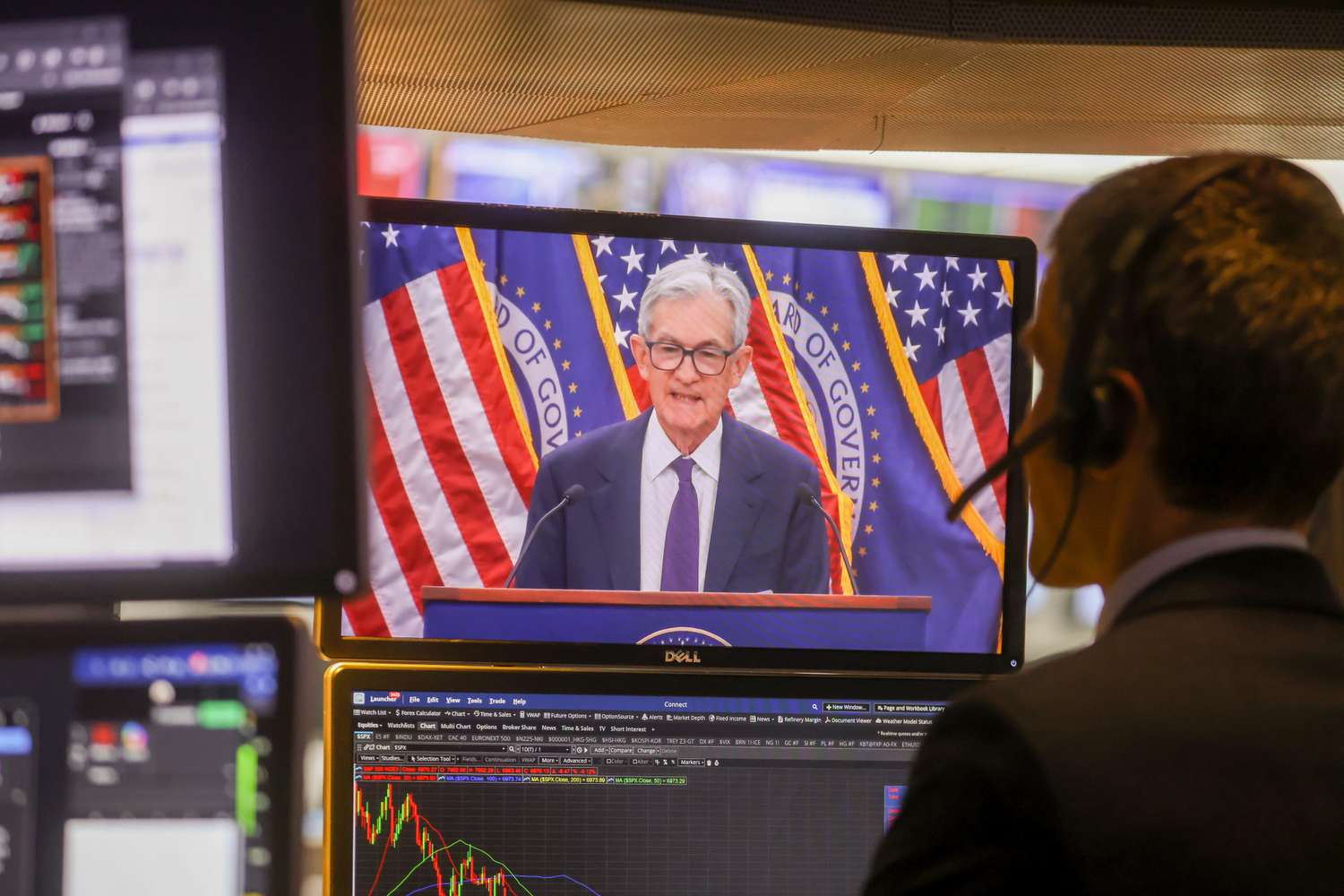
Core Viewpoint - The financial world is focused on how Kevin Warsh, nominated to lead the Federal Reserve, may implement significant changes if confirmed, particularly regarding the Fed's balance sheet and regulatory practices [1]. Group 1: Fed's Balance Sheet and Monetary Policy - Warsh aims to reduce the Fed's $6.6 trillion balance sheet, which he believes has become bloated and ineffective in supporting the economy [2][3]. - The Fed's balance sheet peaked at $9 trillion in 2022, and there is criticism that its size exceeds the mandate of ensuring stable prices and employment [4]. - Warsh supports lowering interest rates as a more effective means to assist families and businesses, contrasting with the current reliance on a large balance sheet [3]. Group 2: Regulatory Changes and Data Dependence - Warsh advocates for a "regime change" in how the Fed supervises and regulates banks, suggesting a reduction in banking regulations [2][5]. - He criticizes the Fed's heavy reliance on data-driven methods for economic assessment, arguing that focusing on outdated data leads to "false precision" and complacency [6][7]. - Warsh believes that the current policy of being "data dependent" lacks real value and should not overly focus on minor fluctuations in government data releases [7].