
Funds

Search documents
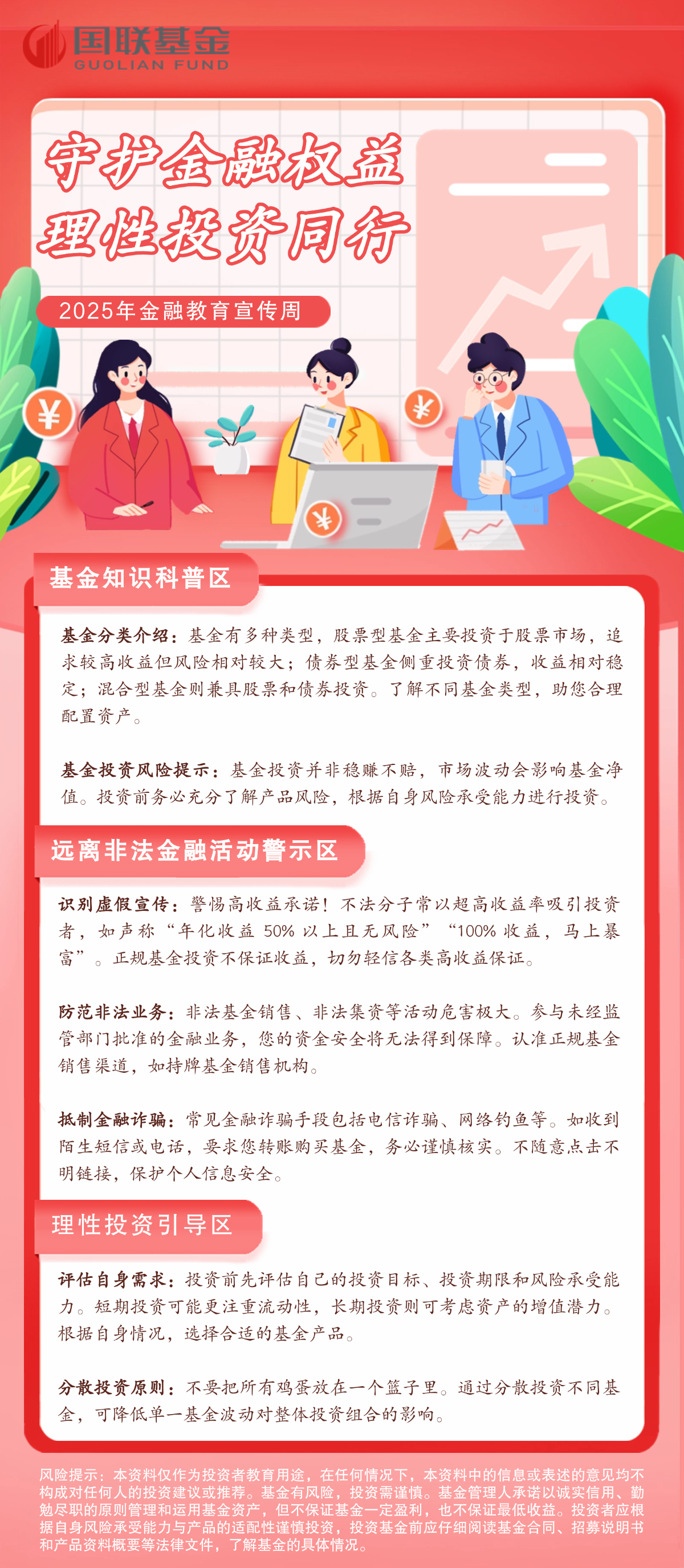
国联基金|守护金融权益 理性投资同行
Xin Lang Ji Jin· 2025-09-22 09:35
专题:2025金融教育宣传周:保障金融权益 助力美好生活 基金行业在行动 MACD金叉信号形成,这些股涨势不错! 责任编辑:郭栩彤 ...

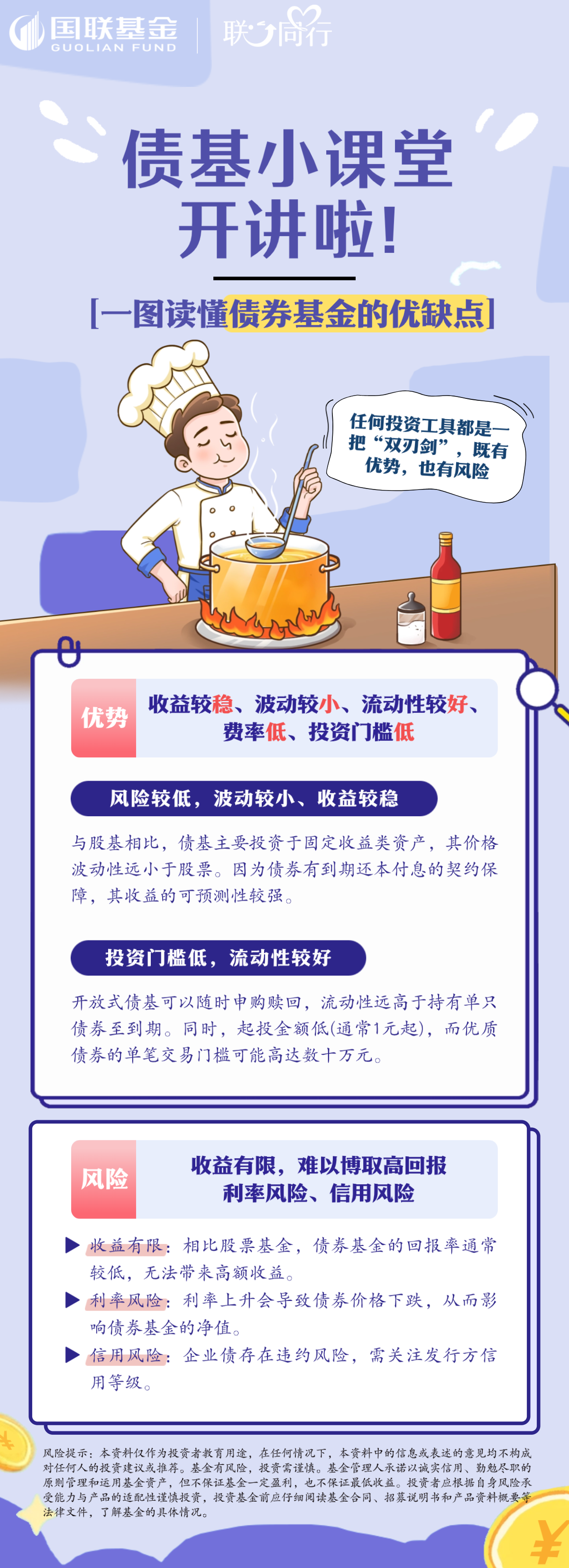
国联基金|债基小课堂:一图读懂债券基金的优缺点
Xin Lang Ji Jin· 2025-09-22 09:35
Group 1 - The core viewpoint is that bond funds are less risky, exhibit lower volatility, and provide more stable returns compared to stock funds due to the contractual guarantees of principal and interest payments [2] - Bond funds have a lower investment threshold and better liquidity, allowing for purchases and redemptions at any time, with minimum investment amounts often starting at 1 yuan, while high-quality bonds may require tens of thousands of yuan for a single transaction [3] - The potential returns from bond funds are limited, making it difficult to achieve high returns compared to stock funds, with risks including interest rate risk and credit risk associated with corporate bonds [4]
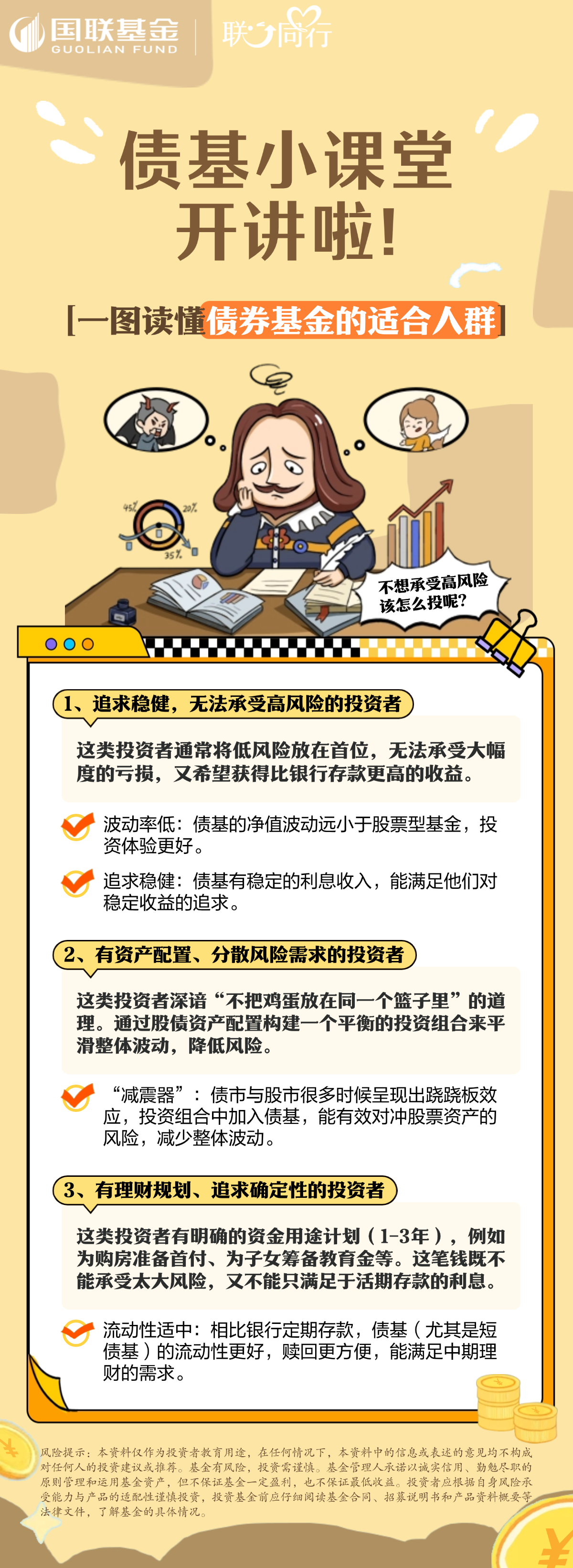
国联基金|债基小课堂:一图读懂债券基金的适合人群
Xin Lang Ji Jin· 2025-09-22 09:27
Group 1 - Investors prioritize low risk and seek higher returns than bank deposits, with a preference for low volatility in bond funds compared to equity funds [2] - Investors with asset allocation needs utilize bond funds to create a balanced portfolio, reducing overall risk through diversification [2] - Investors with specific financial planning goals (1-3 years) prefer bond funds for their better liquidity compared to bank fixed deposits, allowing for easier redemption [2]
新高!突破6000亿
Zhong Guo Ji Jin Bao· 2025-09-22 09:17
Group 1 - The total scale of bond ETFs in the market has surpassed 600 billion yuan, reaching 607.45 billion yuan as of September 19 [2][3] - There are currently 25 bond ETFs with a scale exceeding 10 billion yuan, including notable funds such as Bosera Convertible Bond ETF and Hai Fu Tong Short-term Bond ETF, both exceeding 58 billion yuan [2][3] - The bond ETF market has experienced rapid growth, with a 121% increase from 239.64 billion yuan at the end of 2021 to 529.43 billion yuan at the end of 2022, and further growth to 801.52 billion yuan by the end of 2023 [2][3] Group 2 - The bond ETF market is expected to continue expanding, driven by increasing allocations from pension funds, social security, and public mutual funds [4][5] - The current market share of bond index funds in pure bond funds is about 15%, while the share of ETFs in bond index funds is around 34%, indicating significant growth potential compared to the U.S. market [4] - There is a vacuum in the market for certain types of bond ETFs, such as those focused on green bonds and central enterprise themes, suggesting future opportunities for development [4]
跨行业视角下公募基金企业文化建设的路径探索——以中国特色金融文化为引领
Zhong Guo Jing Ji Wang· 2025-09-22 08:47
Core Viewpoint - The article emphasizes the importance of building a distinctive financial culture in the public fund industry, aligning with the principles outlined in the 20th National Congress of the Communist Party of China and the 2023 Central Financial Work Conference [3][4]. Summary by Sections Introduction - The public fund industry has become a significant force in China's financial system, with assets reaching 35.08 trillion yuan and over 13,000 products by July 2025 [2]. - Challenges include a focus on scale over quality, product homogeneity, and inadequate investor service [2]. Core Values of Public Fund Corporate Culture - **Trust Responsibility**: The foundation of corporate culture must focus on protecting investor interests, ensuring accurate risk disclosures, and adhering to investment strategies [4]. - **Long-term Value**: The culture should promote a long-term investment perspective, moving away from short-term speculation and emphasizing thorough research [5][6]. - **Professional Adaptation**: The culture must balance professional capabilities with compliance, innovating within the framework of serving the real economy [7]. Cross-Industry Cultural Insights - **Lean Culture from Manufacturing**: Emphasizes process optimization and efficiency, which can be adapted to enhance research and product design in public funds [9][11]. - **Risk Control Culture from Banking**: Advocates for comprehensive risk management practices that can strengthen the public fund industry's cautious approach [12][15]. - **User-Centric Culture from Internet**: Focuses on understanding investor needs and providing tailored services, addressing the issue of service homogeneity in public funds [16][18]. Current Status and Optimization Paths - **Current Status**: There is an awakening awareness of cultural construction, but issues of "virtualization" and "disconnection" remain prevalent [19]. - **Optimization Path**: Emphasizes the need for deep integration of culture and business processes, with clear principles for adapting cross-industry experiences [20][21]. Conclusion - The article concludes that the public fund industry can benefit from cross-industry cultural experiences, provided they are adapted rather than copied, to effectively address current challenges and enhance quality development [21].
JOF: A Lower PBR Bet Than DFJ
Seeking Alpha· 2025-09-22 08:45
Thanks to our global coverage, we've ramped up our global macro commentary on our marketplace service here on Seeking Alpha, The Value Lab . We focus on long-only value ideas, where we try to find international mispriced equities and target a portfolio yield of about 4% . We've done really well for ourselves over the last 5 years, but it took getting our hands dirty in international markets. If you are a value investor serious about protecting your wealth, we at the Value Lab might be of inspiration.The Jap ...

鹏华基金:保障金融权益 助力美好生活 基金行业在行动 2025年金融教育宣传周
Xin Lang Ji Jin· 2025-09-22 05:56
Group 1 - The article discusses the 2025 Financial Education Promotion Week, emphasizing the importance of safeguarding financial rights and enhancing quality of life through financial literacy initiatives [1] - The fund industry is actively participating in this campaign, aiming to raise awareness and educate the public about financial management and investment strategies [1] Group 2 - The MACD golden cross signal has formed, indicating a potential bullish trend in certain stocks, which may present investment opportunities for market participants [3] - The article highlights that stocks showing positive momentum in response to this signal could be worth monitoring for potential gains [3]

视频|鹏华基金“一司一省一高校”之走进香港中文大学(深圳)校园金融游园活动
Xin Lang Ji Jin· 2025-09-22 05:53
Group 1 - The article highlights the importance of financial education in safeguarding financial rights and enhancing quality of life, particularly during the 2025 Financial Education Promotion Week [1] - The fund industry is actively participating in initiatives aimed at promoting financial literacy and awareness among the public [1] Group 2 - The MACD golden cross signal has formed, indicating a positive trend for certain stocks, suggesting potential investment opportunities [1]
鹏华基金:“蓝马甲大篷车”助老防骗公益行
Xin Lang Ji Jin· 2025-09-22 05:28
专题:2025金融教育宣传周:保障金融权益 助力美好生活 基金行业在行动 责任编辑:石秀珍 SF183 MACD金叉信号形成,这些股涨势不错! ...

新浪基金白话解读《推动公募基金高质量发展行动方案》系列之四:浮动费率闪亮登场
Xin Lang Ji Jin· 2025-09-22 02:18
为了改变这个局面,《推动公募基金高质量发展行动方案》推出了"浮动费率改革",核心就是让管理费 和基金业绩"挂钩":基金做得好,公司才能多收钱;做得差,就少收钱。 具体怎么操作?举个例子,新成立的主动权益基金,会先定一个"业绩比较基准"(比如跟沪深300指数 比):如果基金业绩达到这个基准,就收正常的"基准费率";要是明显低于基准,就收"低档费率"(基 金公司赚得少);要是远超基准,才收"升档费率"。而且要求大基金公司一年内发的这类基金,得占它 主动权益基金的60%以上,之后再慢慢推广到全行业。 专题:北京公募基金高质量发展系列活动 新时代、新基金、新价值 作者:新浪仓石基金 买基金的朋友可能都有过疑问:为啥不管基金帮我赚没赚钱,都要交管理费?其实之前公募基金大多 用"固定费率"模式,比如买1万元主动权益基金,每年通常要交150元左右(费率1.5%),哪怕基金亏 了,这笔管理费也得照交。 这种模式引发了一个局面:有些基金公司更在意"做大规模"—— 规模越大,固定费率下赚的管理费越 多,反而不太重视投资者到底赚没赚钱。时间久了,就出现"基金净值涨了,但投资者没赚到钱"、"基 金公司赚管理费,投资者亏本金"的情况, ...